Confused about permits, contractor licensing, and building codes for your basement project? Here's what Connecticut actually requires — and what to watch out for.

If you’re dealing with a wet basement in Hartford County — or you’re planning to seal or coat your basement floor — you’ve probably wondered whether you need a permit, whether your contractor needs to be licensed, and what happens if you skip those steps. These are exactly the right questions to ask, and most contractors won’t give you a straight answer unless you push. This guide walks you through what Connecticut’s building codes and licensing laws actually require for basement waterproofing and floor coating projects, what the permit process looks like at the town level, and how to make sure the contractor you hire is operating legally — before any work starts.
Connecticut follows the 2022 Connecticut State Building Code, which has been in effect for all projects permitted after October 1, 2022. It’s based on the International Residential Code and applies statewide — but here’s the part most homeowners miss: the code sets the floor, not the ceiling. Every one of Hartford County’s 29 municipalities administers its own building department, issues its own permits, and sets its own fees. The state code is consistent. The process to comply with it is not.
For basement projects specifically, the code addresses moisture control, vapor retarders, insulation minimums, ceiling heights, and egress — all of which come into play depending on what you’re doing. A floor coating on an existing slab is a different animal than converting unfinished basement space into a livable room. Understanding that distinction is where most homeowners get tripped up.
The honest answer is: it depends on the scope of work, and you should always confirm with your specific town’s building department before assuming either way. That said, here’s a useful framework for how Connecticut generally handles it.
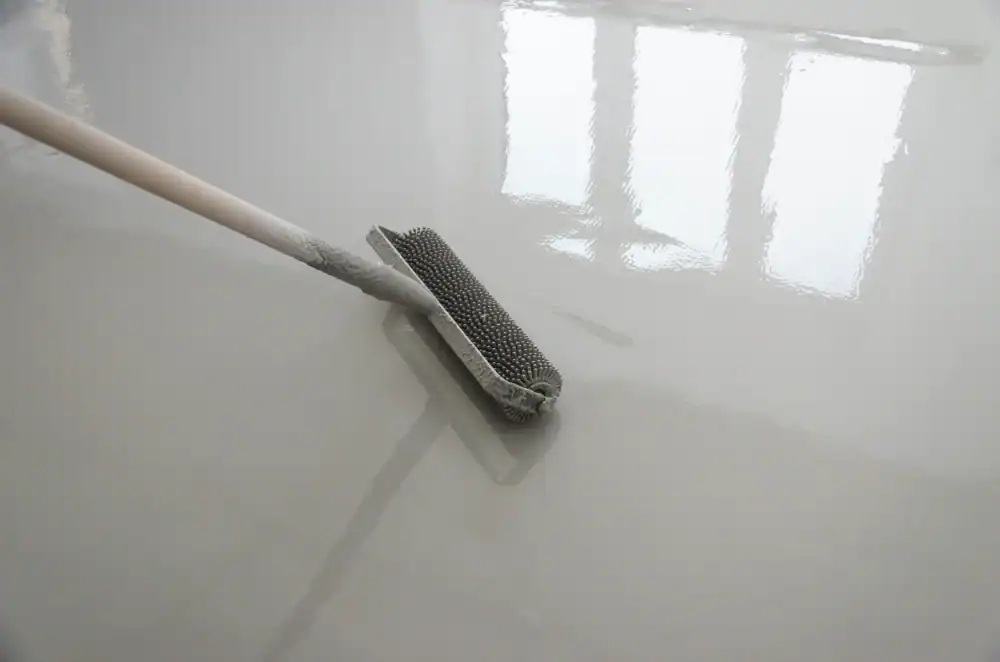
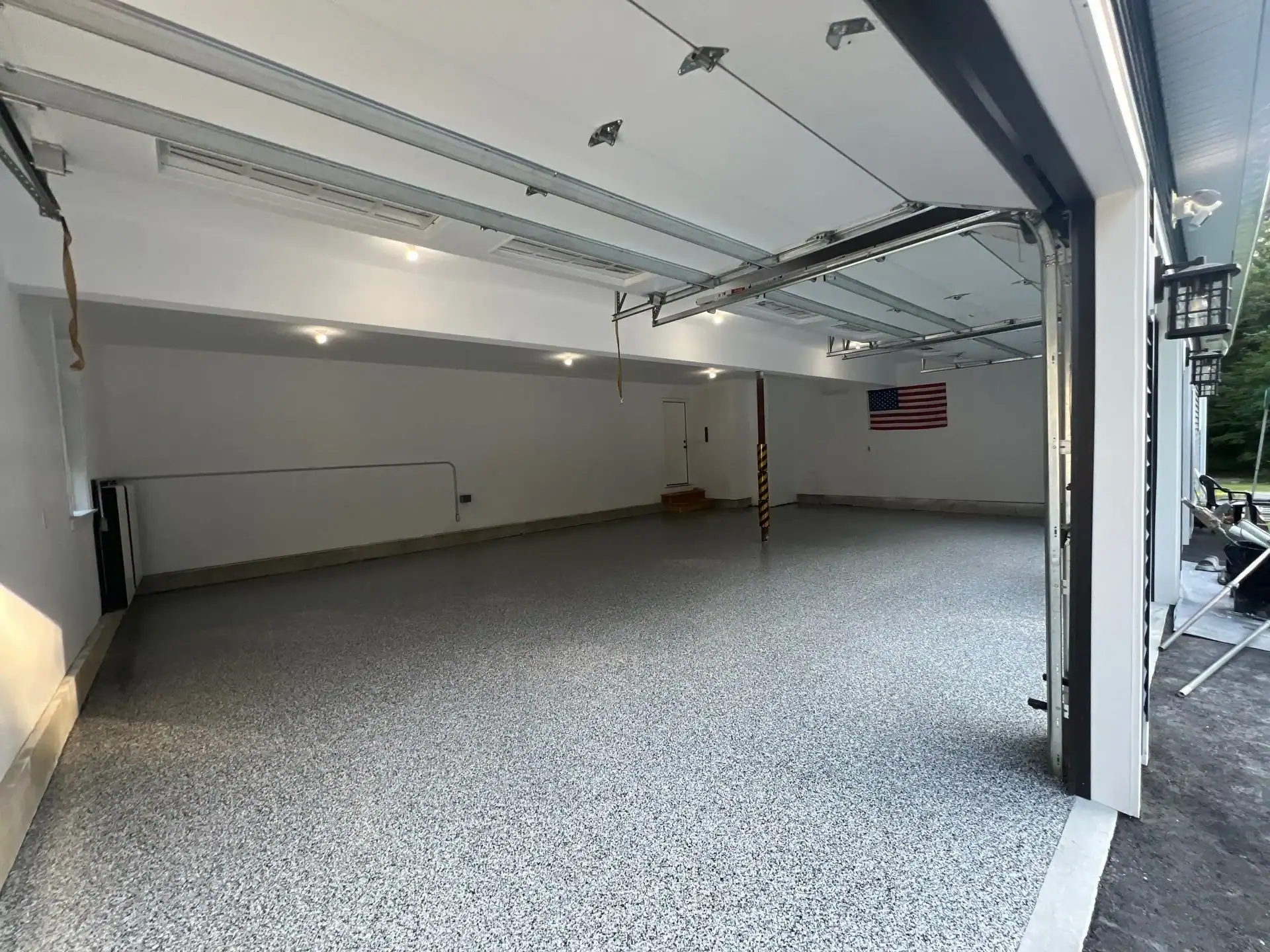
Applying a surface coating — epoxy or polyaspartic — to an existing concrete basement floor typically does not trigger a building permit on its own. It’s a surface treatment, not a structural alteration. No walls are moved, no drainage systems are installed, no electrical or plumbing is touched. In most Hartford County municipalities, that type of work falls below the permit threshold.
What does trigger a permit is anything that changes the structure or function of the space. Installing an interior drainage system, adding a sump pump that requires electrical work, framing new walls, adding egress windows, or converting unfinished basement space into a bedroom or living area — all of that requires a permit. And in Connecticut, that permit must be issued before work begins, not after.
The East Hartford building department is direct about this: anything built without proper permits is a violation, full stop. West Hartford’s building department requires a permit for any alteration or repair of an existing building. New Hartford’s FAQ puts it plainly — it’s always better to ask first than to find out after the fact that you needed one. The pattern across Hartford County is consistent: when in doubt, call your town’s building department before the contractor starts.
One more thing worth knowing: Connecticut law places the ultimate responsibility for permits on the homeowner, not the contractor. If your contractor tells you no permit is needed and they’re wrong, you’re the one who faces the consequences — fines, complications at resale, or being required to tear out and redo work at your own expense. A good contractor handles the permit process on your behalf. But you should still verify it happened.
Connecticut sits in Climate Zone 5A — cold winters, humid summers, and significant freeze-thaw cycling every year. That classification drives specific code requirements for insulation, vapor control, and moisture management in below-grade spaces. It’s not arbitrary. It’s a direct response to conditions that cause real structural damage to homes throughout Hartford County.
Here’s what that looks like on the ground. Hartford County’s Connecticut River Valley is built on clay-rich soil. Clay holds moisture like a sponge and expands when saturated, pushing against foundation walls with thousands of pounds of lateral force. In neighborhoods like Asylum Hill and the West End in Hartford — where a lot of the housing stock was built before 1950 — you’re looking at foundations that predate modern waterproofing standards entirely. In Farmington, properties near the Farmington River deal with elevated groundwater and seasonal flooding during spring snowmelt. These aren’t edge cases. They’re the norm.
The 2022 Connecticut State Building Code requires basement walls to meet R-15 continuous insulation or R-19 cavity insulation minimums. Vapor retarders are required on the interior side of below-grade walls. Slab-on-grade floors need R-10 perimeter insulation extended at least four feet down or out. If you’re converting a basement to habitable space, minimum ceiling height is 6 feet 10 inches clear — with a 7-foot minimum for utility and storage areas. And any sleeping room in a basement requires its own egress opening, no exceptions.
None of this is optional, and none of it is just paperwork. These requirements exist because Connecticut’s climate creates real, ongoing risk to homes that aren’t properly protected. A basement floor coating that includes a vapor barrier primer addresses one piece of that puzzle — stopping moisture vapor from migrating up through the slab. But it’s one layer of a larger system, and understanding how it fits into the code picture helps you ask better questions of any contractor you’re considering.
Want live answers?
Connect with a American Poly Floor expert for fast, friendly support.
Connecticut doesn’t have a single general contractor license. Licensing authority is split across multiple state agencies depending on the trade. For residential waterproofing and floor coating work, the governing law is the Connecticut Home Improvement Act — Connecticut General Statutes Chapter 400 — administered by the Department of Consumer Protection.
Under that law, any contractor performing home improvement work on residential property for compensation exceeding $200 must be registered with the DCP as a Home Improvement Contractor. Waterproofing is explicitly named in the statute as a covered activity. Not implied, not open to interpretation — named. If someone is applying a waterproofing system or floor coating to your basement and they’re not registered, they’re operating illegally in Connecticut, regardless of how long they’ve been in business or how good their work looks.
The verification process is straightforward, and there’s no excuse for skipping it. Connecticut’s Department of Consumer Protection maintains a public license lookup tool at elicense.ct.gov. You can search by contractor name or business name and confirm whether their registration is current. DCP registration must be renewed annually — so a contractor who was registered two years ago may not be registered today. Always check current status, not just whether they have a number on their business card.
Connecticut law also requires that the registration number appear on all contracts, advertising, and business cards. If a contractor hands you a contract without a DCP registration number on it, that’s a red flag worth taking seriously. The DCP is headquartered at 450 Columbus Boulevard in Hartford — the same city most of their Hartford County customers live in — and their consumer protection line is (860) 713-6100.
Beyond registration, contractors performing work that involves electrical, plumbing, or HVAC components need separate trade licenses issued through DCP for those specific trades. A basement project that involves installing a sump pump with electrical connections, for example, requires a licensed electrician for that portion of the work — not just a registered home improvement contractor.
Here’s why this matters beyond legal compliance: Connecticut maintains a Home Improvement Guaranty Fund specifically for homeowners who are harmed by registered contractors. If a registered contractor does shoddy work, disappears with a deposit, or fails to complete a job, that fund exists as a consumer protection backstop. But it only applies if the contractor was DCP-registered. Hire an unregistered contractor, and you have no path to that fund — regardless of how the job goes.
Registration is the legal baseline. It’s not the whole picture. A contractor can be registered with the DCP and still do poor work, skip surface preparation, use residential-grade materials that fail in a Connecticut winter, or disappear when you call about a warranty claim. So beyond verifying registration at elicense.ct.gov, here’s what actually separates a contractor worth hiring from one who isn’t.
Ask about their surface preparation process. In the basement floor coating world, preparation is everything. Diamond grinding — not acid etching, not a light scuff — creates the surface profile that allows a coating to bond permanently to concrete. Skipping or shortcutting that step is the single most common reason epoxy and polyaspartic floors peel, bubble, or delaminate within a year or two. Any contractor who can’t explain their prep process in specific terms is telling you something important.
Ask about moisture testing. Connecticut’s climate means most basement slabs in Hartford County have some level of moisture vapor transmission. A coating applied over untested concrete can trap that vapor underneath, building pressure until the coating lifts. A professional contractor tests first and applies a vapor barrier primer where the readings indicate it’s needed. This isn’t optional in Hartford County — it’s the difference between a floor that lasts and one that fails.
Ask for a written contract with scope, timeline, payment schedule, and warranty terms spelled out. Connecticut law requires a written contract for any home improvement work exceeding $200. If a contractor is reluctant to put things in writing, walk away. A warranty backed by insurance is worth significantly more than a verbal promise — if the contractor goes out of business, an insurance-backed warranty survives with it.
Check their reviews across multiple platforms — not just their own website. Look for named staff members in reviews, consistent praise for communication and follow-through, and how the company responds when something doesn’t go right the first time. A business that shows up in reviews from West Hartford, Glastonbury, Simsbury, and Enfield — not just one town — has the kind of regional presence that suggests they’re doing something right across a range of project types and property ages.
The short version: know what your project actually requires, verify your contractor’s registration before you sign anything, and don’t let anyone start work without confirming the permit situation with your town’s building department first. Those three steps protect you legally, financially, and at resale.
Connecticut basement waterproofing codes aren’t designed to make your life harder. They exist because Hartford County’s clay soil, aging housing stock, and freeze-thaw winters create real risks to homes that aren’t properly managed. The code is the minimum. A good contractor does more than the minimum.
If you’re planning a basement floor coating or waterproofing project in Hartford County and want to work with a locally based, DCP-compliant contractor who handles the prep, the process, and the paperwork the right way — we’re based in East Hartford and have been doing this work across Hartford, New Haven, New London, and Middlesex Counties. Reach out and we’ll give you a straight answer about what your project actually needs.
Summary:
Article details:
Share: