Wondering what epoxy flooring costs in Hartford County? Here's a clear, honest breakdown by project type — plus what actually drives the price difference between a floor that lasts and one that doesn't.
If you’ve started getting quotes for epoxy flooring in Hartford County, you’ve probably noticed the range is wide — sometimes confusingly so. One contractor says $1,500. Another says $4,800. And the guy at Home Depot says you can do it yourself for $300. They can’t all be right, and they’re not.
What you’re really trying to figure out is what a quality floor costs in this market, what’s actually included, and whether the premium is worth it. We’ve been installing floors across Hartford County long enough to give you a straight answer on all three.
Pricing in Hartford County runs higher than the national average for a few reasons we’ll get into — but here’s what you can expect to pay for professionally installed epoxy flooring based on current 2026 market data.
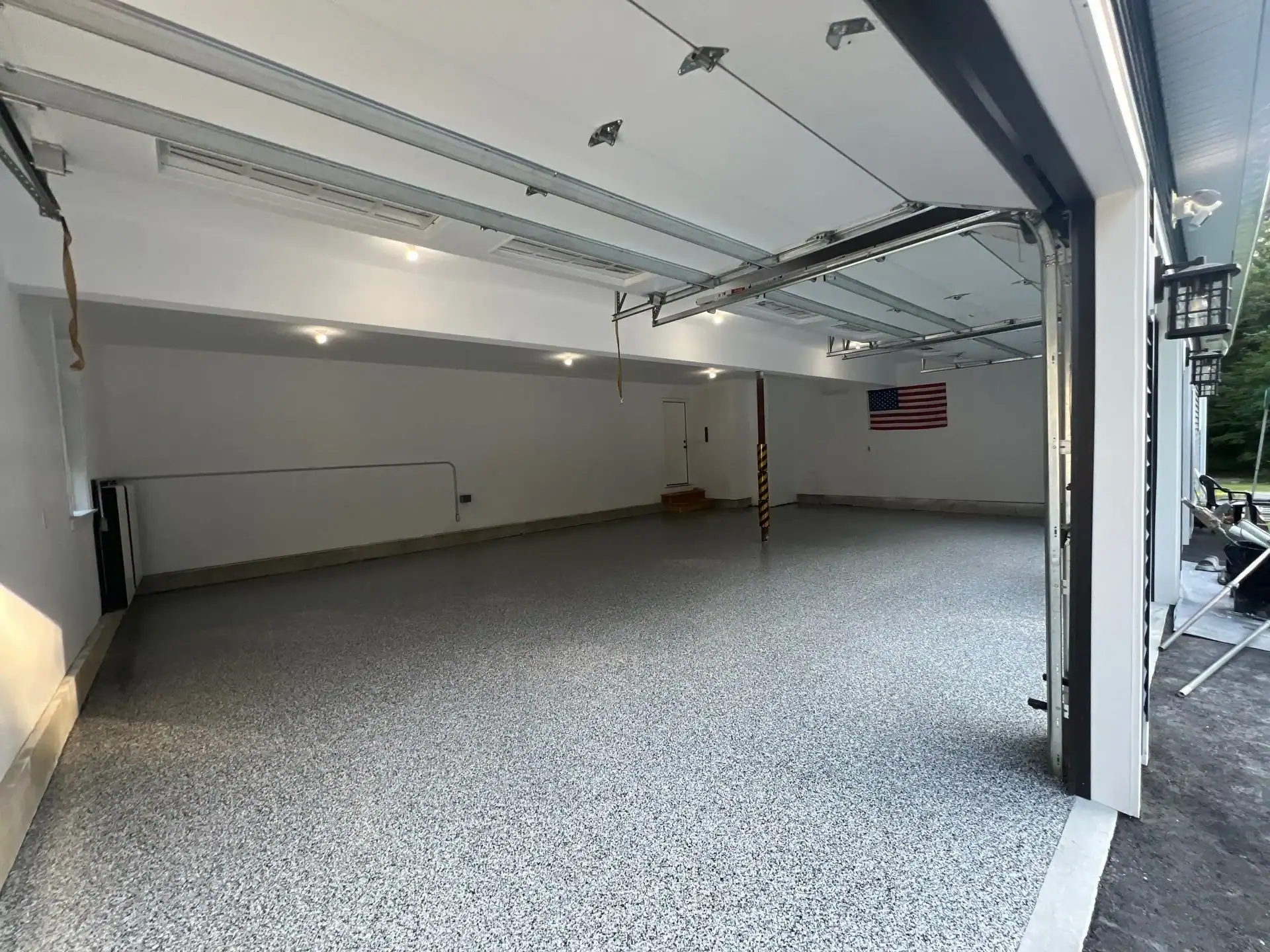
A standard one-car garage (around 250 square feet) typically runs $1,300 to $2,500 installed. A two-car garage at 500 square feet lands between $2,500 and $5,000 depending on the system and the condition of the slab. Basement floors in Hartford County almost always cost more than garages — not because the square footage is larger, but because moisture mitigation is nearly always required. Budget $2,600 to $5,500 for a 500-square-foot basement, with the higher end reflecting vapor barrier work. Commercial and industrial floors run $4 to $12 or more per square foot depending on traffic load, chemical resistance requirements, and system complexity.
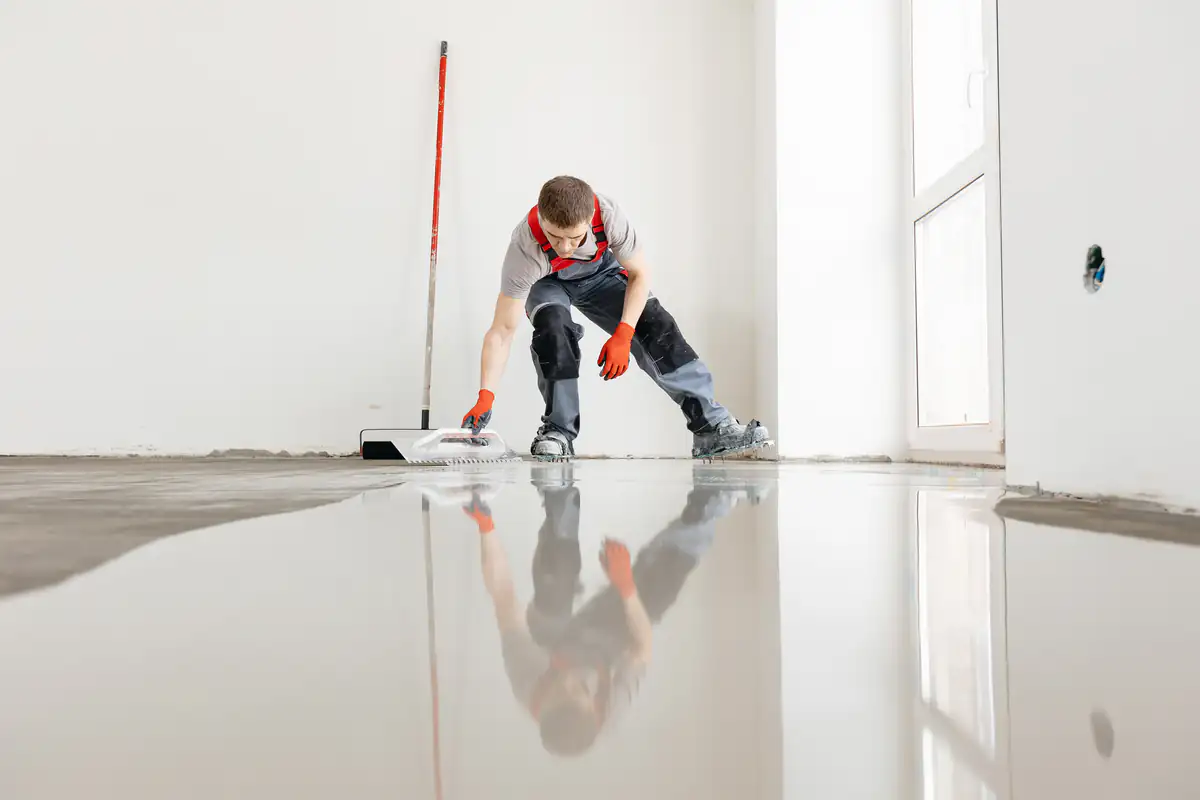
Square footage is the most obvious variable, but it’s rarely the most important one. The condition of your concrete slab has a bigger impact on final cost than almost anything else. Cracks need to be filled. Existing coatings need to be removed. Contamination from oil, salt, or previous sealers needs to be addressed before anything goes down. If a contractor isn’t asking about any of this before giving you a number, that’s worth paying attention to.
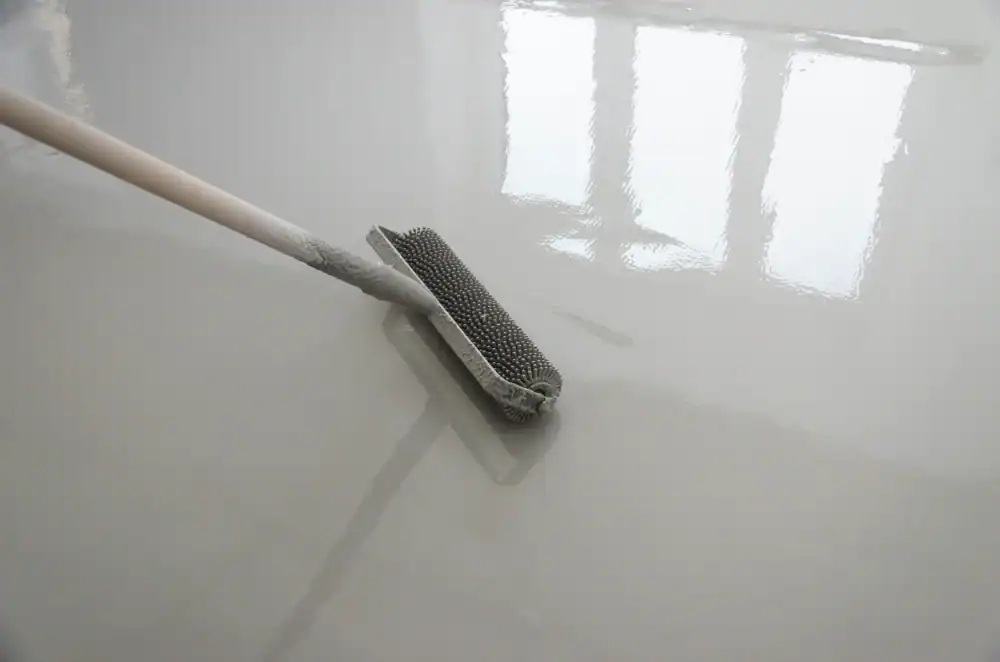
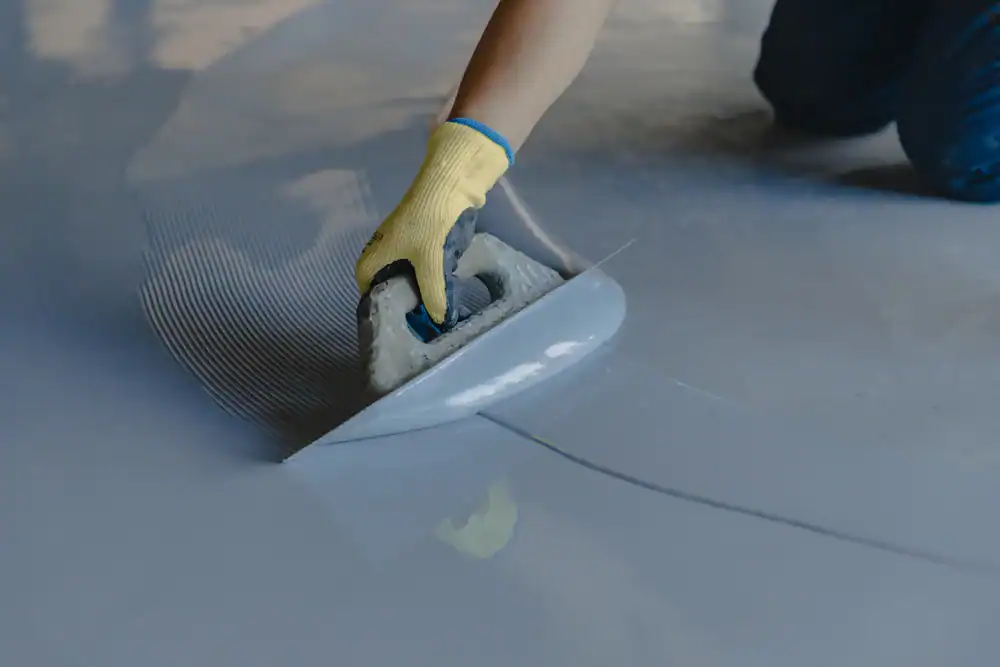
Surface preparation is where most of the cost variation comes from — and where most of the quality variation lives too. Diamond grinding the concrete, which is the professional standard, opens the pores of the slab so the epoxy bonds chemically rather than just sitting on top. It takes longer and costs more than acid etching, which is what budget crews and DIY kits rely on. The difference in longevity between the two approaches is measured in years, sometimes decades.
Moisture testing and vapor barrier application add cost, but in Hartford County they’re rarely optional. The area sits in the Connecticut River valley, and seasonal snowmelt and rainfall push the water table up in ways that put real hydrostatic pressure on basement slabs. Most basements here have measurable moisture vapor transmission. If that’s not addressed before the coating goes down, you’ll be peeling it up within two years. That’s not a worst-case scenario — it’s the most common reason epoxy floors fail in this climate.
The type of system also affects price. Decorative flake systems cost more than solid-color epoxy. Metallic finishes carry a 20 to 40 percent premium. Polyaspartic coatings — which are more UV-stable and cure faster than standard epoxy — typically run 10 to 25 percent more but hold up better in spaces with sunlight exposure. For most Hartford County garages, a professional flake system with a polyaspartic topcoat is the right call.
The $300 Home Depot kit is real. So is the failure rate. Consumer epoxy kits use water-based formulas with low solids content — they’re designed to be easy to apply, not to last. In Hartford County’s climate, where freeze-thaw cycles stress concrete all winter and road salt from I-84 and I-91 gets tracked into garages from October through April, those kits typically fail within one to two years. Peeling, bubbling, and hot-tire pickup are the most common complaints, and they’re almost always traceable to the same root causes: no diamond grinding, no moisture testing, and a coating that was never thick or strong enough for real-world use.
Here’s a way to think about the cost difference more honestly. A professionally installed two-car garage floor at $3,500 with a 15-year warranty works out to roughly $233 per year. A $400 DIY kit that needs to be redone every two years costs $200 per year — with your own labor on top of that, no warranty coverage, and no moisture protection. The math isn’t as lopsided as the upfront numbers suggest.
Professional systems use 100% solids commercial-grade epoxy or polyaspartic coatings — the same materials used in pharmaceutical plants, food processing facilities, and distribution centers. The bond strength, thickness, and chemical resistance aren’t in the same category as consumer products. We’ve installed floors at Costco, Amazon, and Foxwoods Resort Casino. Those clients can’t afford floor failures, and neither can you if you’re redoing a garage floor every other year.
The honest version of the DIY conversation isn’t “don’t do it.” It’s that the conditions in Hartford County — the moisture, the salt, the temperature swings — make proper preparation non-negotiable. And proper preparation requires equipment most homeowners don’t have access to and experience that only comes from doing this work repeatedly.
Want live answers?
Connect with a American Poly Floor expert for fast, friendly support.
Hartford County was named the number one hottest housing market in the U.S. for 2026, and it shows. More homes are selling, more buyers are renovating after closing, and more sellers are upgrading before listing. A garage or basement floor transformation is one of the highest-impact improvements you can make before putting a home on the market — and buyers notice it immediately.
That demand has also brought more contractors into the market, and not all of them are worth hiring. Connecticut requires all home improvement contractors to register with the state’s Department of Consumer Protection. You can verify any contractor’s registration at elicense.ct.gov before signing anything. It takes two minutes and it matters.
Most national cost guides treat Hartford County the same as Phoenix or Atlanta. They shouldn’t. The local climate creates specific conditions that affect both what a floor needs to perform and what it costs to install correctly.
The freeze-thaw cycle is the most obvious factor. Hartford County experiences roughly 100 or more freeze-thaw cycles per year. Water infiltrates micro-cracks in concrete, freezes, expands, and makes those cracks larger. Untreated or poorly coated slabs deteriorate visibly over time — you’ve probably seen it in older driveways and garage floors throughout Simsbury, Glastonbury, Newington, West Hartford, and Enfield. A properly installed epoxy system seals the slab against moisture infiltration and stops that cycle.
Road salt is the second factor that often gets overlooked. Connecticut’s DOT salts I-84, I-91, Route 44, and Route 9 aggressively through the winter months, and that salt-laden slush gets tracked into garages on tires and boots. Standard concrete can’t handle prolonged salt exposure without surface degradation. A chemical-resistant epoxy coating protects the slab underneath and is easy to clean — a sweep and occasional mop is all it takes.
The third factor is moisture vapor transmission, which we’ve already touched on but can’t overstate. Many homes in Hartford County were built between the 1950s and 1980s. Those older slabs weren’t built with modern vapor barriers underneath them, and they sit in a watershed environment where the water table fluctuates significantly with the seasons. A contractor who doesn’t test for moisture before applying a coating isn’t cutting a corner — they’re setting the floor up to fail. This is the step that separates a floor that lasts from one that doesn’t, and it’s built into every project we do.
Most epoxy flooring contractors offer a warranty somewhere between one and five years. Some offer nothing in writing at all. When you’re comparing quotes and trying to understand why prices vary, warranty terms are one of the most telling indicators of what you’re actually getting.
We back our work with a 15-year warranty that covers delamination, moisture failure, and coating breakdown. There’s also an insurance-backed 10-year warranty program available — meaning the coverage is backed by an insurance policy, not just our word. If something goes wrong, you’re not waiting to see if the business picks up the phone. That level of coverage is rare in this industry, and it exists because we’re confident in the preparation work behind every installation.
For Hartford County homeowners, the warranty question is especially relevant because of everything we’ve described above — the moisture, the salt, the freeze-thaw stress. A floor installed without proper prep in this region is going to show problems, and when it does, you want to know exactly what your recourse is. A five-year warranty from a contractor who skipped moisture testing is not the same thing as a 15-year warranty from one who didn’t.
We’re a locally owned, veteran-owned business based in East Hartford. We’ve been working in Hartford County long enough to know what local slabs look like, what they need, and what happens when the prep work gets rushed. The towns we work in most — Simsbury, Glastonbury, Wethersfield, Rocky Hill, Bristol, Southington, and Enfield — all have their own mix of housing ages, slab conditions, and moisture profiles. We’ve seen most of them.
For most Hartford County homeowners and business owners, yes — when it’s done right. The upfront cost is real, but so is the alternative: a floor that fails in two years, a DIY redo that costs you a weekend and another few hundred dollars, and no warranty when the bubbling starts.
The price range for professional epoxy in Hartford County is $3 to $15 per square foot. Where you land in that range depends on your slab condition, the system you choose, and whether moisture mitigation is required. What shouldn’t vary is the preparation work underneath it all — that’s where the floor either holds or doesn’t.
If you’re in Hartford County and trying to figure out what your specific project would cost, the only way to get an accurate number is a site visit. We offer free estimates, show up when scheduled, and give you a straight answer on what your floor needs and what it’ll cost — no vague ranges, no pressure.
Summary:
Article details:
Share: