Finding a reliable concrete contractor in Hartford County takes more than a quick Google search. Here's what to actually look for — and what to avoid.
If you’re searching for the best concrete contractors in Hartford County, you already know the problem isn’t finding options — it’s figuring out who’s actually worth hiring. There are hundreds of contractors operating across Hartford, East Hartford, Glastonbury, Simsbury, and the surrounding towns, and the quality gap between them is enormous. Some do excellent work. Others cut corners on prep, skip moisture testing, and leave you with a floor that looks fine for one winter before it starts peeling. This guide is designed to help you tell the difference — and point you toward contractors who actually understand what Connecticut conditions demand.
Hartford County’s concrete market covers everything from residential garage floors and driveways to commercial warehouse slabs and industrial coatings. The contractors worth hiring tend to share a few things: they’re registered with the Connecticut Department of Consumer Protection, they carry verifiable insurance, and they have a track record you can actually check — not just a handful of five-star reviews from accounts with no history.
What you’ll notice when you start comparing is that “concrete contractor” covers a lot of ground. Some specialize in poured foundations and stamped patios. Others focus on surface coatings, epoxy systems, and floor restoration. Knowing which type of contractor your project actually needs is the first step toward getting a result that lasts.
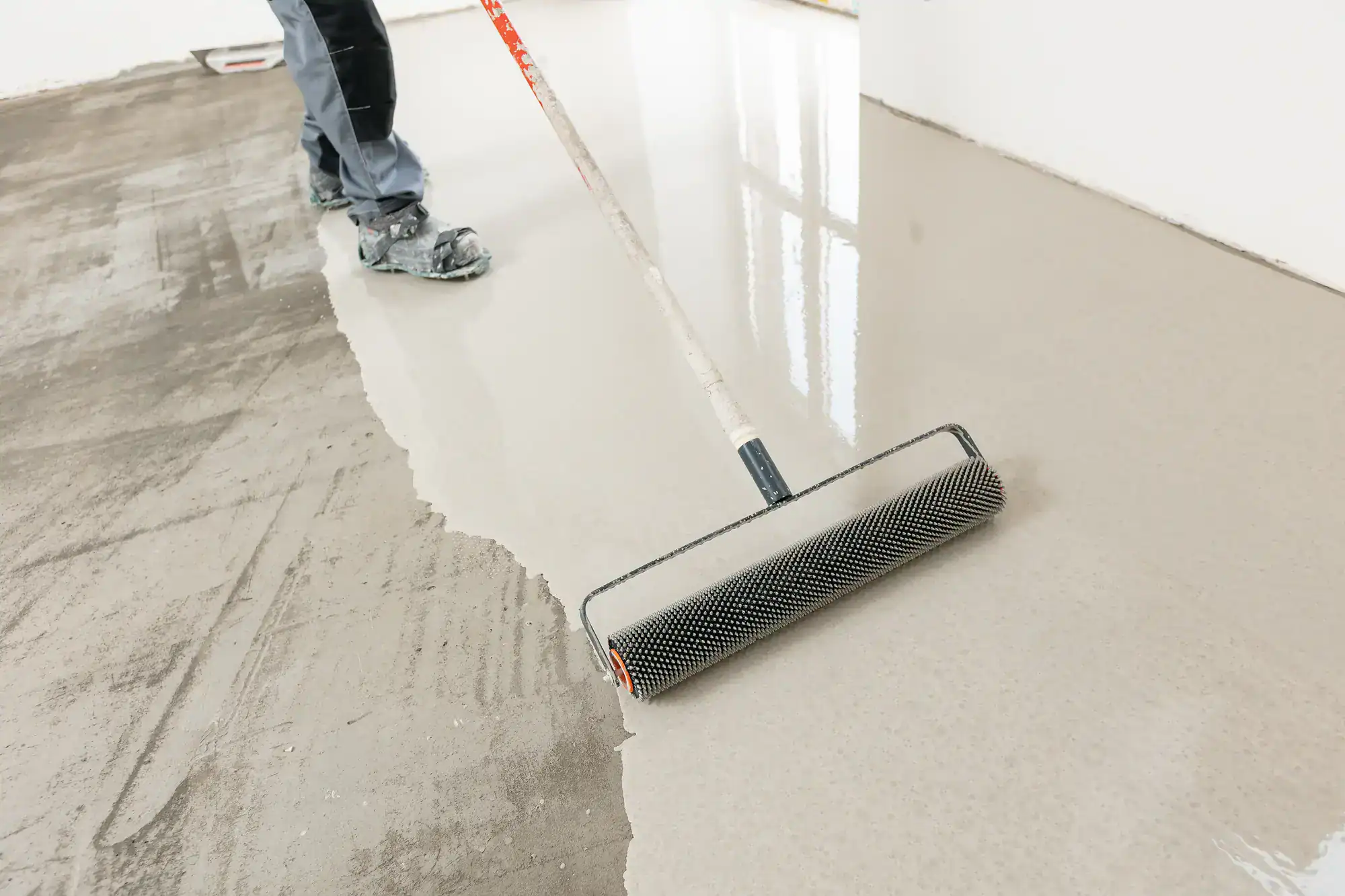
The Hartford County contractor market is more fragmented than most homeowners expect. You’ve got established masonry operations that have been doing driveways and foundations for 20-plus years — companies like Joslin Concrete out of West Hartford, which has built a reputation around stamped concrete work and free on-site estimates. You’ve got general contractors who handle concrete as part of broader remodeling scopes. And then you’ve got specialty flooring contractors who focus entirely on surface systems — epoxy, polyaspartic, polished concrete — and bring a different level of technical depth to that work.
The challenge is that all of these contractors show up in the same search results. Someone searching for a garage floor coating might end up talking to a masonry contractor who primarily does driveways, and vice versa. The scope mismatch leads to bad outcomes on both sides.
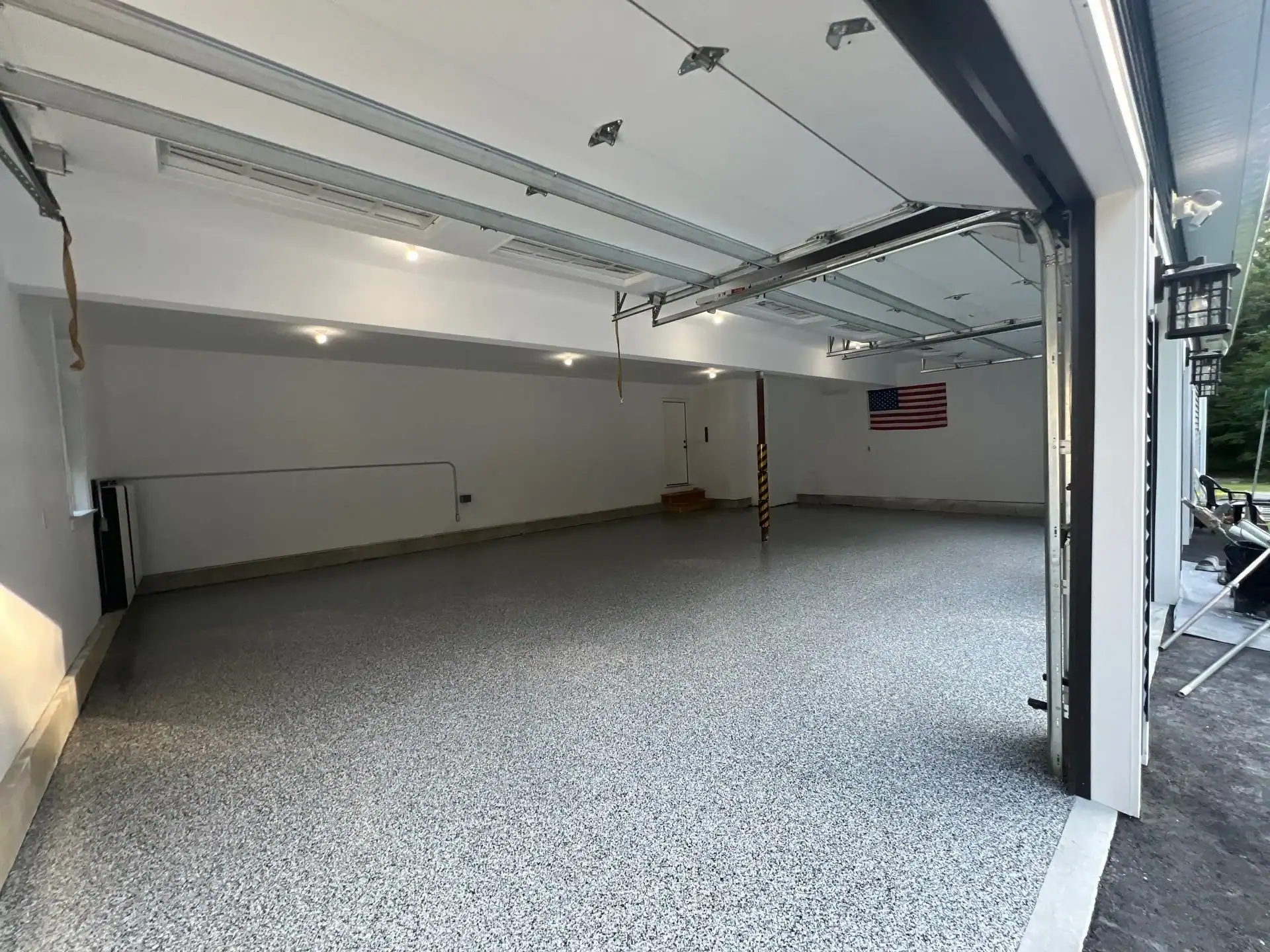
For residential projects in towns like Avon, Farmington, or Glastonbury — where homes are newer, garages are larger, and homeowners are investing in the long-term condition of their property — the right contractor is usually a coating specialist, not a general masonry outfit. The work is fundamentally different. A coating specialist is testing your slab for moisture, diamond-grinding the surface, and applying a commercial-grade system designed to flex with your floor through decades of freeze-thaw cycles. A general masonry contractor doing a “garage floor job” on the side is usually rolling on a thin consumer-grade product that won’t survive two Connecticut winters.
For commercial and industrial projects — manufacturing facilities in New Britain, distribution centers in Windsor, healthcare spaces in Hartford — the stakes are even higher. Floor failures in those environments aren’t just cosmetic. They’re safety issues, compliance issues, and operational disruptions. The contractors who serve that market need to bring FDA-compliant systems, chemical-resistant coatings, and the project management discipline to work around active facility schedules.
Knowing which category your project falls into — and finding a contractor who genuinely specializes in it — is what separates a floor you’ll be proud of from one you’ll be replacing in a few years.
Connecticut doesn’t have a specific license for concrete contractors, which surprises a lot of homeowners. What the state does require is registration through the Department of Consumer Protection. Any contractor performing residential home improvement work — including concrete and flooring — needs to be registered as a Home Improvement Contractor (HIC) if the job exceeds $200. You can verify any contractor’s registration status at portal.ct.gov/DCP, or call them directly at 860-713-6100. The DCP is located at 450 Columbus Blvd in Hartford, and they’re the authority you’d contact if something goes wrong.
Beyond state registration, look for general liability insurance and workers’ compensation coverage. Ask the contractor to provide certificates of insurance before any work begins — not after. A contractor who hesitates on that request is a contractor worth walking away from.
BBB accreditation is another useful signal. It’s voluntary, which means contractors who pursue it are making a deliberate commitment to ethical business practices and a formal dispute resolution process. It’s not a guarantee of quality, but it’s a meaningful filter. For larger commercial projects — buildings over four stories, facilities exceeding 150,000 square feet, or occupancies above 1,000 people — Connecticut requires a separate Major Contractor registration, which carries additional insurance requirements and financial vetting.
One thing worth knowing: the absence of formal licensing in this trade means unqualified operators can advertise freely on neighborhood apps and social media with no barrier to entry. The person offering a garage floor coating for $400 on Facebook isn’t necessarily registered, insured, or using materials rated for Connecticut’s climate. The verification steps above take about ten minutes and can save you a very expensive mistake.
Want live answers?
Connect with a American Poly Floor expert for fast, friendly support.
Some concrete projects in Hartford County are straightforward — a new driveway, a patio, a sidewalk repair. But a significant portion of what homeowners and facility managers actually need falls into a more specialized category: floors that are failing because of moisture, surfaces that have been destroyed by road salt, basements that have never been properly sealed, or commercial spaces that need coatings rated for chemical exposure and heavy traffic.
Those projects require a different kind of contractor. Not just someone who works with concrete, but someone who understands surface chemistry, moisture mitigation, and the specific demands of New England climate conditions.
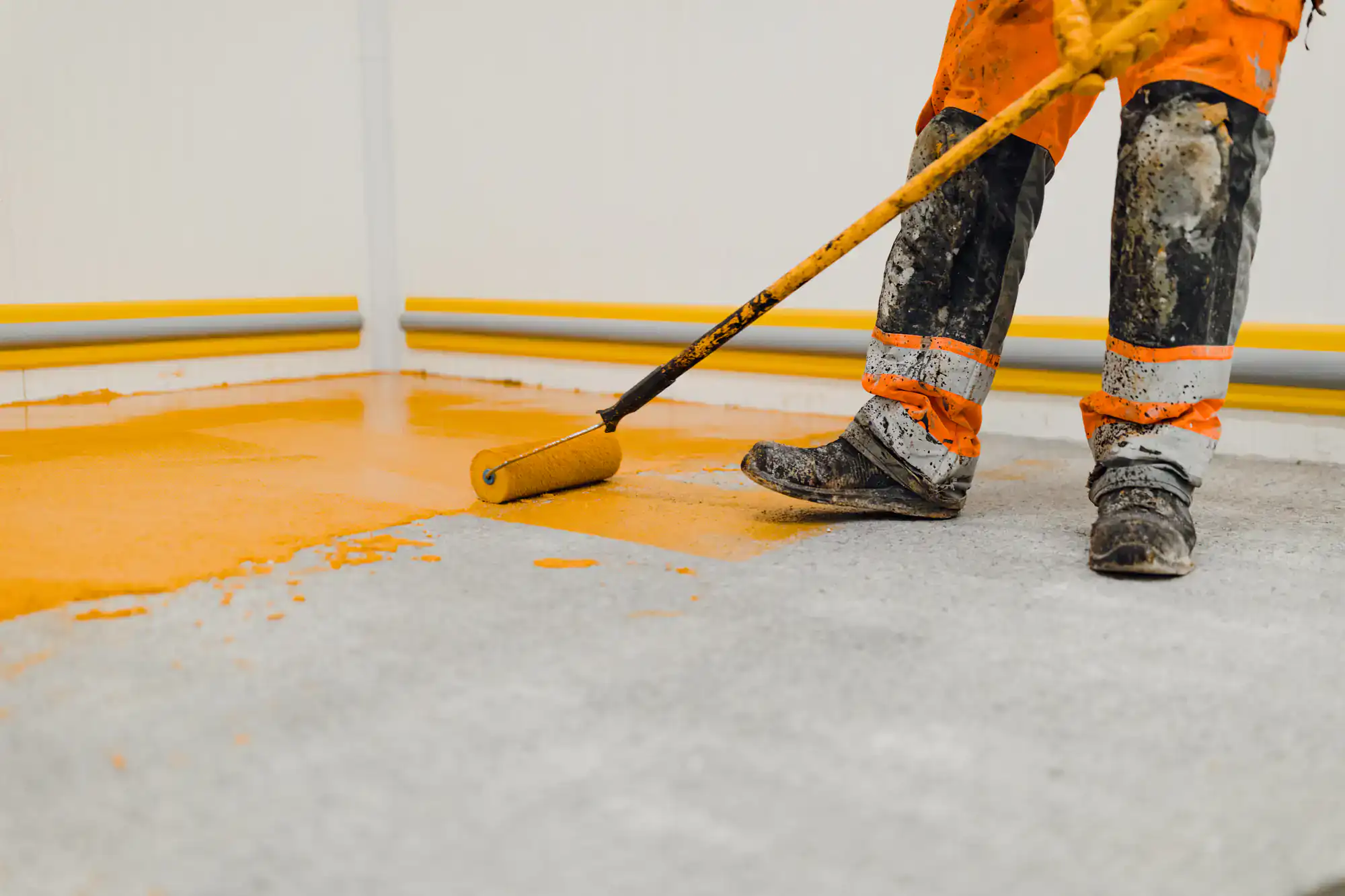
Hartford County gets hit with dozens of freeze-thaw cycles every winter. Water works its way into the microscopic pores of a concrete slab, freezes, expands, and creates fractures that compound over time. By the time a homeowner in Canton or Simsbury notices their garage floor is spalling or their basement slab is cracking, the damage has often been building for years.
Road salt makes it worse. Connecticut municipalities salt heavily from November through March, and that salt gets tracked into garages, absorbed by driveways, and worked into any surface that isn’t properly sealed. Bare concrete absorbs it. The result is the persistent white staining and surface corrosion that Hartford County homeowners deal with every spring — the kind that doesn’t scrub out, no matter what you try.
Then there’s moisture. Connecticut’s geology and precipitation patterns mean that many ground-level slabs and basements have active moisture migration coming up from below. This is the single biggest reason epoxy floors fail in this state. A contractor who doesn’t test your slab for moisture before applying a coating is setting you up for delamination — the coating bubbles up, peels, and fails within a year or two. It’s not a materials problem. It’s a process problem. The fix is a vapor barrier primer applied after proper surface preparation, which stops moisture migration at the source. But it only works if the contractor knows to test for it first, and not every contractor does.
We’ve seen this play out across Hartford County — in Wethersfield, in East Hartford, in Newington — homeowners who had a floor coated by someone who skipped the moisture test, and were back to square one within eighteen months. The prep work is everything. Up to 80% of epoxy failures trace directly to inadequate surface preparation. Diamond grinding, not acid etching. Moisture testing before the first coat goes down. A vapor barrier when the numbers call for it. These aren’t optional steps — they’re the difference between a floor that lasts fifteen years and one that doesn’t make it through two winters.
The contractors worth hiring in this market share a few non-negotiable habits. They diamond-grind every floor before application — a commercial-grade process that opens the concrete’s pores and creates the mechanical bond that holds a coating in place through years of thermal stress. They test for moisture. They repair cracks and spalls before coating, not over them. And they use high-solids, commercial-grade materials — not the thin consumer formulations sold at big-box stores, which fail at roughly a 30% rate within two years even when applied correctly.
Warranty terms are a useful proxy for confidence. A contractor who offers a 15-year warranty on their work — covering delamination, moisture failure, and coating breakdown — is telling you something real about how they approach the job. That kind of warranty only makes financial sense if you’re doing the prep work right and using materials that are actually rated for long-term performance. A contractor who offers no warranty, or a vague “we’ll come take a look” guarantee, is telling you something too.
We’re a veteran-owned business based in East Hartford, and we’ve been working floors across Hartford County long enough to know what this climate does to concrete. Our client portfolio includes Costco, Amazon, and Foxwoods — facilities where floor failure isn’t an option — and we bring that same standard to every residential garage and basement we coat. We carry BBB accreditation, we’re registered with the Connecticut DCP, and our 4.8-star rating from 148-plus customers reflects work that holds up, not just work that looks good on installation day.
For homeowners in Avon, Glastonbury, Farmington, or West Hartford who are investing in a property worth protecting — especially in a market where Hartford County homes are selling in an average of 18 days and prices are up 9% year-over-year — a professionally installed floor coating with a 15-year warranty is a rational investment, not a luxury. For commercial and industrial clients in New Britain, Windsor, or Hartford itself, we also offer emergency response services for floor failures that can’t wait for a standard scheduling window.
The short version: verify their DCP registration, confirm their insurance, check their reviews across multiple platforms, and ask specifically about their surface preparation process and warranty terms. If a contractor can’t explain why they diamond-grind instead of acid-etch, or doesn’t mention moisture testing before a basement or garage coating job, that’s a gap worth taking seriously.
Hartford County’s climate isn’t forgiving. The contractors who do good work here know that — and they build their process around it, not around the fastest path to the next job.
If you’re dealing with a failing garage floor, a moisture-damaged basement slab, or a commercial space that needs a durable, low-maintenance surface, we’re happy to walk you through what the right solution looks like for your specific situation — no pressure, just a straight conversation about what the job actually requires.
Summary:
Article details:
Share: