Gray, cracked, and dusty doesn't have to be the default. Here's what Connecticut homeowners are doing with their garage floors in 2025 — and why it's worth paying attention.
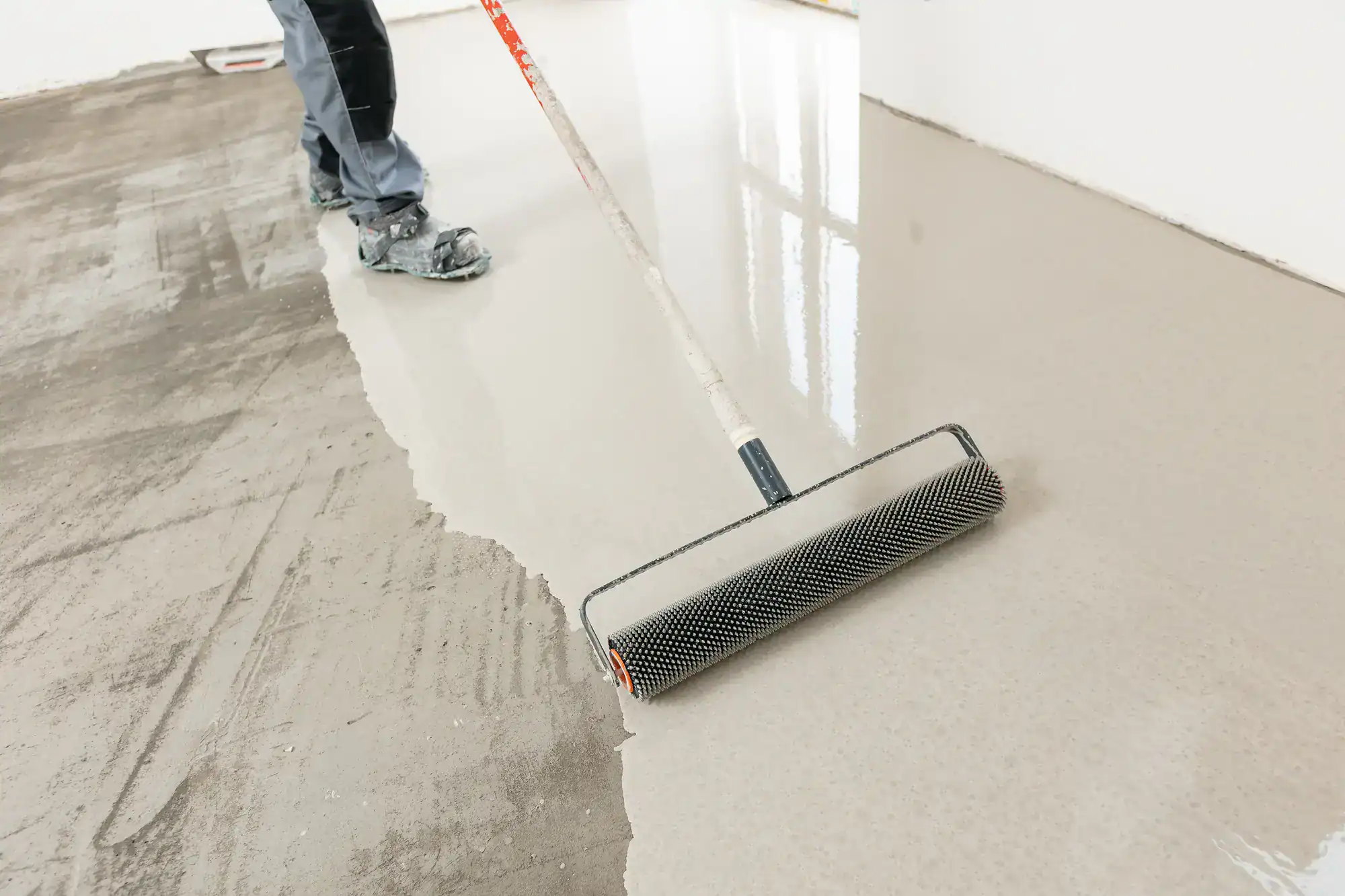
If your garage floor still looks the way it did when you moved in — stained, dusty, cracked down the middle, and vaguely embarrassing — you’re not alone. Most homeowners across Hartford County, New London County, New Haven County, and Middlesex County treat the garage like a utility closet with a car in it. But that’s changing fast. In 2025, garages are being finished, furnished, and actually used. The floor is where it starts. Here’s what’s trending, what actually works in our climate, and what separates a floor that lasts twenty years from one that peels before the next thaw.
The days of “just slap some gray paint on it” are over — and not because homeowners suddenly got fancy. It’s because the options have genuinely gotten better, and people are realizing the garage can function as real square footage.
Metallic epoxy is the finish getting the most attention right now. Think swirling, multi-dimensional surfaces in gunmetal gray, ocean mist blue, or molten bronze — floors that look like they belong in a showroom, not a utility space. Decorative flake systems are close behind, and for good reason: they hide imperfections, add traction, and come in enough color combinations that no two floors end up looking the same. Warm greige, steel blue, jet black, dusty sage — these aren’t paint chip names from a hardware store. They’re full coating systems applied in layers by professionals who know what they’re doing.
The deeper shift is about how people are using the space. Home gyms, workshops, hobby rooms, entertainment setups — garages have become the bonus room that doesn’t show up on the listing but absolutely should. A clean, sealed, bright floor is what makes that possible.
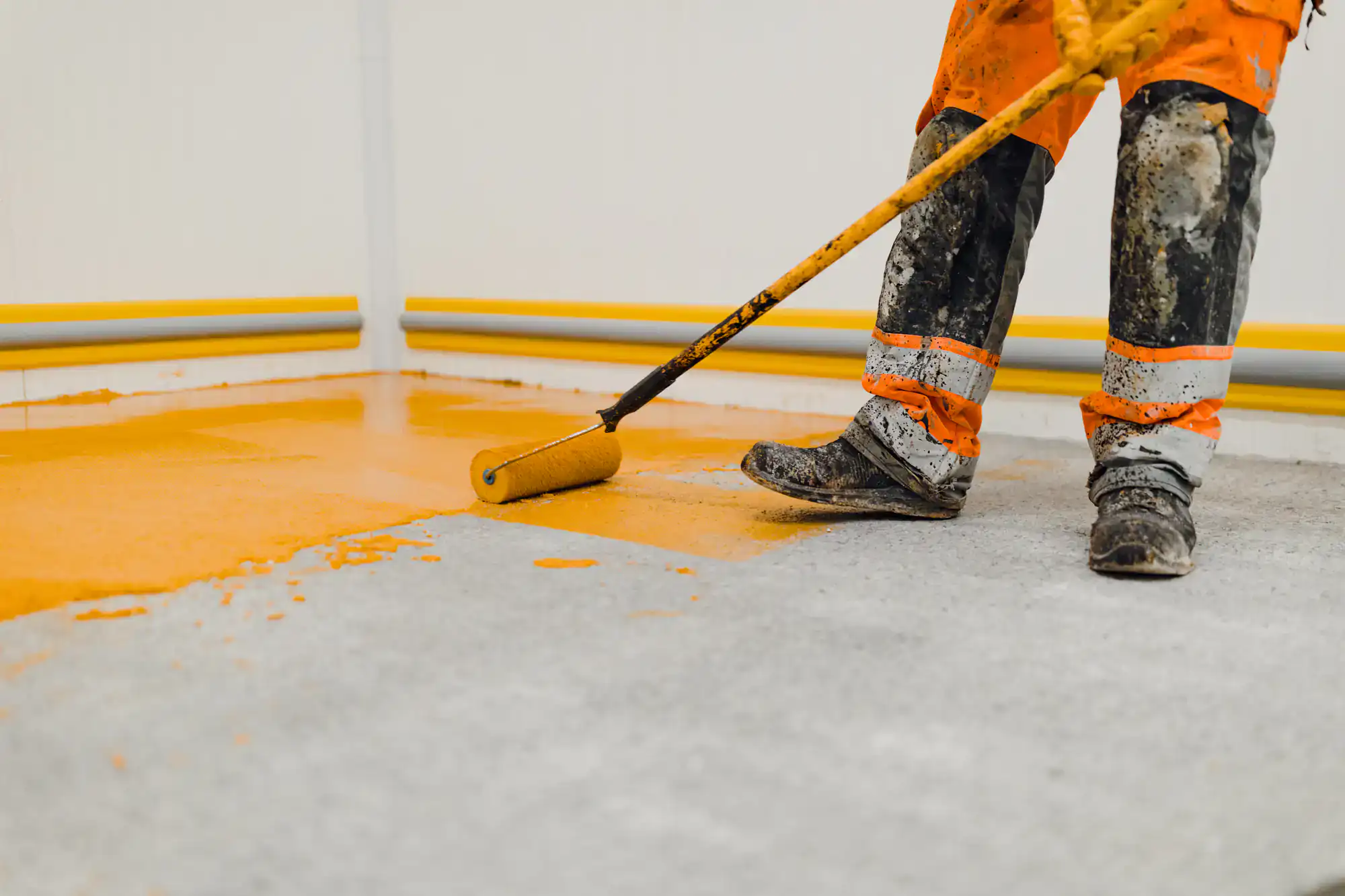
Metallic epoxy isn’t new, but it’s moved from niche to mainstream in the last couple of years. The reason is pretty simple: it looks unlike anything else, and it holds up. When the pigments are worked into the resin during application, they create depth and movement in the surface that you genuinely can’t replicate with paint or a basic solid-color coating. Every floor ends up slightly different, which is either a feature or a drawback depending on how you look at it — most people consider it a feature.
From a practical standpoint, metallic epoxy garage floors are non-porous, chemical-resistant, and easy to clean. Oil drips, road salt tracked in from Route 9 or I-91, antifreeze, whatever ends up on the floor — it wipes up. That’s not a small thing if you’ve spent years watching stains soak into bare concrete and become permanent.
The UV question comes up a lot. Standard epoxy yellows under sunlight exposure, which is why garages with windows or direct light exposure tend to show that amber tint over time. The polyaspartic topcoat we apply over metallic finishes is UV-stable, so the color you choose on day one is the color you’re looking at ten years later. That matters in garages with south-facing doors or skylights — and it’s one of the reasons we don’t use standard epoxy as a finish coat.
One thing worth knowing: metallic epoxy requires a higher level of skill during application than a standard flake system. The pigments need to be manipulated while the resin is still workable, and the results depend heavily on the installer’s experience and technique. It’s not a coating you want applied by someone who picked it up as a side service. When it’s done right, though, it’s genuinely hard to walk into that garage without stopping to look at the floor.
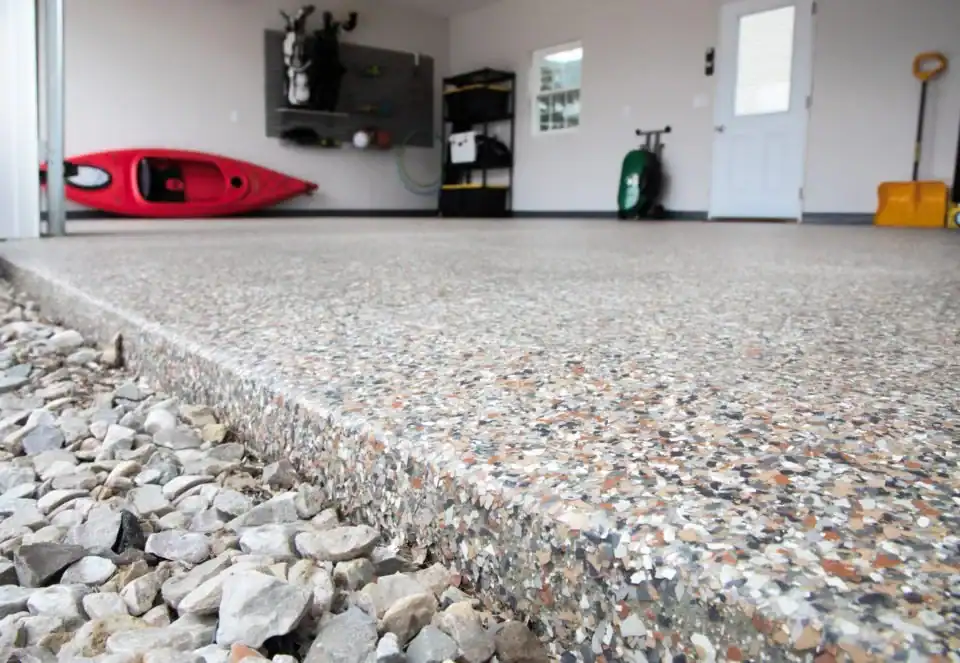
If metallic epoxy is the showstopper, decorative flake is the workhorse — and for most homeowners across Hartford County, New London County, New Haven County, and Middlesex County, it’s the right call. The system involves broadcasting vinyl flake chips into a base coat while it’s still wet, then sealing the whole surface with a clear polyaspartic topcoat. The result is a floor that looks finished and intentional, hides minor surface variation, and performs extremely well under daily use.
The traction factor is real. A glossy solid-color floor can get slippery when wet — snow melt, rain tracked in from the driveway, spilled water. The texture created by the flake chips breaks that up significantly. For families with kids running in and out of the garage, or anyone using the space as a gym, that’s not a minor detail.
Color options have expanded considerably. Granite chip flakes give a natural stone look that pairs well with traditional New England homes in towns like Glastonbury, Simsbury, or Madison. Steel blue and jet black read more contemporary. Dusty sage and terracotta clay have been popular recently with homeowners going for a warmer, more livable aesthetic — which tracks with the garage-as-living-space trend.
The practical case for flake systems in Connecticut specifically comes down to the climate. The polyaspartic topcoat seals the chips into the surface and creates a layer that’s flexible enough to handle freeze-thaw movement without cracking or delaminating. That flexibility is something standard epoxy doesn’t offer — it becomes brittle in cold temperatures, which is a problem when your garage floor is contracting and expanding through a Connecticut winter. We’ve seen DIY epoxy kits fail within the first season for exactly this reason. The flake system, applied correctly over a properly prepared surface, doesn’t have that problem.
Want live answers?
Connect with a American Poly Floor expert for fast, friendly support.
The finish is what people see, but the prep work is what determines whether it lasts. Surface preparation accounts for the majority of a successful installation — and it’s also where most shortcuts get taken.
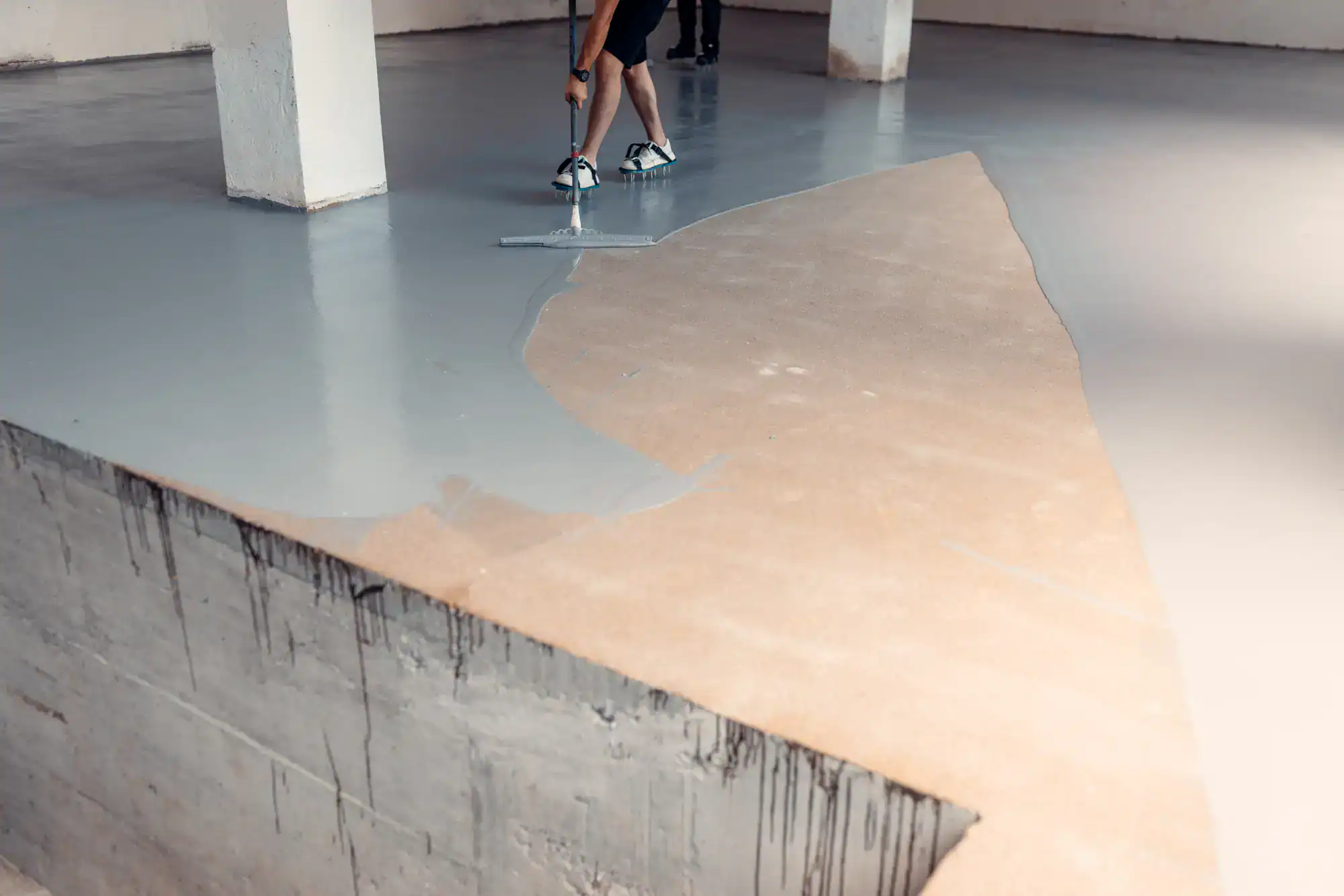
Every floor we install starts with diamond grinding. Not acid etching, not a quick scrub — diamond grinding. It opens the concrete pores and creates a surface profile that allows the coating to bond at a molecular level rather than just sitting on top. After that, we test for moisture. Connecticut’s water tables and seasonal humidity mean moisture vapor coming up through the slab is a real issue, particularly near the Connecticut River in Hartford and Middlesex Counties, and in coastal communities throughout New London and New Haven Counties. We apply a moisture vapor barrier primer on every job — it’s not an upsell, it’s a baseline requirement.
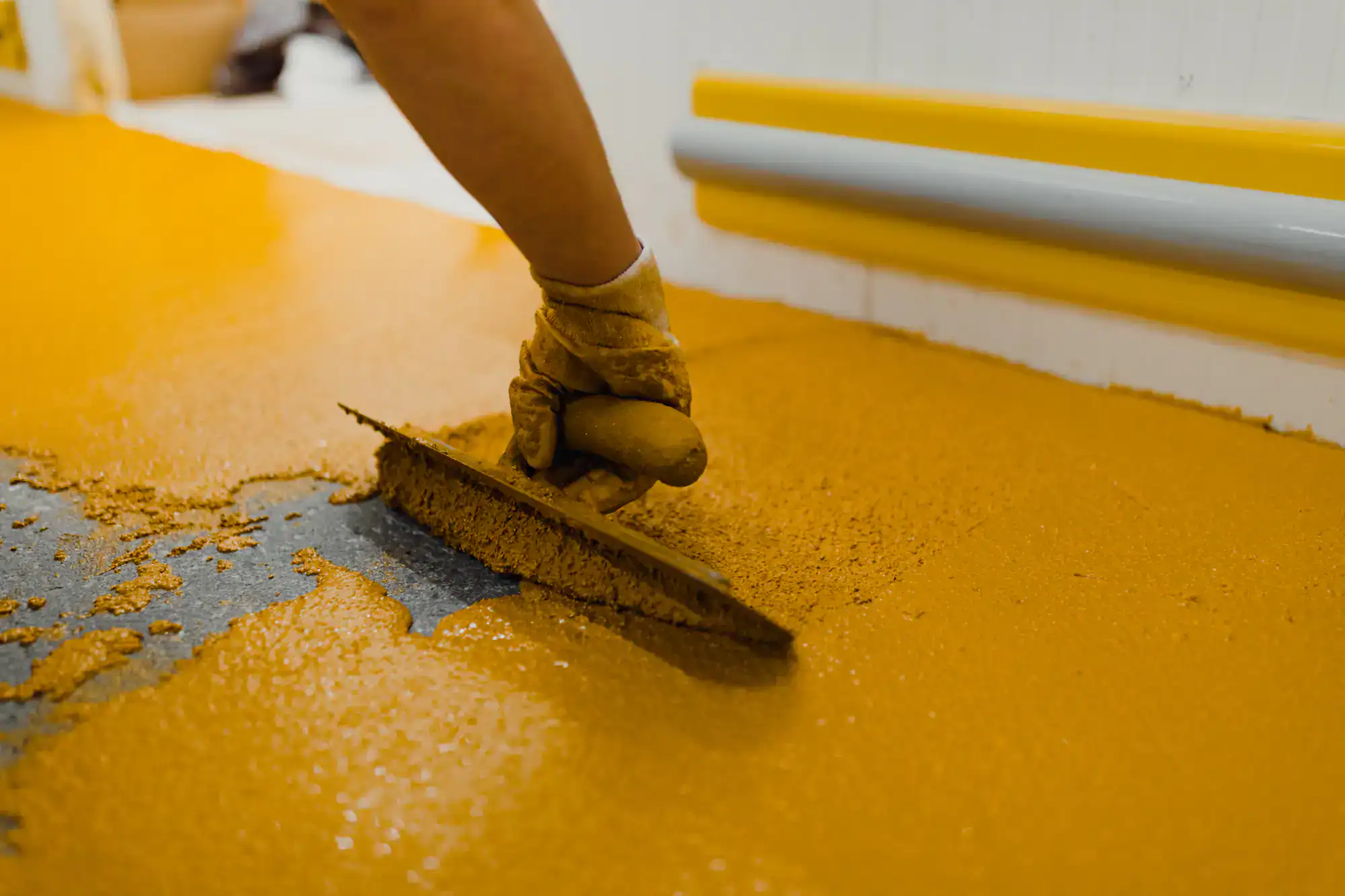
From there, it’s base coat, color coat or flake broadcast, and polyaspartic topcoat. Walkable the same day. Drive-on ready within 24 hours.
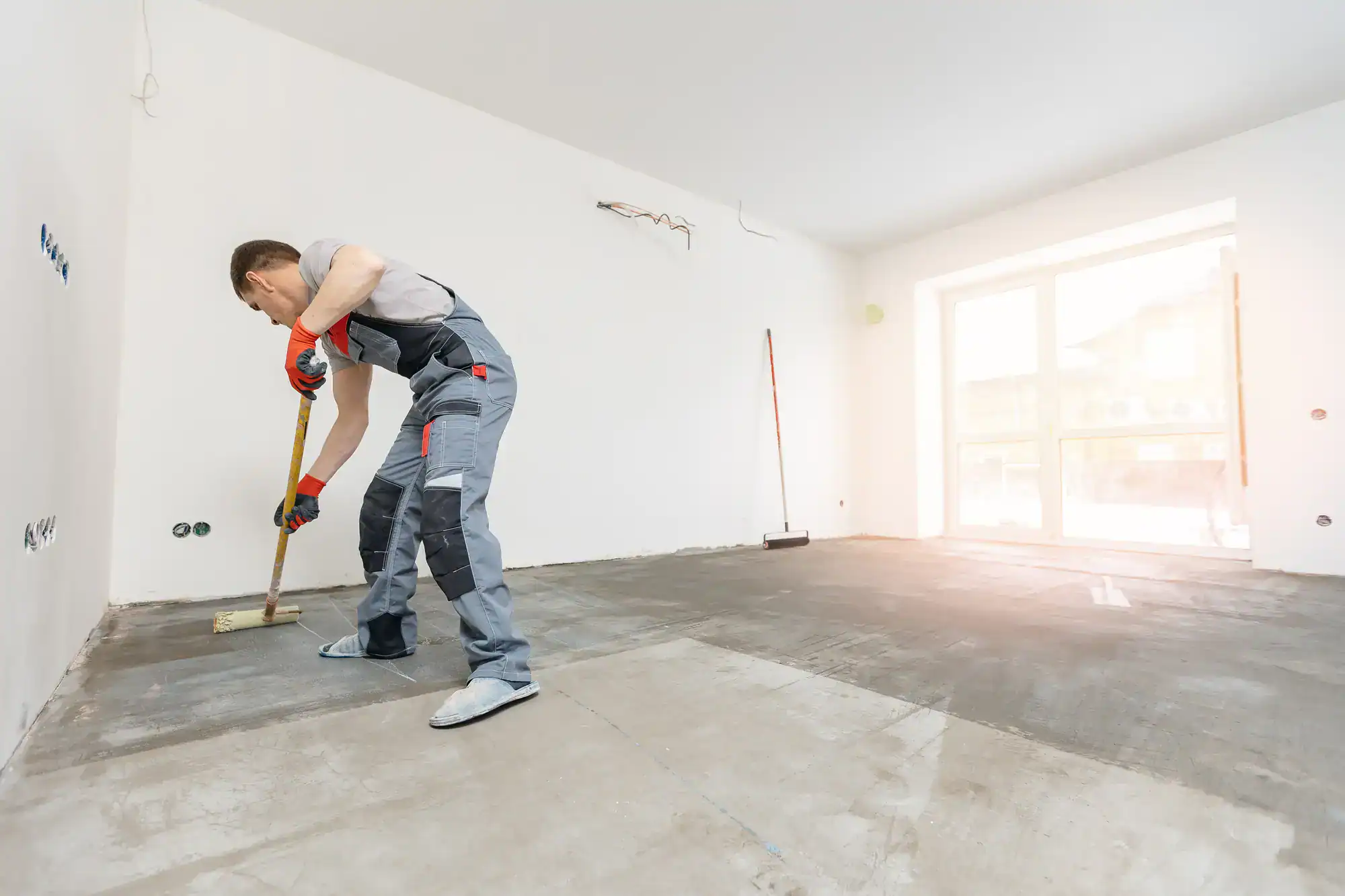
The hardware store kit looks appealing. It’s a fraction of the cost, it comes with everything in the box, and the before-and-after photos on the packaging make it look straightforward. The problem is that the product inside the box isn’t the same thing we apply — and the process required to make it stick isn’t included.
DIY kits use water-based or solvent-based formulations that are significantly thinner and weaker than the 100% solids systems we use in professional installations. They don’t come with moisture testing. They don’t come with diamond grinding equipment. They’re designed to be applied by someone with no training on a floor that hasn’t been properly prepared, which means the bond is surface-level at best.
In Connecticut, that’s a recipe for failure. Moisture vapor coming up through the slab — common in homes near the Connecticut River in Middletown or Cromwell, or in older housing stock throughout Waterbury and New Britain — creates pressure beneath the coating that causes bubbling and delamination. Freeze-thaw cycles do the rest. Most DIY kits in our climate don’t survive the first winter intact. The peeling and bubbling that results isn’t a flaw in the concept of epoxy floors — it’s a flaw in using the wrong product with the wrong prep on a floor that needed professional treatment.
We hear from homeowners who’ve been through this cycle more than once. They tried the kit, it failed, they tried another brand, it failed again, and now they’re skeptical of the whole category. That skepticism is understandable — and it’s also exactly why the installation process matters as much as the product.
Lifespan depends heavily on two things: what system was used and how the surface was prepared. A polyaspartic coating installed over a diamond-ground, moisture-tested slab in a Hartford County or New London County garage will realistically last 15 to 20 years. A standard epoxy system — even a professionally applied one — typically runs 5 to 10 years in Connecticut’s climate before showing wear. A DIY kit in the same environment fails much faster.
The factors that shorten a floor’s life in this region are predictable. Road salt is the big one. Every vehicle pulling into a Connecticut garage from November through March is tracking in a brine of de-icing chemicals from I-84, I-95, Route 9, or whatever local road they came off of. On bare concrete, that salt soaks in and accelerates deterioration. On a sealed epoxy or polyaspartic floor, it sits on the surface until you wipe it up.
Coastal homeowners in towns like Stonington, Waterford, East Lyme, Branford, Guilford, Old Saybrook, and Westbrook have an additional variable: salt air. The corrosive effect of coastal humidity on concrete is real and ongoing, and it’s one of the reasons we specifically train in polyurea and polyaspartic systems rather than defaulting to standard epoxy. Those systems bond more aggressively, cure faster, and hold up better in high-humidity coastal environments.
We back our residential installations with a 15-year warranty — covering delamination, moisture failure, and coating breakdown. That’s not an industry standard. Most competitors in Connecticut offer one year, if they offer a written warranty at all. The reason we can offer 15 years is because of our process: diamond grinding, moisture testing, commercial-grade materials, and polyaspartic topcoats. When those steps are followed, the floor performs.
If you’ve made it this far, you probably already know the floor needs attention. Maybe it’s been cracked for two winters. Maybe the oil stains have officially become part of the concrete. Maybe you’ve been using the garage as a gym or a workshop and the bare concrete is just making everything harder than it needs to be.
The good news is that the fix is more straightforward than most homeowners expect — and the result lasts far longer than most people realize is possible. Whether you’re in West Hartford, Guilford, Middletown, or Groton, the combination of Connecticut winters, road salt, and aging concrete makes a professional garage floor coating one of the more practical home investments you can make. Not just for aesthetics, but for the floor’s long-term survival.
If you have questions about what system makes sense for your space, what the process looks like, or what a realistic price range is, American Poly Floor is the place to start. We’re based in East Hartford, we work across all four counties, and we’re happy to give you a straight answer before you commit to anything.
Summary:
Article details:
Share: