That $100 kit from the hardware store looked promising. Here's the honest reason it didn't last — and what Connecticut homeowners should know before trying again.
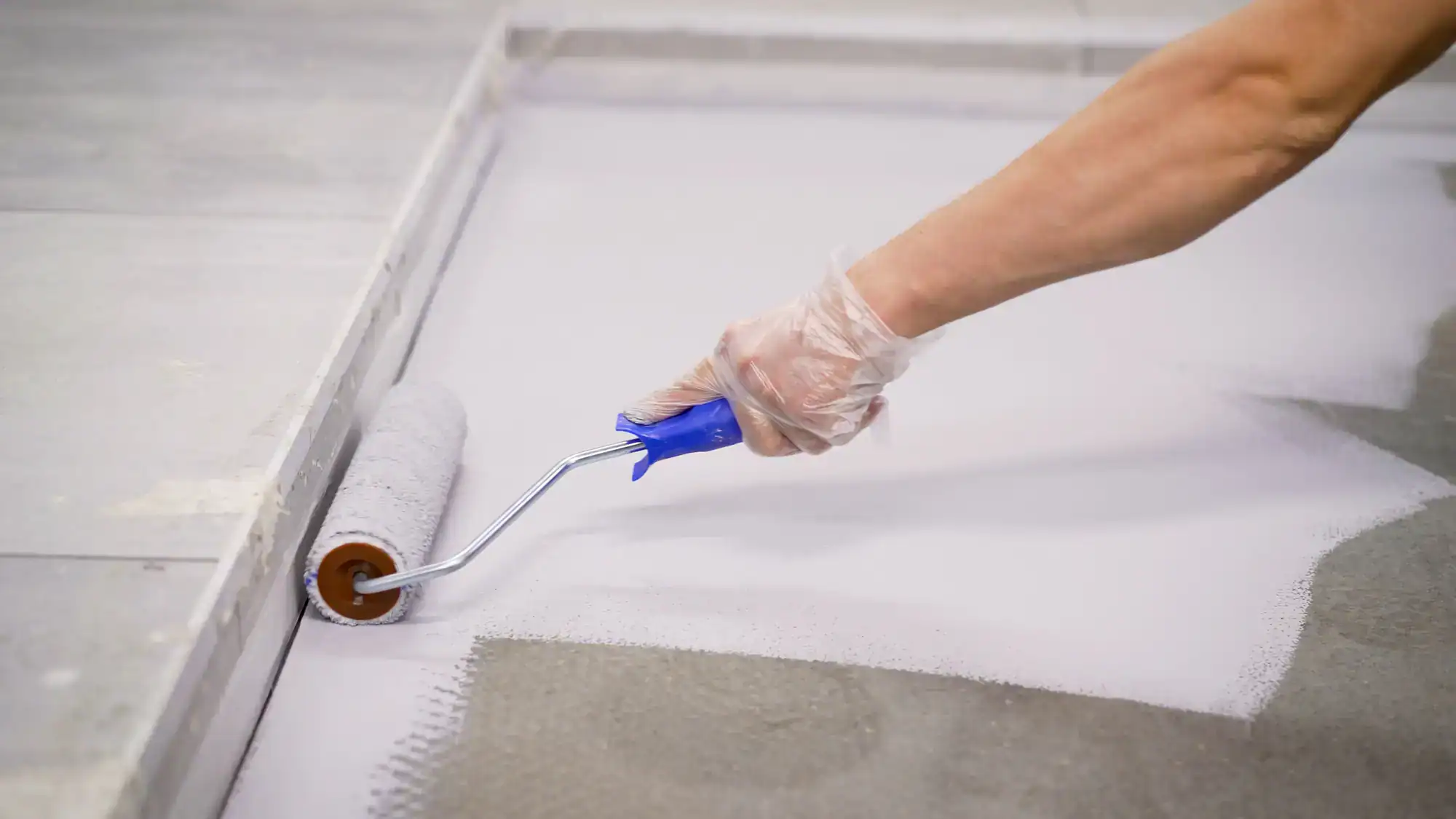
You did everything the instructions said. You cleaned the floor, applied the etching solution, rolled on the epoxy, and waited. It looked great for a few months. Then the peeling started — a bubble here, a flaking edge there — and by the time the second winter rolled through, the floor looked worse than before you started.
This isn’t a rare outcome. It’s the most common one. And it’s not your fault. The kits sold at big-box stores are built around a process that simply isn’t enough for Connecticut’s climate or for concrete that’s been through a few decades of real use. Here’s what’s actually going on — and what a garage floor coating that holds up actually requires.
The short answer is surface preparation — or the lack of it. Up to 80% of epoxy floor failures trace back to inadequate prep, and the process included in most consumer kits isn’t close to sufficient. Acid etching, which is what nearly every DIY kit relies on, opens the surface of the concrete slightly. But “slightly” isn’t enough for a coating to bond permanently.
We use diamond grinding — industrial equipment that removes the weak surface layer of the concrete and creates a profile that the coating can actually grip. That difference in surface texture is the difference between a floor that peels in eight months and one that holds for fifteen years. The product matters, but it can’t compensate for prep work that wasn’t done right.
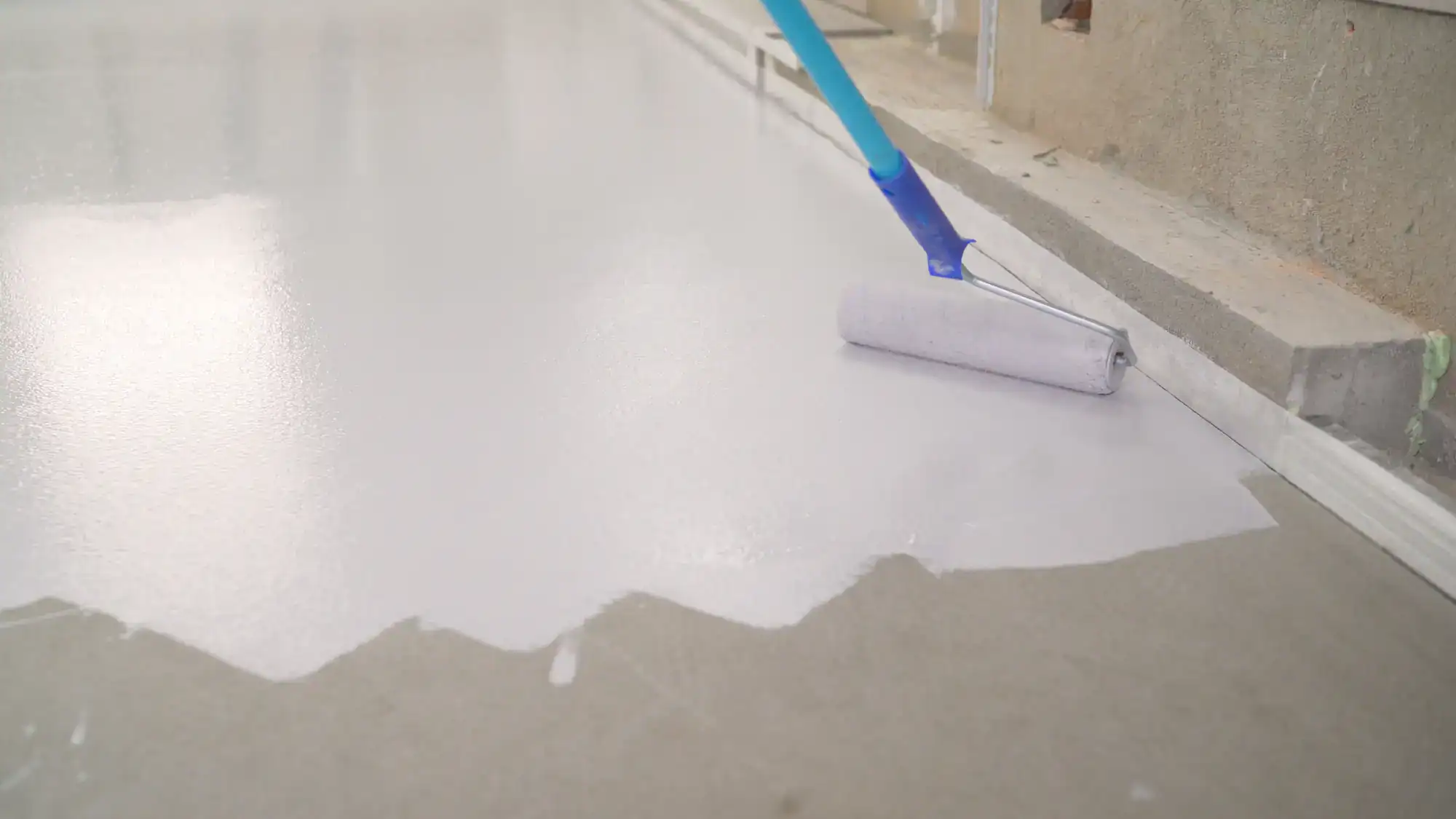
Concrete surface preparation is measured on a standardized scale called the Concrete Surface Profile, or CSP. It runs from CSP-1 on the low end — barely any texture — up to CSP-10, which is highly aggressive. For an epoxy or polyaspartic coating to bond permanently, the surface needs to reach at least CSP-3 or CSP-4. Acid etching, even done perfectly, gets you to CSP-1 or CSP-2. That’s not a minor gap. That’s the gap between a coating that sticks and one that doesn’t.
Diamond grinding removes the carbonated surface layer of the concrete — the weak, dusty top that forms over time — and exposes the dense material underneath. The mechanical profile it creates gives the coating something real to bond to. It’s not a preference or an upgrade; it’s the minimum standard for an installation that’s meant to last.
What makes this especially relevant for homeowners across Hartford County, New Haven County, New London County, and Middlesex County is the age of the housing stock. A lot of garages in East Hartford, West Hartford, Glastonbury, Middletown, Portland, Waterford, East Lyme, Branford, and surrounding towns were poured in the 1960s and 70s. Older slabs have more surface degradation, more carbonation, and more moisture history — all of which make thorough prep work even more critical. Acid etching a 50-year-old slab and rolling on a consumer-grade epoxy is almost guaranteed to fail. The surface simply isn’t ready to hold it.
When we grind a floor, we also connect our equipment to dust collection systems. The garage stays clean during the process — no fine concrete dust coating your tools, your car, or everything else stored in the space. That detail matters to a lot of homeowners, and it’s one of those things you don’t think about until you’ve seen it done the wrong way.
Here’s something most DIY guides don’t mention: moisture in the concrete itself is often the reason a coating fails, even when the surface prep seemed fine. Moisture vapor migrates upward through concrete slabs from the ground below. When a coating is applied over a slab with elevated moisture, the vapor pushes against the underside of the coating and eventually breaks the bond. The result is bubbling, delamination, and peeling — often within the first year.
This is a real issue across all four counties we serve. In Middlesex County, the Connecticut River valley creates elevated groundwater conditions in towns like Middletown, Portland, and Cromwell. Slabs in those areas are more prone to moisture vapor transmission than most homeowners realize. Along the shoreline in New London County — in communities like Waterford, East Lyme, Old Lyme, and Stonington — the combination of coastal humidity and salt air adds another layer of moisture pressure that cheaper coatings simply aren’t built to handle. Even in New Haven County’s shoreline towns like Branford, Guilford, and Madison, the ambient humidity alone is enough to compromise a coating that wasn’t installed with moisture mitigation in mind. Hartford County homeowners face their own challenges, with freeze-thaw cycles that accelerate moisture-related damage.
Before we coat any floor, we test for moisture. If the reading exceeds threshold, we apply a specialized moisture vapor barrier primer before the base coat goes down. It’s an extra step, and it adds time, but it’s the only way to ensure the coating doesn’t fail from below. Most DIY kits include a simple plastic sheet test with no guidance on what to do if the reading is high — because there’s nothing in the kit to address it.
Connecticut also averages more than 20 freeze-thaw cycles per winter season. Water that works its way into concrete pores expands by roughly 9% when it freezes. That expansion physically breaks the concrete from within — the spalling and pitting you see on unprotected garage floors isn’t random wear, it’s physics. A properly applied polyaspartic coating seals the surface and stops that cycle. A thin, water-based consumer coating doesn’t.
Want live answers?
Connect with a American Poly Floor expert for fast, friendly support.
A professional garage floor epoxy coating isn’t just a better version of the DIY process — it’s a fundamentally different process. The materials are different, the prep equipment is different, and the system is engineered to perform under real conditions, not ideal ones.
We use 100% solids polyaspartic and epoxy systems — the same commercial-grade materials used in industrial facilities, breweries, and healthcare environments. These aren’t water-based products thinned down for easy application. They’re dense, chemically resistant, and built to bond permanently to properly prepared concrete. The performance gap between these materials and what’s in a hardware store kit is significant — not a matter of degree, but of category.
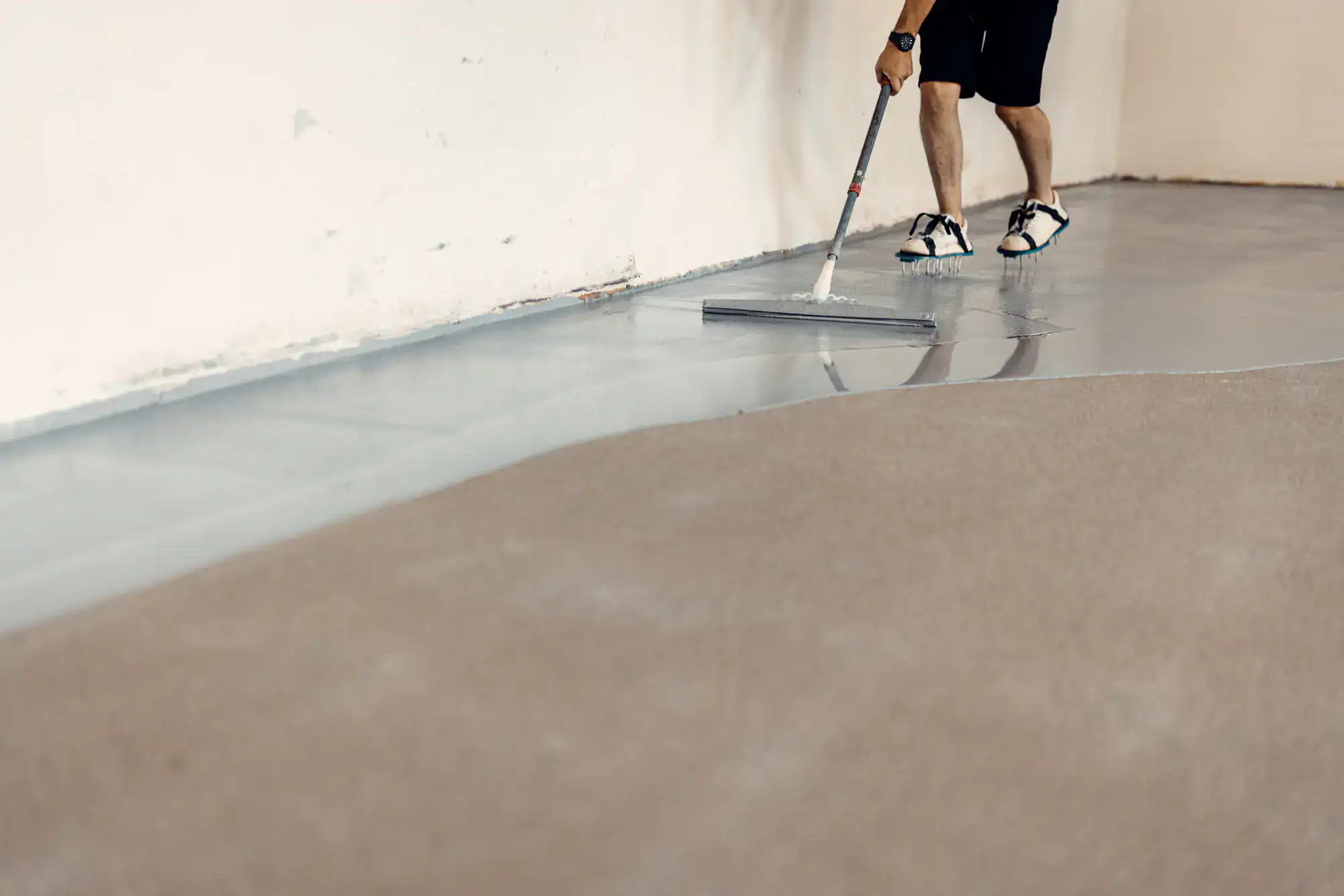
When the prep work is done correctly and the right materials are used, a polyaspartic garage floor coating should last 10 to 20 years. We back our residential installations with a 10-year insurance-backed warranty on our premium system — not because it’s a marketing number, but because we’re confident in what we install. That’s a meaningful contrast to the one-year warranties that are standard in this industry, and to the DIY kits that come with no warranty at all.
The materials we use are UV-stable, which means they won’t yellow or fade under sunlight coming through garage windows or doors. They’re flexible enough to handle Connecticut’s temperature swings — from single digits in January to 90-degree summers — without cracking or becoming brittle. And they’re chemically resistant to road salt, calcium chloride, magnesium chloride, oil, and the other things that end up on a garage floor in regular use.
For homeowners across Hartford County, New Haven County, New London County, and Middlesex County, that last point matters from November through March. Routes 84 and 91 and the local roads feeding into East Hartford, Manchester, Vernon, Enfield, Middletown, and the rest of the region are heavily salted all winter. Every car that comes in from those roads is tracking that chemistry directly onto your garage floor. An unprotected slab absorbs it. A properly coated floor keeps it on the surface, where a mop can handle it.
One-day installation is the norm for most residential projects. Foot traffic is possible in about four hours. You can park your car on it within 24 hours. For homeowners who rely on their garage every day, that turnaround matters.
Not every contractor offering epoxy garage floors is doing the same thing. The difference between a job that holds for fifteen years and one that fails before the next winter often comes down to a few specific questions — and the answers will tell you a lot.
Ask whether they use diamond grinding or acid etching. If the answer is acid etching, the surface profile won’t be sufficient for a permanent bond. Ask whether they test for moisture before applying the coating. If they don’t, you’re taking a real risk, especially in coastal New London County communities or anywhere in the Connecticut River valley through Middlesex County. Ask what the solids content of their base coat is. Water-based products are thinner and weaker than 100% solids systems — and a contractor who can’t answer that question clearly is worth being cautious about.
Ask about the warranty. A one-year warranty is the industry floor, not a selling point. A 10-year insurance-backed warranty on our premium system means the contractor is confident enough in their process and materials to stand behind the work for the long term. Ask whether the topcoat is UV-stable. Polyaspartic topcoats hold their color and sheen under UV exposure; standard epoxy topcoats yellow over time. In a garage with any natural light, that difference becomes visible within a few years.
We’re a veteran-owned business based in East Hartford, and we’ve been coating garage floors across Hartford County, New Haven County, New London County, and Middlesex County since 2020. We’ve had zero callbacks for weather-related failures. That’s not a claim we make lightly — Connecticut winters have a way of testing things. The reason that record holds is that we don’t skip the steps that make the difference. The prep work, the moisture testing, the commercial-grade materials, the proper topcoat — none of it is optional, and none of it gets cut to save time.
If you’ve already tried a DIY kit and it failed, there’s one more thing worth knowing: removing a failed coating before a professional installation adds time and cost to the job. The total expense of a failed DIY attempt plus professional remediation often ends up higher than what a professional installation would have cost from the start. It’s a frustrating math problem, but it’s a common one.
Most garage floor painting failures aren’t mysterious. They come down to the same things almost every time: insufficient surface prep, skipped moisture testing, and materials that weren’t built for the conditions they’d face. In Connecticut — with its freeze-thaw cycles, road salt, coastal humidity, and older concrete — those shortcuts show up fast.
A properly installed polyaspartic or epoxy garage floor coating is genuinely durable. It protects the concrete, handles the chemistry that comes with Connecticut winters, and holds up for well over a decade when the job is done right. The floor you’ve been looking at — stained, dusty, flaking — doesn’t have to stay that way.
If you’re ready to stop guessing and get a straight answer about what your floor actually needs, reach out to American Poly Floor. We’ll tell you what we see, what the job involves, and what it will take to get it done right the first time.
Summary:
Article details:
Share: