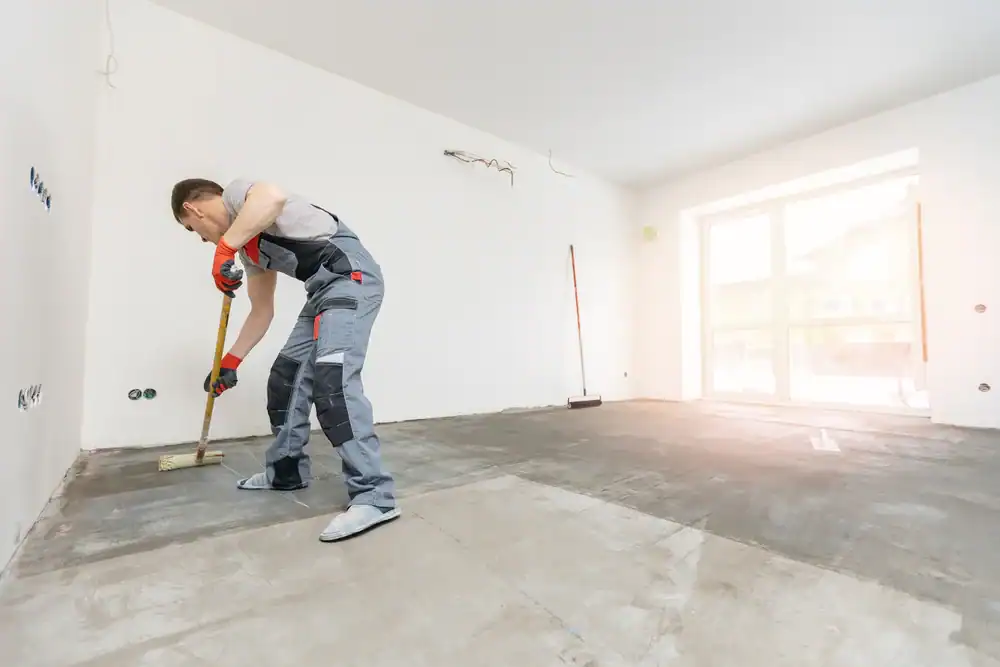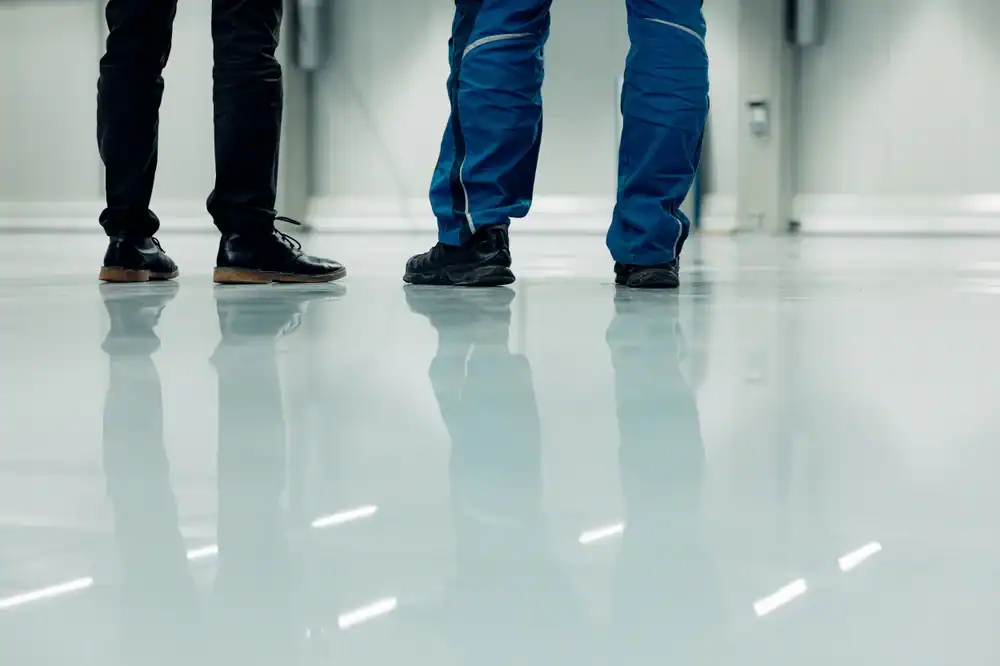
Choosing the right garage floor coating means understanding your options. This guide breaks down solid epoxy, decorative flake, metallic, and polyaspartic systems for Connecticut homeowners.
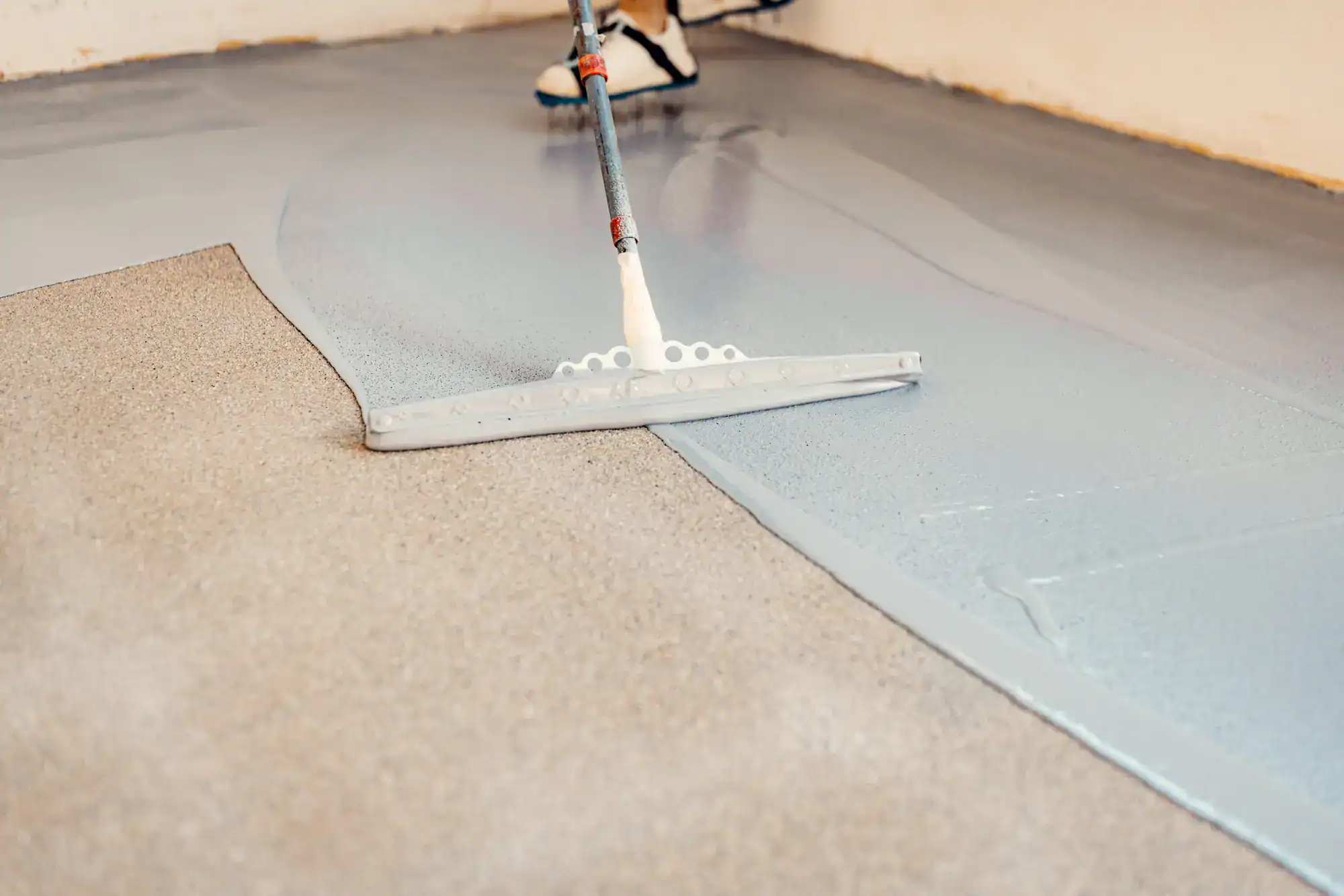
Not all garage floor coatings are created equal. The term “epoxy garage floor” gets thrown around a lot, but it’s not always accurate. Some systems use 100% epoxy. Others combine epoxy with polyaspartic or polyurea topcoats. Some are single-layer. Others are multi-layer systems with primers, base coats, decorative elements, and protective top coats.
What matters is understanding what you’re actually getting. A thin, water-based epoxy from a big-box store won’t perform like a professional-grade 100% solids system. A solid color epoxy won’t give you the same look as a full-broadcast decorative flake floor. And if you’re dealing with UV exposure through garage windows or doors, a standard epoxy will yellow over time while a polyaspartic topcoat won’t.
The best garage floor coating for your home depends on how you use your garage, what your concrete can handle, and what kind of abuse the floor will take over the years.
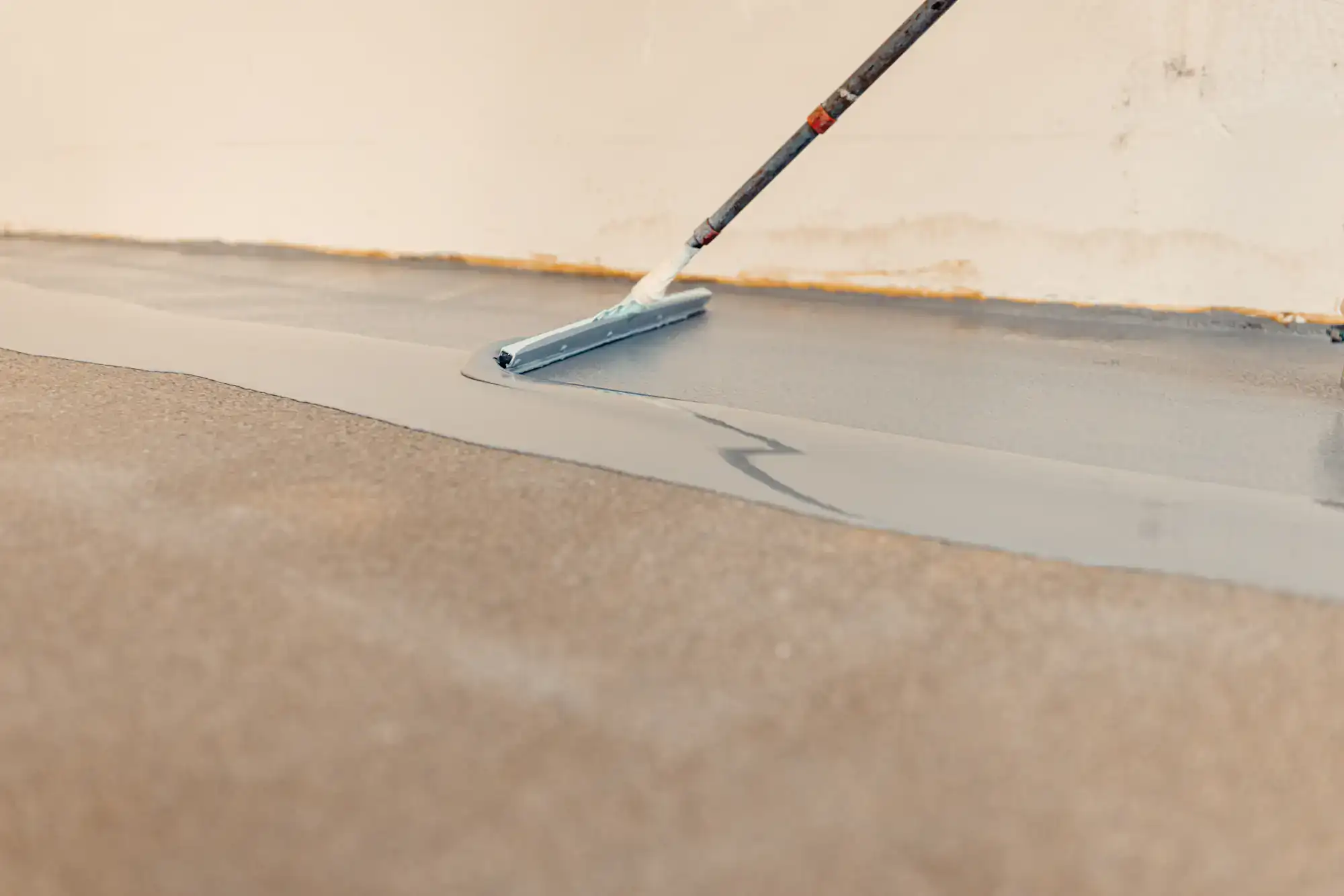
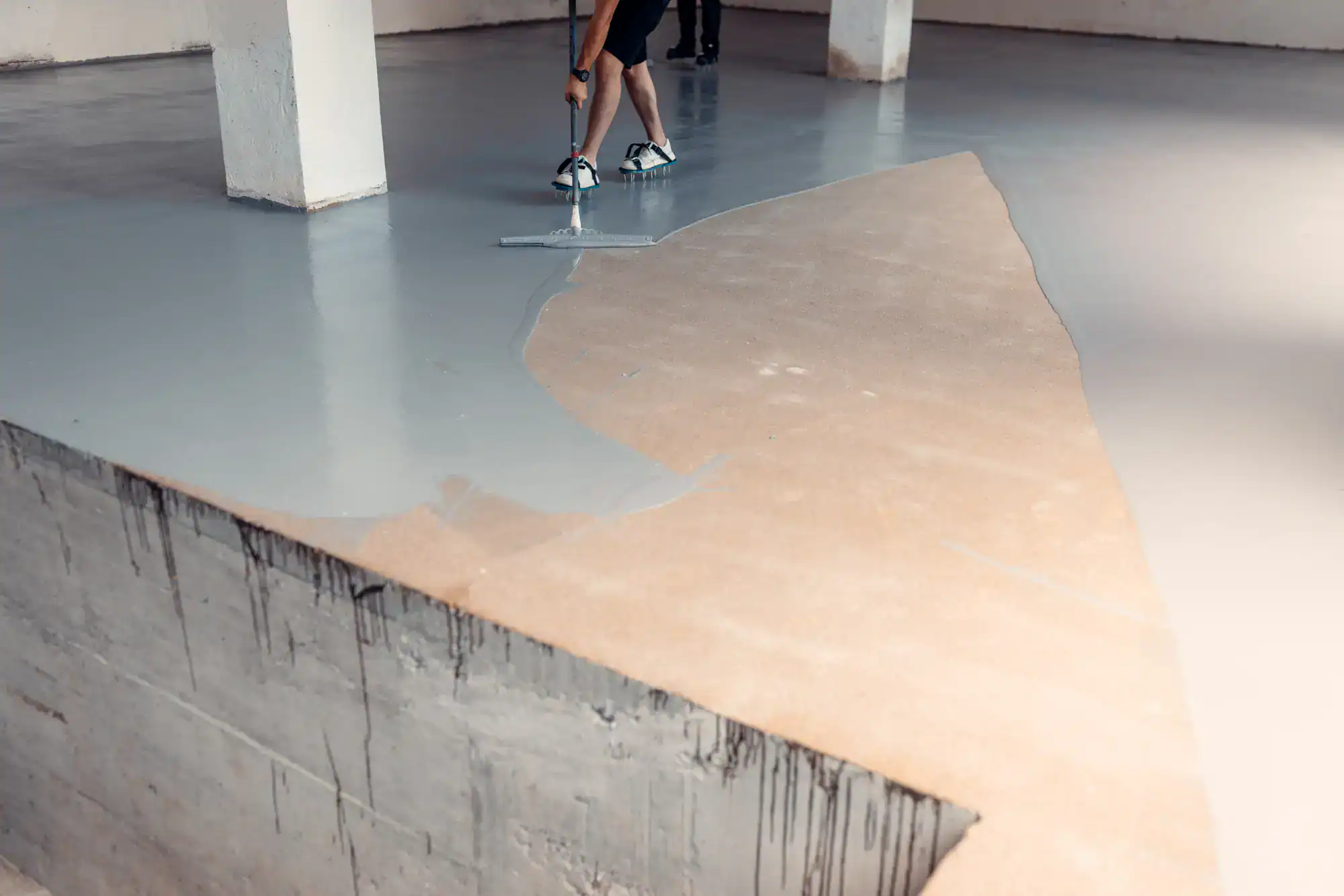
Solid epoxy systems are the foundation of most professional garage floor coatings. These use 100% solids epoxy—meaning there’s no water or solvent that evaporates during curing. What you apply is what stays on your floor. That gives you a thicker, more durable coating compared to water-based or solvent-based options that leave a thinner film once they dry.
A solid epoxy garage floor coating bonds directly to your concrete. It penetrates the surface, fills in small imperfections, and creates a hard, protective layer that resists chemicals, stains, and abrasions. You’ll see this used as a base coat in most multi-layer systems because it provides excellent adhesion and builds thickness quickly.
The downside? Epoxy alone has limitations. It’s rigid, which means it can crack if your concrete shifts. It’s not UV stable, so it yellows when exposed to sunlight. And it’s vulnerable to hot tire pickup—that frustrating issue where your tires literally peel the coating off the floor after you’ve been driving. That’s why most professional systems don’t stop at epoxy. We add a polyaspartic or polyurea topcoat to handle what epoxy can’t.
Solid epoxy works well if you’re looking for a durable base layer, but on its own, it’s not the full solution. It’s best used as part of a complete system—not as a standalone coating. If your garage gets direct sunlight, if you park hot cars regularly, or if you need a floor that stays glossy for years, you’ll want something more than straight epoxy.
Decorative flake systems—sometimes called chip floors—are one of the most popular options for residential garages. They give you color, texture, and a finished look that hides imperfections in your concrete. The process involves applying a base coat of pigmented epoxy, then broadcasting colored vinyl flakes across the wet surface. Once the flakes are down, a clear topcoat seals everything in place.
The flakes do more than just look good. They add slip resistance, which is helpful if your garage floor gets wet from rain, snow, or spills. They also hide dirt and dust better than a solid color floor, so your garage looks cleaner with less effort. And because you can choose from dozens of flake colors and sizes, you can customize the look to match your home’s style—or just pick something that looks sharp.
Most professional decorative flake systems use a full broadcast, meaning the flakes completely cover the base coat. This gives you the best coverage and the most consistent appearance. Some companies offer partial broadcasts to save on material costs, but that leaves more of the base coat exposed, which means less texture and less hiding power for concrete flaws.
The quality of a flake floor comes down to the base coat and the topcoat. If the base coat is a thin, water-based epoxy, it won’t hold up. If the topcoat is a standard epoxy instead of a polyaspartic, it’ll yellow and scratch more easily. A properly installed decorative flake system with a high-solids epoxy base and a polyaspartic topcoat will last 15 to 20 years or more. A cheap DIY version might start peeling within a year.
For Connecticut homeowners, flake systems make sense. They handle road salt, moisture, and temperature swings better than solid color floors. They’re durable enough for daily car traffic. And they give you a finished look that makes your garage feel like an actual room instead of a concrete box.
Want live answers?
Connect with a American Poly Floor expert for fast, friendly support.
Once you’ve decided on a base system—solid epoxy or decorative flake—the next decision is the finish. This is where the topcoat comes in. The topcoat determines how your floor looks, how it wears, and how long it lasts. You’ve got three main options: epoxy topcoat, polyurethane topcoat, or polyaspartic topcoat.
An epoxy topcoat is the most affordable, but it has drawbacks. It yellows when exposed to UV light, so if your garage has windows or if you leave the door open a lot, that glossy clear coat will turn amber over time. It’s also more brittle than other options, which makes it prone to scratching and cracking under heavy use.
Polyurethane topcoats are more durable than epoxy and resist UV yellowing better, but they take longer to cure and they’re more difficult to apply. They’re a middle ground—better than epoxy, but not as advanced as polyaspartic.
Metallic epoxy systems are for homeowners who want something unique. These use metallic pigments mixed into clear epoxy to create a swirling, three-dimensional effect that mimics polished stone, liquid metal, or even ocean waves. No two metallic floors look exactly the same because the pigments move and settle as the epoxy cures, creating one-of-a-kind patterns.
The look is high-end. It’s the kind of floor you’d see in a showroom or a luxury home. But it’s not just about aesthetics—metallic epoxy is still a functional coating. It’s durable, chemical-resistant, and easy to clean. The difference is that it costs more and requires more skill to install. If the installer doesn’t know what they’re doing, the metallic effect can look uneven or blotchy.
Metallic epoxy works best for garages that double as workshops, home gyms, or entertainment spaces. It’s overkill if you just need a durable surface to park your car. But if you’re building out a garage that you want to show off, metallic epoxy delivers a wow factor that solid color and flake systems can’t match.
One thing to watch for: metallic epoxy still needs a protective topcoat. The metallic pigments are mixed into the base layer, but that layer alone isn’t UV stable. You’ll want a polyaspartic topcoat to protect the finish and keep it from yellowing. Without that, your metallic floor will lose its shine and clarity over time.
This is where the conversation gets real. Polyaspartic coatings are newer technology compared to epoxy, and they solve most of the problems that epoxy has. They cure faster—often within a few hours instead of days. They’re UV stable, so they don’t yellow. They’re more flexible, so they resist cracking. And they’re more resistant to hot tire pickup, which is one of the biggest failures with epoxy-only systems.
Polyaspartic is technically a type of polyurea, but it’s been modified to have a longer working time, which makes it easier to apply. It’s often used as a topcoat over an epoxy base because it provides the best of both worlds: the adhesion and thickness of epoxy with the durability and UV resistance of polyaspartic.
Here’s the trade-off. Polyaspartic costs more than epoxy. It’s also harder to work with, which is why most DIY kits don’t use it. The material has a short pot life—about 30 minutes once it’s mixed—so you need to move fast. If you’re not experienced, you can end up with bubbles, streaks, or uneven coverage. That’s why polyaspartic systems are almost always installed by professionals.
For Connecticut homeowners, polyaspartic topcoats make sense. Our winters bring road salt and moisture. Our summers bring heat and UV exposure. Epoxy alone doesn’t handle that well. A polyaspartic topcoat does. It stays clear, stays glossy, and stays bonded to your floor through freeze-thaw cycles, hot tires, and chemical spills.
If you’re comparing a full epoxy system to an epoxy-polyaspartic hybrid, the hybrid wins. It costs more upfront, but it lasts longer and performs better. You won’t be recoating your floor in five years. You won’t be dealing with yellowing or peeling. You’ll have a floor that actually holds up.
The best epoxy garage floor coating for your home depends on how you use your garage, what your concrete looks like, and what kind of abuse the floor will take. If you’re parking cars daily, dealing with Connecticut winters, and you want a floor that lasts, a multi-layer system with a polyaspartic topcoat is the right move. If you want a finished look with color and texture, a decorative flake system gives you that. If you want something unique, metallic epoxy delivers.
What doesn’t work is cutting corners. Thin coatings peel. Water-based epoxies fail. DIY kits rarely hold up. The floor matters because it’s the foundation of your garage. Get it right, and you won’t think about it again for 15 to 20 years. Get it wrong, and you’ll be dealing with repairs, recoats, and frustration.
We install professional-grade garage floor coatings throughout Hartford County, New London County, New Haven County, and Middlesex County. If you’re ready to upgrade your garage floor with a system that actually lasts, reach out and we’ll walk you through your options.
Summary:
Article details:
Share: