Connecticut winters destroy painted garage floors within years. Discover how professional epoxy garage floor coating protects against salt, moisture, and freeze-thaw damage while lasting decades.
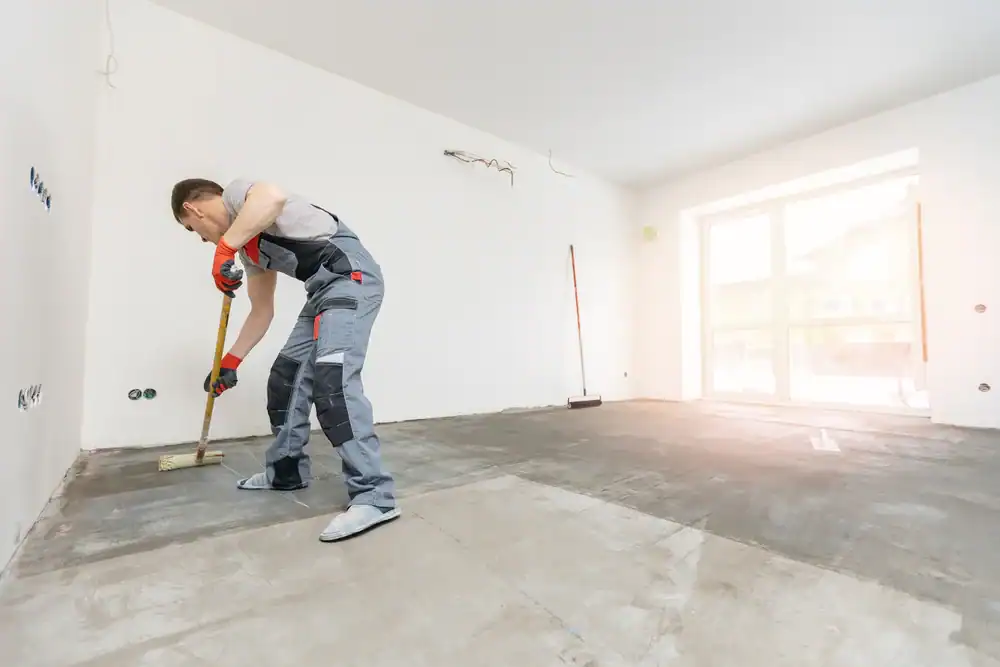
An epoxy garage floor isn’t paint. It’s a two-part coating system made from epoxy resin and a polyamine hardener. When these components mix, they trigger a chemical reaction that creates a thick, durable layer that bonds directly to your concrete at a molecular level.
This process is called curing, not drying. The difference matters because cured epoxy becomes part of your floor structure rather than just sitting on top of it like paint does. That’s why epoxy can handle the weight of vehicles, resist hot tire pickup, and shrug off chemical spills that would destroy painted surfaces.
Professional-grade epoxy creates a layer that’s 2-3 millimeters thick when properly applied. Compare that to garage floor paint, which barely adds any thickness at all. That extra substance is what gives epoxy its legendary durability and makes it worth the investment for Connecticut homeowners dealing with harsh conditions year-round.
Walk into any big-box store and you’ll find garage floor paint kits for under $100. They look appealing until you understand what you’re actually getting. Garage floor paint is typically latex acrylic with maybe a small amount of epoxy resin added. It’s a single-component product that you roll on like regular paint.
The problem shows up fast. Paint sits on top of your concrete without forming a chemical bond. Hot tires from your car literally peel it right off the floor. Road salt eats through it. Oil stains set in permanently. Within a year or two, you’re looking at bare patches and peeling edges.
True epoxy garage floor coating works completely differently. It’s a two-part system that requires mixing before application. Once mixed, you have a limited working time because the chemical reaction has started. This reaction creates cross-linked polymer chains that penetrate into your concrete’s pores and form an incredibly strong bond.
The result is a surface that can last 10 to 20 years or more with proper installation. It resists chemicals, withstands impact, handles thermal stress from hot tires, and maintains its appearance through Connecticut’s toughest weather. The upfront cost is higher, but you’re not repainting every couple years.
Here’s what separates them: paint dries through evaporation and can be reactivated by solvents or heat. Epoxy cures through an irreversible chemical process that creates a thermoset plastic. Once cured, it won’t soften, peel from heat, or break down from chemicals the way paint does. That fundamental difference is why epoxy garage floors have become the standard for homeowners who want a permanent solution.
Connecticut garage floors face conditions that destroy unprotected concrete. Every winter, your car tracks in snow, ice, and road salt. That salt doesn’t just sit there—it’s hygroscopic, meaning it pulls moisture from the air and from your concrete itself.
When moisture gets into concrete and then freezes, it expands. This freeze-thaw cycle happens repeatedly throughout a Connecticut winter, creating tiny cracks that grow larger each year. Eventually, you see spalling—that’s when the concrete surface starts flaking, crumbling, or forming pits. Once spalling starts, it accelerates quickly.
Garage floor epoxy coating creates a waterproof barrier that stops this cycle. Moisture can’t penetrate through properly applied epoxy, so it never gets into your concrete to freeze and expand. The salt stays on the surface where you can sweep or mop it away instead of soaking in and causing chemical damage.
Spring brings its own challenge in Hartford County, New Haven County, and throughout Connecticut: condensation. When warm, humid air hits your cold concrete slab, water droplets form on the surface. This is called sweating slab syndrome, and it’s extremely common in Connecticut garages during spring and early summer. That moisture can lead to mold, mildew, and a perpetually damp garage.
An epoxy finish garage floor helps reduce this condensation because the coating acts as a vapor barrier. It also makes the floor easier to dry quickly if condensation does form. Compare that to bare concrete, which stays damp for hours and provides the perfect environment for mold growth.
The chemical resistance matters too. Road salt is sodium chloride, which is corrosive to concrete over time. De-icing chemicals like calcium chloride are even worse. These substances break down the cement paste that holds concrete together. Epoxy is chemically inert to these compounds, meaning they can’t damage it. You’re not just protecting against moisture—you’re protecting against chemical attack that happens every single winter.
Want live answers?
Connect with a American Poly Floor expert for fast, friendly support.
The benefits go beyond just having a nice-looking floor. Epoxy fundamentally changes how your garage performs and how much time you spend maintaining it. For homeowners in Middlesex County, New London County, and across Connecticut, several advantages stand out.
Durability is the obvious one. Professional epoxy installations regularly last 15-20 years without needing replacement. Some systems come with warranties that reflect this longevity. You’re making a one-time investment instead of repainting every couple years.
Maintenance becomes almost effortless. Spills wipe up easily because the surface is non-porous. A quick sweep removes dust and debris. An occasional mop with mild soap keeps everything looking new. You’re not scrubbing stains or dealing with absorbed odors because nothing penetrates the surface.
Your home’s value takes a hit when the garage looks neglected. Real estate professionals consistently rank garage upgrades among the top improvements that attract buyers. An epoxy garage floor signals that the home has been well-maintained.
Studies show that epoxy flooring can add around $8 per square foot to your home’s resale value. For a standard two-car garage of 400-500 square feet, that’s potentially $3,200 to $4,000 added to your home’s value. Homes with finished garage floors also tend to sell 10-15% faster than comparable homes without them.
But the protection goes deeper than resale value. Epoxy actually strengthens your concrete slab. The coating can make your floor up to 300% stronger by adding a protective layer that distributes impact forces and prevents surface damage. This means your concrete lasts longer and maintains its structural integrity.
Think about what happens to unprotected concrete over years of use. Cracks develop from thermal expansion and contraction. Surface wear creates dust that coats everything in your garage. Oil stains penetrate deep into the porous concrete and become permanent. Small cracks become large cracks, eventually requiring expensive concrete repair or replacement.
Residential garage floor coating in CT stops this deterioration before it starts. The epoxy seals your concrete completely, preventing moisture infiltration, chemical damage, and surface wear. You’re not just making your garage look better—you’re preventing thousands of dollars in future concrete repair costs.
The impact resistance matters more than you might think. Dropped tools, rolling toolboxes, jack stands, and other garage equipment can chip or crack bare concrete. Epoxy absorbs these impacts without damage. Even if you do manage to chip the coating, it’s far easier and cheaper to repair a small epoxy chip than to fix damaged concrete.
Understanding the process helps you know what separates a quality installation from a quick job that fails early. Professional epoxy garage floor installation involves multiple steps that are all critical to long-term performance.
Surface preparation comes first and it’s the most important step. The concrete must be thoroughly cleaned and any existing coatings, sealers, or contaminants removed. We use diamond grinding equipment to open up the concrete’s pores and create the rough surface profile that epoxy needs to bond properly. This step alone can take several hours for a typical garage.
Crack repair happens next. Any cracks or damage in the concrete get filled with specialized epoxy crack filler. This prevents cracks from telegraphing through the new coating and ensures a smooth final surface. Expansion joints may be filled or left flexible depending on your specific situation.
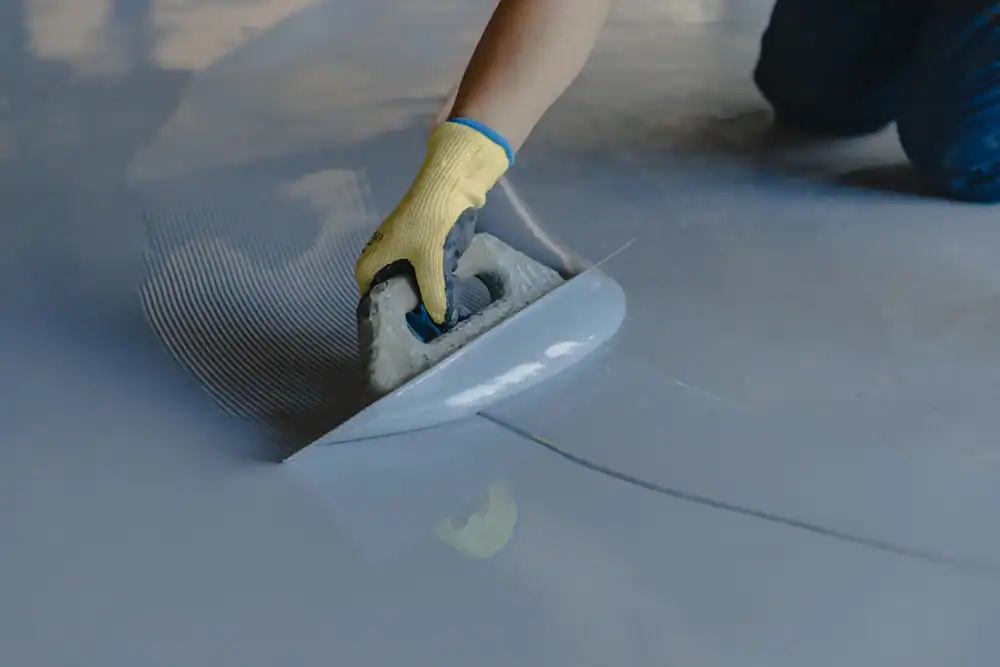
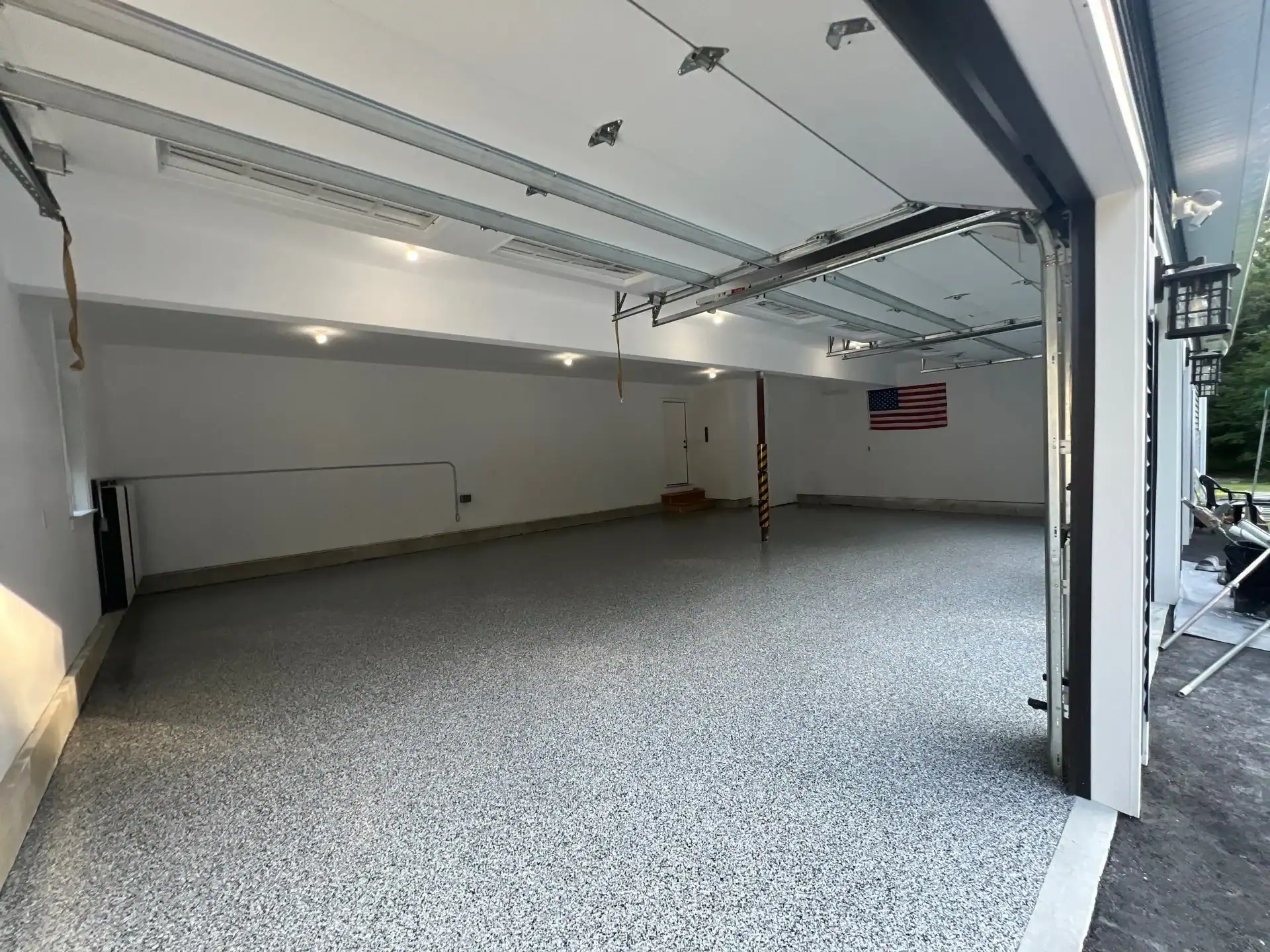
Once the surface is prepared, a primer coat goes down. This penetrates deep into the concrete and creates the initial bond. After the primer cures, the main epoxy layer gets applied. This is typically broadcast with decorative flakes or chips that add texture, color, and slip resistance.
The final step is a clear topcoat, often polyaspartic or polyurethane. This seals everything, adds UV protection, and creates the glossy finish that makes epoxy floors look so good. It also provides an extra layer of chemical and abrasion resistance.
We can often complete professional installations in one or two days. The floor is usually ready for foot traffic within 24 hours and ready for vehicles within 72 hours. That’s remarkably fast considering you’re getting a floor that will last 15-20 years.
Temperature and humidity matter during application. Epoxy needs specific conditions to cure properly. This is one reason why professional installation is worth it—we know how to work with Connecticut’s climate and can adjust our materials and timing accordingly. DIY installations often fail because homeowners don’t account for these factors.
The difference between a professional job and a DIY kit isn’t just skill—it’s also materials. Professional-grade epoxy contains 100% solids, meaning everything we apply becomes part of the final coating. DIY kits are often 50% or more water-based, which evaporates and leaves you with a much thinner, weaker coating. That’s why professional installations last decades while DIY jobs fail in a couple years.
Garage floor painting alternatives exist, but epoxy has proven itself as the most durable and cost-effective long-term solution for Connecticut homes. The upfront investment is higher than paint, but you’re not dealing with constant maintenance, early failure, or the need to redo the floor every couple years.
Connecticut’s climate demands more from garage floors than most other states. The combination of harsh winters, road salt, moisture, and temperature extremes destroys paint and damages unprotected concrete. Epoxy garage floor coating is specifically designed to handle these conditions.
If you’re ready to upgrade your garage floor with a solution that actually lasts, we specialize in high-performance epoxy and polyaspartic flooring systems throughout Hartford County, New Haven County, New London County, and Middlesex County. Our veteran-owned team brings professional-grade materials, proper installation techniques, and a 10-year insurance-backed warranty on our premium system that backs up our work.
Summary:
Article details:
Share: