Your garage floor faces harsh Connecticut winters, road salt, and daily wear. Professional epoxy coating protects concrete, boosts home value, and eliminates constant maintenance.
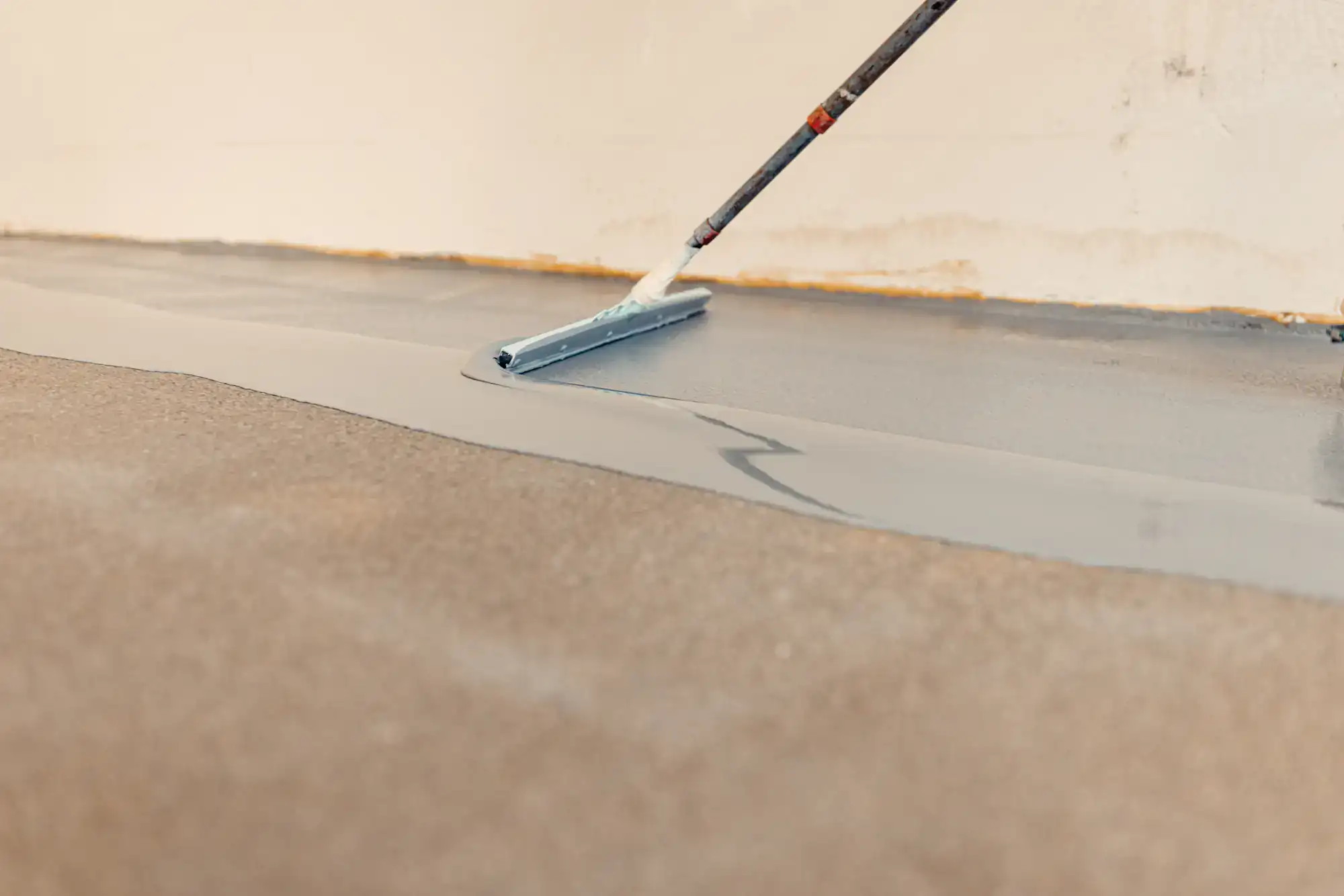
Professional epoxy isn’t the same as those DIY kits you’ll find at the hardware store. The difference shows up within the first year.
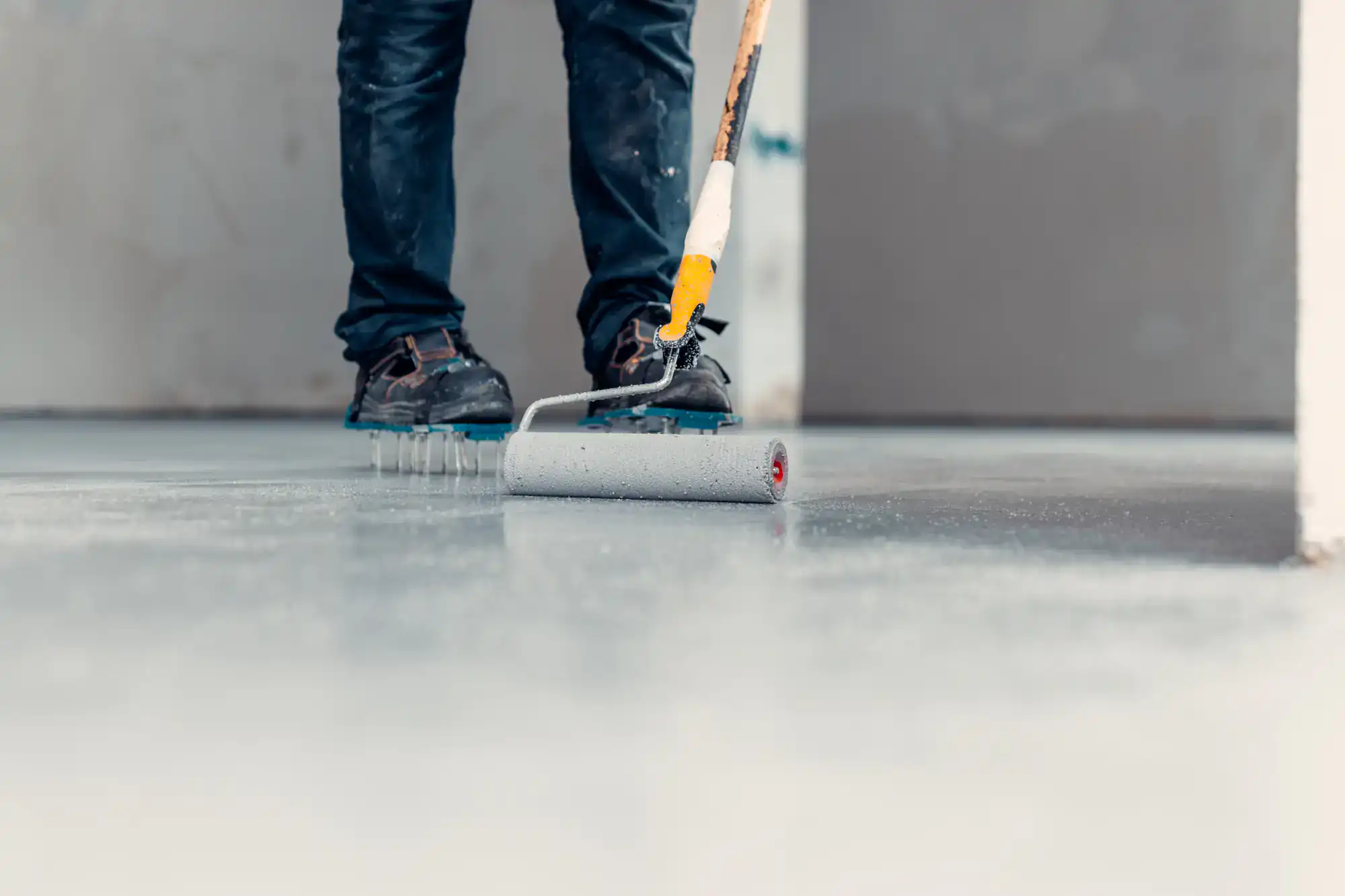
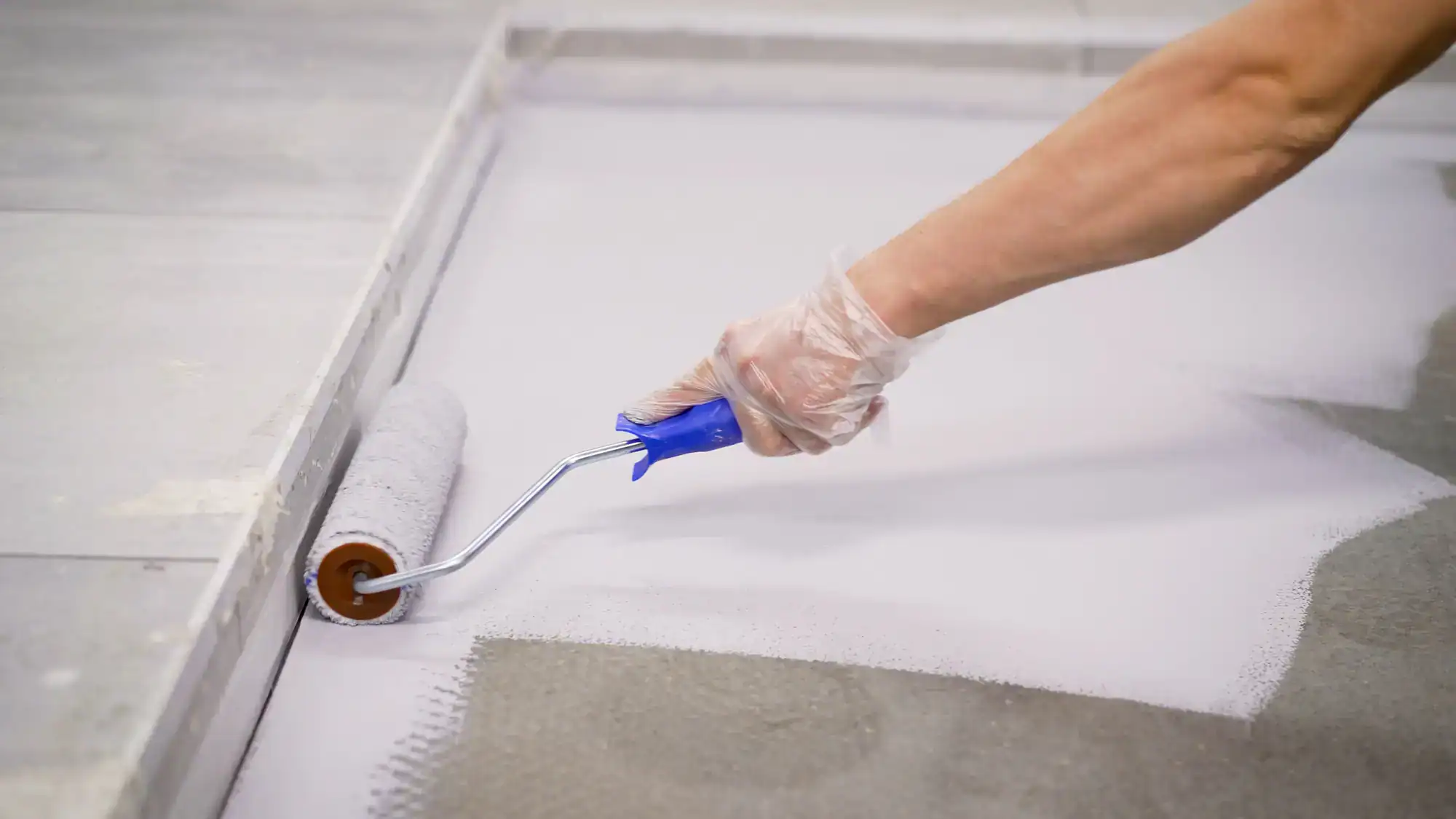
Commercial-grade epoxy systems use 100% solid epoxy, polyurethane, and polyaspartic coatings that homeowners can’t buy retail. These materials create a thick, durable surface that bonds to your concrete at a molecular level. The application process involves diamond grinding the concrete to create the right profile, repairing any damage, and applying multiple layers that cure into a seamless, non-porous surface.
Connecticut’s climate makes professional installation even more critical. High water tables and moisture-prone concrete mean you need a moisture barrier beneath the epoxy to prevent bubbling and delamination. Most DIY jobs skip this step entirely, which is why they fail within 6-18 months when the moisture trapped under the coating causes it to peel away from the concrete.
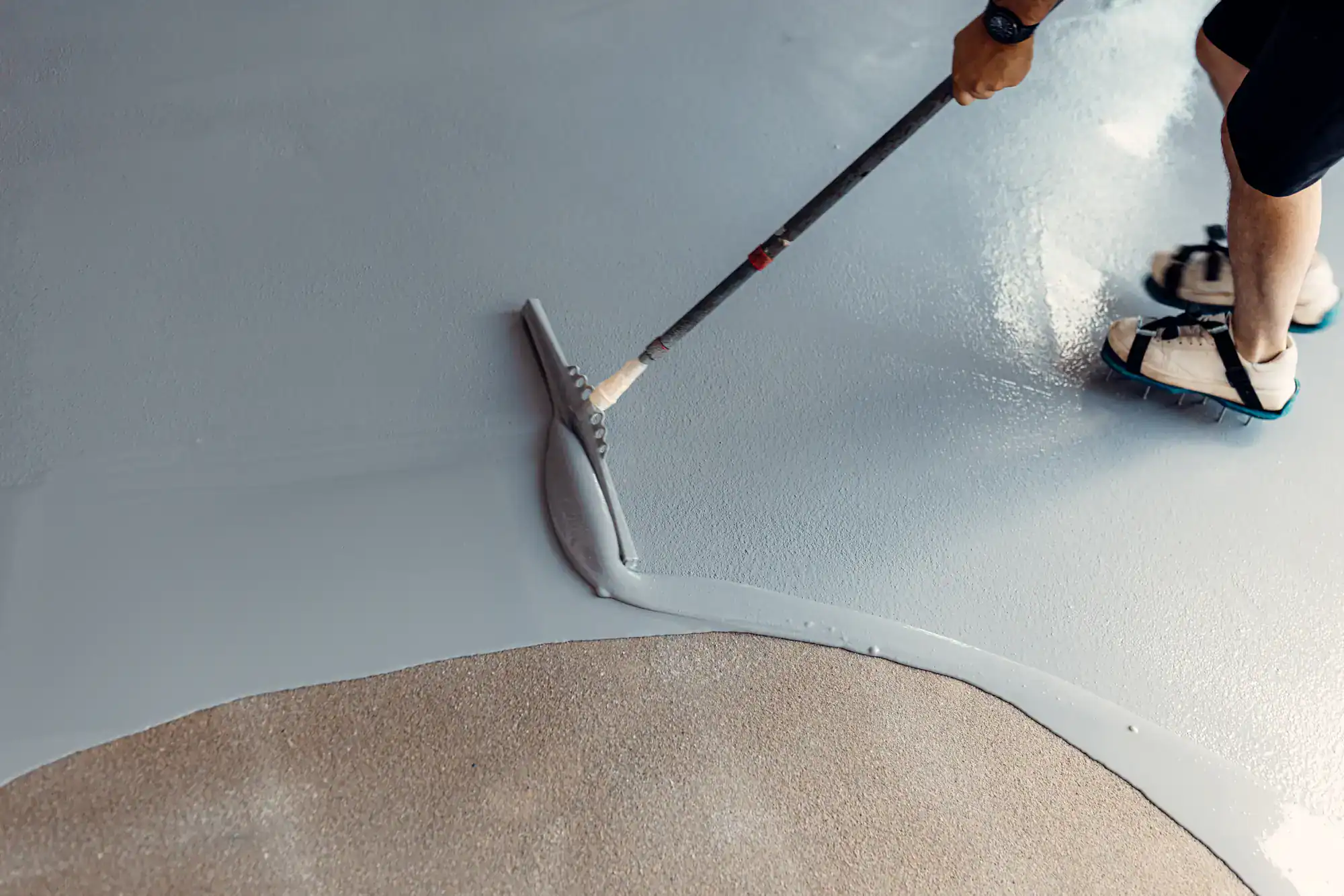
Every time you drive home in winter, your tires bring road salt into your garage. That salt doesn’t just sit on the surface—it goes to work destroying your concrete from the inside.
Here’s what happens: Road crews use calcium chloride and magnesium chloride to melt ice. These chemicals stick to your tires and get deposited on your garage floor. When mixed with the snow and moisture you track in, they create a corrosive brine that seeps into the porous concrete.
Concrete is like a sponge. Once that salty moisture penetrates the surface, it gets trapped in the tiny pores. When temperatures drop, that moisture freezes and expands, creating pressure that cracks and fractures the concrete from within. Then when it warms up, the moisture evaporates, leaving salt crystals behind that continue growing and pushing the concrete apart.
The result is spalling—that flaking, pitting surface damage you see on old garage floors. The white stains that won’t wash away. The rough, deteriorating concrete that gets worse every winter.
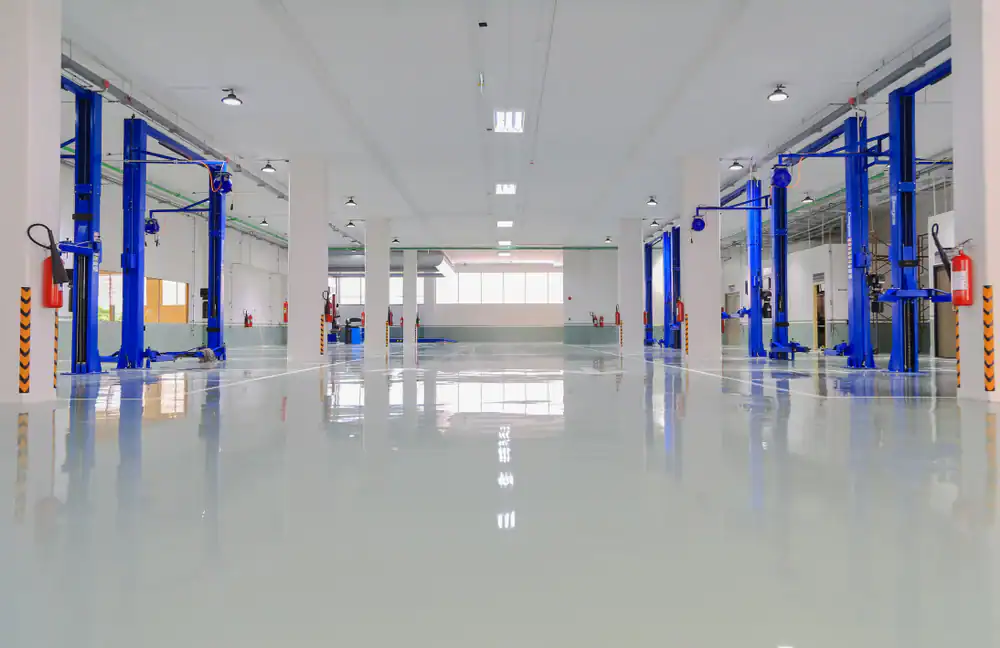
Epoxy stops this cycle completely. The coating creates an impermeable barrier that salt and moisture can’t penetrate. Instead of soaking into your concrete, the salty slush just sits on top of the epoxy where you can rinse it away with a hose. No penetration means no freeze-thaw damage, no crystallization, no spalling.
This protection is especially valuable in Hartford County, New Haven County, Middlesex County, and New London County, where winters are long and road crews use heavy amounts of deicing chemicals. Your garage floor takes a beating from November through March, and professional epoxy is the only coating tough enough to handle it year after year.
The coating also resists the chemicals themselves. While bare concrete reacts with calcium chloride to form calcium oxychloride crystals that expand and destroy the surface, epoxy remains chemically inert. The deicers can’t attack what they can’t touch.
Let’s talk numbers. In Hartford County, professional epoxy garage floor installation typically costs between $5-$9 per square foot, materials and labor included.
For a standard two-car garage (around 400-500 square feet), you’re looking at $2,600-$4,500 for a quality installation. A single-car garage runs $1,300-$2,200. These prices reflect professional-grade materials, proper surface preparation, moisture barrier installation where needed, and a finish that will last 15-20 years.
Compare that to DIY kits that cost $150-$300 but fail within a year or two, forcing you to strip everything and start over. Or compare it to replacing damaged concrete, which can cost $6-$10 per square foot just for the concrete itself, not counting removal and disposal of the old slab.
The real value shows up over time. Professional epoxy requires almost zero maintenance beyond occasional mopping. No sealing. No patching. No constant cleaning to remove stains that have soaked into bare concrete. You’ll spend maybe an hour a year maintaining an epoxy floor versus dozens of hours trying to keep bare concrete looking decent.
Then there’s the resale value. Real estate professionals report that epoxy garage floors can boost your home’s value by 5-10%. On a $400,000 home in Hartford County, that’s $20,000-$40,000 in increased value from a $3,000-$4,000 investment. Even if you only recoup 60-80% of the installation cost when you sell, that’s still a better return than most home improvements deliver.
The installation timeline matters too. Most professional epoxy jobs take 1-2 days from start to finish. You’ll need to keep your cars out for 24 hours for light foot traffic, and 72 hours before you can park on the new surface. That’s minimal disruption compared to other home improvement projects that can drag on for weeks.
Timing your installation matters in Connecticut. The ideal window is September through early November when temperatures are mild and stable, allowing proper curing. Winter installations are impossible when temperatures drop below freezing, and summer heat can cause rapid curing that affects the finish. We know how to work within these constraints and schedule accordingly.
One cost factor many homeowners miss: concrete condition. If your garage floor has significant cracking, spalling, or settlement issues, those need repair before epoxy goes down. Minor cracks and small repairs are typically included in the installation price, but major structural problems add to the cost. We’ll assess your concrete during the estimate and give you an honest evaluation of what needs fixing.
Want live answers?
Connect with a American Poly Floor expert for fast, friendly support.
Forget the sales pitch about “transforming your space.” Here are the benefits that actually impact your daily life and your wallet.
Durability comes first. A professional epoxy floor can handle everything you throw at it—literally. Drop a toolbox, park a 6,000-pound SUV, drag heavy equipment across it. The coating won’t crack, chip, or peel. It’s designed to withstand commercial traffic, so your residential garage is easy duty.
Chemical resistance matters more than most people realize. Motor oil, brake fluid, antifreeze, gasoline—all the automotive fluids that stain and damage bare concrete just wipe off epoxy. Same with household chemicals, paint, and cleaning products. The non-porous surface doesn’t absorb anything, so spills stay on top where you can clean them up before they cause problems.
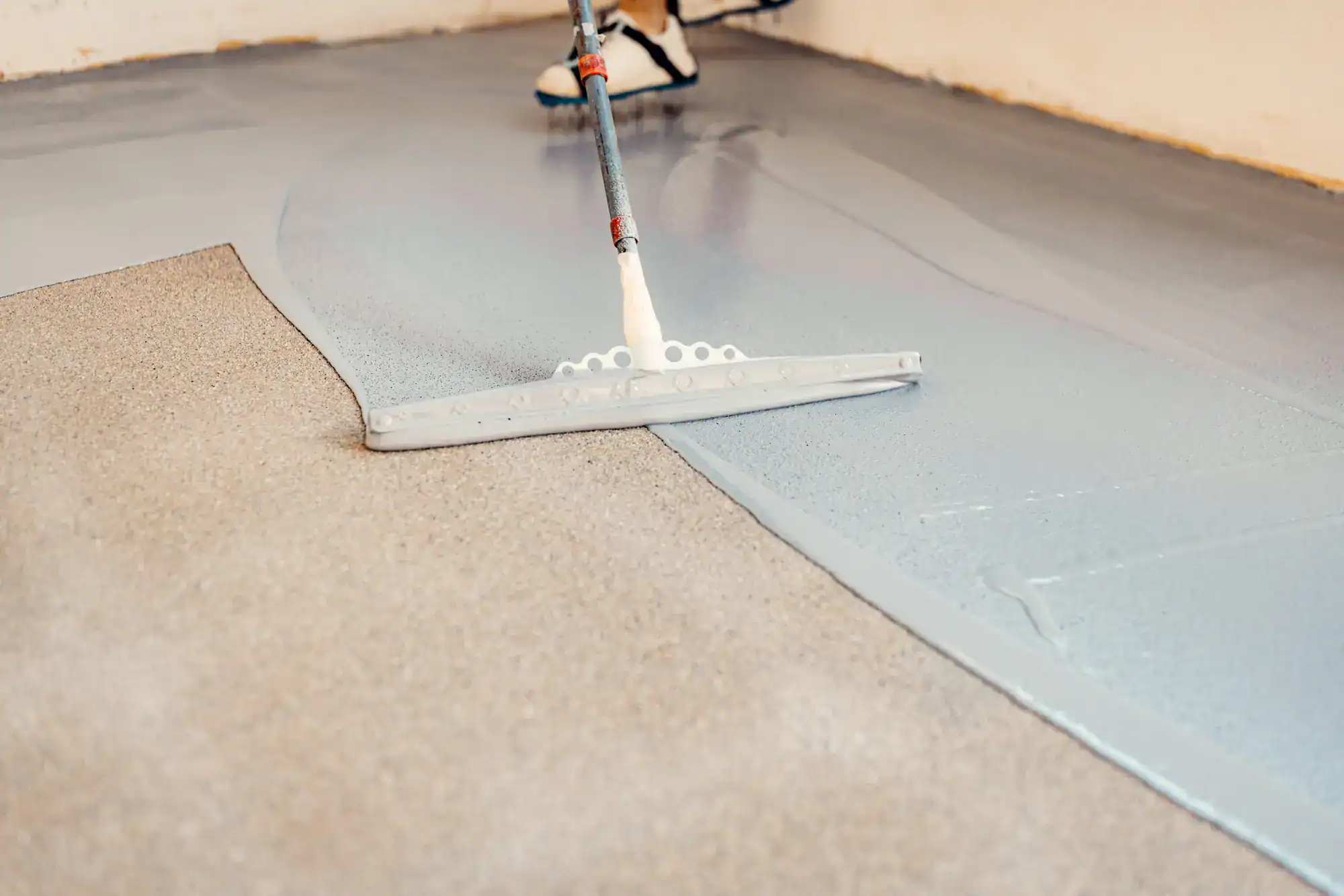
Real estate agents in Connecticut will tell you: garages matter. Buyers notice them, and a clean, professional-looking garage floor makes an impression that affects offers.
Here’s why epoxy adds value. First, it signals that you’ve maintained your home. Buyers see that finished floor and assume you’ve taken care of everything else too. It reduces their concerns about deferred maintenance and hidden problems.
Second, it makes the space more usable. Many buyers are looking for home gyms, workshops, or hobby spaces. A sealed, clean floor with good lighting makes your garage look like actual usable square footage instead of just car storage. That expanded functionality adds perceived value.
Third, it’s one less thing they have to fix. Buyers in 2025 want move-in ready homes. They don’t want to spend their first year dealing with a deteriorating garage floor. When they’re comparing similar homes, the one with the finished garage often wins.
The data backs this up. Studies show homes with epoxy garage floors sell 18% faster than comparable homes without. In competitive markets like Hartford County and New Haven County, that speed advantage can be the difference between accepting your asking price and having to drop it after months on the market.
The return on investment typically ranges from 60-80%, which puts epoxy flooring ahead of most cosmetic upgrades. Kitchen remodels average 50-60% ROI. Bathroom updates hover around 55-65%. Epoxy garage floors consistently outperform both, especially in areas with harsh winters where the protective benefits are obvious to buyers.
Younger buyers particularly value finished garages. Surveys show 67% of buyers aged 25-40 will pay premiums for homes with completed garage spaces. This demographic grew up with home improvement shows and Pinterest boards showing beautiful garage makeovers, so their expectations are higher than previous generations.
The increased value isn’t just about the floor itself. It’s about what the floor represents: a well-maintained home, additional usable space, and one less project on the buyer’s to-do list. Those intangibles drive offers and reduce negotiation friction during closing.
About 30% of our installations are replacements for failed DIY jobs. That’s not because homeowners are incompetent—it’s because DIY kits are fundamentally different products that can’t deliver the same results.
Big-box store kits use water-based epoxy that’s 50% or more water. This extends the working time so inexperienced users can apply it before it sets, but it also means you’re left with a very thin coating once the water evaporates. That thin layer doesn’t have the strength or chemical resistance of professional-grade coatings.
The preparation is where most DIY jobs fail. Those kits recommend acid etching to prepare the surface, which sounds thorough but isn’t aggressive enough to remove the sealant that most garage floors have. Without proper mechanical grinding to create the right surface profile, the epoxy doesn’t bond correctly. It might look good initially, but it’ll start peeling within months.
Professional installation involves diamond grinding the entire floor. This removes any existing sealants, opens up the concrete pores, and creates the rough texture the epoxy needs to bond at a molecular level. It’s loud, it’s messy, and it requires specialized equipment that homeowners don’t have access to.
Then there’s the moisture issue. New England has high water tables and moisture-prone concrete. We test for moisture vapor transmission and install barriers when needed. DIY kits don’t include moisture testing or barriers, so if your slab has moisture issues—which most do—the coating will bubble and delaminate as that moisture tries to escape through the epoxy.
The application technique matters too. Professional-grade epoxy has a short pot life once mixed, which means we need to work fast and efficiently. We know how to maintain consistent thickness, eliminate bubbles, and create a uniform finish. DIY users often end up with thin spots, thick spots, bubbles, and uneven color distribution.
Curing conditions are critical. Temperature and humidity affect how epoxy sets. Too cold and it won’t cure properly. Too hot and it cures too fast, affecting the finish. Too humid and you get moisture contamination. We monitor conditions and adjust our schedule accordingly. DIY users install whenever they have a free weekend, regardless of whether conditions are ideal.
The bottom line: DIY epoxy kits typically last 1-2 years before they start failing. Professional installations last 15-20 years. When you factor in the cost of stripping and redoing a failed DIY job, plus the time and frustration involved, professional installation is actually the more economical choice.
Your garage floor takes more abuse than almost any surface in your home. Connecticut winters, road salt, vehicles, chemicals, and daily wear create a hostile environment that bare concrete simply can’t handle long-term.
Professional epoxy flooring solves that problem with a durable, chemical-resistant surface that protects your concrete investment for decades. The benefits go beyond protection—easier maintenance, increased home value, better aesthetics, and a more functional space that you’ll actually want to use.
The cost is reasonable, the installation is fast, and the results last. More importantly, it’s one less thing you have to worry about. No more stains, no more salt damage, no more deterioration that gets worse every winter.
If you’re in Hartford County, New Haven County, Middlesex County, or New London County and you’re tired of dealing with a garage floor that looks worse every year, it’s worth having a conversation with us about what professional epoxy installation can do for your home.
Summary:
Share: