Everything Connecticut homeowners need to know about epoxy flooring costs, installation timelines, coating options, and choosing between professional and DIY solutions.

Professional epoxy flooring in Connecticut runs between $4 and $9 per square foot on average, with some projects ranging from $3 to $12 depending on complexity and coating type. For a standard two-car garage (roughly 500 square feet), expect to pay $2,500 to $4,200. A single-car garage typically costs between $1,200 and $2,100.
Hartford County, CT sees slightly higher averages around $190 to $201 per square foot for standard installations. New Haven County, New London County, and Middlesex County show similar pricing with minor variations based on contractor availability and distance. The price range exists because every floor is different—a basic solid-color epoxy with minimal prep costs significantly less than a full metallic system requiring extensive crack repair and custom design work.
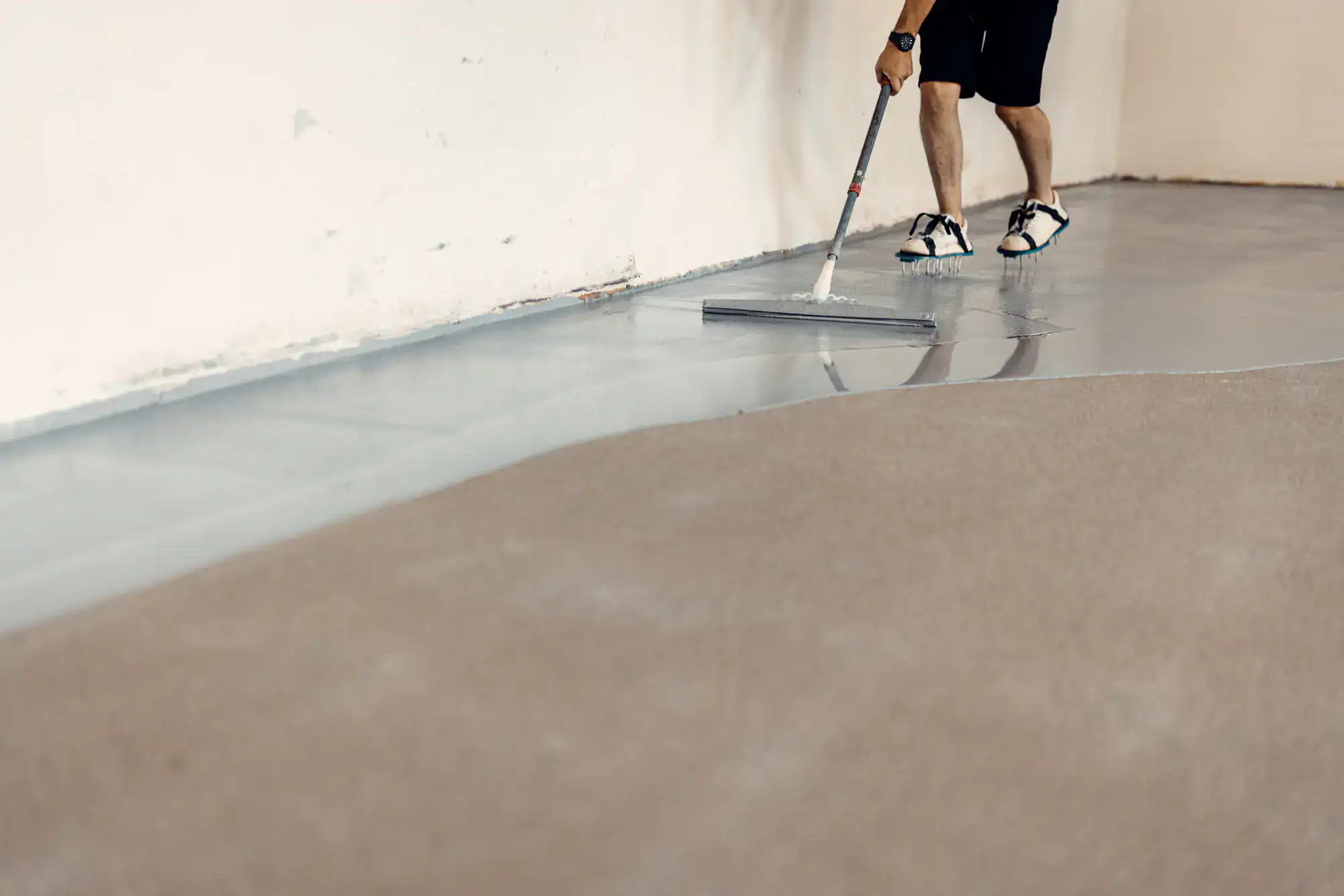
Several factors determine where your project lands in the price range, and knowing them helps you budget accurately and spot red flags in contractor quotes.
Your concrete’s condition is the biggest variable. Newer concrete in good shape requires basic cleaning and surface profiling. Older garage floors in Hartford, CT or New Haven, CT with spalling, deep cracks, moisture issues, or old coatings that need removal drive costs up. Surface preparation isn’t where we cut corners—it’s what separates epoxy flooring that lasts 20 years from coatings that fail in two.
The coating system you choose matters. A basic epoxy base with clear polyaspartic topcoat costs less than decorative options. Flake epoxy floor systems (the granite or terrazzo look) add modest cost. Metallic epoxy flooring with swirling 3D effects sits at the premium end because it requires additional layers—typically a black primer, metallic coat, and clear topcoat—plus more labor-intensive application.
Square footage affects per-foot pricing. Coating 1,000 square feet costs less per foot than 200 square feet because fixed costs (equipment, mobilization, crew) spread across more area. If you’re coating both your garage and basement, doing them together often reduces the per-square-foot cost.
Location within Connecticut nudges prices modestly. Hartford County and Fairfield County sometimes see higher rates due to demand and cost of living. Rural areas in Middlesex County, CT or New London County, CT might run slightly lower, though the difference rarely exceeds 10-15%.
Additional services add line items. Custom colors, decorative patterns, or logos increase costs. Coating vertical surfaces like garage walls or adding polyaspartic coatings to outdoor spaces like patios cost extra. We charge separately for extensive crack repair or moisture mitigation in basements when needed.
DIY epoxy floor kits from big-box stores cost $1.50 to $2.50 per square foot in materials alone. For a two-car garage, that’s $750 to $1,250—a fraction of professional costs. The savings look attractive until you understand why most DIY epoxy projects fail within a few years.
The problem isn’t the concept; it’s execution. Successful epoxy flooring depends almost entirely on surface preparation, and that’s where DIY projects fall apart. You need to remove existing sealers, properly clean the concrete, repair cracks, and create adequate surface profile (roughness) for mechanical bonding. Most homeowners don’t own diamond grinders, shot blasters, or industrial vacuums. Acid etching—the method included in most kits—rarely creates sufficient profile, especially on hard-troweled garage floors common in Connecticut homes.
Even with perfect prep, DIY products are water-based or solvent-based formulations that don’t match professional-grade 100% solids epoxy. They’re thinner, less durable, and prone to hot-tire pickup where your car’s warm tires literally pull the coating off. UV exposure causes yellowing and fading. Connecticut’s freeze-thaw cycles accelerate failure. Within 3 to 5 years, you’re looking at peeling edges, worn traffic patterns, and a floor that looks worse than before you started.
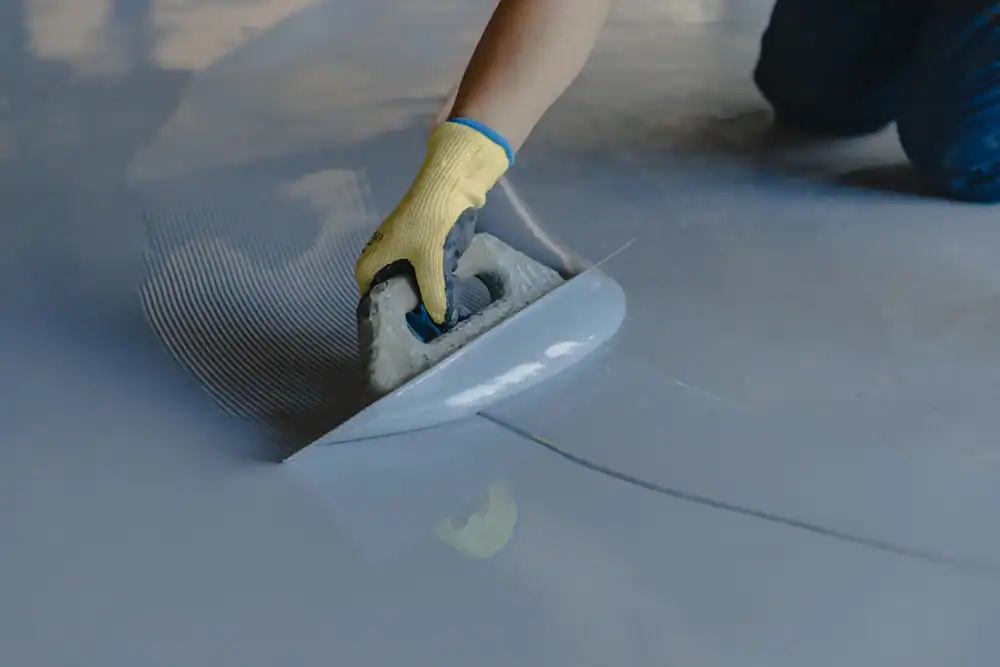
Professional epoxy flooring installation in Hartford, CT or elsewhere in Connecticut costs more upfront but includes commercial-grade surface prep, industrial materials, and experienced application. The result lasts 15 to 20 years instead of 3 to 5. When you factor in redoing a failed DIY job—materials, time, disposal of the old coating, and frustration—professional installation often costs less long-term.
If budget is tight, ask us about entry-level systems. A solid-color epoxy with polyaspartic topcoat delivers professional durability at the lower end of the price range. We offer financing or payment plans that spread costs over time.
Consider your time investment too. A DIY garage floor project consumes a full weekend minimum, assuming everything goes right (it rarely does). We complete most residential garages in one to two days, and you’re not doing the work. For many homeowners in New Haven, CT or Middlesex County, CT, that time savings alone justifies the cost difference.
Want live answers?
Connect with a American Poly Floor expert for fast, friendly support.
Connecticut’s climate is brutal on unprotected concrete. Winter delivers freeze-thaw cycles that crack slabs. Road salt and de-icing chemicals eat away surfaces. Spring and summer bring humidity and moisture issues, especially in basements across Hartford County and New Haven County. Quality epoxy flooring isn’t cosmetic—it’s protection against deterioration.
Epoxy and polyaspartic coatings create an impermeable barrier over concrete. Water, salt, oil, and chemicals can’t penetrate, which prevents the slow destruction that plagues bare concrete in Connecticut. The coating flexes with temperature changes, reducing crack formation. In basements, proper systems with moisture-blocking primers prevent damage from groundwater vapor that’s common in areas like Middlesex County, CT.
Durability is the other major benefit. These coatings withstand vehicle traffic, dropped tools, dragged equipment, and everything else a garage floor endures. They resist abrasion far better than bare concrete, which means less dust, fewer chips, and surfaces that maintain appearance for decades.
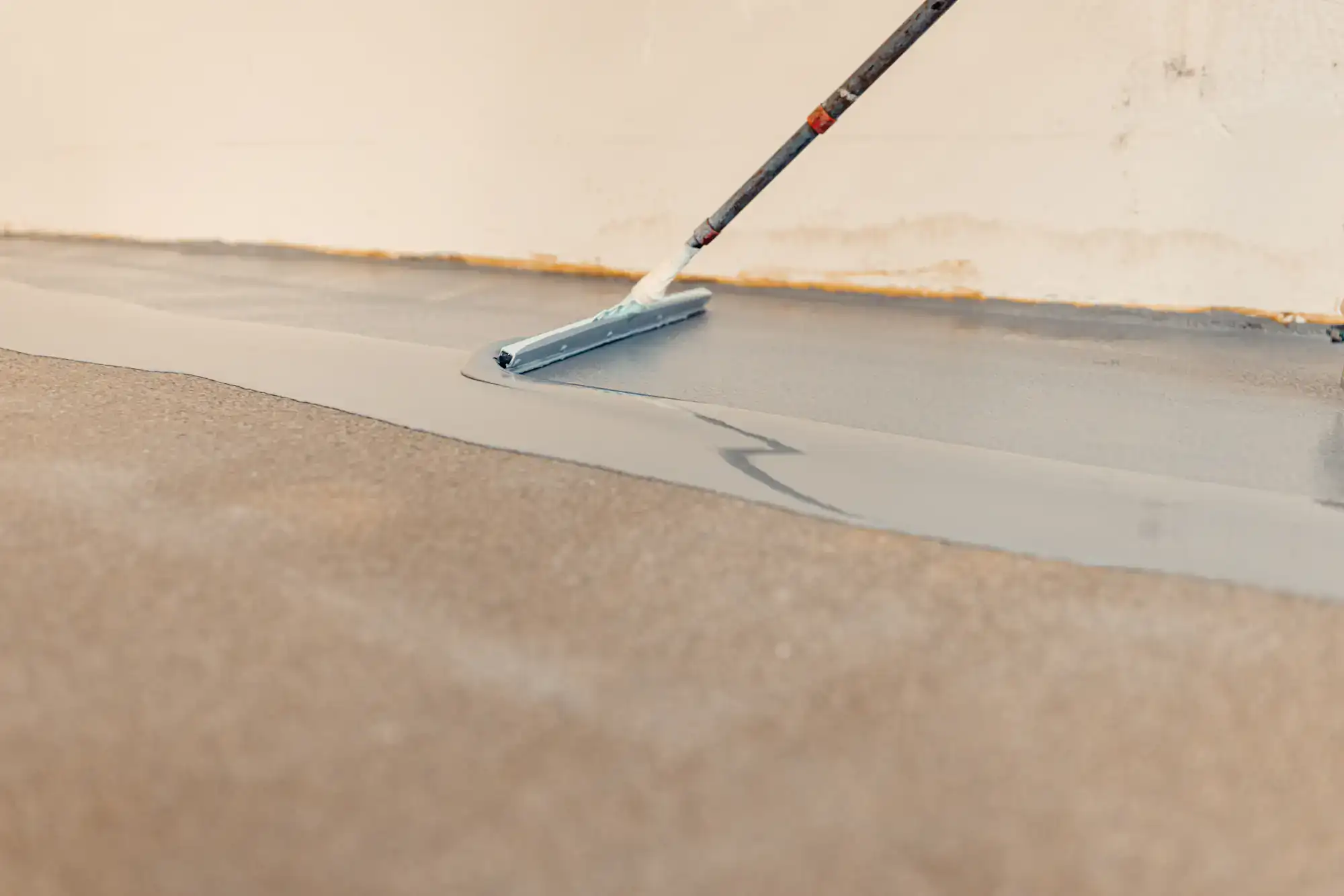
One of the biggest practical advantages is how simple these floors are to maintain compared to bare concrete. Uncoated concrete is porous and rough—dirt, dust, and stains embed themselves in the surface. You sweep and mop repeatedly, but the floor never looks truly clean.
Epoxy and polyaspartic coatings create smooth, seamless surfaces. Dirt and dust sit on top instead of grinding into pores. A quick sweep or dust mop picks up debris. Spills wipe away easily—oil, antifreeze, even paint clean up with a rag and mild detergent. No more permanent stains marking where you worked on your car.
For regular cleaning, sweeping or using a leaf blower handles daily dust and debris. Every few weeks, mop with water and a pH-neutral cleaner like Simple Green. That’s the entire maintenance routine. No waxing, no resealing, no special products. The coating does the work.
Decorative flake epoxy floor systems have an added advantage: texture and color variation hide dirt and small imperfections. Your floor looks cleaner longer because dust and minor marks blend into the pattern. Solid-color floors show dust more readily but remain far easier to maintain than bare concrete.
Chemical resistance matters more than you might realize, especially in Connecticut where winter means salt-covered cars dripping corrosive brine across your garage floor. Road salt damages unprotected concrete over time. Proper epoxy flooring resists salt, brake fluid, oil, antifreeze, and most household chemicals. Spills don’t etch or stain—you clean them and move on.
One maintenance note: while durable, these coatings aren’t indestructible. Dragging heavy metal objects or dropping sharp tools can scratch or chip the surface. Using furniture pads under workbenches, avoiding metal shovels when clearing snow from your car, and treating the floor with reasonable care extends its lifespan. Most minor scratches and chips can be professionally touched up if needed.
UV stability matters if your garage gets direct sunlight or you’re coating outdoor spaces like patios or carports. Traditional epoxy yellows and fades with UV exposure. Polyaspartic topcoats are UV-stable, maintaining color and gloss even with sun exposure. If your garage in Hartford, CT has windows or you occasionally park outside, polyaspartic topcoats are worth the investment.
Not all floor coatings perform the same way, and understanding your options helps you choose the right system for your needs, budget, and Connecticut climate challenges.
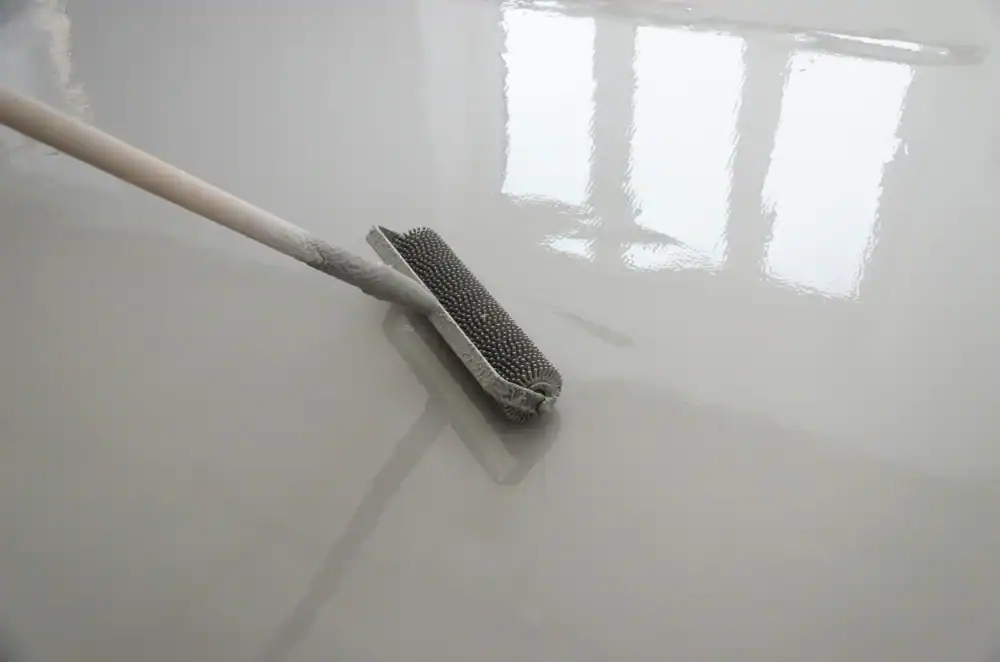
Traditional epoxy is a two-part resin system that cures into a hard, durable surface. It’s been the standard garage floor coating for decades because it delivers excellent chemical and abrasion resistance at reasonable cost. Epoxy works best as a base coat or in indoor spaces with minimal UV exposure. The downsides are cure time—24 to 72 hours, meaning your garage is unusable for days—and tendency to yellow over time with sunlight exposure.
Polyaspartic coatings are newer technology addressing many of epoxy’s limitations. Polyaspartic is a modified polyurea that cures extremely fast, often in 4 to 6 hours. Most installations complete in a single day, and you can park your car the next morning. Polyaspartic is UV-stable so it won’t yellow or fade. It’s more flexible than epoxy, making it more resistant to cracking and chipping. It can be applied in wider temperature ranges, helpful in Connecticut where weather is unpredictable. The tradeoff is cost—polyaspartic runs more expensive than traditional epoxy. Many professional installations use hybrid approaches: epoxy base coat for strength and adhesion, topped with polyaspartic clear coat for durability and UV resistance.
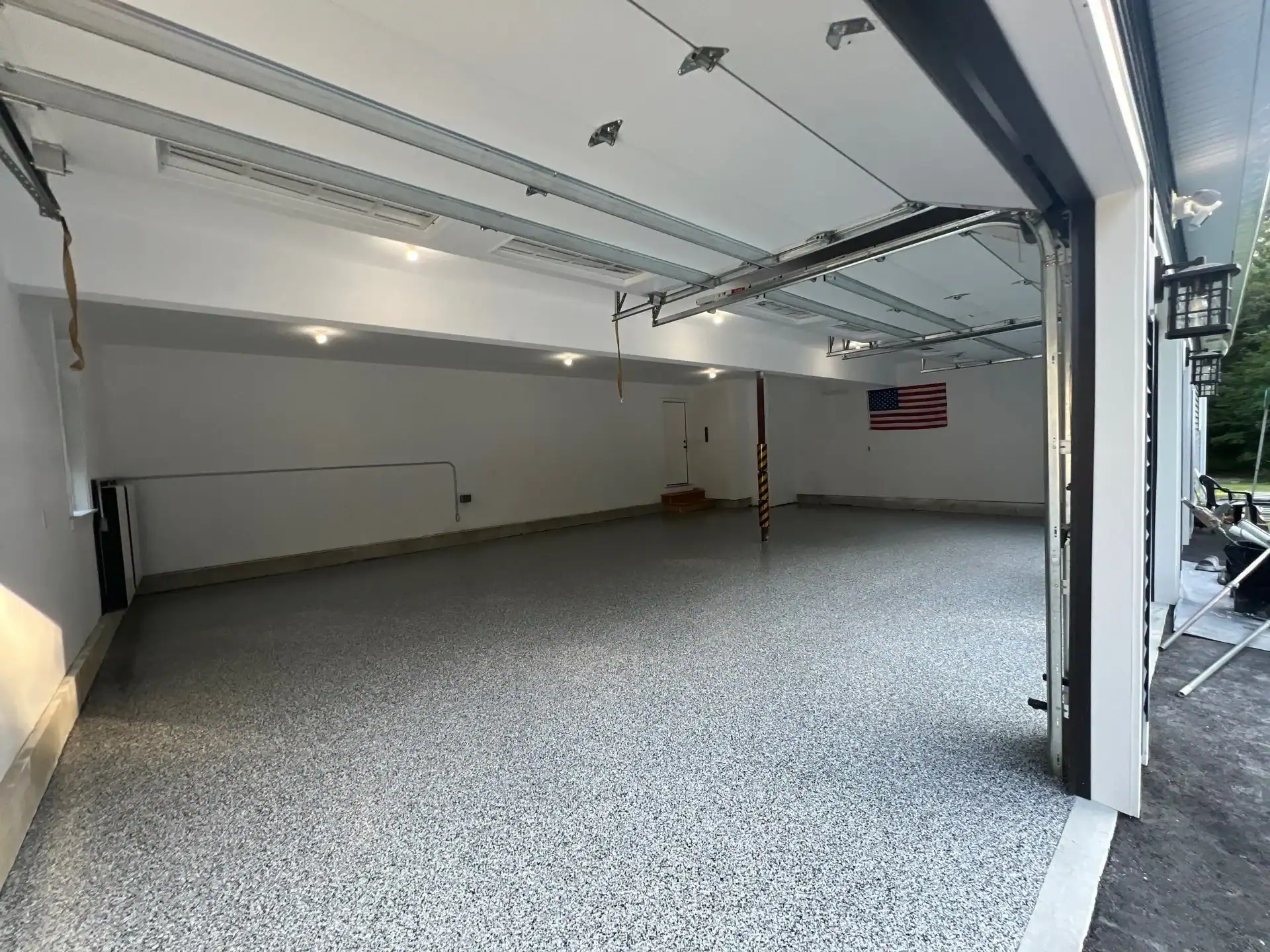
Flake epoxy floor systems (also called chip systems) add decorative colored flakes to the base coat while wet. The flakes are vinyl or acrylic chips available in dozens of colors and sizes. You can choose light broadcast (50-75% coverage) for subtle speckled looks, or full broadcast (90-95% coverage) for terrazzo or granite appearances. Flake systems offer benefits beyond aesthetics. The texture provides slip resistance, helpful in wet conditions. Color variation hides dirt, dust, and minor imperfections. Flakes also mask small blemishes in underlying concrete that might show through solid-color coatings. A clear topcoat seals flakes in place and provides smooth, cleanable surfaces.
Metallic epoxy flooring is the premium option. It uses metallic pigments mixed into epoxy to create swirling, three-dimensional effects resembling marble, liquid metal, or flowing water. Each metallic floor is unique because installers manipulate the coating while wet to create patterns. Metallic systems typically require black primer bases, metallic coats, and clear topcoats, increasing both material and labor costs. They’re stunning and often used in showrooms, high-end garages in Hartford County, CT, and commercial spaces where aesthetics matter. The tradeoff is cost and the need for nearly perfect substrates—metallic coatings are high-gloss and will show any concrete imperfections underneath.
Choosing between these options depends on priorities. If budget is the main concern, solid-color epoxy with polyaspartic topcoat delivers professional-grade performance at reasonable prices. If you want decorative looks with added slip resistance, flake systems offer great middle ground. If you’re going for showroom aesthetics and budget isn’t a constraint, metallic epoxy delivers wow factor. And if you need your garage back in service quickly, full polyaspartic systems (base and topcoat) get you there in a day.
Epoxy flooring in Connecticut is an investment that pays off in durability, protection, and maintenance ease. The key is choosing the right system for your specific situation and working with installers who understand proper surface preparation and Connecticut’s unique climate challenges.
Focus on contractors who use professional equipment for surface prep, offer multiple coating options, and can clearly explain differences between systems. Ask about cure times, UV stability, warranty coverage, and how they handle moisture issues common in Connecticut basements. Good installers will assess your floor’s condition, discuss your priorities, and recommend systems that fit your needs and budget without overselling.
Whether you’re upgrading a garage in Hartford, CT, finishing a basement in New Haven, CT, or coating a commercial space in Middlesex County, CT, the right floor coating transforms how you use and maintain that space. We serve Hartford County, New Haven County, New London County, and Middlesex County with professional resinous flooring solutions designed specifically for Connecticut’s demanding conditions.
Summary:
Article details:
Share: