Connecticut winters destroy garage floors. Professional epoxy coatings stop road salt damage, prevent oil stains, and eliminate hot tire pickup—with a 20+ year lifespan and minimal maintenance.
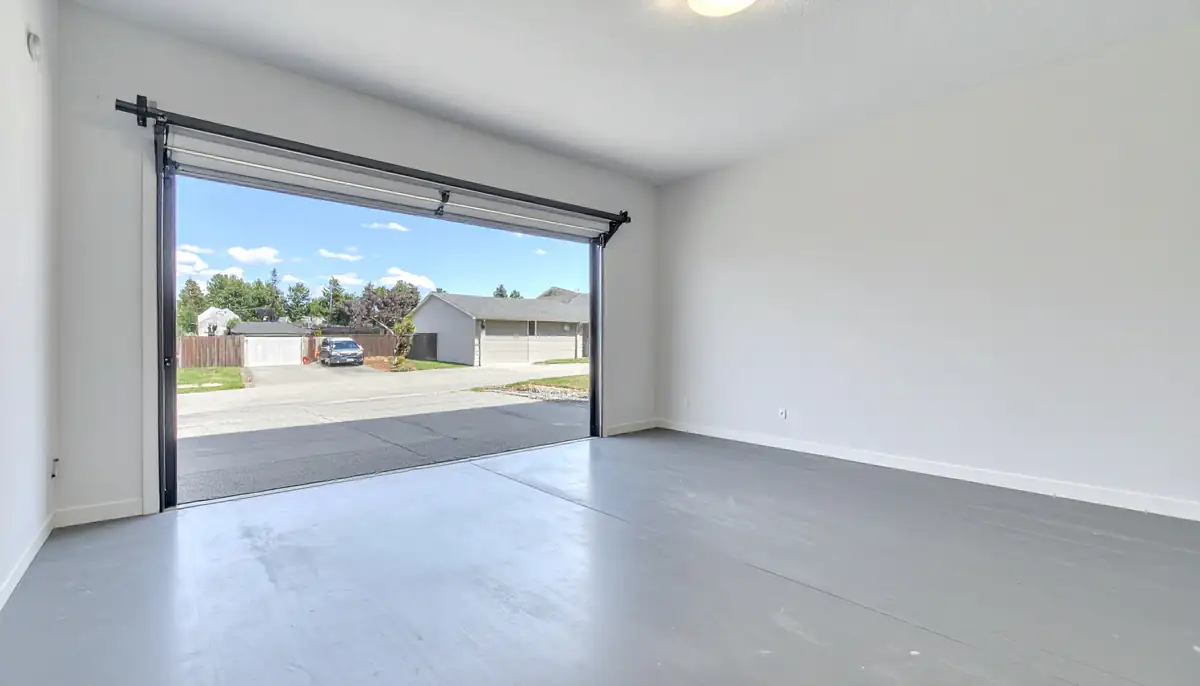
Your garage floor tells a story. There’s the oil stain from two winters ago that no amount of scrubbing could remove. The white salt residue that reappears every time you park after driving through slush. The fine concrete dust that somehow makes its way into your house no matter how often you sweep.
Connecticut winters are brutal on garage floors. Road salt eats away at concrete. Freeze-thaw cycles create cracks. Oil and automotive fluids soak in and become permanent. Bare concrete wasn’t designed to handle what we put it through from November through March—and it shows.
There’s a reason epoxy garage floor coatings are becoming standard in homes across Hartford County, New Haven County, New London County, and Middlesex County. They actually solve the problems Connecticut homeowners face. Let’s talk about what that looks like in practice.
Epoxy flooring isn’t paint. It’s a chemical reaction between resin and hardener that bonds to your concrete and creates a rigid, protective surface. The difference matters because paint sits on top and eventually peels. Epoxy becomes part of the floor structure.
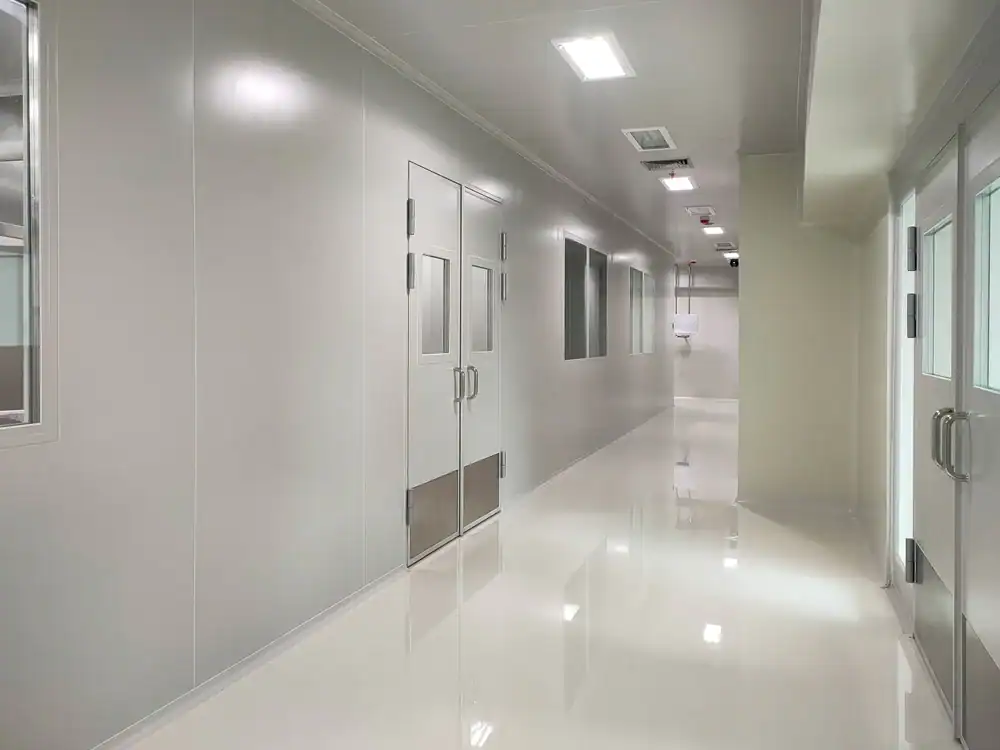
When professionally installed, epoxy creates a seamless, non-porous barrier. Liquids can’t penetrate. Road salt can’t work its way into concrete pores where it causes damage. Oil from a slow leak sits on the surface instead of soaking in and staining.
The result is a floor engineered for the specific challenges we face in Connecticut. You’re not covering up problems—you’re preventing them from starting. That’s why properly installed epoxy floors last 20+ years while bare concrete needs replacement or extensive repair in less than a decade.
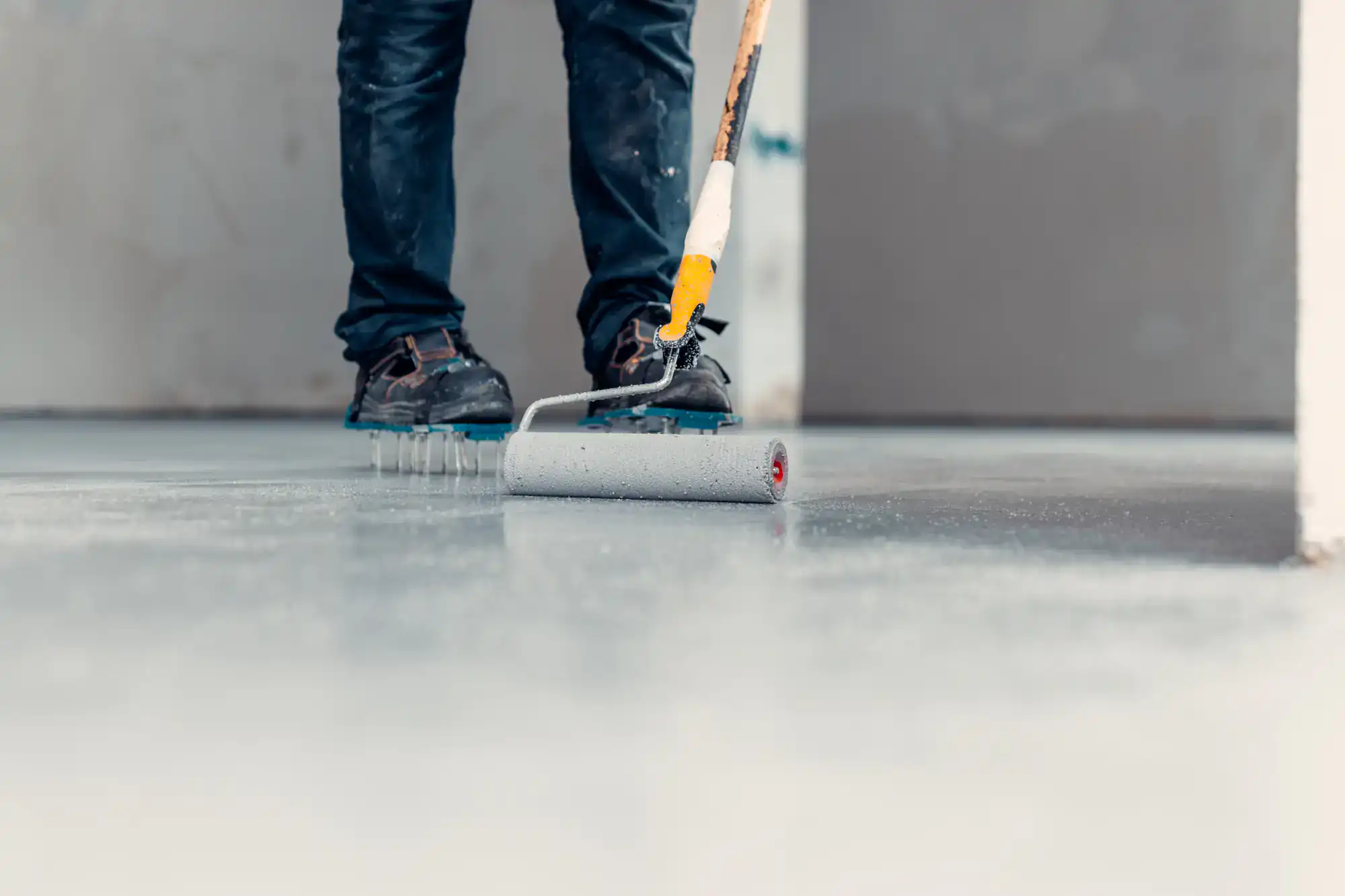
Road salt destroys concrete from the inside out. Connecticut uses it heavily—and the chemicals involved are more aggressive than most homeowners realize. Modern de-icing products contain calcium chloride and liquid magnesium designed to melt ice quickly. They work, but they’re also highly corrosive to concrete.
Here’s what happens on bare concrete: Salt-laden slush from your tires hits the floor. The chemicals penetrate through concrete’s natural pores. When moisture evaporates, salt crystals remain trapped inside the concrete. Those crystals expand and contract with temperature changes, creating pressure that fractures the concrete from within—a process called spalling.
You’ve seen the result. That rough, pockmarked surface near your garage door threshold where the most salt accumulates. The white residue that never fully goes away. The small pits that become larger cracks over time. Each winter makes it worse because the damage compounds. Once spalling starts, it accelerates.
Professional epoxy garage floor coating eliminates this cycle entirely. The non-porous surface means salt can’t penetrate. When you drive in after a snowy commute, the slush sits on top of the epoxy. There are no pores for chemicals to enter, no pathway for moisture infiltration, no opportunity for internal damage to occur.
Cleanup is straightforward. Mop with warm water and mild soap when salt accumulation is visible. The salt and chemicals wash away completely because they never bonded with anything. No residue remains. No damage occurs. Your floor looks the same in March as it did in October.
This protection is particularly valuable in Connecticut where road crews apply salt liberally and winter lasts five months. Your tires deliver corrosive chemicals directly to your garage floor multiple times daily during winter. Without protection, that’s thousands of exposures over a season. With epoxy coating, those exposures cause zero damage.
The protection extends beyond just surface appearance. By preventing moisture infiltration, epoxy also stops freeze-thaw damage. Water can’t get into the concrete, so there’s nothing to expand when temperatures drop overnight. That means fewer cracks, less spalling, and a floor that maintains structural integrity year after year despite Connecticut’s temperature swings.
Concrete is porous at a microscopic level. Those tiny holes that allow concrete to breathe also make it act like a sponge for automotive fluids. When oil, transmission fluid, or grease hits bare concrete, penetration begins within minutes. The longer it sits, the deeper it goes.
Once oil soaks into concrete’s porous structure, removal becomes nearly impossible. You can scrub with industrial degreasers. You can apply poultices designed to draw oil out. You can even try professional concrete cleaning services. The stain lightens but never disappears completely because the oil has become integrated into the concrete’s structure at a molecular level.
This is why older garages have those dark patches under parking spots. Every slow leak adds to the problem. Every oil change that drips. Every time you park a lawnmower or snowblower. The stains accumulate over years until the floor looks perpetually dirty regardless of how much effort you put into cleaning.
Epoxy flooring fundamentally changes how your floor interacts with oil. The seamless, non-porous surface means oil cannot penetrate. When a leak occurs or you spill something during maintenance, the fluid sits on top of the coating. You have hours—even days—to clean it before any staining potential exists.
Cleanup becomes trivial. Wipe up the bulk with paper towels or a rag. Clean the area with dish soap and water. Done. No scrubbing. No special chemicals. No permanent marks. The floor returns to its original appearance because nothing penetrated the surface.
The difference is dramatic for anyone who’s dealt with years of oil stains on bare concrete. Homeowners consistently report that maintenance effort drops significantly. Tasks that used to require 30 minutes of scrubbing now take two minutes of wiping. The garage actually stays clean instead of looking progressively worse despite regular cleaning efforts.
Epoxy’s resistance extends beyond just oil. Antifreeze, brake fluid, gasoline, transmission fluid, power steering fluid—all the automotive chemicals that inevitably end up on garage floors—won’t stain or damage properly installed epoxy coating. This makes it ideal if you do any automotive work, maintain equipment, or simply want a garage that doesn’t require constant damage control.
Want live answers?
Connect with a American Poly Floor expert for fast, friendly support.
Professional epoxy garage floor coating in Connecticut runs $5 to $9 per square foot on average. For a typical two-car garage (400-500 square feet), that translates to $2,000 to $4,500 depending on your concrete’s condition, the system you choose, and any repairs needed before installation.
That’s a real investment. But understanding what you’re paying for matters because the cost difference between professional installation and DIY kits comes down to factors that determine whether your floor lasts two years or twenty.
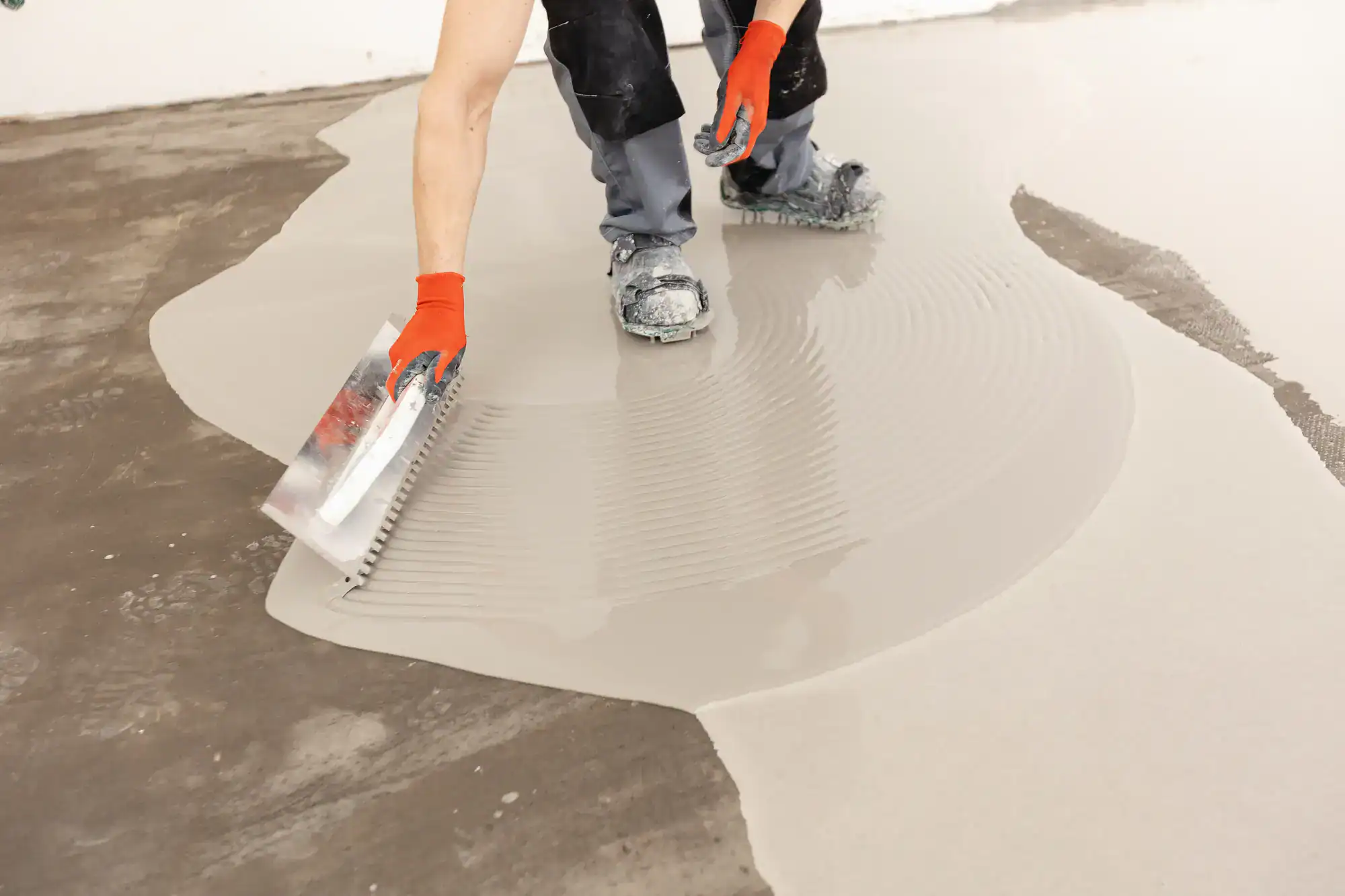
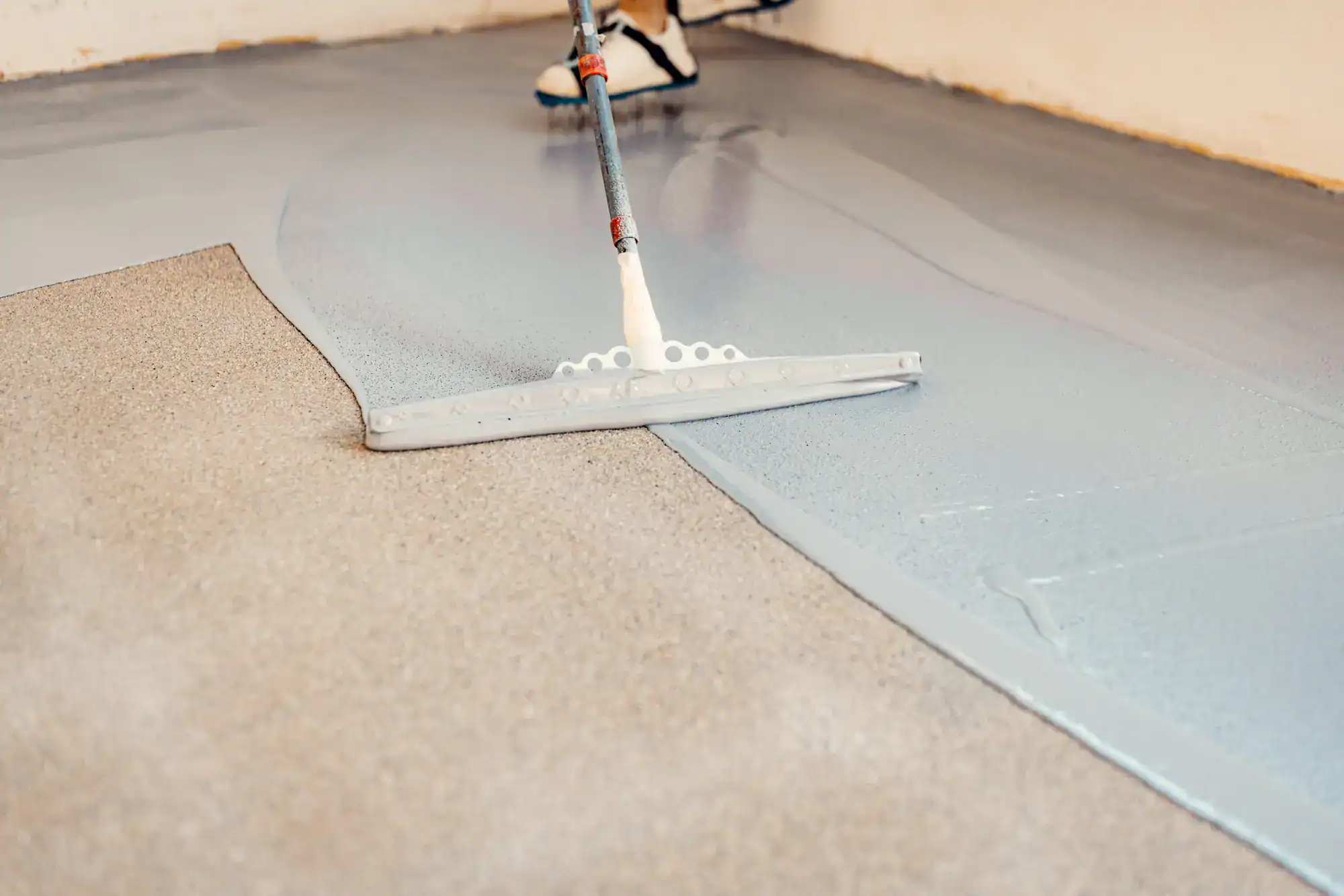
Professional installation includes diamond grinding your concrete to create proper mechanical bonding surface, repairing cracks and damaged areas, applying moisture mitigation primer, installing multiple coats of commercial-grade epoxy or polyaspartic coating, and finishing with UV-stable topcoat. Each step matters for long-term performance.
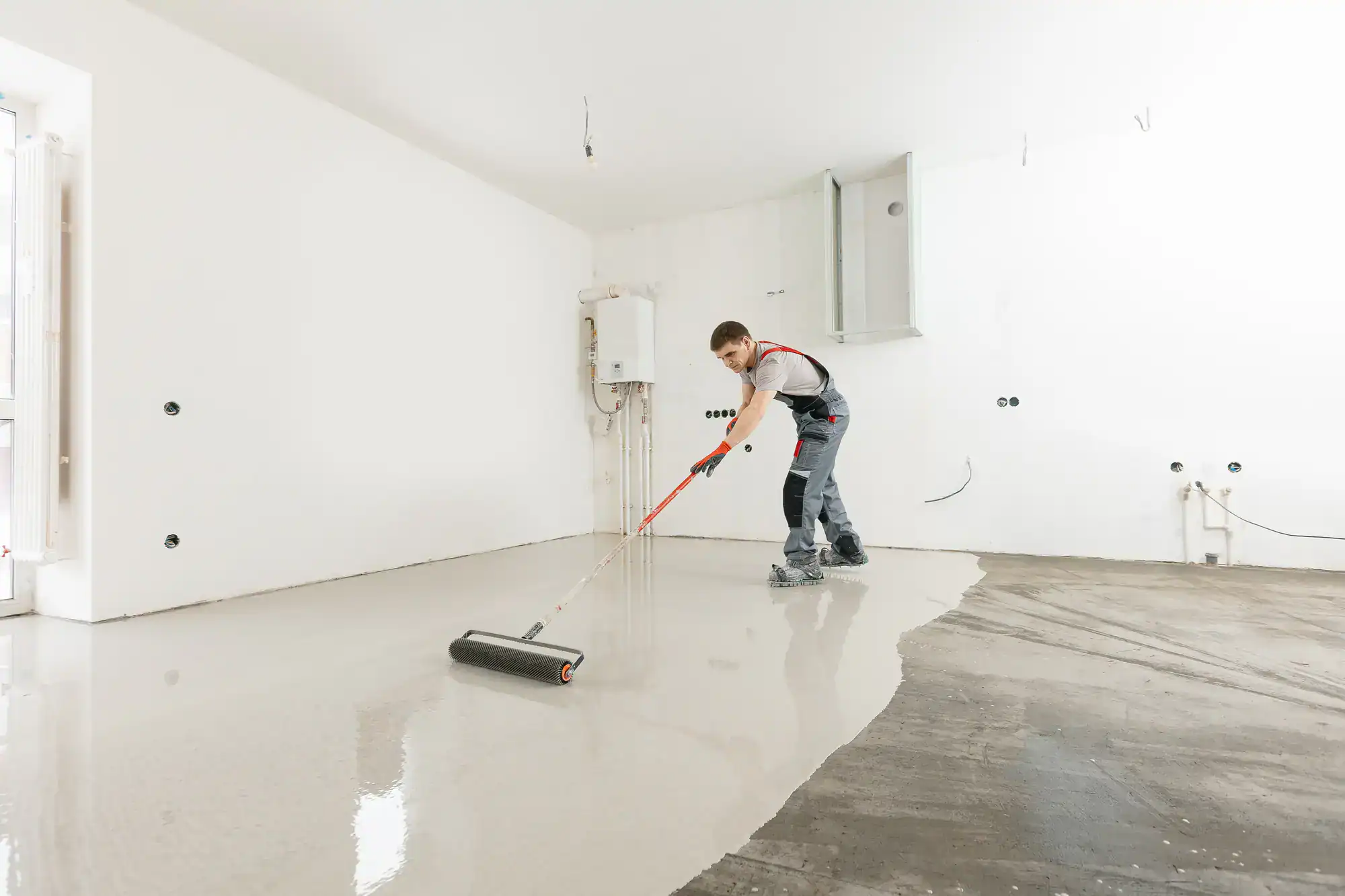
Big box store epoxy kits cost $150 to $300 for a two-car garage. That’s roughly one-tenth the cost of professional installation. The price difference seems significant until you understand what those kits actually contain—and why they consistently fail within two years.
Most DIY epoxy kits are water-based formulations containing 5% to 12% actual epoxy. The remainder is latex paint with additives. That’s not a professional coating reformulated for homeowners. It’s a fundamentally different product designed to hit a price point and be simple to apply. The performance difference is substantial.
The main failure mode is hot tire pickup. When you drive on highways, friction heats your tires to 135-150 degrees Fahrenheit. That heat transfers to your garage floor when you park. Water-based epoxy coatings have low heat tolerance—the heat softens the coating, making it tacky. When your tires cool and contract, they literally pull the softened coating off the concrete.
You’ll see it first under your front tires where you park regularly. Small patches where the coating has lifted. The patches grow over time. Within a year, you have significant peeling. Within two years, the floor looks worse than it did before you applied the coating because now you have failing epoxy mixed with exposed concrete.
Professional-grade systems use 100% solids epoxy or polyaspartic coatings. These materials have completely different chemical composition. They maintain hardness at high temperatures. They don’t soften when hot tires park on them. They’re also significantly thicker—professional installations typically apply 10 to 60 mils of coating compared to the few mils you get from DIY kits.
Surface preparation is the other critical failure point. DIY kits recommend acid etching—pouring muriatic acid on concrete to roughen the surface slightly. This creates minimal profile and doesn’t remove contaminants, old sealers, or the weak surface layer (laitance) that prevents proper bonding.
Professional installations use diamond grinding equipment. This mechanically removes the concrete’s surface layer, creates proper profile for bonding, and eliminates contaminants that cause adhesion failure. The difference is measurable—diamond grinding creates a profile that allows epoxy to bond at 300+ PSI while acid etching typically achieves less than 100 PSI bonding strength.
The result is predictable. DIY installations look acceptable initially. Within six months to two years, you see peeling, hot tire pickup, and coating failure. You’ve spent money and time, and you’re back where you started—except now you have to remove the failed coating before installing a proper system, adding to eventual cost.
Connecticut’s climate makes DIY failure even more likely. Our temperature extremes, road salt exposure, and freeze-thaw cycles stress coatings in ways that mild climates don’t. A marginal installation that might survive in Arizona fails quickly here. If you’re going to invest in epoxy flooring, professional installation isn’t optional—it’s the only approach that works long-term.
With professional installation and basic maintenance, epoxy garage floors last 15 to 20 years in residential settings—often longer. Some installations exceed 30 years when conditions are favorable. That lifespan depends on material quality, installation process, traffic patterns, and how you maintain the floor.
Professional-grade epoxy systems are substantially thicker than DIY coatings. Where a DIY kit might give you 3-5 mils of coverage, professional installations typically range from 10 to 60 mils depending on the system. That thickness determines how much wear the floor can absorb before the coating wears through to concrete.
The type of coating affects longevity significantly. Standard 100% solids epoxy provides excellent durability for most residential garages—typically 15-20 years. Polyaspartic systems like we install offer even better performance. They cure faster, have superior UV stability, resist yellowing better than traditional epoxy, and handle temperature extremes better.
That temperature tolerance matters in Connecticut. Your garage might see 95-degree summer days and -5-degree winter nights. Coatings that work fine in moderate climates can fail under thermal stress. Polyaspartic coatings maintain flexibility across wider temperature ranges, reducing the risk of cracking or delamination from thermal cycling.
Traffic patterns influence wear rates. A garage used primarily for parking two vehicles sees minimal wear. The tires always contact the same spots, but the forces involved are modest. Add a workshop area where you’re dragging heavy equipment, and you’ll see more surface wear over time. Even so, properly installed professional coatings handle residential use for decades.
Maintenance extends lifespan significantly. Epoxy floors are low-maintenance, but they’re not no-maintenance. Regular sweeping removes abrasive dirt and grit that can scratch the surface over time. Occasional mopping with mild detergent keeps the floor clean and preserves the topcoat. Promptly cleaning spills prevents any potential for staining or chemical interaction with the coating.
Connecticut’s specific challenges—freeze-thaw cycles, road salt, moisture—don’t affect properly installed epoxy the way they destroy bare concrete. The coating prevents moisture infiltration, so freeze-thaw damage can’t occur. Road salt sits on the surface and rinses away rather than penetrating and causing spalling. UV exposure from garage door openings doesn’t cause yellowing when you have a UV-stable topcoat.
The economics work out favorably. If you pay $3,500 for professional installation and the floor lasts 20 years, that’s $175 per year. Compare that to other flooring options that might cost less initially but require replacement every 5-7 years. The long-term cost per year makes epoxy one of the most economical choices available.
Epoxy garage floor coating makes sense when you’re done fighting problems that bare concrete can’t solve. If you’re tired of oil stains that never come out, frustrated by road salt damage that worsens every winter, or simply want a garage that functions like a real room instead of a concrete box, professional epoxy coating delivers.
The investment pays off in reduced maintenance time, longer floor life, and a space that genuinely adds value to your home. Connecticut winters are hard on garage floors. Professional epoxy coating is how you stop losing that battle every year and start winning it for the next two decades.
We specialize in garage transformations across Hartford County, New London County, New Haven County, and Middlesex County. We use commercial-grade materials, proper surface preparation techniques, and installation processes engineered specifically for New England’s climate challenges. When you’re ready to upgrade your garage floor, that’s where the conversation should start.
Summary:
Share: