Not all epoxy garage floors are built the same. Here's what separates a floor that lasts 15 years from one that peels by spring.
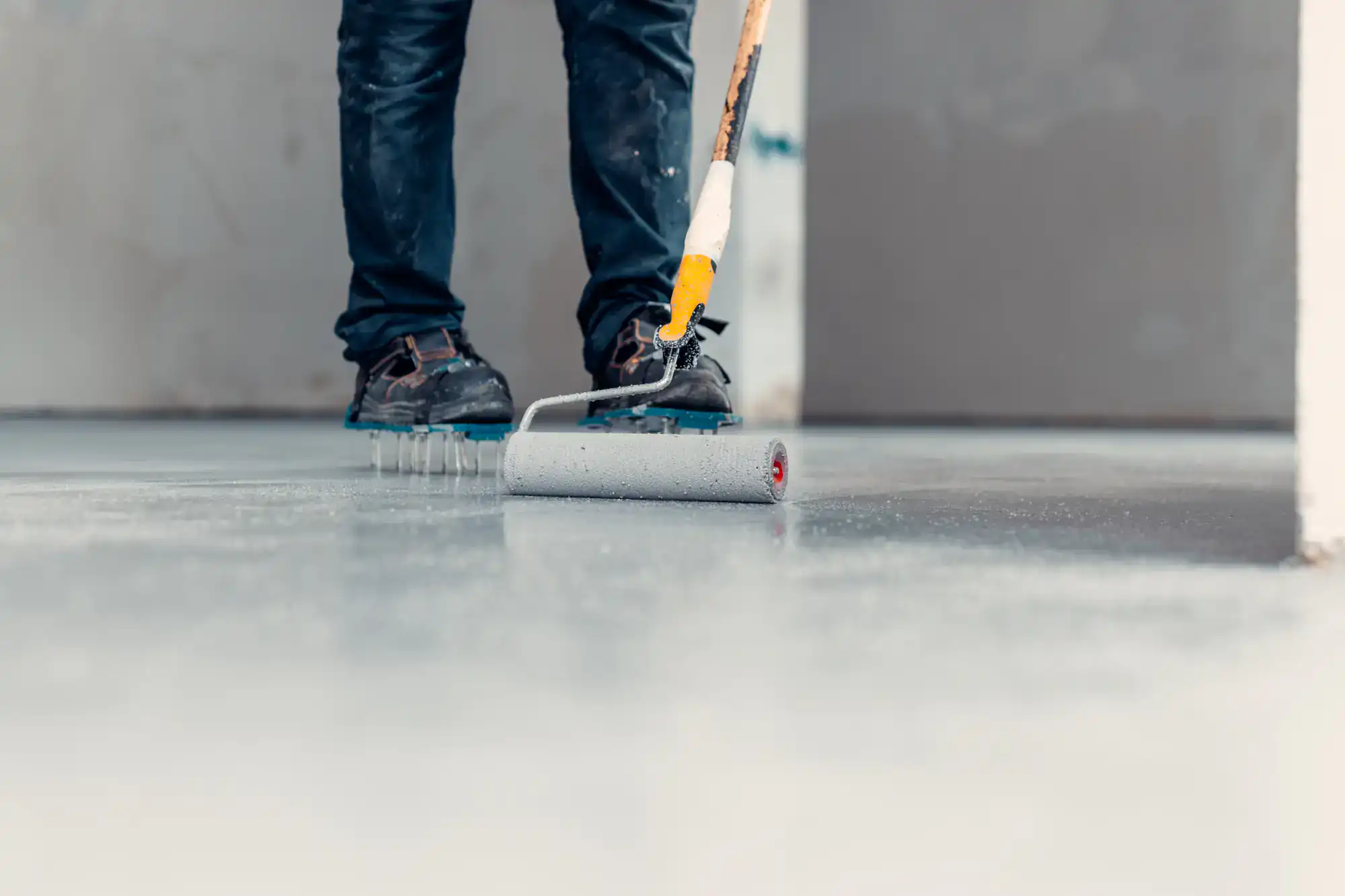
You’ve probably seen it — a garage floor that looked great for about one winter before the coating started bubbling, peeling back at the edges, or lifting right off the concrete in sheets. Maybe that was your floor. Maybe you’ve just heard enough stories to be skeptical.
That skepticism is fair. But it’s also pointed at the wrong target. The problem usually isn’t epoxy itself. It’s how the floor was prepared, what system was actually used, and whether the person who installed it understood what Connecticut winters actually do to a garage slab. We’ve installed hundreds of epoxy garage floors across Hartford County, New Haven County, New London County, and Middlesex County, and we’ve learned exactly what works and what doesn’t in this climate. Here’s what you need to know before making any decisions.
The short answer is surface preparation. Industry research consistently points to improper prep as the cause of roughly 80% of all coating failures. Not bad materials. Not bad luck. Bad prep.
When a floor is ground down with diamond equipment before coating, it creates a surface profile that lets the epoxy bond at a level that’s genuinely hard to reverse. When it’s just acid-washed — which is faster and cheaper — you get a surface that looks prepared but isn’t. The coating sits on top rather than bonding into the concrete, and eventually, it lets go.
The second most common culprit is moisture. Connecticut garages, especially in areas like Hartford County with clay-heavy soils, deal with moisture pushing up through the slab constantly. If that’s not accounted for before the coating goes down, you’ll see bubbling and delamination within months — sometimes weeks.
Hot tire pickup is exactly what it sounds like. You pull into the garage after driving, park on your coated floor, and when you back out later, the coating comes with you — stuck to the tires in patches. It’s one of the most common complaints about epoxy garage floors, and it’s also one of the most misunderstood.
Standard epoxy has a thermal threshold. When a tire that’s been driven on — especially in stop-and-go traffic or highway driving — makes contact with the floor, the heat transfers into the coating. If the epoxy isn’t formulated to handle that, it softens. The tire grips it. And when the car moves, the coating moves too.
The fix isn’t to avoid epoxy. It’s to use a polyaspartic topcoat over the base system. Polyaspartic coatings were originally developed for industrial and commercial environments — aircraft hangars, manufacturing floors, hospitals — specifically because they needed to hold up under conditions that would destroy standard epoxy. They have a significantly higher heat resistance, a stronger bond to the substrate, and they maintain that bond even when temperature swings are dramatic, which is a daily reality in a Connecticut garage from November through March.
This matters more here than it does in climates that stay relatively moderate year-round. Connecticut garages go from near-freezing overnight temperatures to a vehicle pulling in off a salted highway. That thermal stress is real, and a coating system that isn’t built for it will show you that within a season or two. We use polyaspartic topcoats on every garage floor we install — not as an upsell, but because it’s the only system we’re confident standing behind with a 15-year warranty. That number isn’t arbitrary. It reflects what the materials are actually capable of when they’re installed correctly.
The kits at the big-box stores are tempting. A few hundred dollars, a weekend of work, and your garage looks completely different — for a while. The problem is that “for a while” tends to mean one to three years before you’re back to square one, and sometimes less than that. Industry data puts the failure rate for DIY epoxy kits at around 30% within just two years. That’s nearly one in three projects that needs to be redone almost immediately.
Part of that comes down to the product itself. Consumer-grade epoxy kits use water-based formulas that are thinner, bond less aggressively, and have no UV-stable topcoat — meaning they’ll yellow in any garage that gets natural light. But a bigger part of it is what those kits ask you to do for prep, which is usually a basic acid wash and a scrub. That’s not enough to create the surface profile that a coating needs to actually hold.
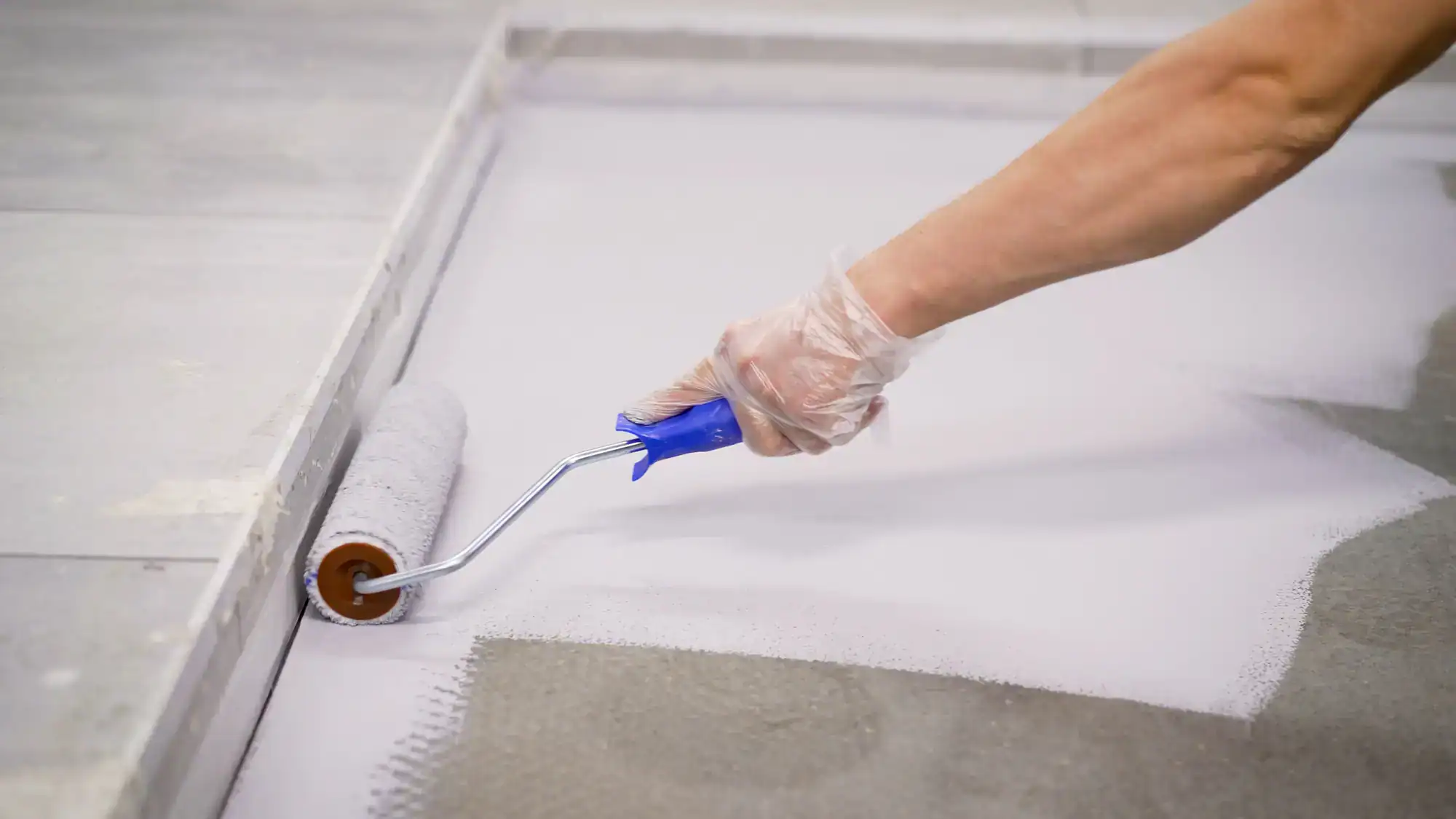
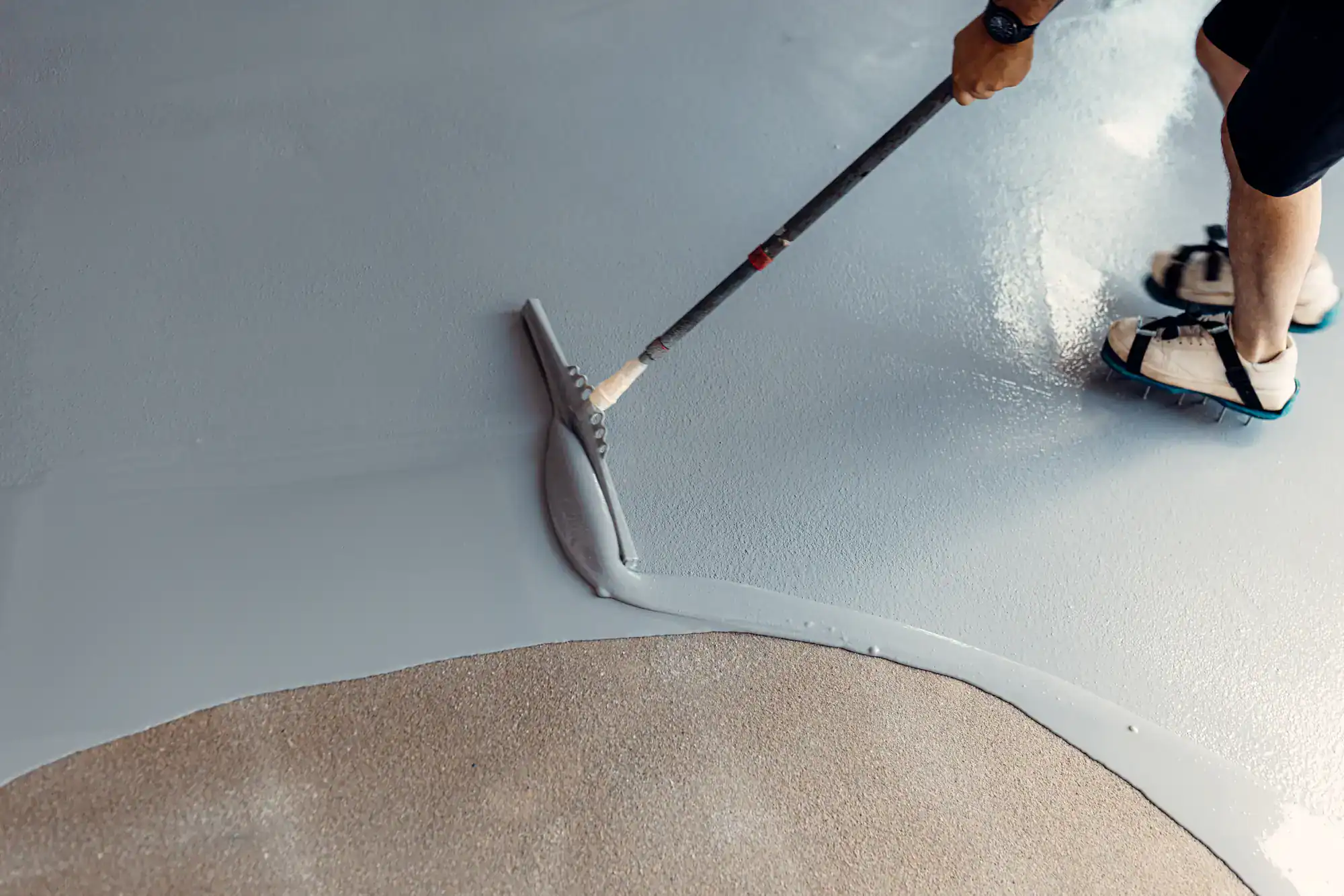
Our professional installation uses diamond grinding equipment that physically profiles the concrete surface — creating a texture at the microscopic level that the coating bonds into rather than just sitting on top of. It also includes moisture testing before anything goes down, a vapor barrier primer when moisture is present, crack repair, a commercial-grade base coat, a decorative layer if you want one, and a polyaspartic topcoat to finish. That’s a multi-layer system designed to last. A DIY kit is a single coat of product on a surface that may or may not have been properly prepared.
The cost comparison is real, but it shifts over time. A professional epoxy garage floor installation in Connecticut — for a standard two-car garage — typically runs between $4,000 and $5,500. A DIY kit costs a few hundred dollars. But if that kit needs to be redone every two to three years, the math changes quickly, and you’re spending that time and money on a floor that still doesn’t perform the way our professional system would from day one.
Want live answers?
Connect with a American Poly Floor expert for fast, friendly support.
The process matters as much as the product. A professional installation isn’t just better materials applied the same way — it’s a fundamentally different approach from the first step to the last.
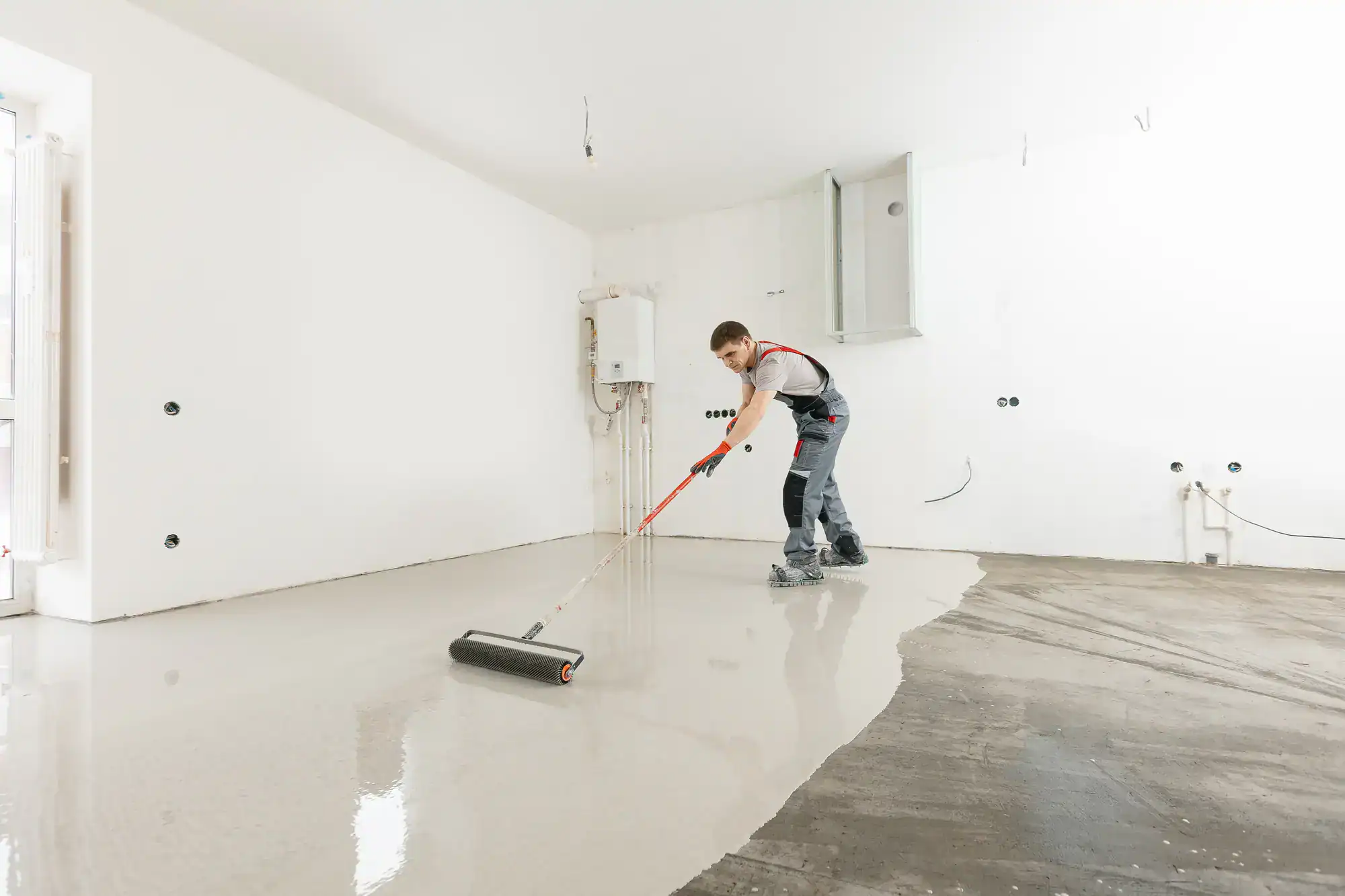
It starts with diamond grinding, which profiles the concrete surface to the right depth for adhesion. Then moisture testing, because applying a coating over a slab that’s pushing vapor upward is a guaranteed failure. If moisture is present, a vapor barrier primer goes down first. From there, it’s a base coat, a decorative layer if you’ve chosen one, and a polyaspartic topcoat to seal and protect everything underneath.
Most residential garages are done in two to three days. You can walk on the floor within 24 hours and park on it within 72. That’s a small disruption for a floor that’s built to hold up for 15 to 20 years.
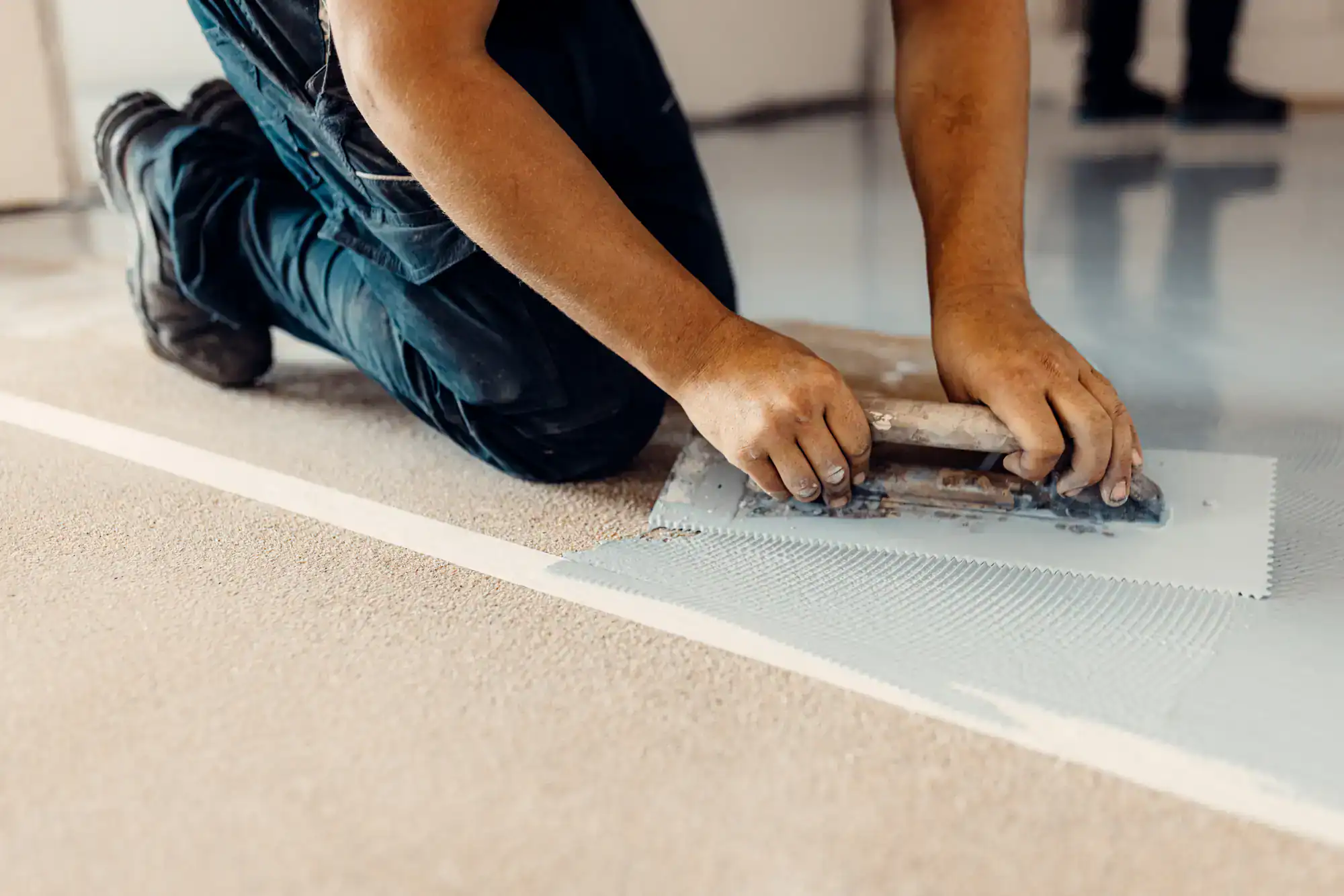
Connecticut is genuinely hard on garage floors. It’s not just cold winters — it’s the combination of factors that pile up over a season and compound over years.
The Hartford area crosses the 32-degree freezing threshold roughly 100 times a year. Every one of those cycles causes the concrete to expand and contract. Unprotected concrete absorbs water, that water freezes and expands inside the slab, and the surface starts to flake and pit — a process called spalling. Once it starts, it accelerates. A coated floor that seals the concrete stops that cycle before it begins.
Then there’s road salt. Connecticut roads are heavily treated from November through March, and that salt rides into your garage on your tires and undercarriage every single time you drive. On bare concrete, it penetrates the surface, reacts with moisture, and breaks the concrete apart from the inside. On a properly coated floor, it wipes off.
Hartford County’s clay-heavy soils add another layer. Clay expands when it’s wet and contracts when it dries, which puts pressure on the slab from below — contributing to cracking and moisture migration that you might not even notice until a coating fails. In New London County, the challenge shifts toward coastal humidity and salt air from Long Island Sound, which creates a more aggressive moisture environment year-round. Along the Connecticut River in Middlesex County, higher water tables mean hydrostatic pressure is a more persistent issue, particularly for garages in lower-lying areas. New Haven County’s shoreline towns — Branford, Guilford, Madison — deal with similar coastal conditions, while inland communities like Waterbury face the same freeze-thaw and salt issues as Hartford.
None of this is a reason to avoid coating your garage floor. It’s the reason to do it right the first time, with a system and an installer who understand what the floor is actually up against.
**How long does a professionally installed epoxy garage floor actually last?**
With a full polyaspartic system installed correctly — diamond grinding, moisture barrier, commercial-grade base coat, polyaspartic topcoat — you’re looking at 15 to 20 years in Connecticut’s climate. Standard epoxy without a polyaspartic topcoat runs closer to 5 to 10 years under the same conditions. DIY water-based kits typically need replacing every one to three years.
**My concrete has cracks. Can it still be coated?**
In most cases, yes. Crack repair is part of our professional installation process, not something that disqualifies a floor from being coated. Hairline cracks and surface damage are addressed before any coating goes down. The only situations that get complicated are active structural movement or severe moisture intrusion that hasn’t been resolved at the source — and those are things we assess during the estimate.
**Will it be slippery when it’s wet?**
This is a common concern, and it’s worth addressing directly. Our professional systems include anti-slip additives in the topcoat that provide grip even when the floor is wet — from snow tracked in off boots, dripping vehicles, or a hose-down. A properly finished floor is actually safer than bare concrete in wet conditions.
**How does Connecticut’s coastal environment affect a garage floor coating in New London County?**
Salt air from Long Island Sound doesn’t just affect the outside of your home — it creates a more aggressive moisture environment inside as well. Garages in East Lyme, Stonington, Groton, and the Mystic area deal with higher ambient humidity year-round, which increases the rate of moisture vapor transmission through concrete slabs. That’s why moisture testing and a vapor barrier primer aren’t optional steps for coastal installations in New London County — they’re the difference between a floor that holds and one that fails in the first season. We’ve installed hundreds of floors across New Haven County and Middlesex County as well, and we adjust our approach based on local soil conditions and water table issues specific to each area.
**What does it actually cost in Connecticut?**
For a standard two-car garage in Hartford County, New Haven County, New London County, or Middlesex County, a professional polyaspartic system typically runs between $4,000 and $5,500. The exact number depends on the square footage, the condition of the existing concrete, and the finish you choose. We’d rather give you a real number upfront than make you sit through a quote call to find out you were priced out from the start.
For most Connecticut homeowners, the answer is yes — but only if it’s done right. The floor itself isn’t complicated. What makes it work is the preparation underneath it, the quality of the materials used, and whether the system was chosen for the actual conditions your garage deals with, not just the conditions in a product brochure.
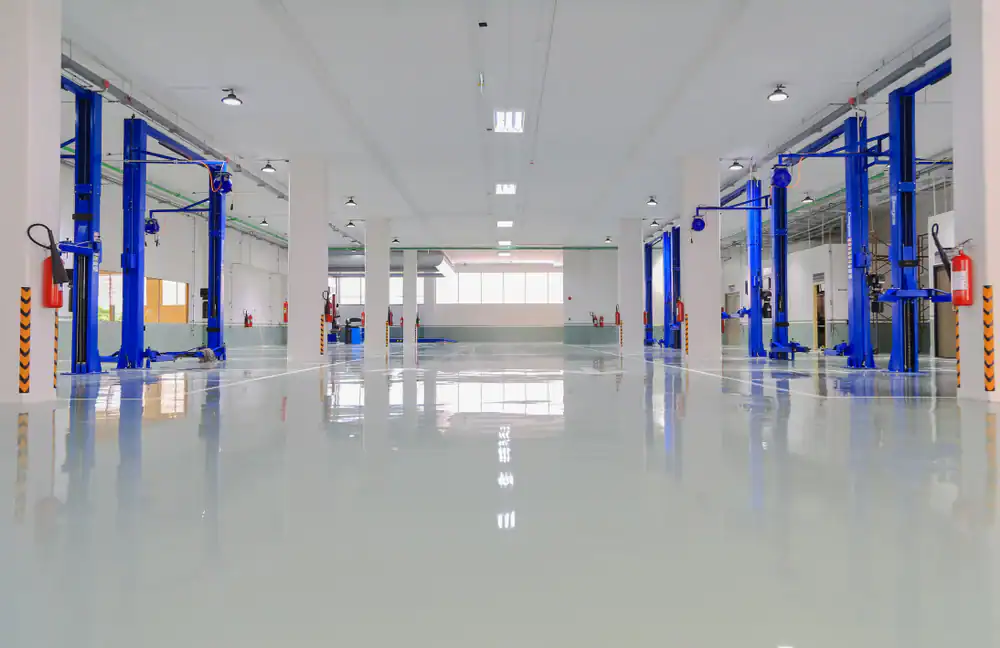
A floor that’s properly ground, moisture-tested, and finished with a commercial-grade polyaspartic topcoat will handle hot tires, road salt, freeze-thaw cycles, dropped tools, and oil spills without giving you a reason to think about it again for 15 years. That’s the version worth paying for.
If you’re in Hartford County, New Haven County, New London County, or Middlesex County and you’re trying to figure out whether your garage floor is a good candidate — or just want to understand what the process actually involves — we’re based in East Hartford and work across all four counties. Reach out for a straightforward conversation and a real estimate.
Summary:
Article details:
Share: