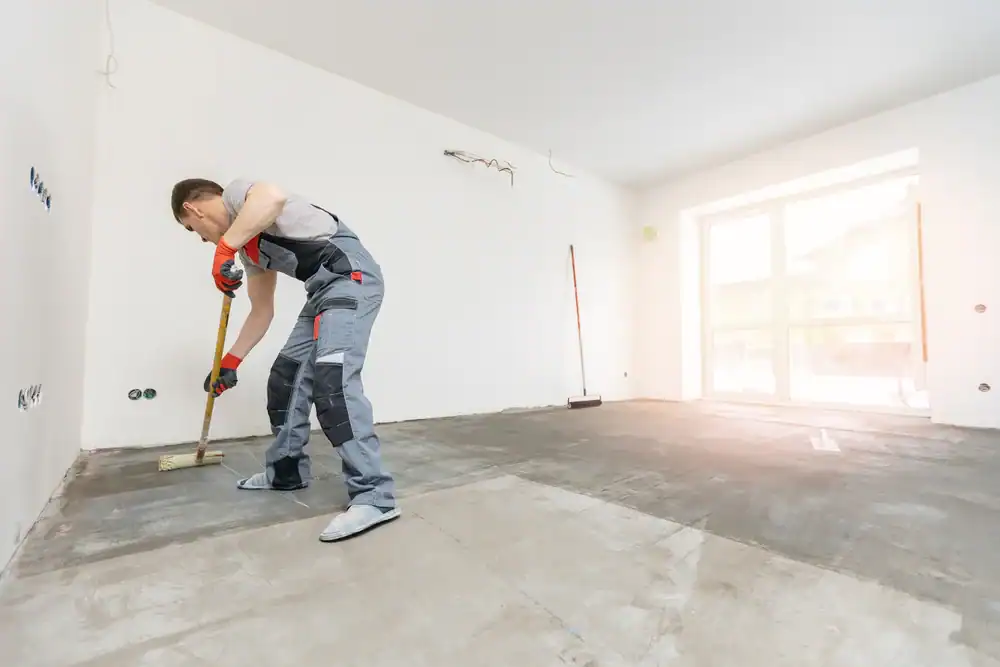
Connecticut winters are more brutal on garage floors than a Monday morning without coffee. Epoxy coating protects against salt, cracks, and stains while delivering a showroom finish that lasts decades.
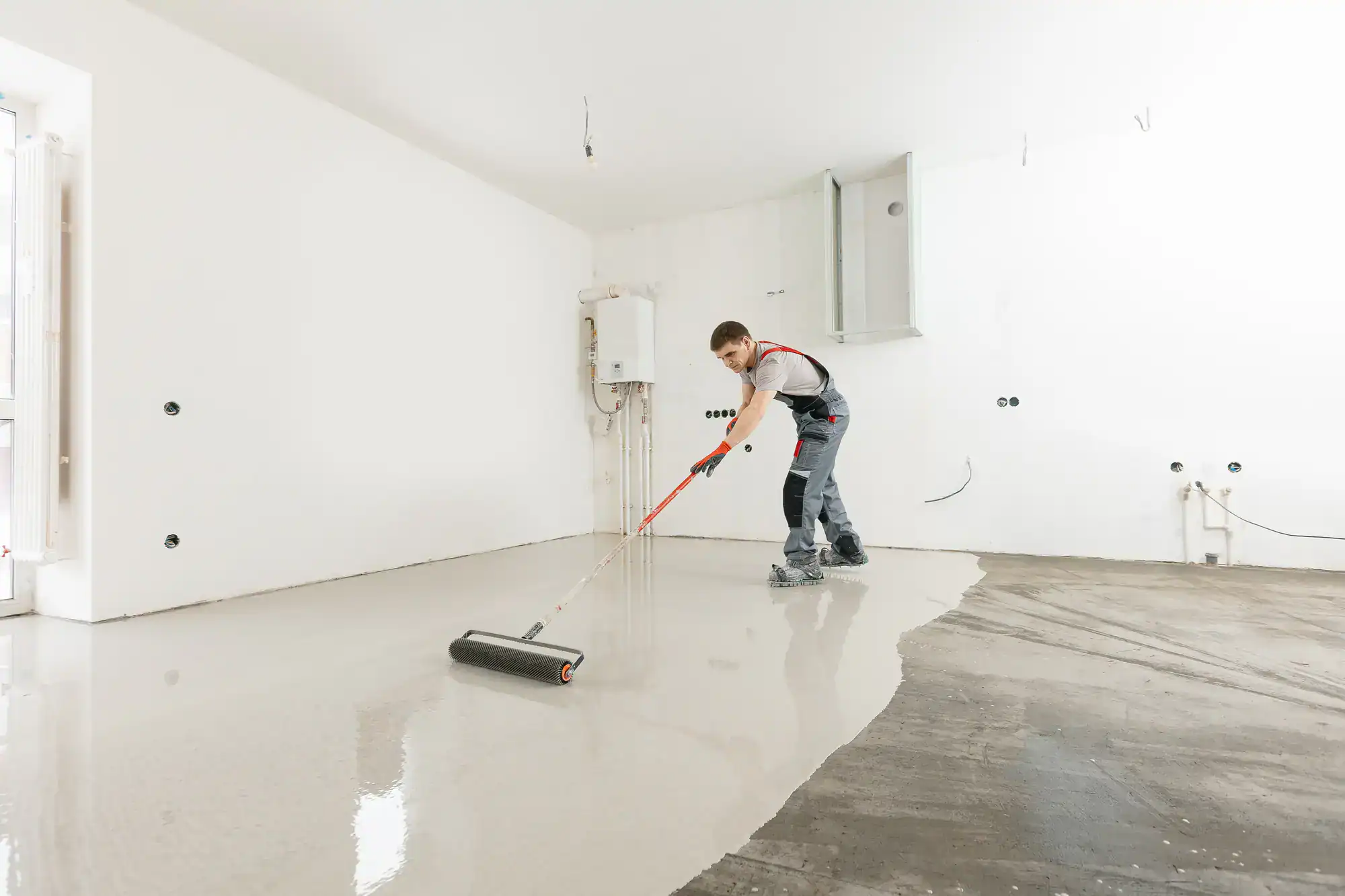
Standard concrete is basically a giant, heavy sponge. It drinks up water, oil, and road salt like it’s at an open bar.
In Connecticut, where road crews treat the streets with enough calcium chloride to preserve a mummy, your bare floor is under constant attack. “Garage floor paint” might look okay for a week, but it has serious commitment issues. It’s thin, it’s flimsy, and it peels the second a hot tire even looks at it.
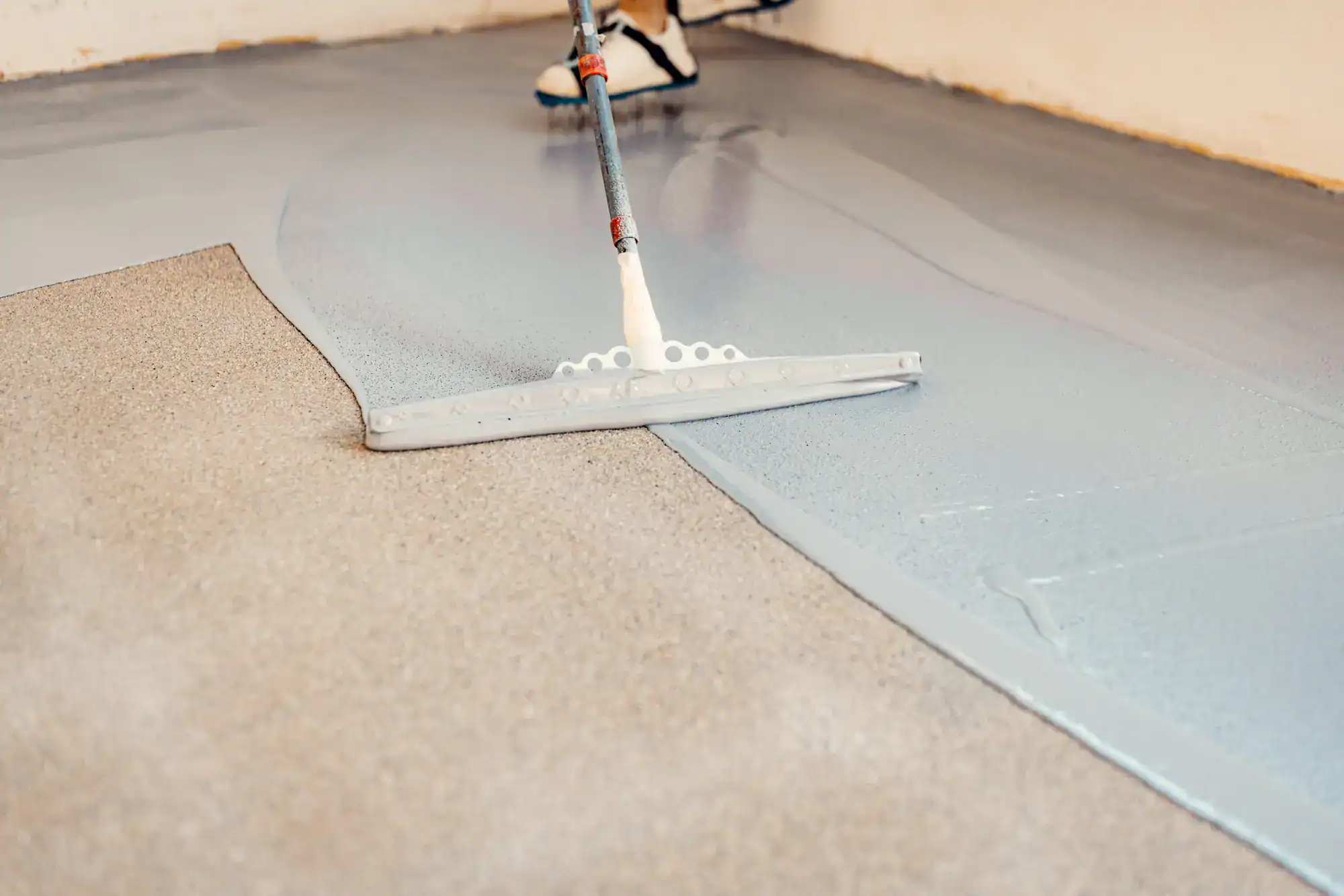
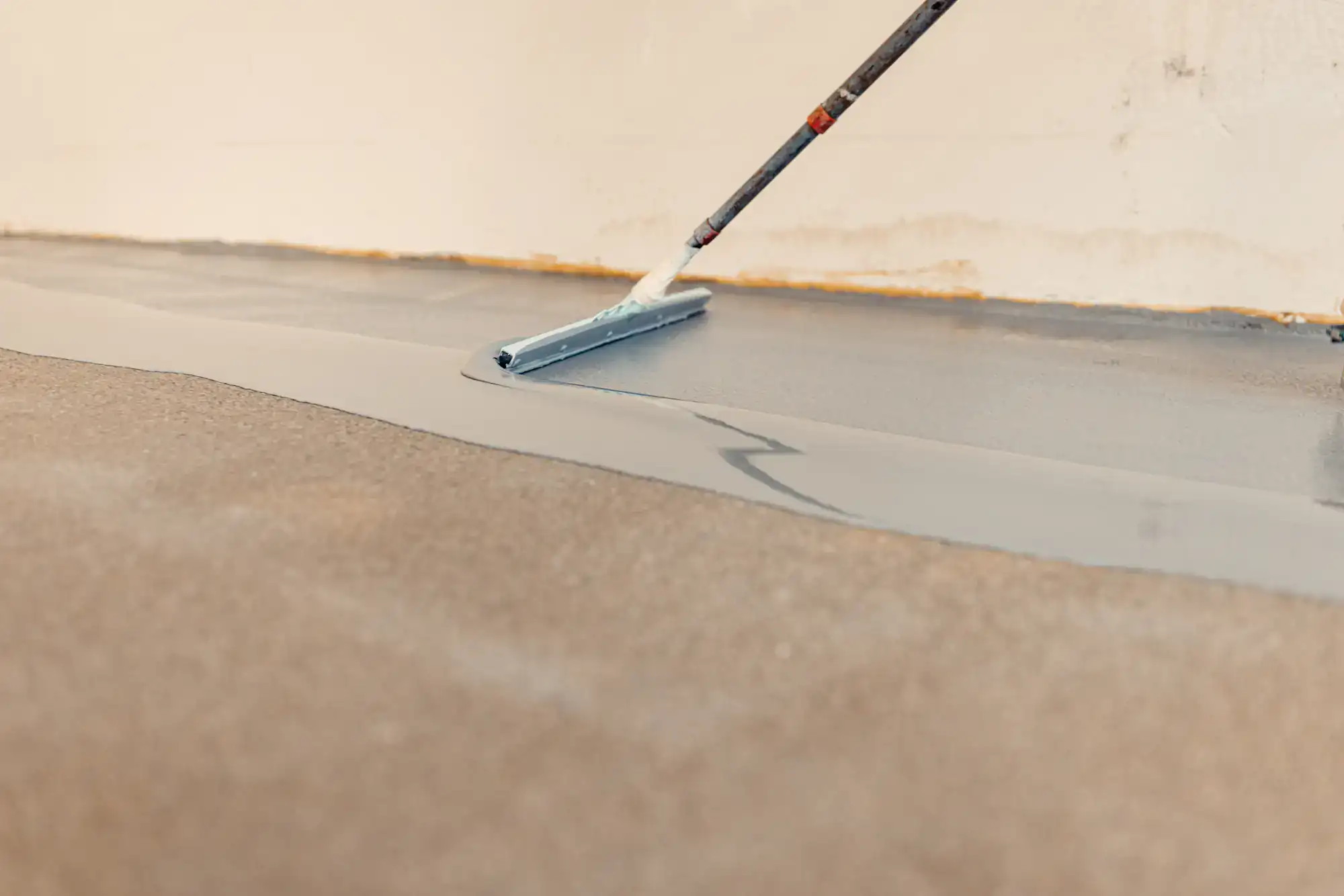
Epoxy is a different beast entirely. It’s a two-part chemical reaction—resin and hardener—that bonds to your concrete at a molecular level. It doesn’t just “sit” on the floor; it moves in, unpacks its bags, and becomes part of the architecture. Once it cures, you’ve got a rock-solid, non-porous shield that laughs in the face of chemical spills and heavy SUVs.
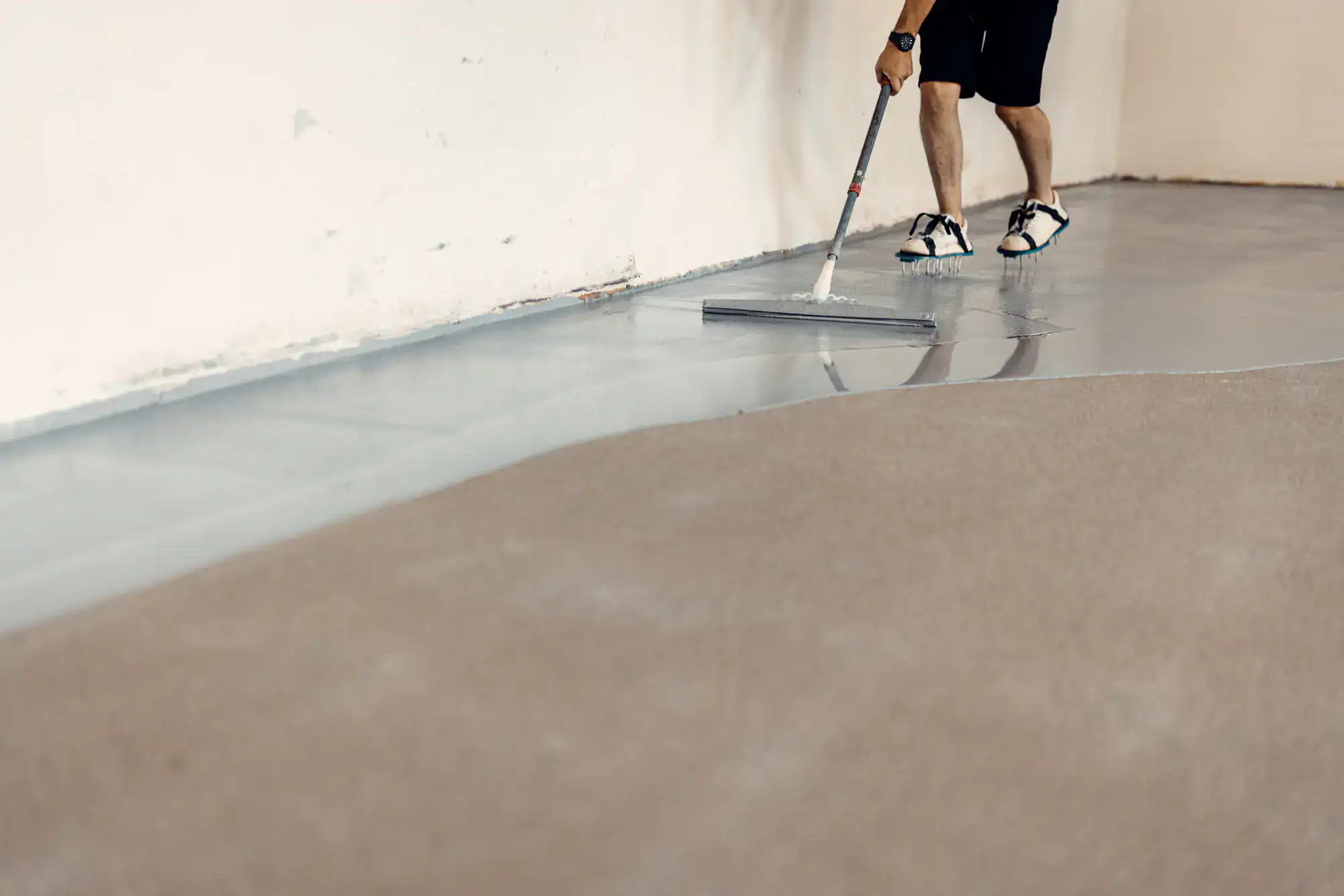
Road salt is the silent assassin of Connecticut garages. When your tires track in that winter slush, it seeps into the pores of your concrete. When that moisture freezes, it expands with enough force to literally “pop” the surface of your floor. This is called spalling, and it’s why your garage floor currently looks like a relief map of the moon.
Then there’s “subfluorescence”—a fancy word for those white salt stains that keep coming back to haunt you. Salt crystals grow inside the concrete, expanding and fracturing the surface from the inside out.
Epoxy puts an end to this chemical drama. It creates a waterproof seal so salt and brine stay on the surface. You can literally hose the “Salt-pocalypse” right out the garage door. No soaking, no freezing, no cracking. Just a clean floor and a much happier homeowner.
We’ve all seen those $100 epoxy kits at the big-box stores. They look so easy in the YouTube video, don’t they?
Here’s the reality: those kits are usually water-based “epoxy-lite.” They have about as much staying power as a New Year’s resolution. Professional installation involves industrial diamond grinding to “open” the concrete’s pores. Without that mechanical bond, the epoxy is basically just a giant sticker waiting to be peeled off by your tires.
About 30% of our business is fixing DIY disasters where the floor started flaking off after six months. Homeowners end up paying twice—once for the kit and the weekend they’ll never get back, and once for us to do it right. The math is simple: a $2,500 professional floor that lasts 20 years costs you $12 a month. A $300 kit that dies in a year? That’s just a very expensive hobby.
Want live answers?
Connect with a American Poly Floor expert for fast, friendly support.
A professionally installed epoxy floor is designed to last 10 to 20 years in a residential garage. Some outlast the cars parked on them.
Maintenance is almost suspiciously easy. You don’t need to wax it, buff it, or negotiate with it. Most of the time, a quick run with a dust mop is all it takes to keep it looking like a showroom. Since the surface is non-porous, dust doesn’t “stick,” and dirt doesn’t get ground in. If things get really muddy after a storm, a mop and some warm water (maybe a splash of ammonia or pH-neutral soap) will bring back that “just installed” shine.
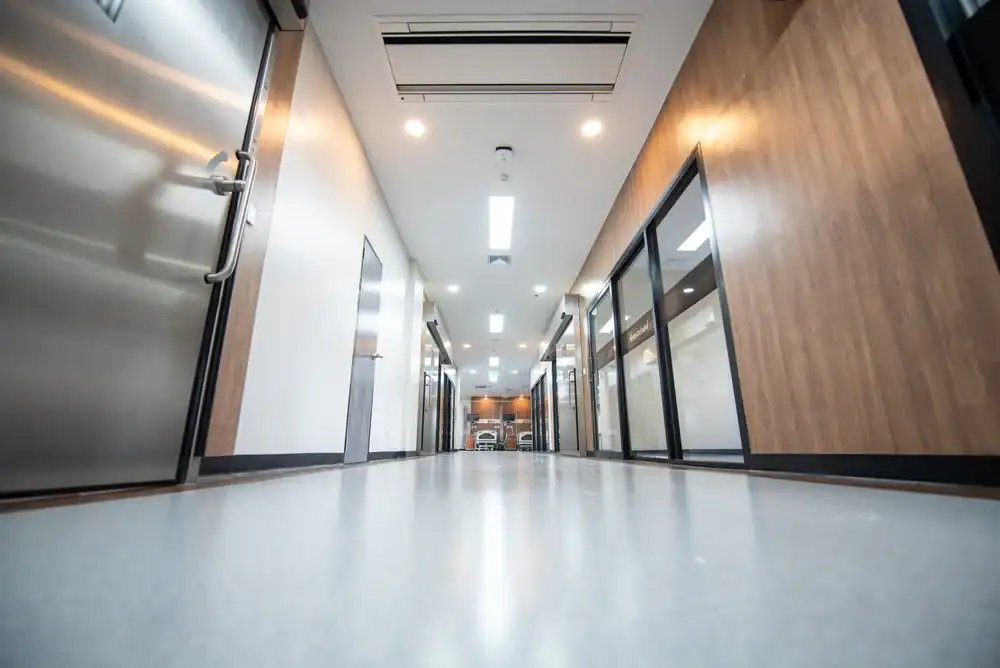
Not all epoxies are created equal. We use 100% solid systems—the heavy-duty stuff. In Connecticut, we also have to account for UV rays and temperature swings.
Cheap epoxies can “amber” (turn yellow) if they get too much sun. That’s why we use UV-stable topcoats like polyaspartic or polyurethane. These topcoats act like high-SPF sunscreen for your floor, keeping the colors bright and the surface scratch-resistant.
No matter if you’re in Hartford or New London, the secret to longevity is keeping the “grit” off the floor. Sand and salt act like sandpaper under your tires, so a quick sweep now and then goes a long way. It’s basically the only work you’ll have to do for the next two decades. Not a bad deal, right?
Marketing departments love calling everything “epoxy.” You’ll see “one-part epoxy paint” on shelves, which is a bit like calling a tricycle a motorcycle because it has wheels. “Paint” dries when the water inside it evaporates. It leaves behind a thin, fragile film. True “Epoxy” cures through a chemical reaction that generates heat and creates a hard, plastic-like structure.
If you drop a hammer on a painted floor, you get a chip. If you park a car after a long highway drive on a painted floor, the heat from the tires will literally “pick up” the paint when you pull out the next morning. Professional epoxy doesn’t flinch. It’s built for the “hot tire” reality of daily life.
If you’re tired of your garage looking like a neglected basement, it’s time to join the epoxy revolution. It protects your slab from the “salt-and-ice” special we get every winter, it’s a breeze to clean, and it actually adds value to your home.
This isn’t just about aesthetics; it’s about not having to worry about your floor for the next 20 years. At American Poly Floor, we bring the industrial-grade gear and the New England expertise to make sure your floor is done once and done right. We serve Hartford, New Haven, New London, and Middlesex Counties with pride (and a lot of diamond grinders).
Summary:
Share: