Wondering what professional epoxy installation actually costs in Connecticut? Here's an honest breakdown — with local pricing, real variables, and what you need to know before hiring.
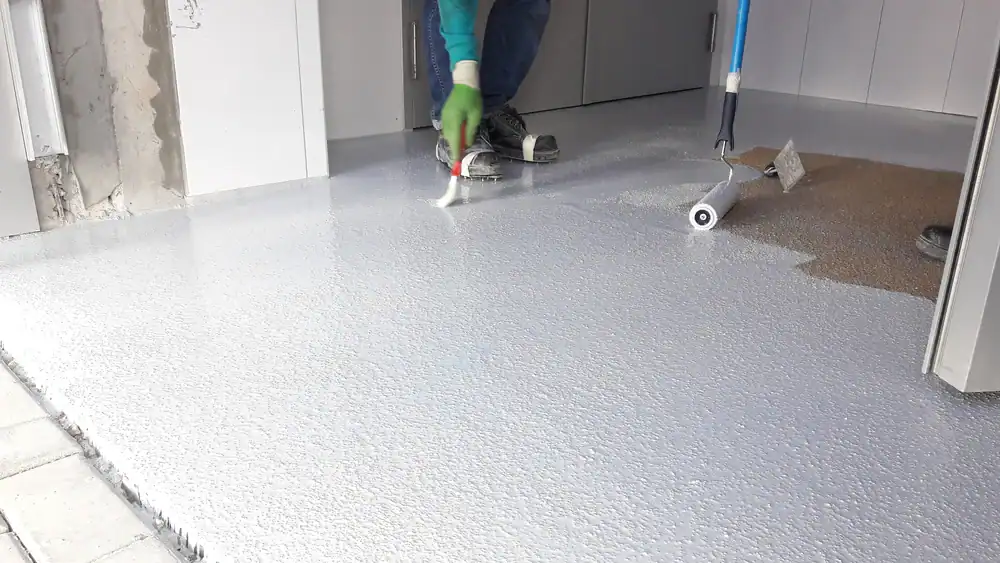
You’ve probably already seen the range. One contractor quotes $1,800. Another quotes $4,500. Same garage, same square footage — and you’re left wondering what you’re actually paying for. That’s not a coincidence. Epoxy flooring pricing varies widely because the work behind it varies just as much. In Hartford County, where winters are hard on concrete and moisture is a constant issue, the difference between a cheap install and a proper one shows up fast. This guide gives you real 2026 pricing, explains what drives the cost, and helps you figure out what a quality floor is actually worth.
Based on current market data and completed projects across Hartford County, professional epoxy installation typically runs between $5 and $12 per square foot installed. A standard two-car garage — roughly 400 to 500 square feet — lands most homeowners somewhere between $2,000 and $4,500, depending on the condition of the concrete and the coating system they choose.
Nationally, the averages sit a little lower. But Hartford County isn’t a national average kind of market. Labor costs here are higher, older homes with aging slabs are common, and the climate demands more from both the prep work and the materials. Prices in 2026 have also ticked up roughly 3 to 5 percent from prior years due to material cost inflation and tighter labor availability.
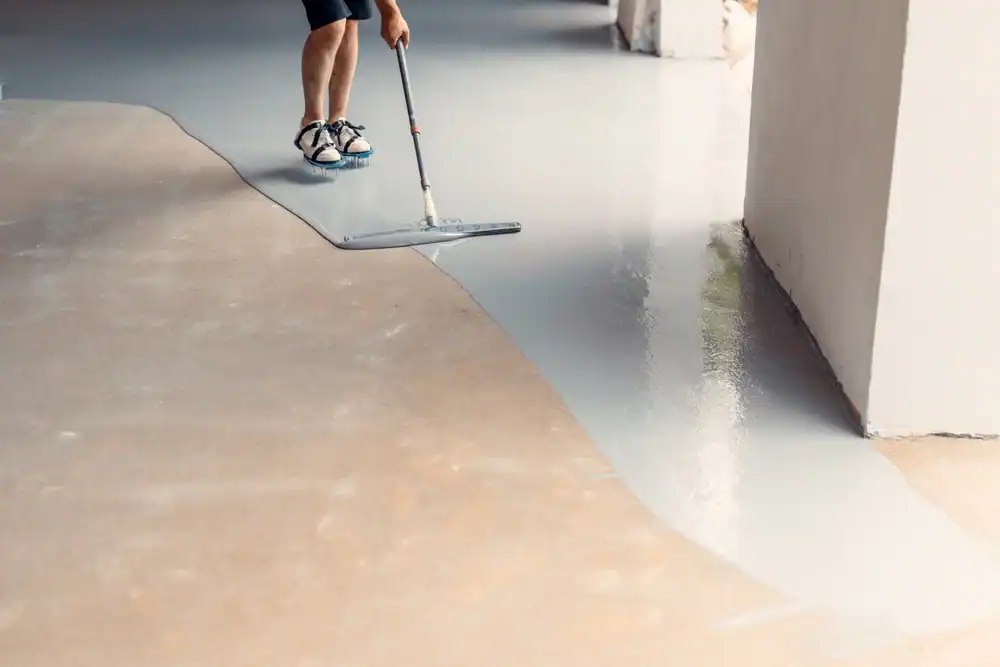
This is where a lot of buyers get tripped up. Two quotes can look very different on paper even when the scope sounds the same, because what’s included in each quote is rarely identical. A thorough professional installation covers concrete surface preparation, crack repair, moisture testing, primer application, the epoxy or polyaspartic coating system itself, a decorative broadcast layer if applicable, and a topcoat sealer. Labor accounts for roughly a third to more than half of the total project cost, which is why you’ll see such a wide range depending on who you hire and what they’re actually doing.
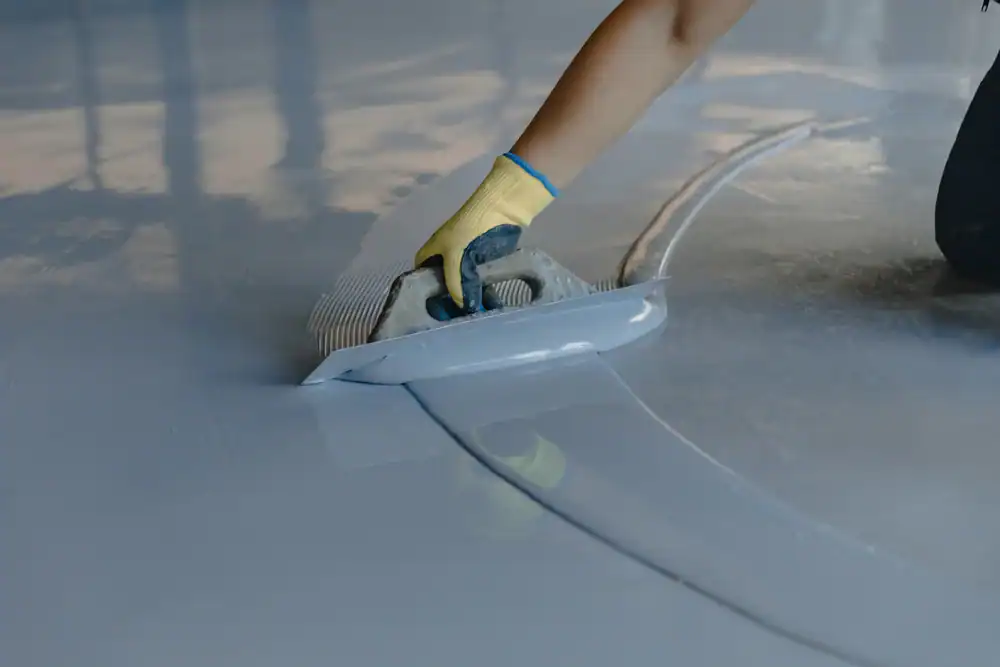
Surface preparation is the piece that separates a floor that lasts from one that doesn’t. We diamond-grind every floor we install — not acid-etch. Grinding opens the concrete at a mechanical level that acid can’t replicate, which is what creates a bond strong enough to survive Hartford County winters. Up to 80 percent of epoxy failures trace back to inadequate prep work, and most of those failures happen in the first two winters.
Moisture testing and vapor barrier application add cost, but in Hartford County they’re rarely optional. The region’s water table, combined with seasonal ground moisture changes, creates vapor pressure beneath concrete slabs — even ones that look and feel completely dry. Without a vapor barrier primer, that moisture pushes up through the slab and lifts the coating from below. We see this on floors all across Hartford County, from older ranch homes in Glastonbury to newer construction in Simsbury. It’s not a corner case. It’s the norm.
When you’re comparing quotes, ask each contractor what their prep process looks like, whether they test for moisture, and what their warranty actually covers. Those answers will tell you more than the price itself.
Not all epoxy floors are the same product, and the coating system you choose has a significant effect on cost. A basic solid-color epoxy system typically runs $4 to $7 per square foot installed. A decorative flake system — the most popular choice for residential garages — runs $5 to $9. Metallic epoxy, which creates a marbled, high-end look, can reach $8 to $18 per square foot depending on complexity. Quartz broadcast systems, often used in commercial kitchens and healthcare spaces, fall in the $7 to $14 range.
Polyaspartic coatings sit at the higher end of the price range, and for most Hartford County homeowners and business owners, they’re worth it. Polyaspartic systems cure faster — light foot traffic in as little as 24 hours — and they’re UV-stable, which means they won’t yellow or dull under sun exposure the way standard epoxy does. In a state with four distinct seasons and real UV exposure in the summer months, that matters. Standard epoxy can look great in October and noticeably faded by the following July.
For commercial applications — warehouses in East Hartford, manufacturing facilities in Bristol, food service operations in Hartford proper — the coating system requirements are more specific. Chemical resistance, slip ratings, seamless surfaces for sanitation compliance, and load-bearing capacity all factor into the spec. Commercial-grade systems typically add 20 to 30 percent to the total project cost compared to residential-grade work, and that’s before accounting for square footage, which is usually much larger. We’ve installed floors for clients like Costco, Amazon, and Foxwoods — and the standard those projects demand is the same standard we apply to every job we take on.
Want live answers?
Connect with a American Poly Floor expert for fast, friendly support.
When you look at national cost guides, you’ll see ranges like $3 to $10 per square foot and averages around $2,500 for a standard garage. Those numbers aren’t wrong — they’re just not Hartford County. The region sits in a climate zone that puts specific demands on concrete coatings, and meeting those demands costs more than a generic install in a milder market.
The freeze-thaw cycle is the main driver. Hartford County averages 30 to 35 days per year where temperatures cross the freezing threshold — which means concrete surfaces go through repeated cycles of expansion and contraction every single winter. A coating that isn’t bonded at the right depth and applied over properly prepared concrete won’t survive that. Road salt compounds the problem. Connecticut uses heavy de-icing chemicals on I-84, I-91, Route 44, and local roads throughout the county, and that salt gets tracked into garages and warehouses where it actively corrodes weak coatings.
A significant portion of Hartford County’s housing was built before 1970. Towns like West Hartford, Farmington, Glastonbury, and Simsbury have beautiful older neighborhoods — and concrete slabs that reflect their age. Pre-1970 slabs are more likely to have surface cracks, previous sealers or paints that need to be removed, higher moisture content, and uneven surfaces that require leveling before any coating can be applied. All of that adds prep time, and prep time adds cost.
This isn’t a problem unique to older homes. Even newer construction in places like Avon or Canton can have slabs with moisture issues depending on the site drainage and soil conditions. The point is that an accurate quote for a Hartford County floor almost always requires a physical site visit. Any contractor who gives you a firm number over the phone without seeing your concrete is either guessing or cutting corners — neither of which works in your favor.
When we visit a job site, we’re looking at the surface condition, checking for cracks and previous coatings, testing moisture levels, and assessing whether a vapor barrier is needed. That assessment shapes the quote, and it’s why our pricing is specific rather than approximate. A floor in a 1955 ranch in Wethersfield and a floor in a 2010 colonial in Avon are going to have different prep requirements, and the cost reflects that.
The upside of doing it right is a floor that genuinely lasts. Professionally installed epoxy, applied over properly prepared concrete with appropriate moisture mitigation, holds up for 10 to 20 years. That’s the realistic lifespan of a quality system. When you factor that against the 3 to 5 year lifespan of a DIY kit (which fails within two years about 30 percent of the time), the math on professional installation is straightforward.
The Home Depot kits look appealing. You’re looking at $200 to $400 in materials, a weekend of your time, and a floor that looks great in the photos. The problem is what happens after the first Hartford County winter.
DIY epoxy kits are water-based, thin, and designed for easy application — not longevity. They don’t require the surface preparation that a professional system does, which means they’re going on concrete that isn’t truly clean, open, or dry. When moisture pushes up through the slab, or when road salt gets tracked in and sits on the surface, or when a hot tire sits on the coating for a few minutes, the coating lifts. Peeling, bubbling, and hot tire pickup are the three most common complaints from homeowners who’ve tried the DIY route in this climate.
The real cost of a DIY install isn’t the $300 kit. It’s the $300 kit, plus the cost of removing the failed coating (which requires grinding and can run $1 to $3 per square foot on its own), plus the cost of the professional installation you end up doing anyway — now on a timeline you didn’t plan for. We hear this story regularly from homeowners in West Hartford, Glastonbury, and Bloomfield who did their garage two or three years ago and are now starting over.
Professional installation at $5 to $12 per square foot includes the prep work, the materials, the labor, and — when you work with us — a 15-year warranty that covers delamination, moisture failure, and coating breakdown. That’s not a vague “we’ll come take a look” warranty. It covers the specific failure modes that actually happen to epoxy floors in Hartford County. We also offer a 10-year insurance-backed warranty program, which means there’s a third-party financial guarantee behind the coverage — not just our word.
If the upfront cost is the main concern, the honest answer is that the gap between DIY and professional narrows significantly when you account for the full lifecycle of the floor. A professional system installed once and maintained properly costs less over 15 years than multiple rounds of DIY kits and the prep work that comes with removing them.
The biggest factors in your final cost are the size of the space, the condition of the concrete, the coating system you choose, and whether moisture mitigation is needed. In Hartford County, that last one almost always comes into play. Climate, older housing stock, and the region’s water table make vapor barrier work a standard part of most installations here — not an optional upgrade.
What you’re really paying for in a professional installation is preparation, materials that are built to last in this climate, and a warranty that means something. The square footage is just the starting point.
If you’re ready to get an accurate number for your specific floor, we offer free on-site assessments across Hartford County and all of Connecticut. We don’t quote over the phone, because your floor deserves a real look — and so does your budget.
Summary:
Article details:
Share: