Not all concrete contractors in Hartford County are built the same. Here's what to look for before you hire — and what most people miss until it's too late.
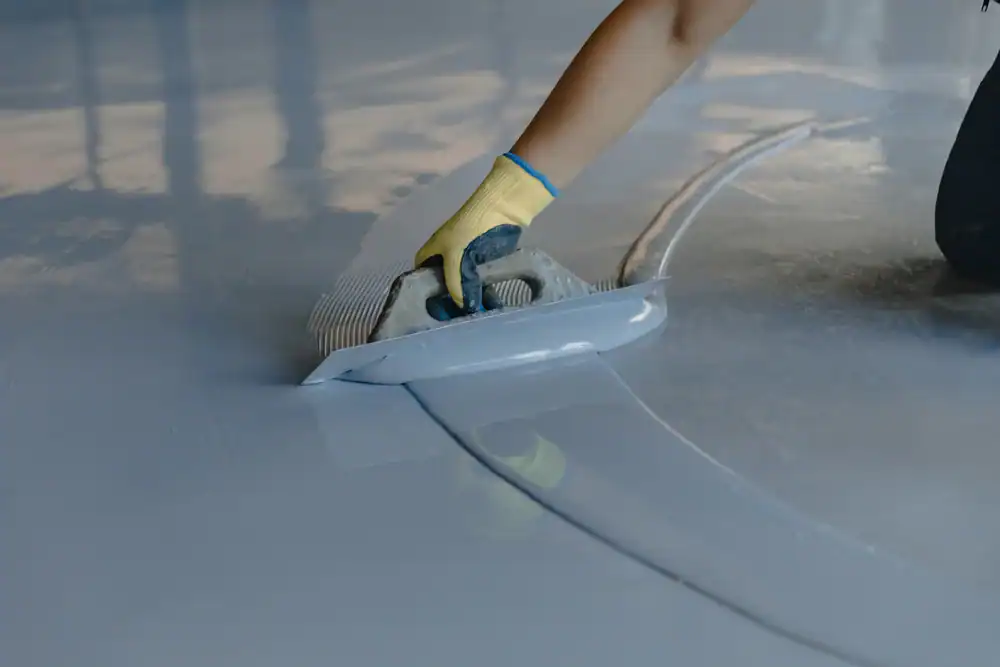
If you’ve been searching for concrete contractors in Hartford County, you already know the problem — there are plenty of names out there, but very few that give you a clear reason to trust them. Most listings look the same. Reviews are hit or miss. And once the work is done, you’re stuck with whatever they left behind.
Hartford County’s climate doesn’t forgive shortcuts. Between road salt, freeze-thaw cycles, and the moisture that works its way up through slabs all winter long, the difference between a contractor who knows Connecticut and one who doesn’t shows up fast. Here’s what to actually look for.
The best concrete contractors in Hartford County aren’t necessarily the ones with the flashiest trucks or the lowest quote. We’re the ones who ask the right questions before we start — and whose work is still holding up five years later.
What separates quality work comes down to a few non-negotiables: proper surface preparation, moisture testing before any coating goes down, commercial-grade materials, and a warranty that actually means something. In a market where plenty of contractors will show up, slap down a product, and move on, those details are what you’re really paying for.
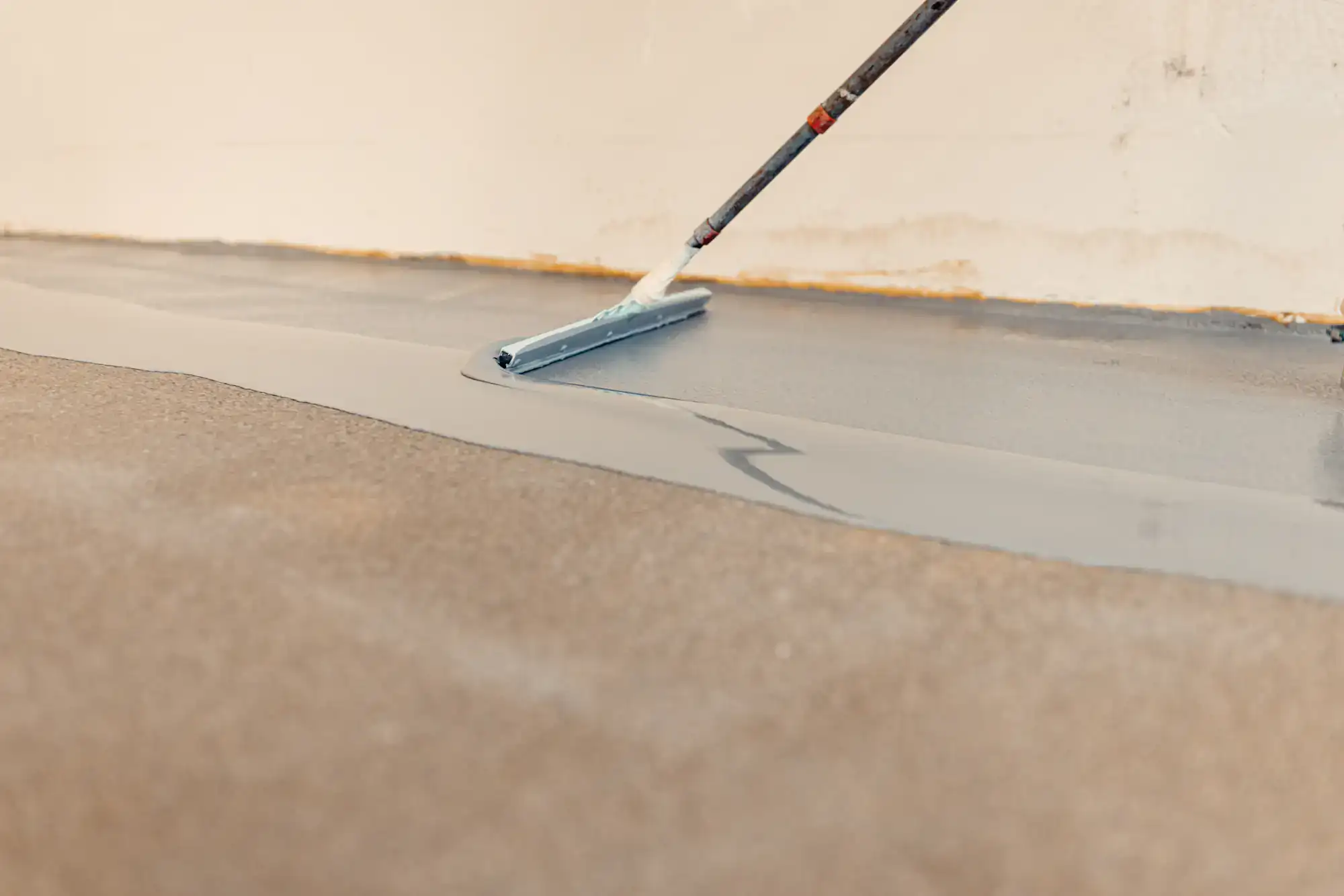
Connecticut doesn’t have a concrete-specific license. What the state does require is that any contractor doing home improvement work over $200 be registered with the Department of Consumer Protection. That’s a low bar. It means the credential alone tells you very little — and why everything else about how a company operates matters more than a single piece of paper.
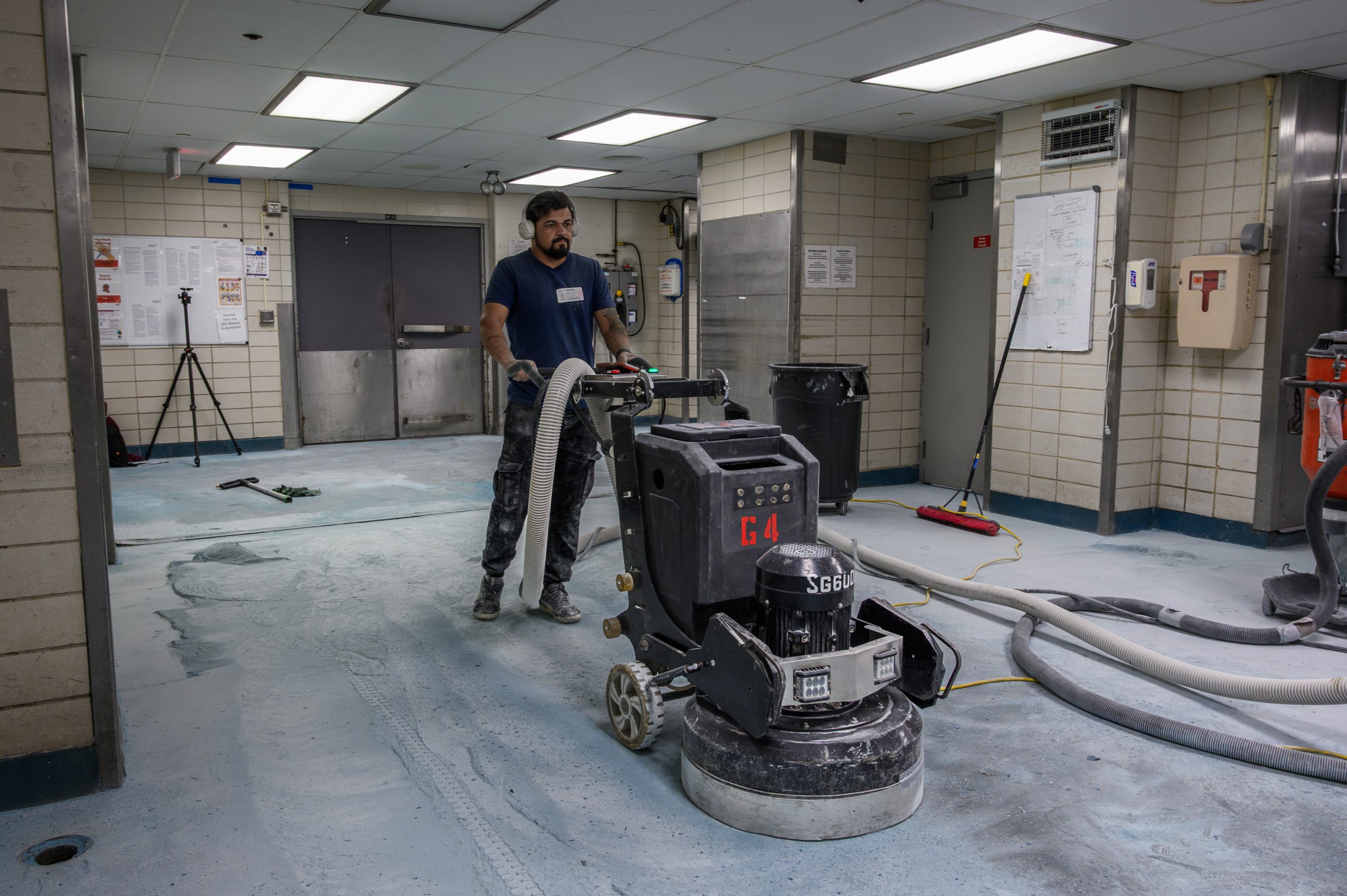
When you’re comparing concrete contractors in Hartford County, the first thing worth asking is how we prepare the surface. Diamond grinding — not acid etching, not a light sand — is the standard for any coating system that’s meant to last. It opens the concrete’s pores, removes contaminants, and gives the coating something real to bond to. Up to 80% of epoxy failures trace back to poor surface prep.
The second thing to ask about is moisture. Connecticut’s water table and seasonal humidity push vapor up through slabs constantly — especially in basements and ground-level garages. A slab can look completely dry and still be transmitting enough moisture to cause a coating to bubble and peel within months. Professional contractors test for it before they mix anything. If a contractor skips that step or dismisses the concern, that’s your answer.
Warranty terms are the third filter. A real warranty specifies what it covers — delamination, moisture failure, coating breakdown — and for how long. A vague “we stand behind our work” isn’t a warranty. It’s a way to avoid having one. Ask for the terms in writing before you sign anything.
Finally, look at their commercial portfolio. A contractor who has installed flooring at high-traffic facilities — distribution centers, resort casinos, healthcare buildings — has been held to a different standard than someone who only does residential driveways. That experience translates directly to the quality of what we’ll do in your garage or on your shop floor.
Most contractor evaluation advice is written for a generic market. Hartford County isn’t generic. Central Connecticut sees dozens of freeze-thaw cycles every winter — temperatures that cross the freezing threshold repeatedly from November through March, expanding water inside concrete and breaking it apart from the inside out. Add road salt tracked in from every major route through West Hartford, Manchester, Glastonbury, and Enfield, and you have a recipe for concrete deterioration that accelerates fast on unprotected or improperly coated surfaces.
Older housing stock compounds the problem. A significant portion of Hartford County homes were built between the 1950s and 1970s. Those slabs have had decades to absorb contaminants, develop hairline cracks, and build up moisture issues that aren’t visible on the surface. A contractor who doesn’t account for that history — who treats a 1962 East Hartford garage the same way they’d treat a freshly poured slab in a new development — is going to produce a result that reflects that oversight.
This is also why the vapor barrier conversation matters so much here specifically. Connecticut’s seasonal water tables are not a minor variable. They’re a central feature of the environment your floor has to survive in. A contractor who doesn’t bring up moisture mitigation, who doesn’t test before coating, and who doesn’t install a barrier system when the slab calls for it isn’t cutting corners by accident. They’re either inexperienced in this climate or they’re prioritizing speed over durability.
The towns across Hartford County — from Simsbury and Avon in the northwest to Wethersfield and Rocky Hill in the south, from Windsor Locks near the river to Marlborough on the eastern edge — all share these same climate realities. The contractor you hire should know that without being told.
Want live answers?
Connect with a American Poly Floor expert for fast, friendly support.
The type of project you have matters as much as the contractor’s general reputation. A company that excels at stamped concrete patios may not be the right fit for an industrial warehouse floor. A paving company that handles driveways all day may not have the equipment or the product knowledge to install a high-performance epoxy system that holds up to chemical exposure, heavy loads, or healthcare compliance requirements.
Before you call anyone, get clear on what you actually need. Residential garage floor coating, commercial facility flooring, and decorative concrete are three different specialties — and the best contractors are honest about where their expertise lives.
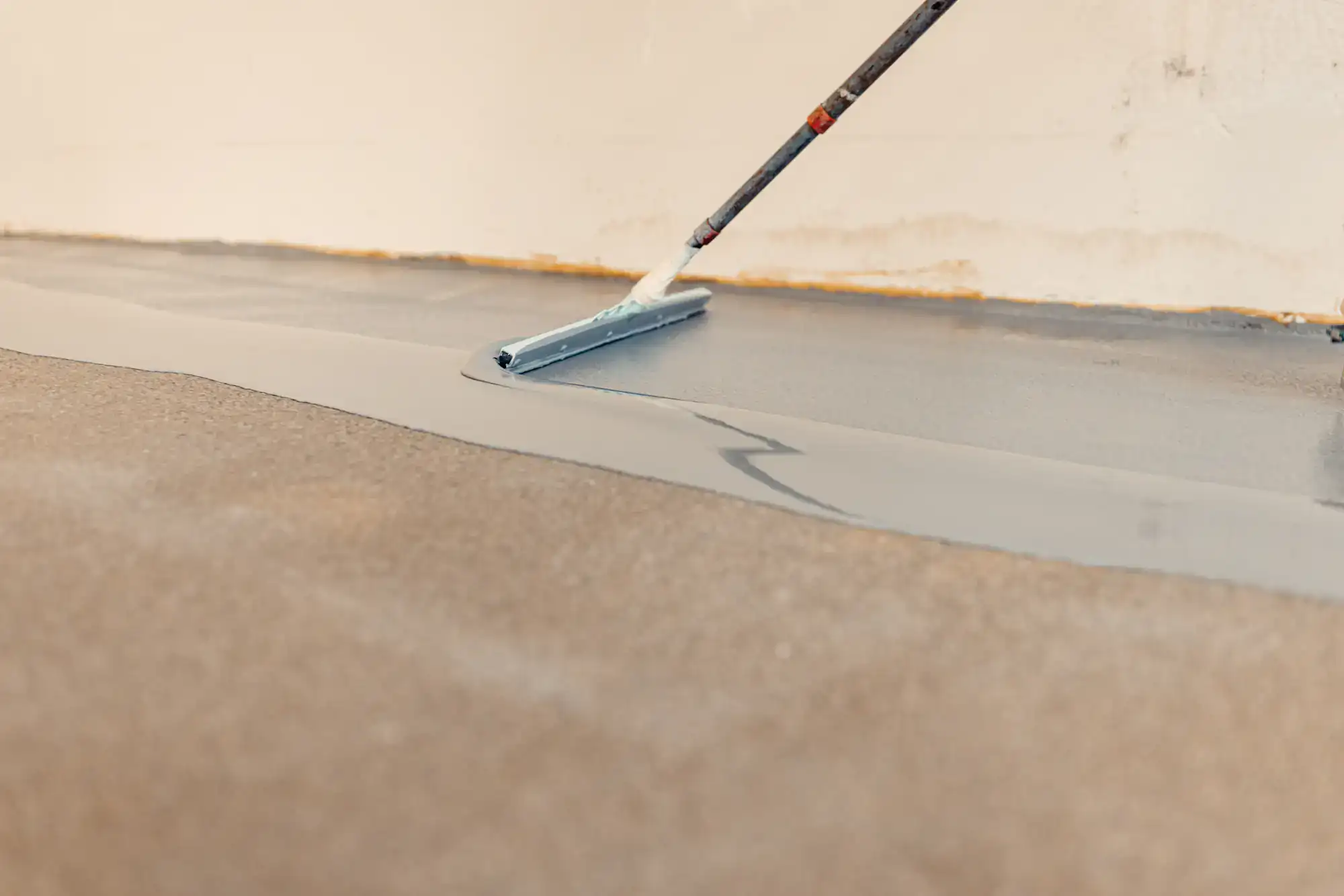
The questions you ask before the work starts are the ones that protect you after it’s done. Start with the basics: Are you registered with the Connecticut Department of Consumer Protection? Do you carry general liability insurance and workers’ compensation? Can you provide that in writing? These aren’t rude questions — they’re standard, and any legitimate contractor will answer them without hesitation.
From there, get specific about the process. Ask how we prepare the surface and why. Ask whether we test for moisture and what we do if the slab shows vapor transmission. Ask what product system we’re using and how it’s rated for your specific use — a garage that sees road salt and cold tires every winter needs a different formulation than a basement that stays climate-controlled year-round.
Ask about the warranty. Not just how long, but what it covers. Delamination, moisture failure, and coating breakdown are the three things that actually go wrong — and a warranty that doesn’t name them specifically isn’t worth much. If a contractor offers a 15-year written warranty covering all three, that tells you something real about how confident they are in their own work.
Finally, ask about timeline and disruption. Most residential garage floors can be completed in one to two days when the prep work is done right. If a contractor is vague about timing or can’t give you a clear schedule upfront, that’s often a sign of how the rest of the job will go. Reliability is one of the most consistent complaints homeowners in Connecticut have about contractors — and the ones who communicate clearly before the job starts tend to be the same ones who show up when they say they will.
We’re based in East Hartford. We’ve been working in Hartford County and across Connecticut for over 30 years. That’s not a marketing line; it’s context for why we approach every project the way we do.
We start every job with diamond grinding, not because it’s the easiest method, but because it’s the only method that gives a coating a real bond on Connecticut concrete. We test every slab for moisture before anything goes down. When the test calls for a vapor barrier, we install one — because skipping that step in this climate isn’t a minor oversight, it’s a guarantee of failure. Our systems are commercial-grade, built for the same environments where we’ve done work for facilities like Costco, Amazon, and Foxwoods Resort Casino. Your garage or shop floor gets the same standard.
We back that work with a 15-year warranty that covers delamination, moisture failure, and coating breakdown in writing. We also carry a 10-year insurance-backed warranty program for clients who want that additional layer of protection. These aren’t vague assurances — they’re specific terms you can hold us to.
We serve all of Hartford County, from Glastonbury and Farmington to Bloomfield, South Windsor, Newington, and New Britain. We also cover New Haven, New London, and Middlesex County. As a veteran-owned, BBB-accredited business with a 4.8-star rating from over 148 customers, we’ve built our reputation on doing the job right the first time — because in Connecticut’s climate, there’s no margin for doing it wrong.
If you need PODS storage during installation, we can coordinate that. If you have an urgent situation that can’t wait, we offer emergency response services. The goal is always to make the process as straightforward as possible, from the first call to the final walkthrough.
Hartford County has no shortage of contractors willing to take your money. What’s harder to find is one who prepares the surface correctly, handles Connecticut’s moisture problem honestly, uses products built for this climate, and backs the work with a warranty that means something.
The things that matter most — surface prep, moisture testing, product quality, warranty terms — aren’t visible in a listing or a low quote. They show up in the finished floor, and in whether it’s still holding up three winters from now.
If you’re ready to stop sorting through generic contractor lists and talk to someone who actually knows Hartford County, reach out to us. We’ll tell you exactly what your project needs — and exactly what it doesn’t.
—
**Frequently Asked Questions**
**Who are the best concrete contractors in Hartford County?** The best concrete contractors in Hartford County combine proper surface preparation, moisture mitigation, and commercial-grade materials with a written warranty and verifiable local experience. In a county where freeze-thaw cycles and road salt are facts of life from Enfield to Glastonbury, contractors who understand Connecticut’s specific climate conditions consistently outperform those who don’t. Registration with the CT Department of Consumer Protection, BBB accreditation, and a clear, documented process are the baseline signals worth looking for before you commit.
**How long does an epoxy floor last in Connecticut?** A professionally installed epoxy floor in Connecticut should last 10 to 20 years when the surface is properly prepared and a vapor barrier is applied where the slab requires it. In Hartford County specifically, where seasonal water tables and humidity are constant factors, moisture mitigation is especially critical to that lifespan. The lifespan drops significantly — often to two years or less — when surface prep is rushed or moisture testing is skipped.
**Do I need a permit for concrete work in Hartford County, CT?** It depends on the scope of the project. Municipalities across Hartford County — from West Hartford to Manchester to Farmington — have their own permit requirements, and larger structural or exterior concrete projects often require a local building permit. Registered contractors familiar with Hartford County’s towns will know what applies to your specific project and can advise you before work begins.
**How much do concrete contractors charge in Hartford County?** Concrete work in Connecticut generally runs between $6 and $14 per square foot for standard installation, with additional costs for removal of existing material or specialized systems. Epoxy floor coating pricing varies depending on the size of the space, the condition of the existing slab, and the type of system installed. A slab that requires moisture barrier treatment or significant crack repair will cost more than a clean, dry surface — and that’s usually the right call, because skipping that prep is what leads to early failure.
**What’s the difference between a general concrete contractor and an epoxy flooring specialist?** A general concrete contractor typically handles poured slabs, driveways, patios, and foundations. An epoxy flooring specialist focuses on high-performance resinous coating systems applied over existing concrete — a different skill set that requires different equipment, different products, and a different understanding of surface chemistry and moisture behavior. If your project involves coating an existing floor in Hartford County, look specifically for a contractor who specializes in that work and understands the region’s moisture challenges.
Summary:
Article details:
Share: