Fast cure time sounds like a win. Here's why some contractors use it to skip critical prep work—and how to spot the difference before you sign.
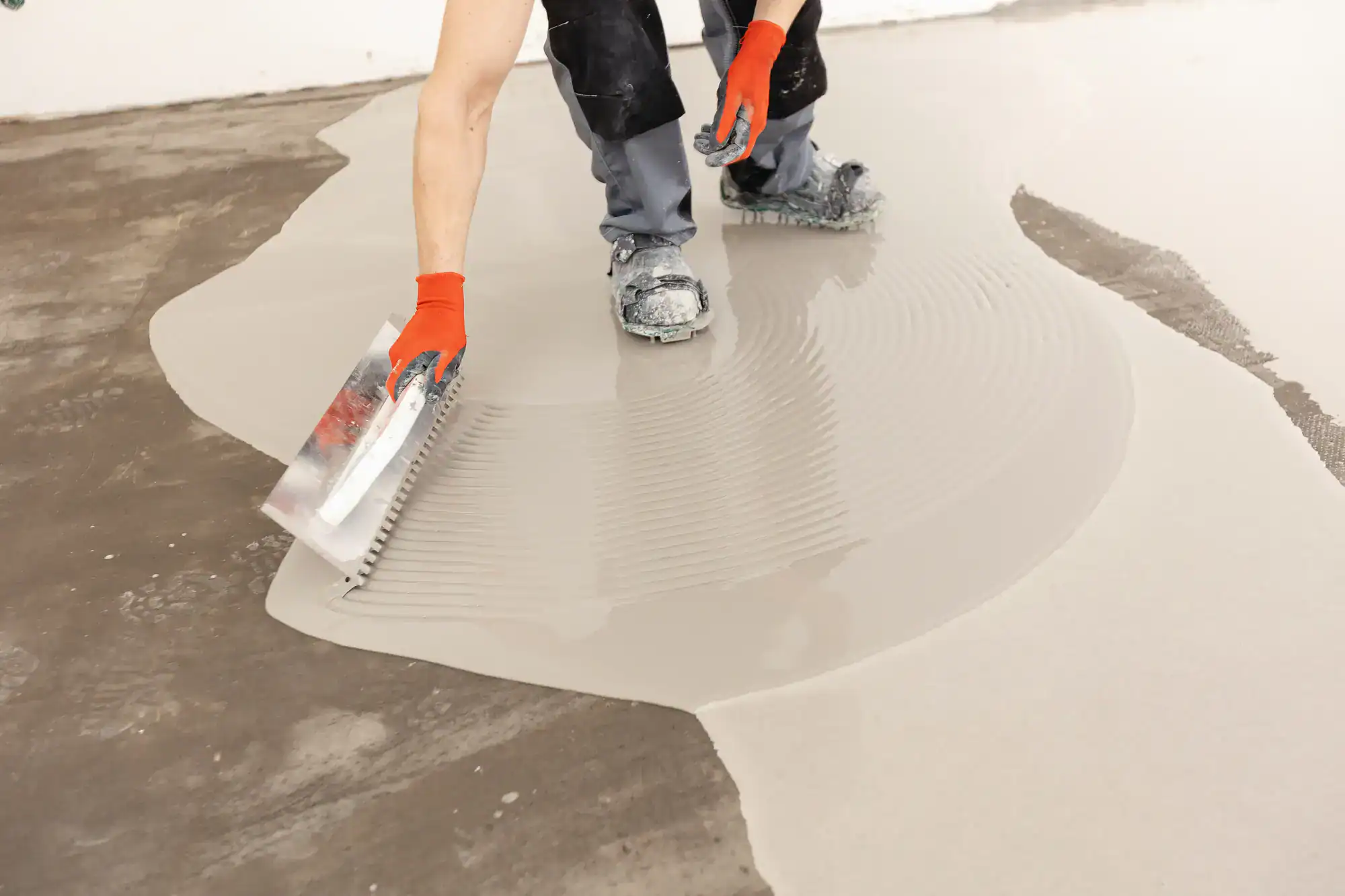
If you’ve been researching garage floor coatings, you’ve probably seen “one-day installation” plastered across every contractor’s website. And honestly, it’s true — polyaspartic flooring does cure fast. That’s one of the reasons it’s become the go-to system for homeowners and commercial facilities alike. But here’s what most contractors don’t explain: fast cure time is a feature of the coating, not an excuse to rush the work that happens before it goes down. In Hartford County, where winters are hard on concrete and moisture problems are the norm, that distinction matters more than most people realize. Here’s what you actually need to know.
Polyaspartic flooring is a type of resinous coating — technically a subtype of polyurea — that was originally developed in the early 1990s by Bayer Material Science for industrial corrosion protection on steel bridges. It made its way into flooring applications because of one standout trait: it cures faster than almost anything else on the market, and it does so across an enormous temperature range, from -40°F all the way up to 140°F.
That temperature tolerance is a big deal in Hartford County. Standard epoxy requires ambient temperatures between 50 and 90°F to cure properly, which effectively shuts down epoxy-only contractors from October through April. Polyaspartic doesn’t have that problem. You can install it in January in a Glastonbury garage and it will cure just fine.
Beyond speed and temperature, polyaspartic is roughly four times stronger than epoxy and significantly more flexible, which matters when you have concrete that expands and contracts through freeze-thaw cycles. It’s also 100% UV stable — it won’t yellow or fade in sunlight the way epoxy does, which is why you see it used in garages with windows, commercial showrooms, and any space with natural light.
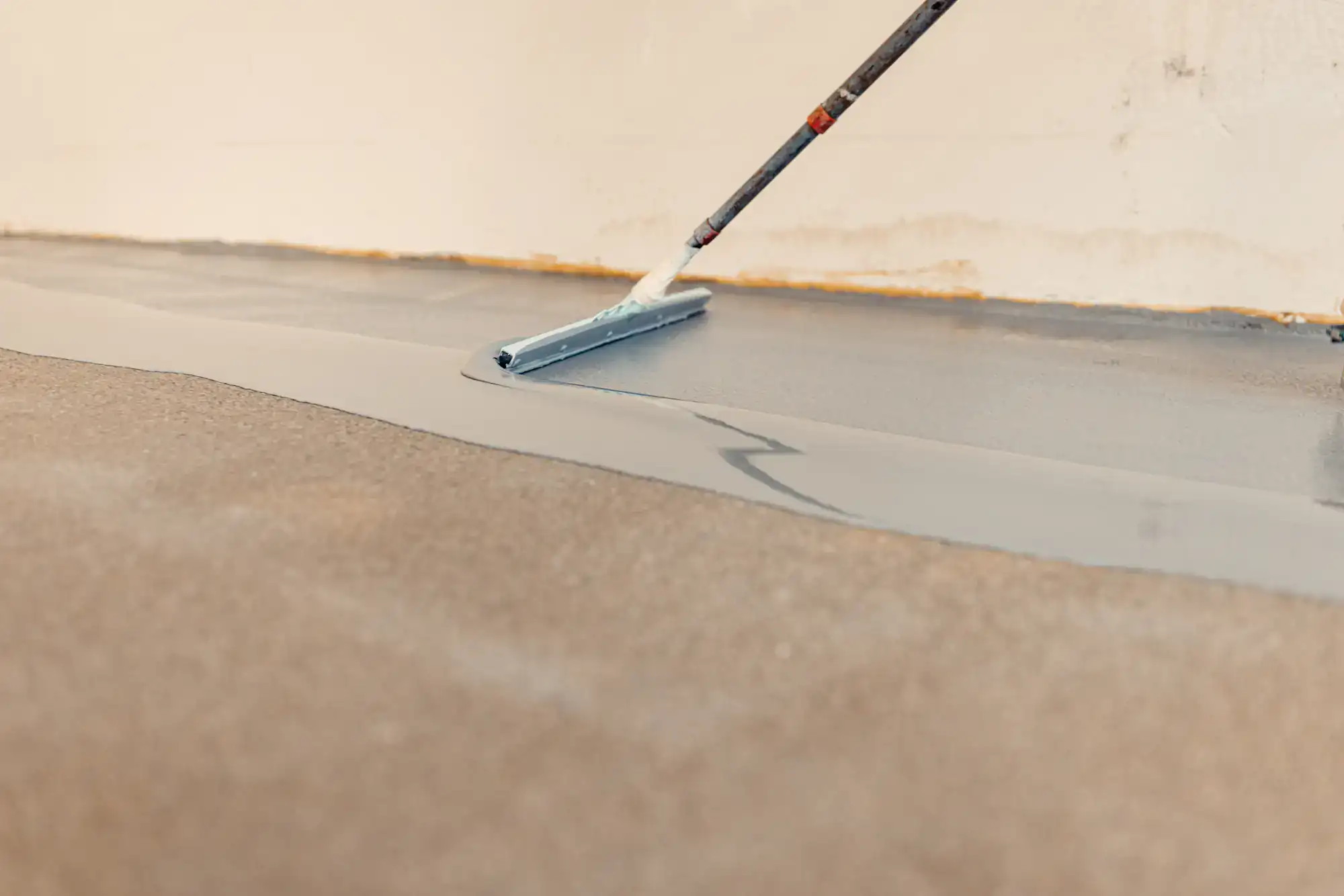
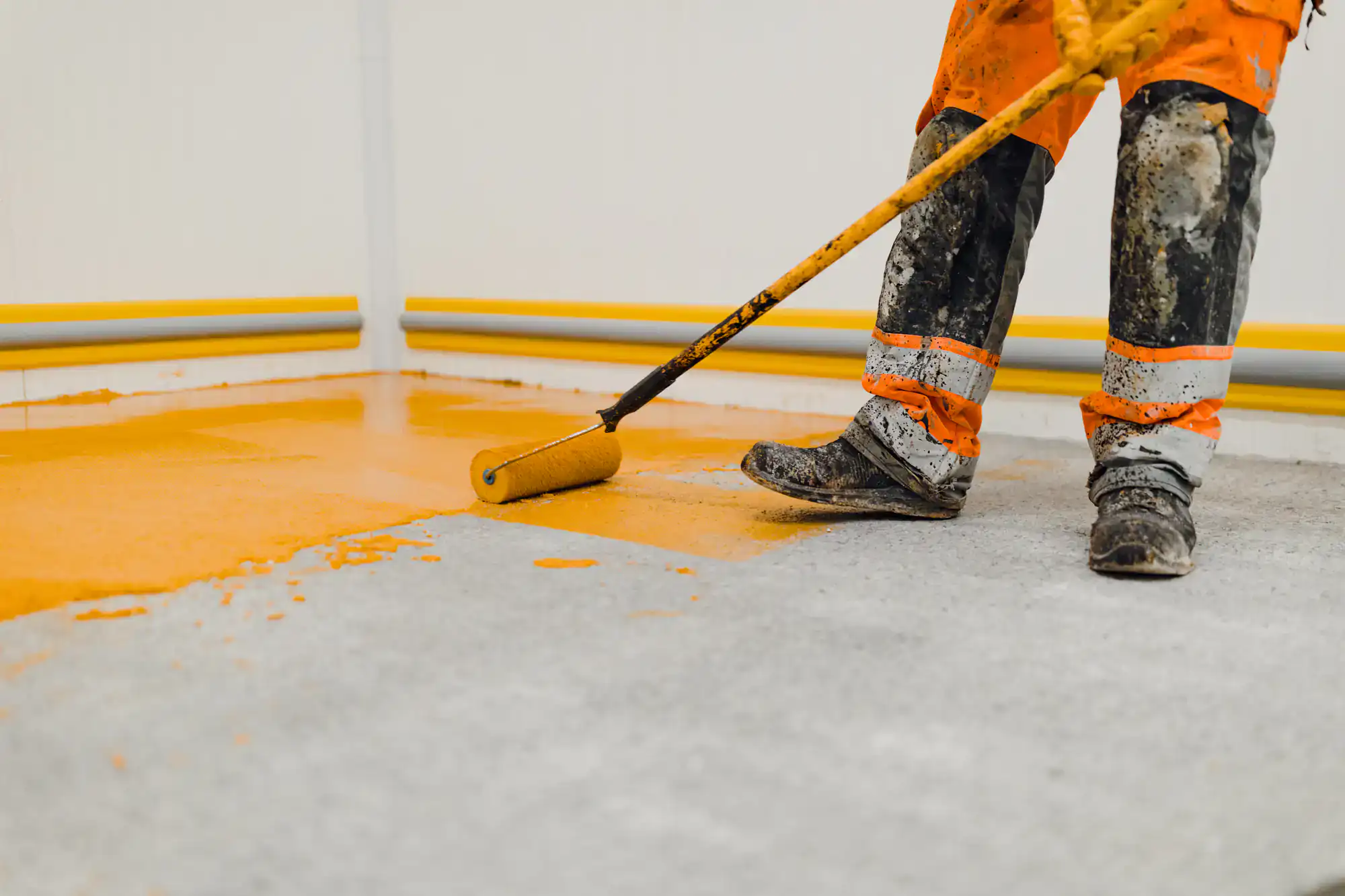
This is the question contractors are vague about, and the vagueness is usually intentional. Here’s the honest answer: polyaspartic coatings are walkable in as little as one to six hours depending on the formulation and conditions. A typical two-car garage installation — from the time the crew arrives to the time they leave — runs about six to eight hours. You can usually walk on it the same day. You can drive on it within 24 hours.
Compare that to standard epoxy, which requires 24 to 72 hours before you can walk on it and up to a full week before it reaches full hardness. For homeowners in West Hartford or Simsbury who use their garage daily, that’s not a minor inconvenience — it’s a week without a functional space.
So why would any contractor hide this? Two reasons. First, some contractors use the fast cure time to justify skipping or shortening the preparation work. If the coating cures in a few hours, they can finish a job in a morning, move on to the next one in the afternoon, and double their daily revenue. The problem is that surface preparation — diamond grinding, moisture testing, crack repair — is what determines whether the floor lasts 15 years or peels in two. That work takes time regardless of how fast the topcoat cures.
Second, some contractors don’t fully disclose cure time requirements to the homeowner upfront, leading to confusion about when the garage can actually be used again. “Same-day installation” gets marketed as “same-day use,” which isn’t always accurate depending on the specific system being applied. A good contractor tells you exactly what to expect before the job starts — not after the truck is already in your driveway.
The preparation phase accounts for roughly 70 to 80 percent of what makes a floor installation succeed or fail. A contractor who treats that phase as an obstacle to get through quickly is not someone you want working on your floor, regardless of how good their topcoat is.
Hartford County isn’t an easy place to install floor coatings. The region sits on glacially deposited, clay-heavy soils that retain water and push moisture vapor up through concrete slabs year-round. That moisture vapor transmission — MVT, in contractor terms — is the single most common reason coatings fail in Connecticut. When moisture vapor can’t escape through the slab, it builds up pressure beneath the coating and eventually forces it to bubble, delaminate, or peel. It doesn’t matter how good the polyaspartic is if the moisture problem underneath it was never addressed.
The freeze-thaw cycle compounds this. Hartford County averages 40 to 50 inches of snow annually, and temperatures swing above and below freezing repeatedly during October, November, March, and April. Every freeze-thaw cycle puts stress on concrete — expanding and contracting it, widening existing cracks, and creating new ones. Unprotected or improperly coated concrete in this climate deteriorates faster than in most other parts of the country.
Then there’s road salt. If your garage is anywhere near I-84, I-91, Route 44, or Route 5, your floor is getting a regular dose of magnesium chloride and calcium chloride tracked in on tires and boots all winter. These deicing chemicals are chemically corrosive to standard epoxy coatings. Polyaspartic resists them — but only if the coating was applied correctly over a properly prepared surface.
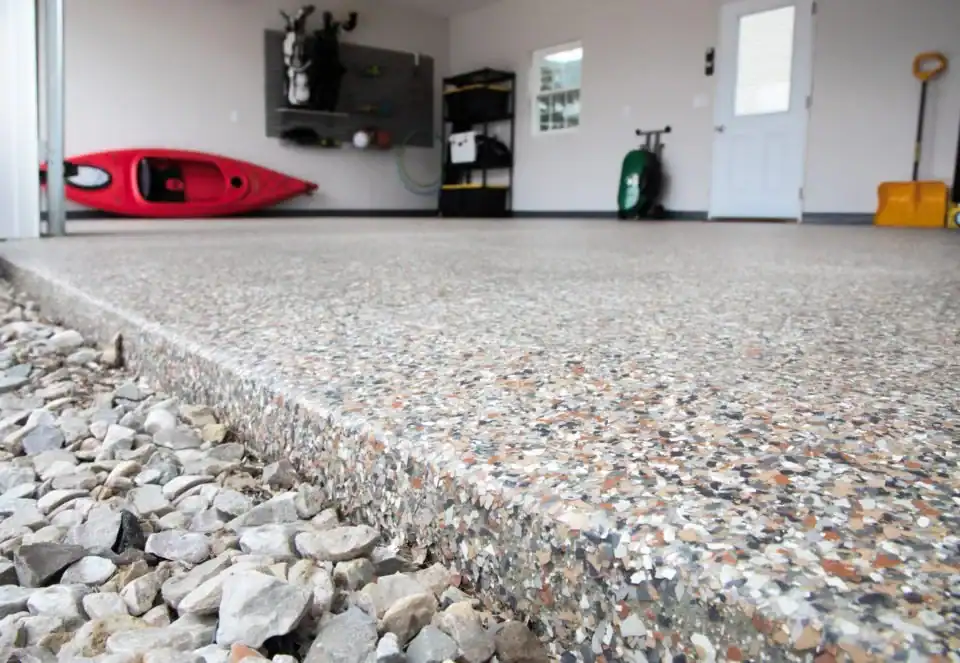
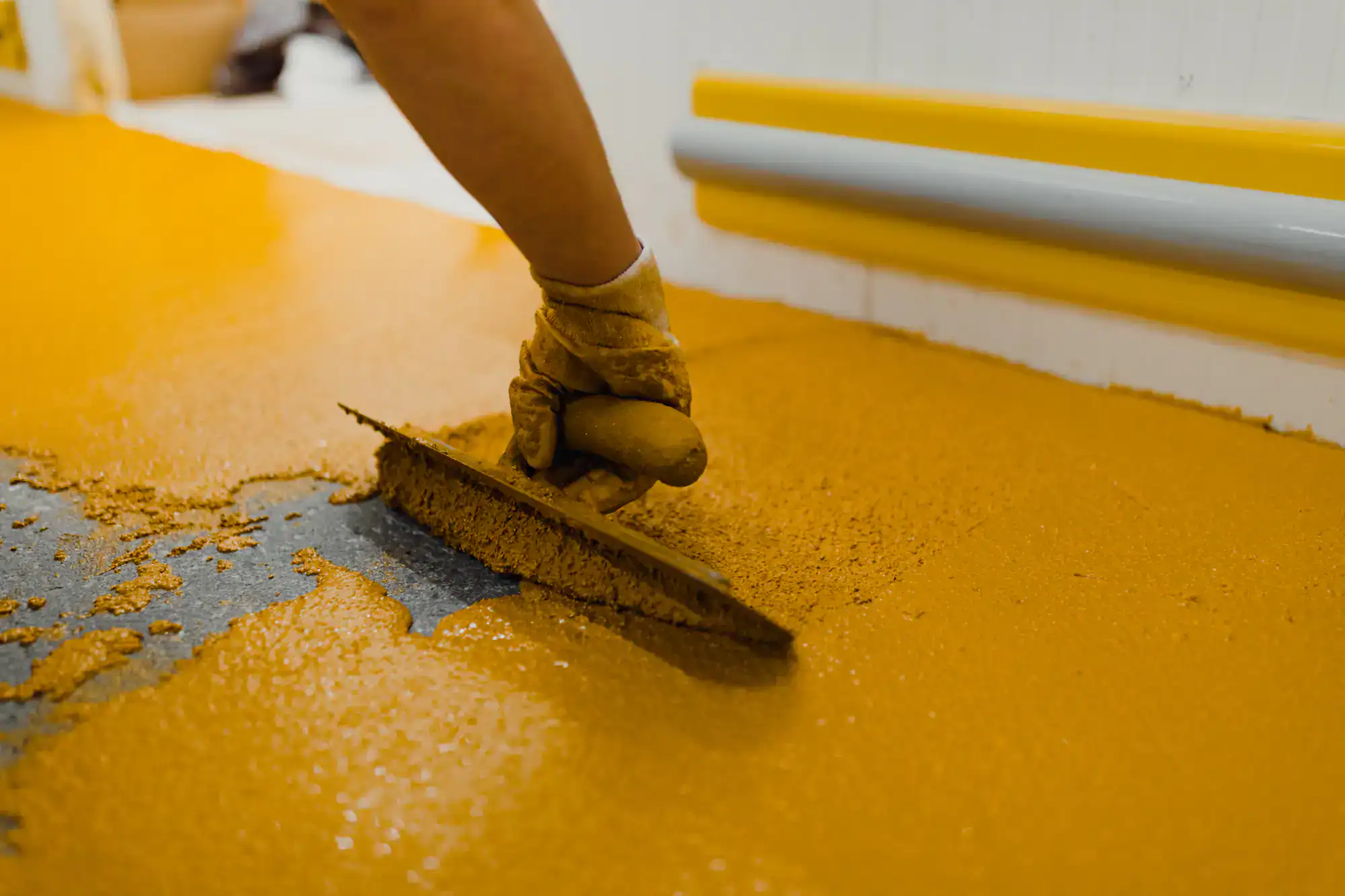
What proper preparation looks like is this: diamond grinding the entire concrete surface (not acid etching, which is cheaper and leaves a less consistent surface profile), testing for moisture vapor emission before a single drop of coating goes down, repairing any cracks or spalled areas, and applying a moisture vapor barrier primer as the first coat. Contractors who skip any of these steps — especially the moisture testing — are setting the floor up to fail, and they know it. The question is whether they’ll be around when it does.
Want live answers?
Connect with a American Poly Floor expert for fast, friendly support.
The Hartford County market has no shortage of contractors offering polyaspartic and epoxy flooring. Some are excellent. Some are not. The challenge is that from the outside, they all look roughly the same — same website format, same before-and-after photos, same claims about quality and experience. So how do you actually tell them apart?
Start with licensing. In Connecticut, home improvement contractors are required to register with the Department of Consumer Protection, located at 450 Columbus Boulevard in Hartford. You can verify any contractor’s registration by calling the DCP directly at 860-713-6100. An unlicensed contractor doing home improvement work over $200 is operating illegally in this state, and more importantly, you have no legal recourse if the job goes wrong. This is a five-minute check that eliminates a significant portion of the risk.
Beyond licensing, look for insurance, a written warranty with specific terms, and evidence of real commercial work — not just residential jobs. Contractors who have successfully installed flooring for major commercial clients have been held to a higher standard of accountability than those who only work on residential garages.
Most homeowners ask contractors for a price. The ones who end up with floors that last ask a different set of questions first. Here’s what actually separates a professional from someone who learned the trade recently and is working their way through Hartford County neighborhoods on word of mouth.
Ask them how they prepare the surface. If the answer is acid etching, that’s a yellow flag. Acid etching is faster and cheaper than diamond grinding, but it creates an inconsistent surface profile and leaves chemical residue that can interfere with adhesion. Diamond grinding is the professional standard. A contractor who can’t explain why they prefer one over the other doesn’t fully understand what they’re doing.
Ask them whether they test for moisture vapor transmission before applying any coating. In Hartford County, the correct answer is always yes. Any contractor who says moisture testing isn’t necessary, or who looks confused by the question, is either inexperienced or cutting corners. Moisture is the primary reason floors fail in this region, and it’s invisible — you can’t see it, and neither can the contractor without testing for it.
Ask about the warranty — specifically what it covers, what voids it, and whether it’s in writing. A verbal warranty is worth nothing. A written warranty that’s backed by insurance is worth something. There’s a meaningful difference between a contractor who says “we stand behind our work” and one who can hand you a document that spells out exactly what they’ll do if something goes wrong five years from now.
Finally, ask whether the crew showing up to do the work is their own team or a subcontractor. Some companies sell the job and send someone else to do it. When that happens, the accountability chain breaks. If something goes wrong, the company you hired points to the subcontractor, and the subcontractor has no relationship with you. It’s a situation worth avoiding entirely.
We’re a locally owned, veteran-owned business based in East Hartford. We’ve been doing this work for over 30 years combined, and we’ve installed floors for Costco, Amazon, and Foxwoods Resort Casino — facilities that have zero tolerance for shortcuts because a failed floor in those environments shuts down operations and costs real money. That commercial experience isn’t just a credential we put on a website. It shapes how we approach every job, including residential garages in Glastonbury, Avon, and West Hartford.
Every floor we install starts with diamond grinding. Every floor gets moisture vapor tested before we apply anything. Every installation uses a multi-coat system: moisture barrier primer, base coat, decorative layer if applicable, and two clear polyaspartic topcoats. We don’t subcontract — the team that shows up is our team, and we’re accountable for the result.
Our residential warranty is 15 years, and it’s insurance-backed. That’s not a marketing phrase. It means the warranty is enforceable regardless of what happens to the business, which is a real distinction when you’re making a decision that’s supposed to protect your floor for the next decade and a half. The industry standard is 10 years. We exceed it because we’re confident in the work.
We also offer a PODS storage service during installation, which solves the practical problem of where to put everything that lives in your garage while the work is being done. It’s a small thing, but it removes a real obstacle for a lot of homeowners. We’ve participated in the CT Home Show at the Connecticut Convention Center in Hartford, and we serve all 30 towns across Hartford County — from Windsor Locks and Enfield in the north to Southington and Bristol in the south. If you’re in this county and you’re looking for local epoxy flooring companies that will actually stand behind the work, we’d like to earn your consideration.
The short version of everything above: polyaspartic flooring is genuinely excellent technology, and fast cure time is a real advantage — but only when the preparation work is done right. In Hartford County, where moisture, road salt, and freeze-thaw cycles are facts of life, skipping that preparation doesn’t just reduce the floor’s lifespan. It guarantees failure.
The contractors worth hiring are the ones who can explain their process clearly, show you a written warranty, verify their Connecticut registration, and point to real commercial work as evidence of their capability. That’s not a high bar, but it does filter out a meaningful portion of the market.
If you want to talk through what your specific floor needs — whether that’s a residential garage in Simsbury, a commercial facility in New Britain, or anything in between — reach out to us. We’ll tell you exactly what we’d do and why, before you commit to anything.
Summary:
Article details:
Share: