Not all garage flooring holds up to Connecticut winters. Here's an honest look at what works, what doesn't, and why prep matters more than the product.
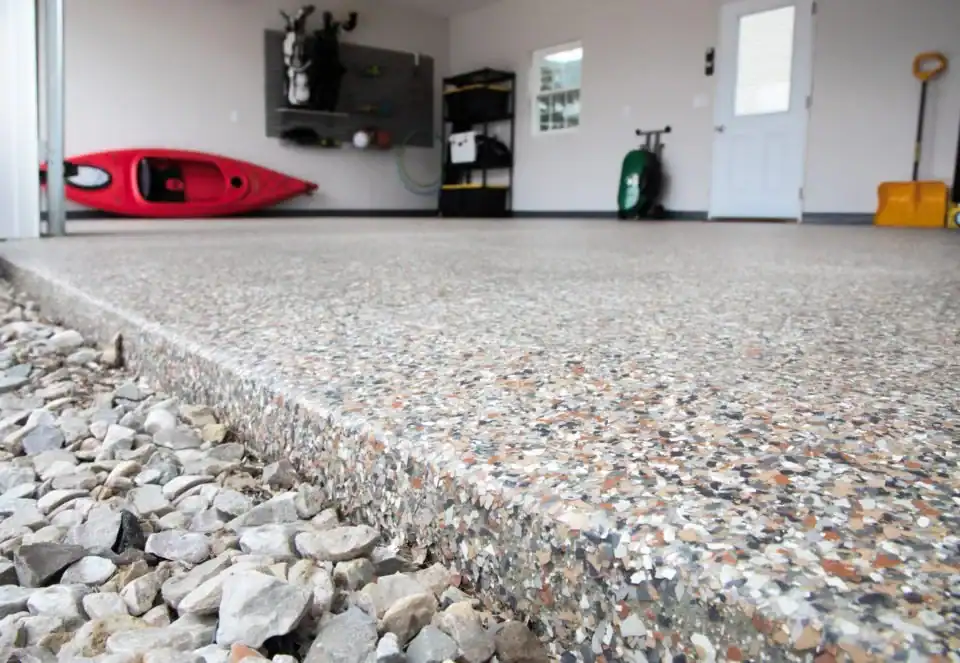
Your garage floor takes more abuse than almost any surface in your home. Oil, road salt, tire drag, freeze-thaw movement, moisture creeping up from below — and in Hartford County, all of that happens every single year without fail. So when you’re trying to figure out which garage flooring option is actually worth your money, generic advice from a national home improvement site isn’t going to cut it. What works in Phoenix doesn’t work in Glastonbury or Simsbury. This page is written specifically for Hartford County homeowners who want an honest, practical breakdown of their options — no fluff, no overselling.
There are more garage floor options on the market today than most homeowners realize — and the differences between them go well beyond appearance. Epoxy coatings, polyaspartic systems, interlocking tiles, and polished concrete each have a distinct performance profile, price point, and maintenance reality. Understanding those differences is what helps you avoid spending money twice.
The short version: some options are genuinely built for Hartford County’s climate, and some are not. A coating system that performs beautifully in a climate-controlled showroom can bubble, peel, or crack after a single Hartford winter if it wasn’t designed — or installed — for what this region actually throws at a floor.
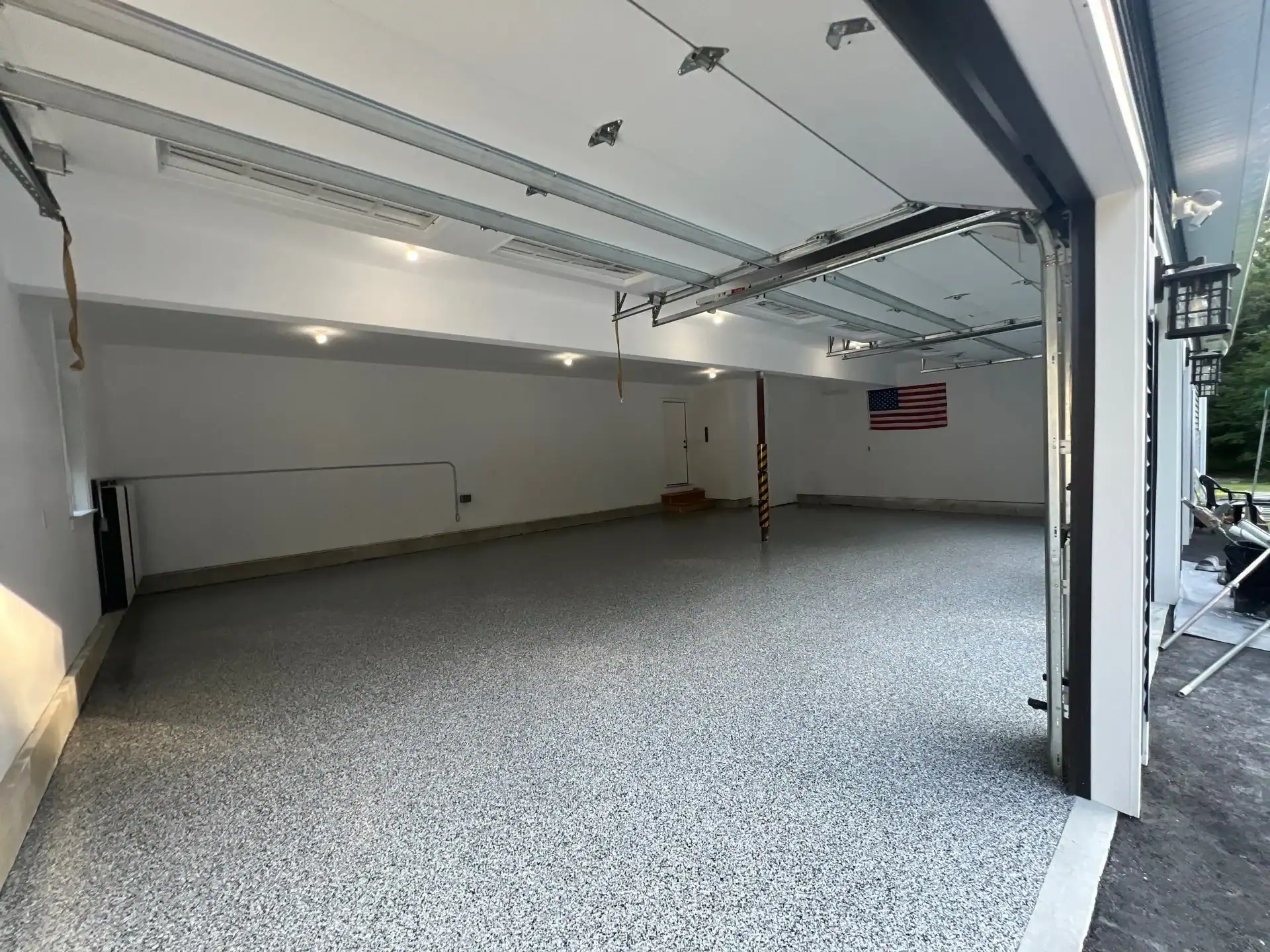
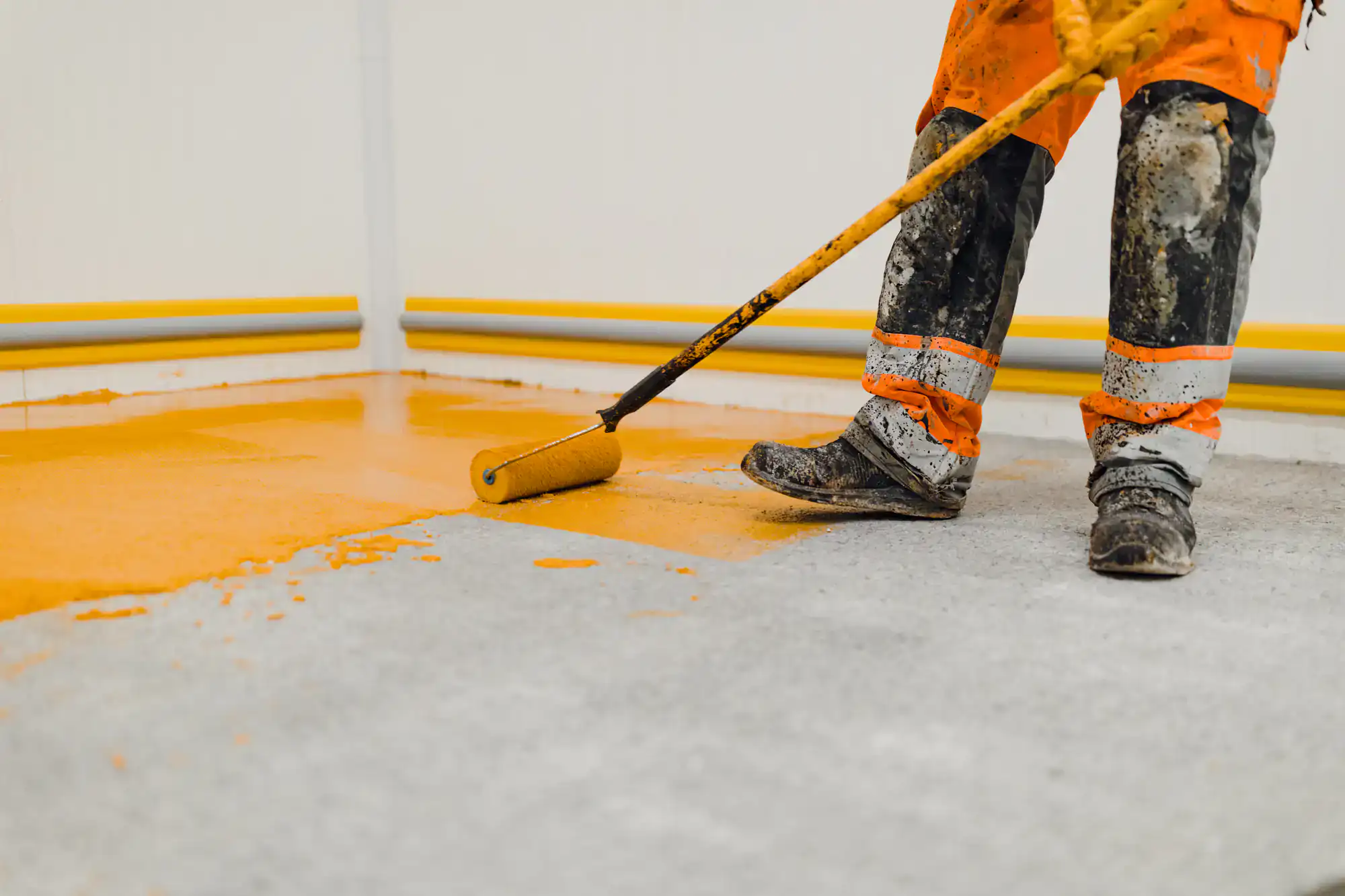
Epoxy is the name most people know, but it’s worth understanding what it actually is before assuming it’s the right call. Epoxy is a two-part chemical system — a resin and a hardener — that bonds at a molecular level to prepared concrete. When it’s installed correctly, it creates a dense, durable surface that resists oil, chemicals, and heavy foot traffic. When it’s installed incorrectly — which is most of what you’ll find in a box-store kit — it sits on top of the concrete rather than bonding to it, and it fails.
Polyaspartic is a different animal. It’s an aliphatic polyurea derivative, which is a mouthful, but the practical takeaway is this: it cures faster, it handles UV exposure without yellowing, and it’s more thermally flexible than standard epoxy. That last part matters in Hartford County. When temperatures swing from 10°F in January to 85°F in July, a coating that can’t flex with the concrete will eventually crack or delaminate. Polyaspartic handles that movement better.
The best professional systems don’t make you choose between the two. We use a hybrid approach — epoxy as the base coat for deep bonding strength, polyaspartic as the topcoat for UV stability, chemical resistance, and long-term durability. That combination is what gives our floors a 15-year warranty. Epoxy alone as a topcoat will yellow in a garage with south-facing windows; polyaspartic alone as a base coat doesn’t bond as deeply as epoxy. Together, they cover each other’s weaknesses.
One more thing worth saying plainly: the DIY epoxy kits at the hardware store are not the same product. They’re thinner, weaker, and rely on acid etching for surface prep — a method that simply doesn’t create enough surface profile for a lasting bond, especially on older Hartford County slabs that have absorbed years of moisture. Our systems are roughly 20 times stronger and three times thicker than what you’ll find on a shelf. That’s not a sales line — it’s the difference between a floor that lasts 15 years and one that peels before the snow melts.
Interlocking garage floor tiles — usually made from PVC or polypropylene — get a lot of attention because they’re DIY-friendly and visually appealing. They’re worth considering in specific situations, but they come with real limitations that Hartford County homeowners should understand before committing.
The biggest issue is the joints. Every seam between tiles is a place where moisture, road salt, and debris can collect. In a climate like ours, where vehicles track in salt-laden slush from November through March, those joints become a maintenance problem. Tiles can also shift under heavy loads, crack under point impacts (a dropped wrench or a jack stand), and degrade in extreme cold. They don’t seal the concrete below them — they just cover it — which means moisture vapor from the slab is still doing its work underneath. For a casual weekend car park, tiles might be fine. For a working garage in Farmington or West Hartford that sees daily use and Connecticut winters, a seamless coated system is a more durable long-term answer.
Polished concrete is a different conversation. It’s genuinely beautiful — smooth, refined, and low-profile in a way that works well in modern or minimalist spaces. For commercial lobbies, showrooms, and retail environments, it’s often the right call, and it’s a service we provide. For residential garages, though, it comes with trade-offs. Polished concrete is more susceptible to staining than a sealed epoxy or polyaspartic system, it requires periodic re-sealing to maintain its finish, and it’s less forgiving of concrete imperfections. If your slab has cracks, pitting, or surface damage — which is common in homes built in the 1970s and 1980s throughout Wethersfield, Newington, and Glastonbury — polished concrete will show those flaws rather than covering them.
The honest answer is that polished concrete is a premium option for the right application. For most Hartford County homeowners with a standard attached garage, a properly installed epoxy-polyaspartic system will outperform it on durability, stain resistance, and total cost over time.
Want live answers?
Connect with a American Poly Floor expert for fast, friendly support.
Most people don’t realize how many finish options exist within a professional coating system. The base material — epoxy, polyaspartic, or a hybrid — is just the foundation. What the floor actually looks like when it’s done depends on the decorative layer applied during installation, and there’s genuine range here.
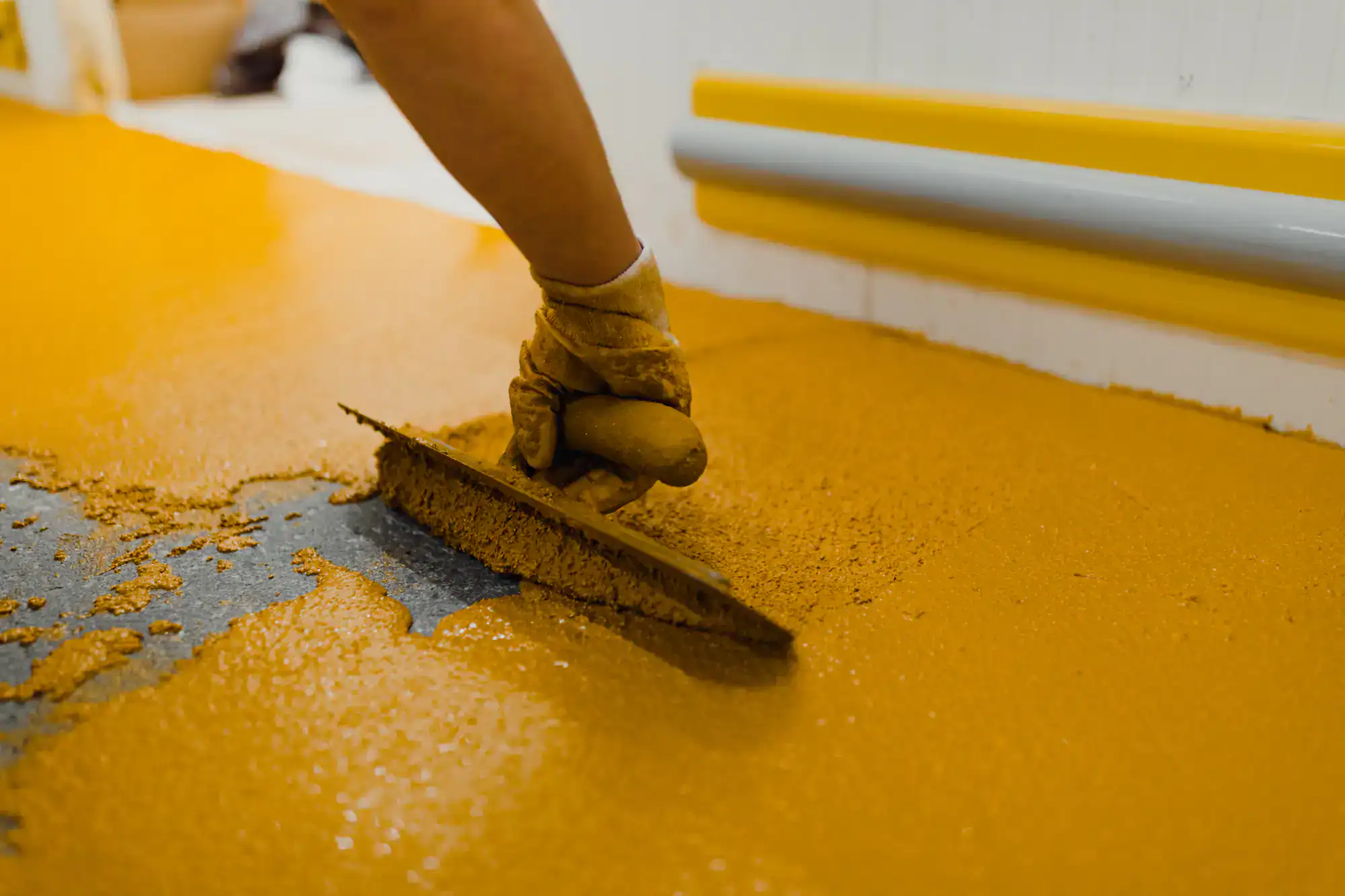
The most popular finish in residential garages is a color flake broadcast system — decorative vinyl chips scattered across the wet base coat before the topcoat is applied. The result is a speckled, textured surface that hides minor imperfections, adds slip resistance, and holds up visually over time. It’s also highly customizable — flake color blends can be matched to a garage’s interior, a car collection, or simply a homeowner’s preference.
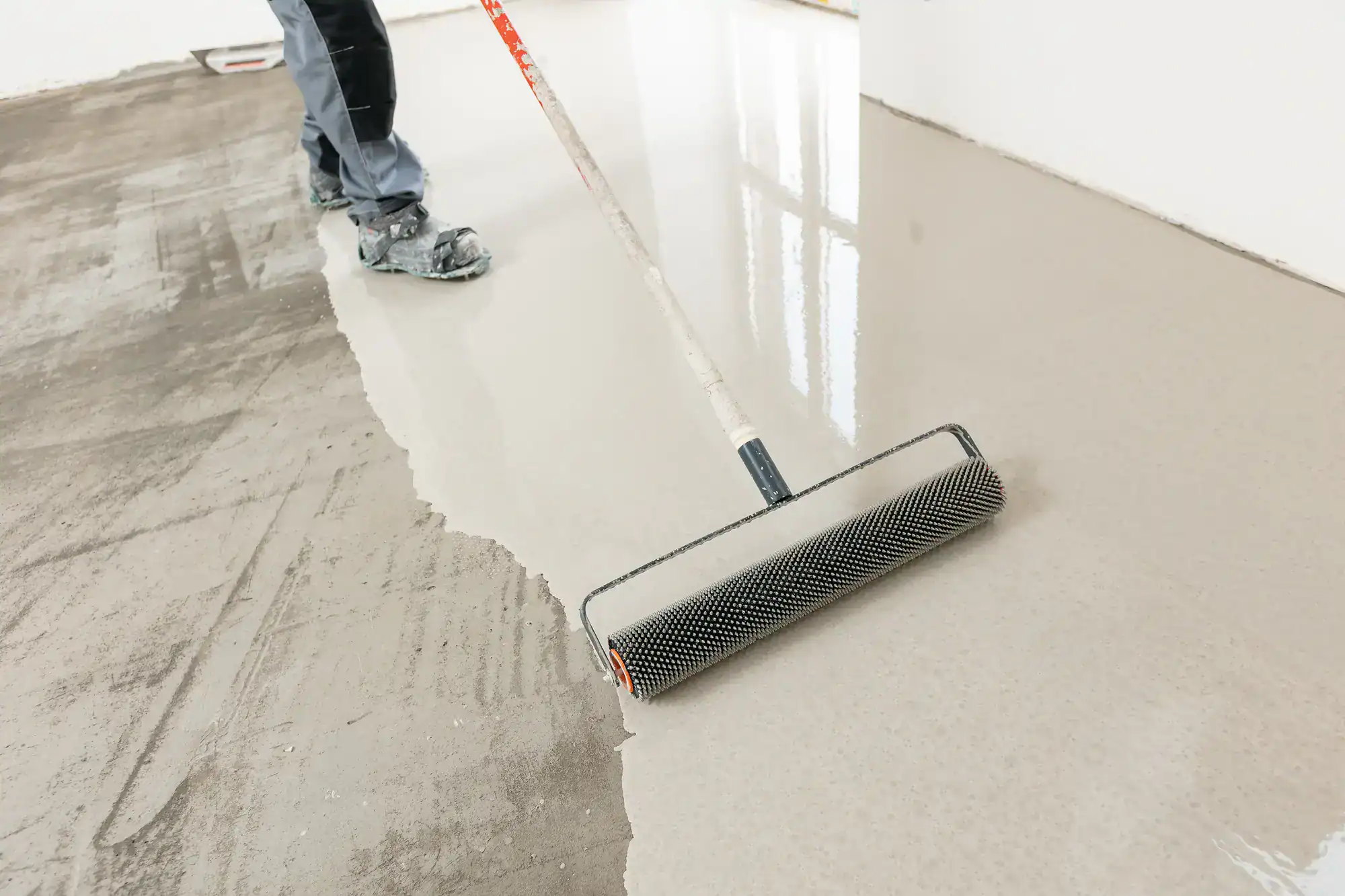
Color flake systems are the most practical and widely chosen finish for Hartford County garages. The chips create a natural visual texture that breaks up the monotony of a solid surface, and the broadcast density can be adjusted — a light scatter gives a subtle look, while a full broadcast creates a nearly seamless flake-on-flake surface that covers the concrete completely. It’s also one of the most forgiving finishes for a floor that sees real use, because minor scuffs and wear don’t read visually the way they would on a solid or high-gloss surface.
Metallic epoxy is a different category entirely. It uses metallic pigments suspended in the coating to create a flowing, three-dimensional effect — think of a deep ocean swirl or a polished stone surface. It’s striking, and it photographs beautifully, which is why it shows up in a lot of before/after content. It’s also more labor-intensive to install and more unforgiving of surface imperfections, which means it’s best suited to slabs in good condition. For homeowners in newer construction in Avon, Simsbury, or Canton where the concrete is relatively recent and flat, metallic epoxy can be a genuinely impressive upgrade.
Solid color finishes — a single, uniform hue across the entire floor — are clean, modern, and popular in commercial and industrial settings. They’re also common in residential garages where the homeowner wants a specific color match or a minimalist look. The trade-off is that solid colors show wear patterns more readily than flake systems, and any surface variation in the concrete will be more visible. We offer a wide range of custom color options for homeowners who have a specific vision, and we’re happy to work through those choices during the estimate process.
Regardless of which finish you choose, we add a slip-resistant additive to the topcoat as standard practice. A high-gloss garage floor looks great until it’s wet — and in Connecticut, a floor that’s wet from tracked-in snow and slush is a safety issue. The additive doesn’t change the appearance in any meaningful way, but it changes the risk profile significantly.
Here’s something that doesn’t come up often enough in general garage flooring content, but it’s one of the most important factors for homeowners in Hartford County specifically: moisture vapor.
Concrete is not a solid barrier. It’s porous, and water vapor from the ground below is constantly pushing upward through the slab — slowly, invisibly, and relentlessly. In communities along the Connecticut River like East Hartford, Windsor, and Wethersfield, where the water table sits relatively high, this process is more aggressive than in upland towns. But it’s a factor almost everywhere in the county, and it’s the primary reason professionally installed garage floors fail when the preparation isn’t done correctly.
When moisture vapor gets trapped under a coating that wasn’t sealed with a proper vapor barrier primer, it has nowhere to go. It builds pressure, and eventually that pressure wins — the coating bubbles, blisters, and separates from the concrete. This is the failure mode behind most of the “my epoxy peeled after one winter” stories you’ll hear from Connecticut homeowners. It’s not that epoxy doesn’t work. It’s that the floor wasn’t properly prepared before the epoxy went down.
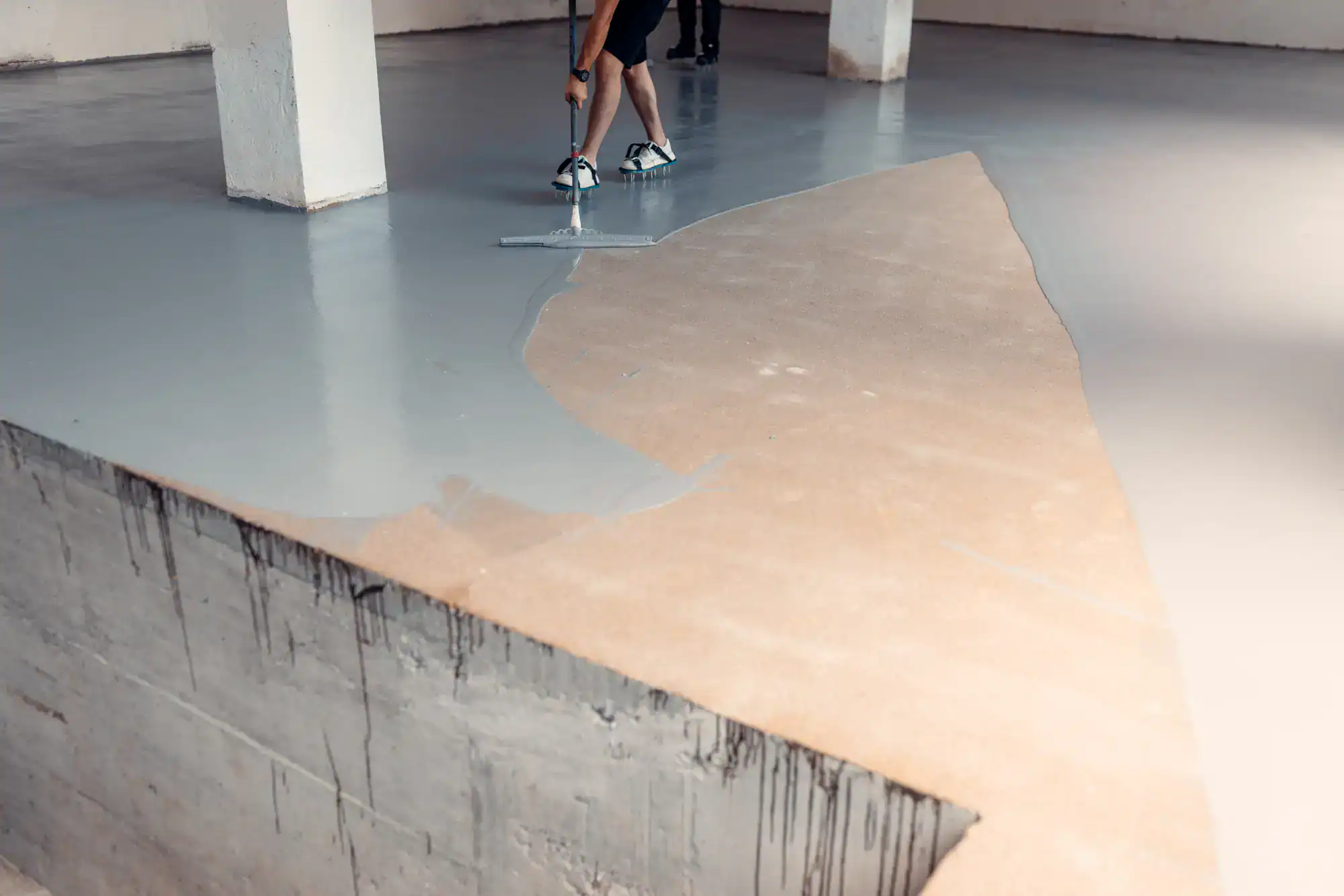
Every floor we install begins with moisture testing. If the slab shows elevated vapor transmission — which is common in older Hartford County homes — we apply a specialized vapor barrier primer before any coating goes on. This step permanently stops the moisture from reaching the coating, which is why we can stand behind a 15-year warranty without hesitation. Skipping it is the single biggest mistake a DIYer or an underprepared contractor can make in this climate.
Surface preparation is the other half of the equation. We diamond grind every floor — not acid etch, which is the shortcut used by DIY kits and some lower-tier contractors. Diamond grinding opens up the concrete’s pore structure and creates the surface profile needed for a genuine molecular bond. The difference in adhesion between a ground surface and an acid-etched surface is dramatic, and in Hartford County’s climate — with the freeze-thaw cycling, the road salt, the moisture — that difference is the margin between a floor that lasts and one that doesn’t. We’ve been working on Hartford County slabs for over 30 years. We know what they need.
The best garage flooring for a Hartford County home isn’t the cheapest option, and it’s not the one with the most impressive product name. It’s the one that was installed correctly, on a properly prepared surface, with the right system for your specific slab and how you actually use your garage.
If you’ve been going back and forth on this — weighing DIY against professional installation, comparing quotes that vary wildly, wondering whether it’s worth spending more upfront — the honest answer is that the preparation and the product quality are where the real differences live. A floor installed on a diamond-ground, moisture-tested, vapor-sealed slab with commercial-grade materials is a fundamentally different product than one that isn’t, regardless of what it looks like on day one.
If you want to talk through your specific situation — the age of your slab, how you use the space, what finish makes sense — we’re based right here in East Hartford and serve homeowners throughout Hartford County. Reach out and we’ll give you a straight answer.
Summary:
Article details:
Share: