Connecticut commercial kitchens face strict health codes. Learn how epoxy flooring delivers the slip resistance, chemical durability, and seamless cleanliness inspectors demand.
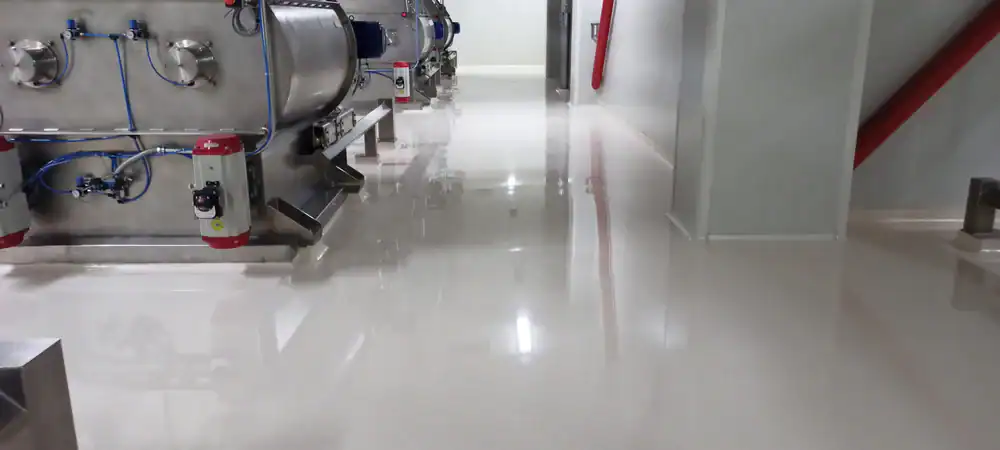
Connecticut’s health code isn’t arbitrary. It’s built around preventing the conditions that lead to foodborne illness. Your floor is ground zero for contamination risk.
Every time water hits the floor, every time grease spatters, every time a prep station drips—your flooring either handles it or becomes part of the problem. Inspectors know this. That’s why they’re checking for cracks, porous surfaces, and grout lines where bacteria can hide. If your floor can’t be properly cleaned and sanitized, you’re starting every shift at a disadvantage.
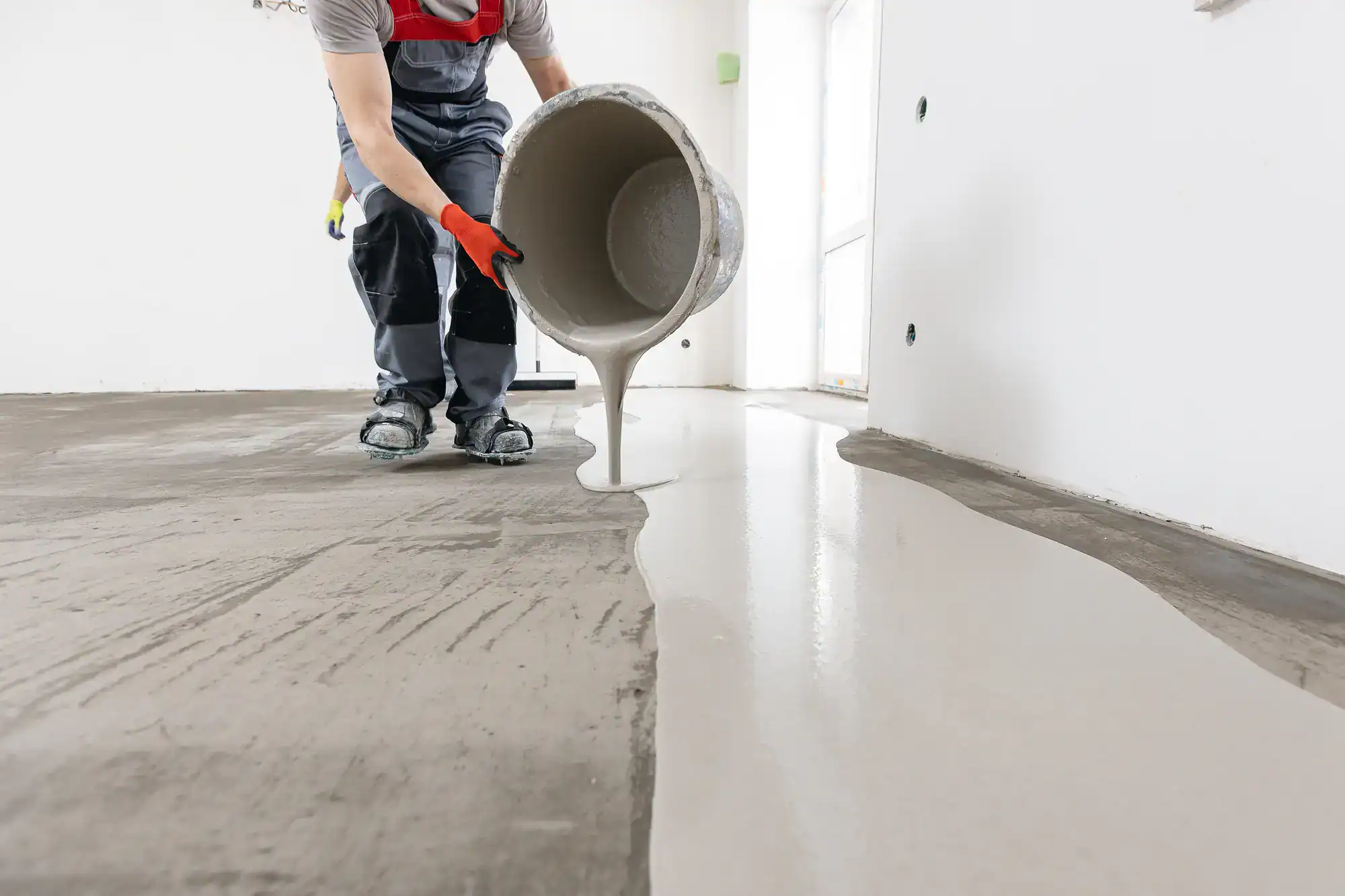
Connecticut’s regulations are specific. Floors in food prep areas, dishwashing stations, walk-in coolers, and utensil washing areas must be smooth, durable, and nonabsorbent. They need to be made from materials that are easily cleanable—meaning no texture that traps debris, no seams that collect grime.
There’s also a coving requirement. Floors must meet walls with a curved, 3/8-inch minimum radius cove that extends at least four inches up the wall. This prevents liquid and debris from settling in corners where it’s hard to reach. It’s not just a recommendation—it’s code. Inspectors will check for it.
Flooring materials have to stand up to the cleaning agents you use. Acidic cleaners, degreasers, sanitizers—your floor needs to handle all of it without breaking down. If the surface starts to deteriorate, it becomes porous. Once it’s porous, it’s a contamination risk. And once it’s flagged as a contamination risk, you’re looking at reinspection, fines, or worse.
Connecticut restaurants that fail inspection get two weeks to fix the problem. Fail again, and you’re facing fines and a meeting with the health department. A third failure can mean closure. The stakes are real, and the floor is often where violations start.
The shift to the FDA Food Code also changed how violations are categorized. Priority violations—like flooring that can’t be properly sanitized—must be corrected within 72 hours. That’s not a lot of time if you’re dealing with a floor that needs replacement. The smarter move is installing flooring that meets the standard from day one.
Health inspectors in Hartford, New Haven, and surrounding counties consistently cite the same issues: unclean floors, cracked tiles, grout that’s stained or deteriorating, and surfaces that are visibly porous or damaged.
Ceramic tile used to be the go-to choice for commercial kitchens. It’s affordable and widely available. But grease and bacteria build up in the grout lines, and those grout lines are nearly impossible to keep clean in a high-volume kitchen. Even with daily scrubbing, the grout becomes discolored and starts to break down. Once that happens, it’s absorbing moisture and harboring bacteria.
Inspectors also flag floors that don’t have proper drainage or coving. If water pools in corners or along walls, that’s a violation. If there’s no cove base, that’s a violation. If the floor surface is too rough or textured in the wrong areas, making it hard to clean, that’s a problem too.
Slip resistance is another issue. Connecticut kitchens see a lot of water, oil, and grease on the floor. If your surface doesn’t provide traction, you’re creating a workplace hazard. Slip-and-fall injuries are one of the most common accidents in food service, and they’re expensive—both in terms of workers’ compensation claims and lost productivity.
The flooring problems that show up in inspection reports aren’t always dramatic. Sometimes it’s just a floor that’s wearing out. But wear leads to cracks, cracks lead to moisture infiltration, and moisture infiltration leads to contamination. Inspectors are trained to spot the early signs, and they’ll flag it before it becomes a bigger issue.
What’s interesting is that the violations aren’t always about the floor being dirty. Sometimes it’s about the floor being the wrong material for the job. Vinyl that’s peeling. Concrete that’s unsealed and pitted. Quarry tile with grout that’s crumbling. These materials can’t meet the standard, no matter how much you clean them.
Want live answers?
Connect with a American Poly Floor expert for fast, friendly support.
Epoxy and resinous flooring systems are designed specifically for environments like commercial kitchens. They create a seamless, nonporous surface that checks every box inspectors are looking for.
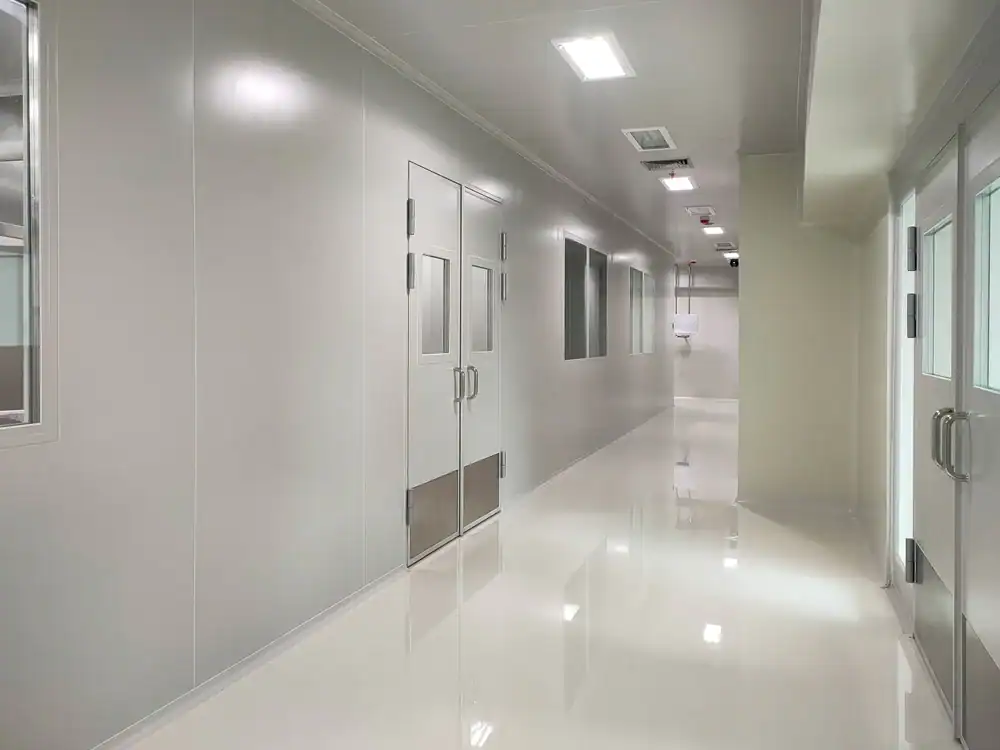
Seamless means no grout lines. No seams. No cracks. Nowhere for bacteria, grease, or moisture to hide. The floor is one continuous surface from wall to wall, and it can be installed with an integral cove base that curves up the wall. This eliminates the corner gaps where debris typically accumulates.
Nonporous means the surface doesn’t absorb anything. Water, oil, cleaning chemicals—they all stay on top of the floor where they can be wiped away. There’s no infiltration, no staining, no bacterial growth beneath the surface. This is critical for both cleanliness and durability.
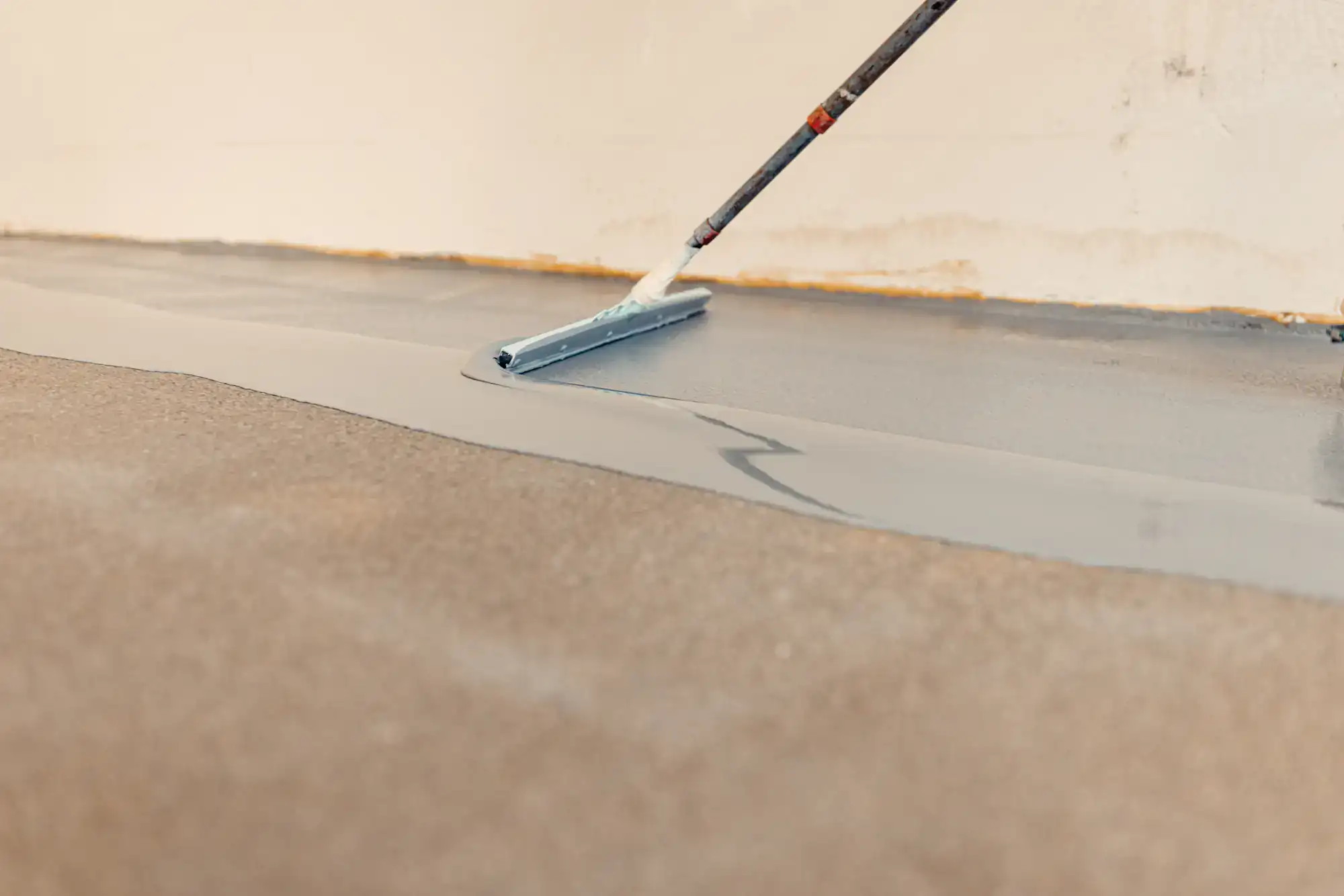
Commercial kitchens don’t clean floors gently. You’re using industrial-strength degreasers, sanitizers, and sometimes acidic or alkaline cleaners depending on what you’re dealing with. Your floor needs to handle that without breaking down.
Epoxy and urethane cement systems are formulated to resist a wide range of chemicals. They won’t degrade when exposed to the cleaning agents required to meet health department standards. This means the floor maintains its integrity over time, even with daily high-pressure washing and aggressive scrubbing.
Thermal shock is another factor. If you’re washing down a cold floor with hot water, or if hot liquids spill near cooking equipment, the floor has to handle the temperature swing without cracking. Resinous flooring systems are built for that. They’re designed to withstand the temperature extremes common in food service environments—from walk-in freezers to areas near fryers and ovens.
Durability also means the floor can handle the physical abuse of a busy kitchen. Heavy equipment, carts, dropped utensils, constant foot traffic— epoxy flooring resists impact, abrasion, and wear. It’s not going to chip, crack, or peel under normal use. That longevity matters when you’re trying to avoid the downtime and expense of floor replacement.
The lifespan of a properly installed epoxy or urethane system can be significantly longer than traditional tile or vinyl. You’re not replacing grout every few years. You’re not dealing with tiles that crack under heavy loads. The floor stays intact, and it continues to meet health code requirements without constant maintenance or repair.
Slip-and-fall accidents are a serious concern in commercial kitchens. Between water from dishwashing stations, grease from cooking areas, and the general chaos of a busy service, floors get slippery. If someone goes down, you’re dealing with injuries, workers’ compensation claims, and potential OSHA violations.
Epoxy and resinous flooring can be customized with slip-resistant additives. These additives—often quartz or aluminum oxide—are broadcast into the surface during installation, creating a textured finish that provides traction even when wet. The level of texture can be adjusted based on the specific needs of different areas in your kitchen.
High-traffic zones, areas near sinks, and sections around fryers typically need more aggressive slip resistance. Epoxy systems allow you to tailor the texture to match the risk level of each space. This isn’t something you can easily do with tile or vinyl.
The slip resistance also needs to hold up over time. Some coatings provide good traction initially but wear smooth after a few months of use. Quality resinous systems maintain their slip-resistant properties because the texture is embedded throughout the surface, not just applied on top.
OSHA has clear standards for workplace safety, and flooring plays a role in meeting those standards. Providing a slip-resistant surface is part of your responsibility as an employer. It’s also just good business. Fewer injuries mean fewer disruptions, lower insurance costs, and a safer environment for your team.
Connecticut inspectors are also looking at this. If your floor is visibly slippery or if there have been incidents, it can trigger additional scrutiny during inspections. Installing flooring that’s designed to prevent slips isn’t just about compliance—it’s about creating a workspace where people can move confidently and focus on their work.
Not every kitchen needs the same flooring. The right system depends on your specific operation, your cleaning protocols, and the conditions your floor will face.
If you’re running a high-volume restaurant with heavy equipment and frequent washdowns, urethane cement is often the best choice. It handles extreme conditions, offers superior thermal shock resistance, and provides the durability needed for demanding environments. If you’re operating a smaller café or a facility with moderate traffic, a high-build epoxy system with slip-resistant additives can deliver the performance you need at a lower cost.
What matters most is working with a team that understands Food service flooring and Connecticut’s health code requirements. We specialize in epoxy and resinous flooring for commercial kitchens across Hartford, New Haven, New London, and Middlesex Counties. We install seamless, FDA-compliant systems designed to meet inspection standards and hold up under the daily demands of food service operations.
Summary:
Article details:
Share: