Cracked, peeling, or stained garage floor? Learn when resurfacing is the right call — and what it actually takes to do it right in Connecticut.
If your garage floor is peeling, cracking, or stained beyond recognition, you’re probably wondering whether it can actually be fixed — or whether you’re looking at a full replacement. It’s a fair question, and the answer matters because the difference in cost, time, and disruption is significant.
The short version: most garage floors in Hartford County can be resurfaced. The longer version is that resurfacing only holds up when the underlying issues — moisture, poor prep, structural damage — are properly addressed first. Skip those steps, and you’ll be right back where you started. Here’s what you actually need to know.
Resurfacing is the process of repairing and recoating an existing concrete slab rather than removing and replacing it. For most homeowners, it’s the right call — provided the slab itself is structurally sound. Surface-level damage like cracks, spalling, staining, and even a previously failed coating are all resurfacing candidates when handled correctly.
Where resurfacing stops making sense is when the slab has significant structural failure — major heaving, widespread settlement, or concrete that’s deteriorating from the inside out. That’s a different conversation. But the cracked, salt-stained, oil-soaked floor that’s been through thirty Hartford County winters? That’s almost always fixable. The key is an honest assessment before anyone picks up a grinder.
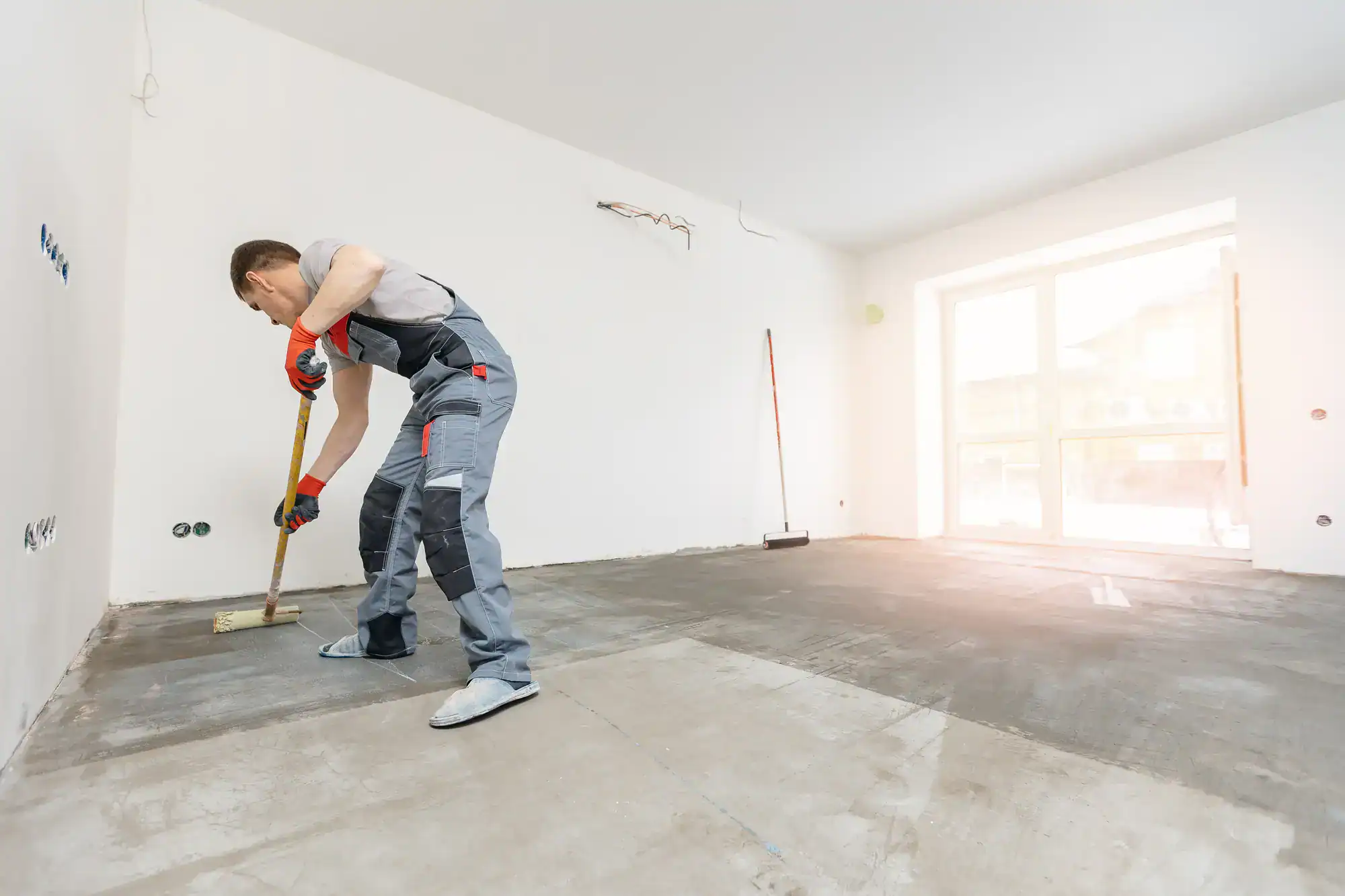
Here’s the part most people don’t hear until after their floor has already failed twice: the coating itself is almost never the problem. The problem is what happens — or doesn’t happen — before the coating goes down.
Garage floor refinishing requires opening the concrete’s pores so the new coating can chemically bond to the slab, not just sit on top of it. The professional standard for doing that is diamond grinding — a mechanical process that profiles the surface at the right depth for a true bond. Acid etching, which is what most DIY kits rely on, doesn’t get you there. It cleans the surface, but it doesn’t create the profile that epoxy needs to grip. That’s why big-box kits peel. It’s not the product — it’s the prep.
Hartford County adds another layer to this. Our clay-heavy soils, seasonal water table fluctuations, and increasingly intense precipitation events mean that moisture vapor transmission through concrete slabs is a near-universal issue here. When moisture pushes up through a slab and hits a coating that wasn’t applied over a proper vapor barrier, the coating lifts. It’s not a matter of if — it’s when.
Before we coat any floor, we test for moisture using ASTM F2170 in-situ relative humidity probes — the industry’s preferred method for getting an accurate read at depth, not just at the surface. If moisture is present at problematic levels (and in Hartford County, it often is), we apply a vapor barrier primer that stops vapor transmission permanently. That step alone is why so many resurfacing jobs done without it fail within the first year or two, and why ours carry a 15-year warranty.
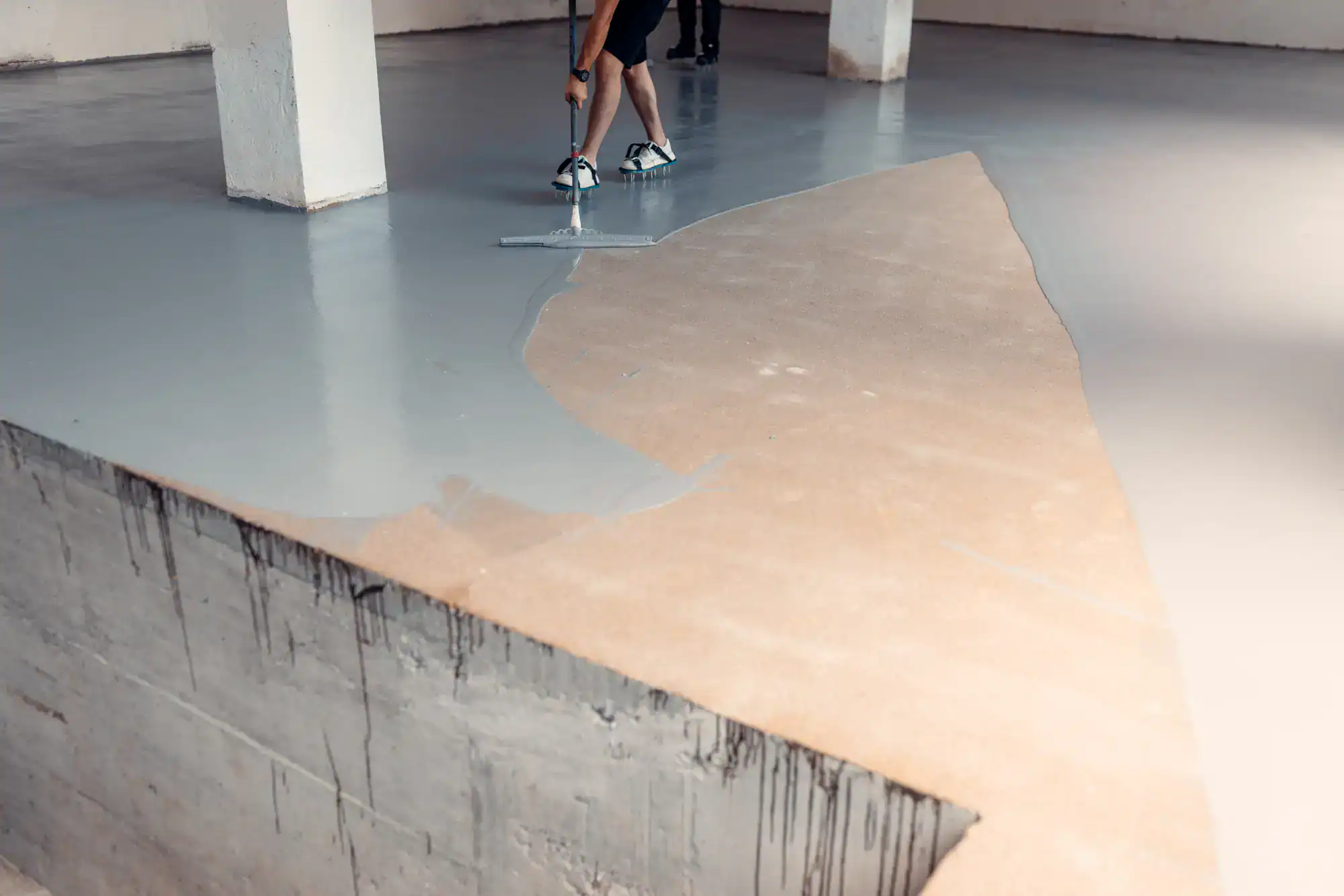
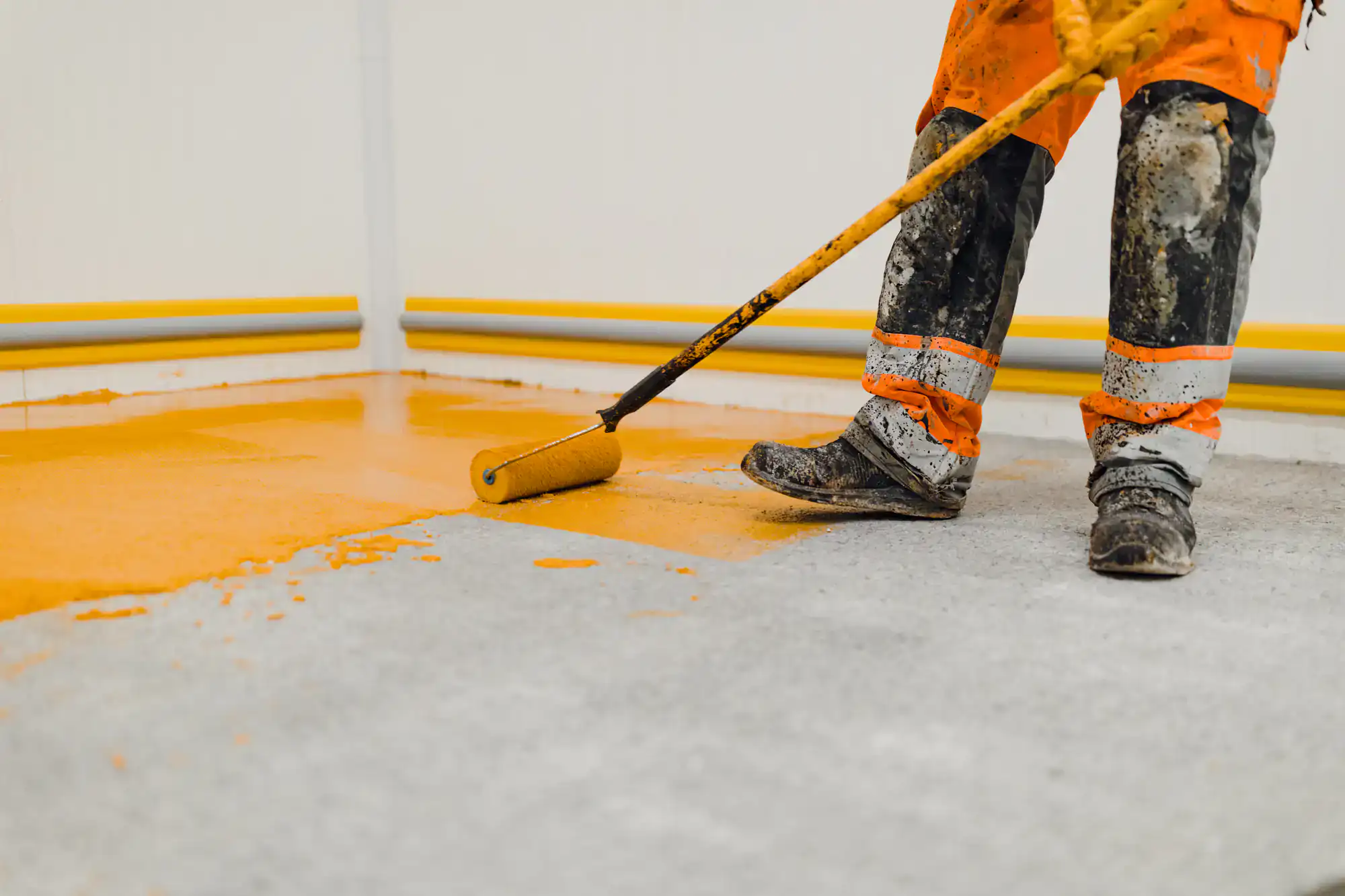
The refinishing process, done right, looks like this: diamond grinding to create the correct surface profile, crack repair and spalling remediation, moisture testing and vapor barrier application where needed, then a multi-layer coating system — primer, base coat, decorative broadcast layer, and a protective topcoat. Each layer has a job. None of them are optional.
A lot of homeowners think of their garage floor coating as a single product. In reality, a professional system is a stack of layers, and the topcoat is what determines how that floor holds up over time.
Polyurethane is one of the most effective topcoat options for a resurfaced garage floor, and it does things that epoxy alone doesn’t. It’s more flexible than epoxy, which matters in a climate like Hartford County’s where temperatures swing from well below freezing in January to above 90°F in August. That roughly 100-degree seasonal range creates real thermal expansion and contraction stress on any rigid coating. Polyurethane moves with it rather than cracking under it.
UV stability is the other major advantage. Epoxy yellows when exposed to sunlight — not dramatically at first, but noticeably over time, especially in garages with windows or doors that stay open during warmer months. Polyurethane doesn’t have that problem. It holds its color and gloss through years of sun exposure, which matters both aesthetically and for resale value in a market where Hartford County homes are currently among the most in-demand in the region.
Chemical and abrasion resistance round out the picture. A polyurethane topcoat creates a surface that sheds road salt, motor oil, brake fluid, and cleaning chemicals without absorbing them. For a garage floor that’s already been through the damage cycle once, that kind of surface durability is what makes the difference between a floor that lasts two years and one that lasts twenty.
The way we typically build a resurfacing system is epoxy for the base — it provides the structural bond and the thickness — and polyurethane or polyaspartic for the topcoat, where surface performance and longevity are the priorities. It’s not an either/or. Both materials have a role, and combining them gets you the best of each.
Want live answers?
Connect with a American Poly Floor expert for fast, friendly support.
Once a floor is properly prepped and the moisture situation is addressed, the finishing options open up considerably. The most popular choice we see in Hartford County right now is the decorative flake system — and for good reason. It looks sharp, performs well, and holds up to the specific abuse that Connecticut garages dish out year after year.
Beyond flake systems, solid color epoxy and metallic finishes are also common depending on your preference and how the garage is used. Commercial-grade solid color systems work well in high-traffic garages and workshops. Metallic finishes are a popular upgrade for homeowners who want a more distinctive, high-end look. The right choice depends on how you use the space, how much foot and vehicle traffic it sees, and what you want it to look like when it’s done.
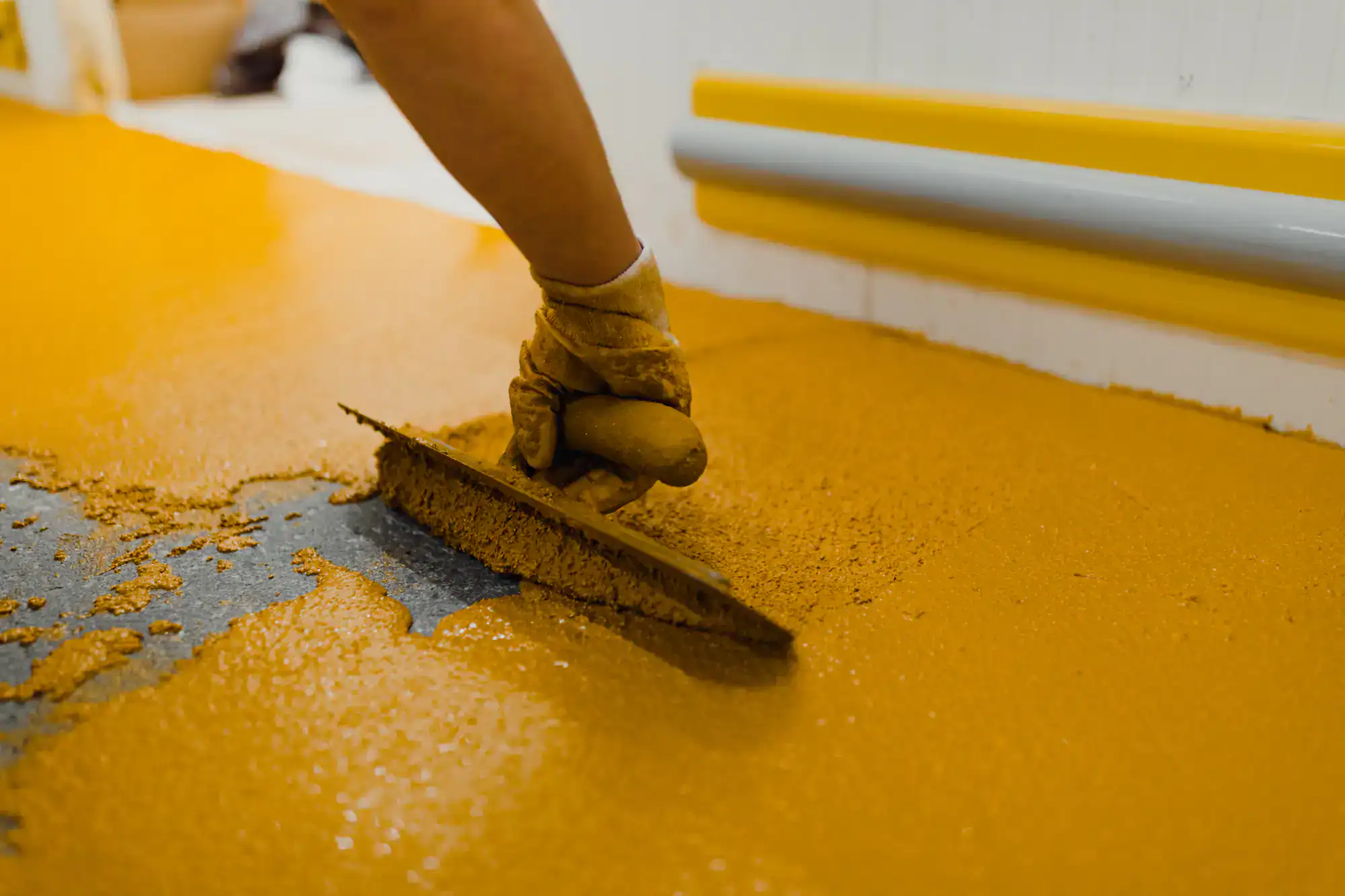
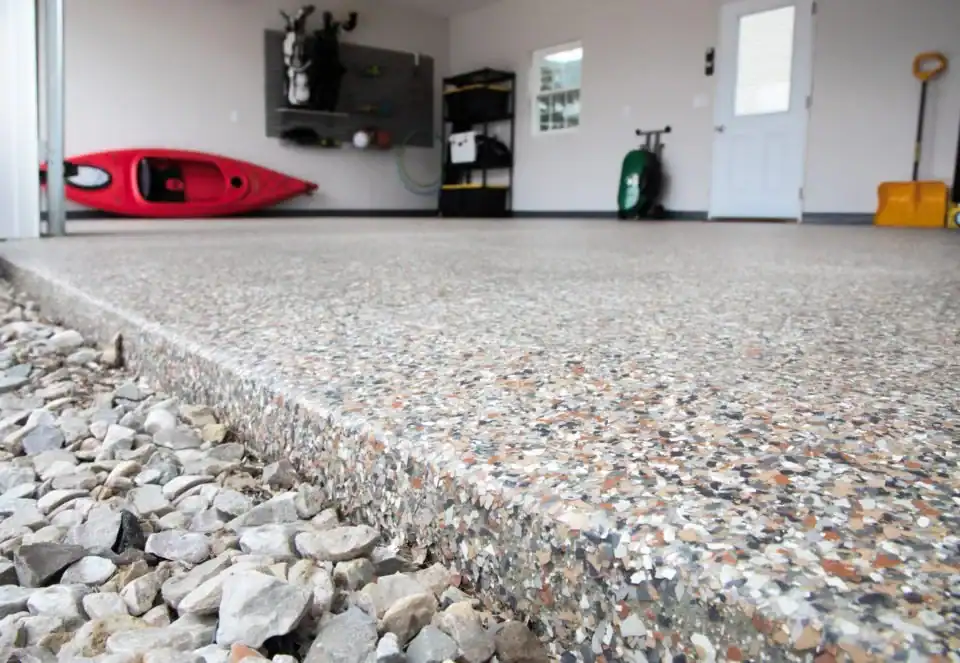
A flake garage floor system — sometimes called a chip or broadcast system — involves scattering decorative vinyl chips into a wet epoxy base coat, then sealing the whole surface with a protective topcoat. The result is a speckled, multi-color finish that looks significantly more finished than bare concrete or a plain solid-color coating.
The practical advantages go beyond appearance. The chips add texture and slip resistance, which is genuinely useful in a Hartford County garage where wet boots, snow melt, and road salt are tracked in from November through March. The varied color pattern also hides minor scuffs, tire marks, and dirt far better than a solid-color floor — meaning the floor looks clean longer between washes. We recommend slip-resistant additives as standard for most residential garages in this area, and the flake system works naturally with that.
What homeowners sometimes don’t realize is that a flake system over a resurfaced floor requires exactly the same preparation as any other coating. The chips don’t compensate for poor adhesion underneath. If the base coat doesn’t bond properly to the concrete, the entire system — chips, topcoat, and all — will eventually lift. The prep is the same whether you’re doing a plain solid color or a full decorative broadcast.
For resurfacing projects specifically, that means removing any existing failed coating down to bare concrete, grinding the surface to the correct profile, addressing cracks and moisture, and then building the new system from the ground up. When that’s done right, a flake system over a resurfaced Hartford County garage floor should last 15 to 20 years without significant maintenance.
It’s worth being direct about what Hartford County garage floors are actually up against, because it’s more than most homeowners realize.
Connecticut typically puts garage floors through 30 to 50 freeze-thaw cycles in a single winter season. Each time moisture inside the concrete freezes, it expands by roughly 9 percent, creating internal pressure that slowly widens cracks and weakens the surface. Multiply that by 40 or 50 winters in a home built in the 1970s, and you start to understand why so many floors in West Hartford, Manchester, Southington, and Enfield look the way they do.
Road salt compounds the damage. Connecticut municipalities apply significant de-icing chemicals every winter, and vehicles track that salt directly into residential garages. Chloride ions penetrate unprotected concrete and accelerate surface deterioration — the white efflorescence and surface scaling you see on older floors is largely the result of years of salt exposure. A properly coated floor stops that process entirely.
Then there’s moisture. Hartford County’s precipitation risk is classified as extreme, and annual rainfall is projected to increase over the coming decades. More intense precipitation events mean more moisture infiltration, more hydrostatic pressure from below, and more demand for flooring systems that are engineered specifically to handle it. A vapor barrier primer isn’t a nice-to-have in Hartford County — it’s the difference between a coating that lasts and one that doesn’t.
This is why we approach every resurfacing project the same way we approach commercial work. The standards don’t change based on the square footage. A residential garage in Farmington or South Windsor gets the same moisture testing, the same vapor barrier, and the same multi-layer system as a warehouse floor — because the consequences of cutting corners are the same: the floor fails, and someone has to pay to do it again.
For most homeowners in Hartford County, the answer is yes — your floor can be resurfaced, and doing it correctly will outlast anything you’ve tried before. The failures you’ve seen, whether from a DIY kit or a previous contractor, almost always trace back to the same root causes: inadequate surface preparation, no moisture testing, no vapor barrier. Fix those things, and a resurfaced floor becomes a long-term solution rather than a temporary patch.
What it takes is an honest assessment of your specific slab, the right prep process for Connecticut’s conditions, and a coating system built for the climate — not just the catalog. That’s what separates a floor that holds up through thirty more Hartford County winters from one that starts peeling by next spring.
If you’re ready to find out whether your floor is a resurfacing candidate, we’re based right here in East Hartford and have been working with Hartford County homeowners for over 30 years. Reach out and we’ll take a look.
Summary:
Article details:
Share: