Most garage epoxy floors fail before they should — and it's rarely the coating's fault. Here's what Hartford County homeowners need to know before they spend a dime.
You’ve probably seen it. A neighbor’s garage floor looked like a showroom for about a year — then the coating started lifting near the tires, bubbling along the edges, and peeling in sheets. Maybe that neighbor was you. Either way, it’s a frustrating outcome for something that was supposed to be a long-term fix. The good news is that a properly installed garage epoxy floor doesn’t do that. The bad news is that plenty of installations in Hartford County aren’t done properly — and most homeowners don’t find out until it’s too late. Here’s what you actually need to know before you hire anyone or pick up a kit.
A lot of homeowners use the terms interchangeably, but garage floor paint and epoxy are not the same thing — and the gap between them is bigger than most people expect. Paint sits on top of concrete. Epoxy bonds to it at a chemical level, creating a surface that’s dramatically harder, more resistant to staining, and far less likely to fail under the kind of stress a garage floor sees every day.
That said, not all epoxy is created equal either. The water-based epoxy in most big-box store kits contains only 30 to 50 percent solids — the rest is water that evaporates, leaving behind a thin film that looks fine at first but can’t hold up to hot tires, road salt, or Hartford County’s freeze-thaw cycles. Professional-grade systems use 100 percent solids epoxy, which means the coating you apply is the coating you get — no shrinkage, no weak spots.
The failure mode for garage floor paint is almost always the same: it looks decent for a season, then the tires start pulling it up. This happens because paint doesn’t create a true mechanical bond with concrete — it adheres to the surface layer, which is the weakest part of any slab. When that surface layer flexes under thermal stress — and in Connecticut, it flexes constantly — the paint comes with it.
Epoxy, applied correctly over properly prepared concrete, doesn’t have this problem. The preparation step is what makes the difference. Diamond grinding removes the weak surface layer entirely and opens up the pores of the concrete so the epoxy can penetrate and lock in. Acid etching, which is what most DIY kits recommend, only cleans the surface. It doesn’t create the mechanical profile that holds a coating in place for years.
We’ve seen this play out on floors all over Hartford County — in Glastonbury, in West Hartford, in Wethersfield. The homeowner did everything the kit said. They cleaned the floor, etched it, applied the coating on a dry day. And it still peeled. Not because they did it wrong, but because the process itself wasn’t built for what Connecticut concrete actually demands. The chemistry in those kits assumes conditions that most New England garages don’t meet.
The other issue is moisture. Concrete isn’t a solid barrier — it’s porous, and it transmits moisture vapor from the ground up through the slab year-round. If there’s too much moisture in the concrete when you coat it, the coating traps that vapor underneath. Pressure builds. The coating bubbles, then lifts. This is the most common cause of epoxy failure in the Connecticut River Valley, where the water table runs high and slab moisture is rarely tested before installation.
A professional installer tests for moisture before anything else. The industry standard is ASTM F2170, which places humidity sensors inside the concrete — not just on the surface — to get an accurate reading of what’s actually happening inside the slab. If moisture levels are too high, a vapor barrier primer goes down first. Skip that step, and you’re gambling with the entire job.
When people search for the best epoxy for garage floor solutions, they’re usually comparing products — brands, formulations, price points. That’s a reasonable starting point, but the product itself is only one piece of the equation. The best epoxy in the world will fail on a floor that wasn’t prepared correctly. A well-prepared concrete garage floor with a mid-tier coating will outlast a poorly prepared floor with a premium product every time.
What actually makes a garage floor system perform over the long term is the combination: proper concrete grinding, moisture testing and mitigation if needed, a high-solids base coat, and a UV-stable polyaspartic topcoat. The polyaspartic layer is what protects the floor from yellowing, scratching, and the kind of chemical exposure — road salt, motor oil, antifreeze — that Hartford County garages deal with from November through March every year.
Polyaspartic coatings are sometimes marketed as a premium upgrade, but for Connecticut homeowners, they’re really the practical choice. They cure faster than traditional epoxy — you can walk on the floor the same day and drive on it within 24 hours — and they stay flexible across the full range of temperatures a New England garage experiences. Traditional epoxy gets brittle in cold weather. Polyaspartic doesn’t.
The flooring system we install on a garage in Simsbury or Farmington is the same class of system we use on commercial floors for industrial clients. That’s not a marketing claim — it’s just what the environment requires. Hartford County winters are hard on concrete. Road salt alone causes surface spalling that compounds every year. A coating system that’s built for industrial use handles that stress without breaking a sweat. One that’s built for mild conditions and light traffic doesn’t.
Want live answers?
Connect with a American Poly Floor expert for fast, friendly support.
Finding a garage flooring company for a garage epoxy floor installation isn’t hard. Finding one who will actually do it right is a different question. The Hartford County market has a mix of established flooring specialists, painting companies that offer epoxy as a side service, and weekend-trained installers who learned from a manufacturer’s two-day certification program. The price difference between them can be significant — and so can the quality difference.
The most important thing you can ask any contractor is what their preparation process looks like. If they say acid wash, walk away. If they say diamond grinding, ask how they handle moisture. If they can explain ASTM F2170 moisture testing without hesitation, you’re probably talking to someone who knows what they’re doing.
A few patterns show up consistently with contractors who cut corners. The first is quoting without visiting the space. A legitimate installer needs to see your floor — its condition, its square footage, any existing damage or previous coatings — before they can give you an accurate number. A quote over the phone based on square footage alone is a sign that the details aren’t being taken seriously.
The second red flag is vague warranty language. “We stand behind our work” isn’t a warranty. A real warranty specifies what’s covered, for how long, and what happens if something fails. Our residential installations come with a 15-year warranty — not because we think something will go wrong, but because we’re confident enough in the process to put it in writing. That warranty is also insurance-backed, which means there’s a financial guarantor behind the promise, not just a handshake.
The third thing to watch is whether the contractor is licensed through Connecticut’s Department of Consumer Protection. CT requires Home Improvement Contractors to hold a valid HIC license — you can verify any contractor through the DCP at ct.gov. It takes about two minutes and tells you a lot about whether you’re dealing with a legitimate operation.
Finally, ask about their commercial work. A contractor who only does residential jobs has a narrower range of experience. We’ve installed floors at facilities that include Costco, Amazon, and Foxwoods — environments where the floor has to perform under conditions that make a residential garage look easy. That experience comes back to your floor in the form of better preparation, better material selection, and fewer surprises.
A professional installation isn’t just “apply epoxy.” It’s a multi-step process that starts well before any coating touches the concrete. Here’s what it should look like from start to finish — and what you should expect if you’re hiring a reputable garage flooring company in Hartford County.
The first step is surface preparation. We diamond-grind every floor we coat. The grinders connect to dust collection systems, so the garage stays clean throughout the process. Grinding removes the laitance — the weak surface layer — and creates the mechanical profile the coating needs to bond permanently. This step alone is what separates a floor that lasts from one that peels.
Next is moisture testing. Before any primer or coating goes down, we measure the relative humidity inside the concrete slab using in-situ probes — not just surface readings. For most coating systems, the slab needs to be below 75 percent relative humidity. If it’s not, a moisture vapor barrier primer goes down first. This step is especially important for homes in the Connecticut River Valley — Hartford, Wethersfield, Glastonbury, Rocky Hill, Cromwell — where elevated water tables mean slab moisture is a real and consistent issue.
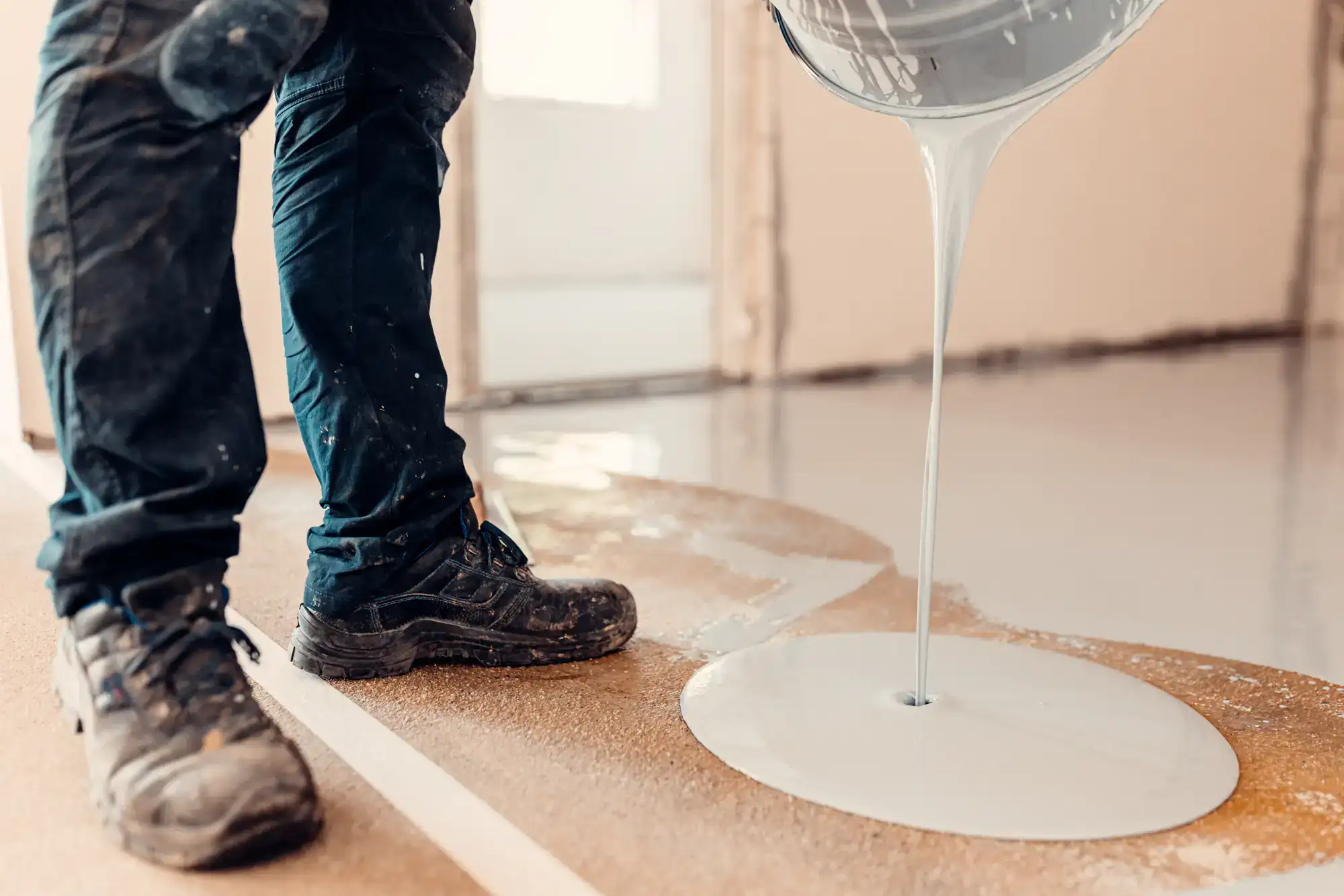
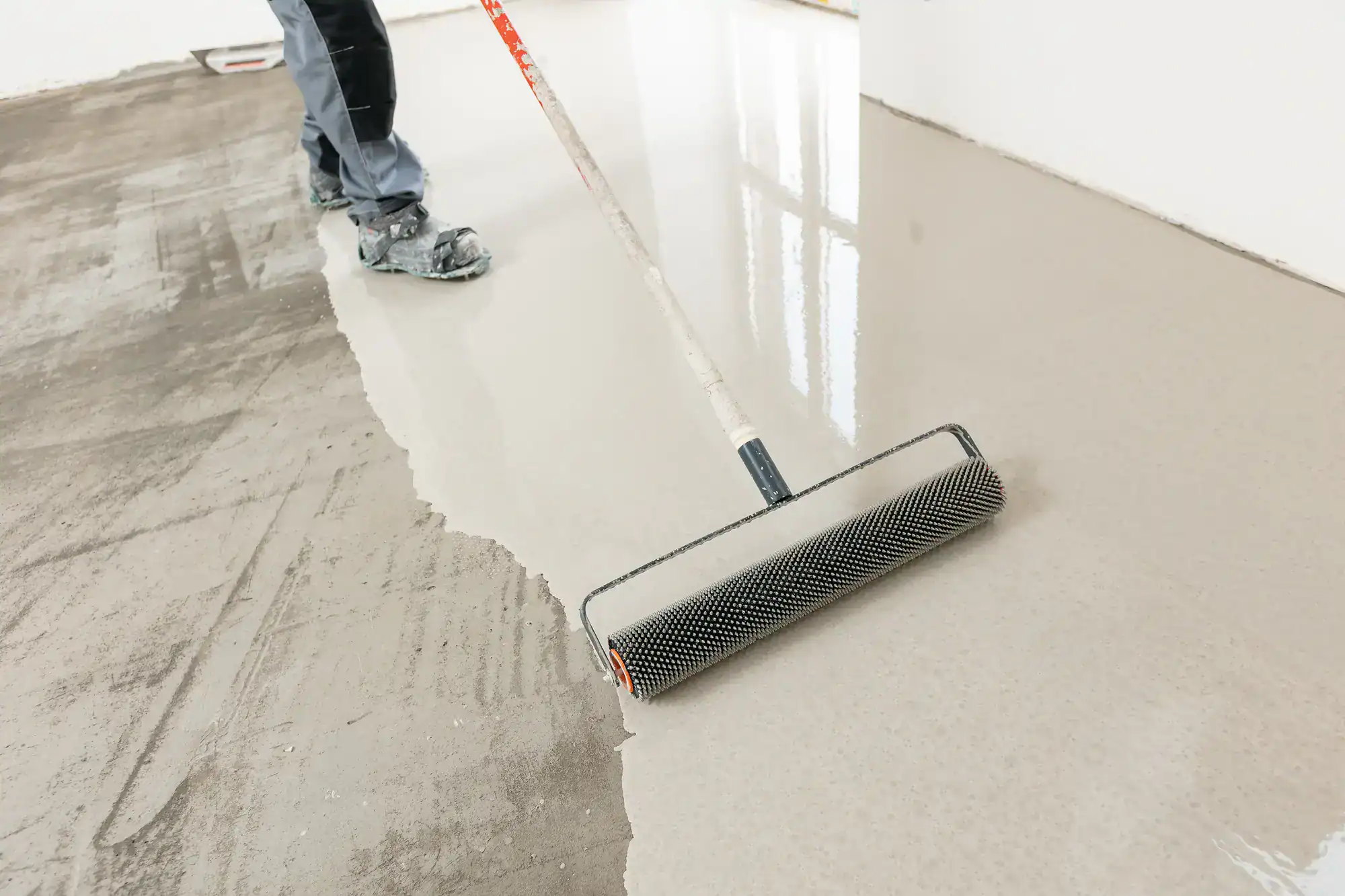
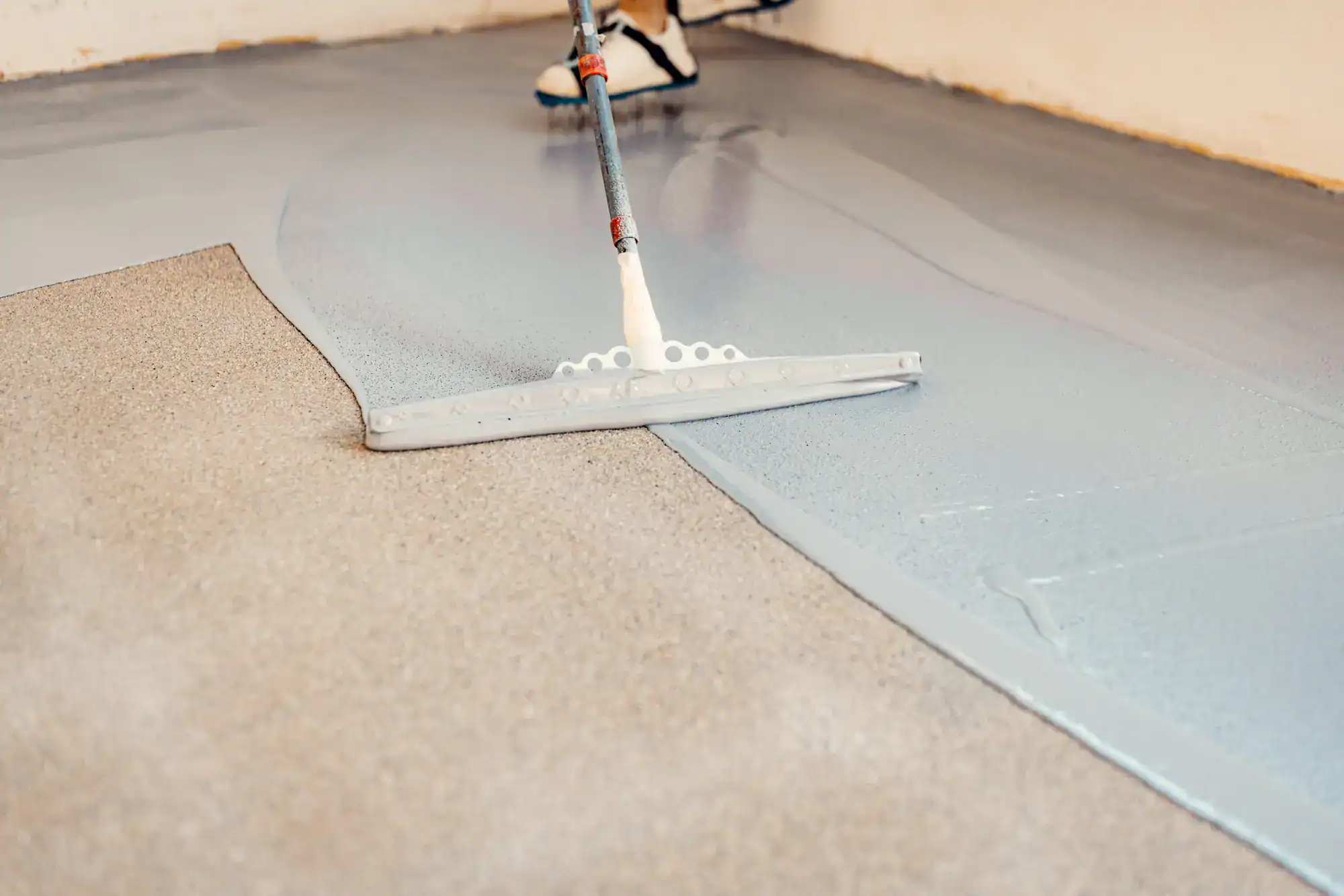
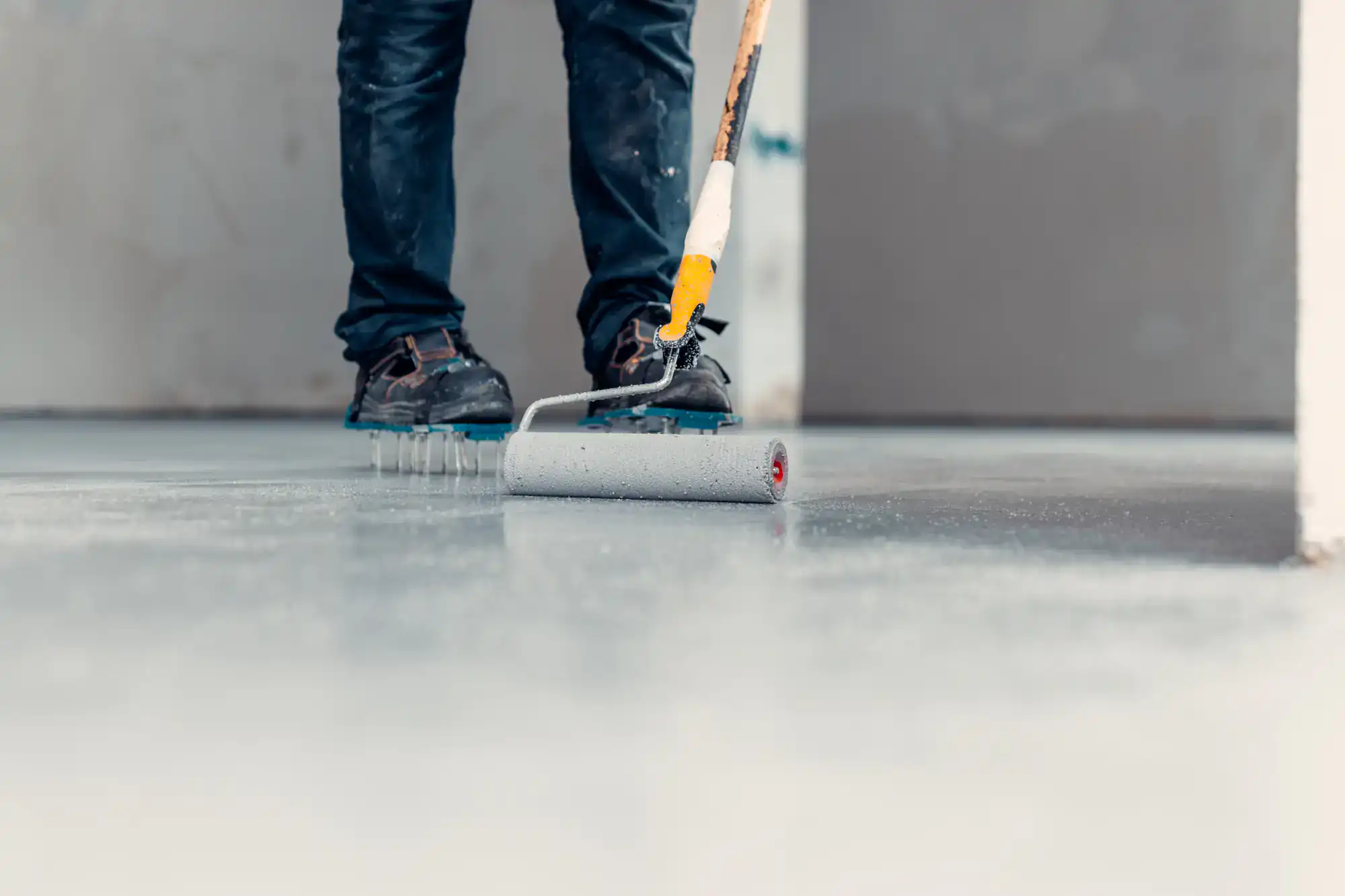
After prep and any necessary crack repair, the base coat goes down. We use 100 percent solids or high-solids epoxy — not the water-based formulations you find in consumer kits. The base coat is followed by the decorative layer, which is where color flakes or metallic finishes get broadcast into the wet coating. Then the polyaspartic topcoat seals everything in — UV-stable, scratch-resistant, and chemically resistant to the road salt and automotive fluids your floor will see every winter.
Most residential installations in Hartford County take two days. Day one is prep and base coat. Day two is finish work and topcoat. You’re walking on it within 24 hours and driving on it within 72. If you need to clear the garage before we start and don’t have somewhere to put everything, we offer a PODS storage service to handle that — one less thing to figure out before the job begins.
The $3,000 mistake isn’t always a single bad decision — it’s usually a series of small ones. Choosing a kit over a professional. Choosing a contractor based on the lowest quote. Not asking about moisture testing or prep. Not getting a real warranty in writing. Each one seems minor at the time, and none of them show up as a problem until the coating starts failing.
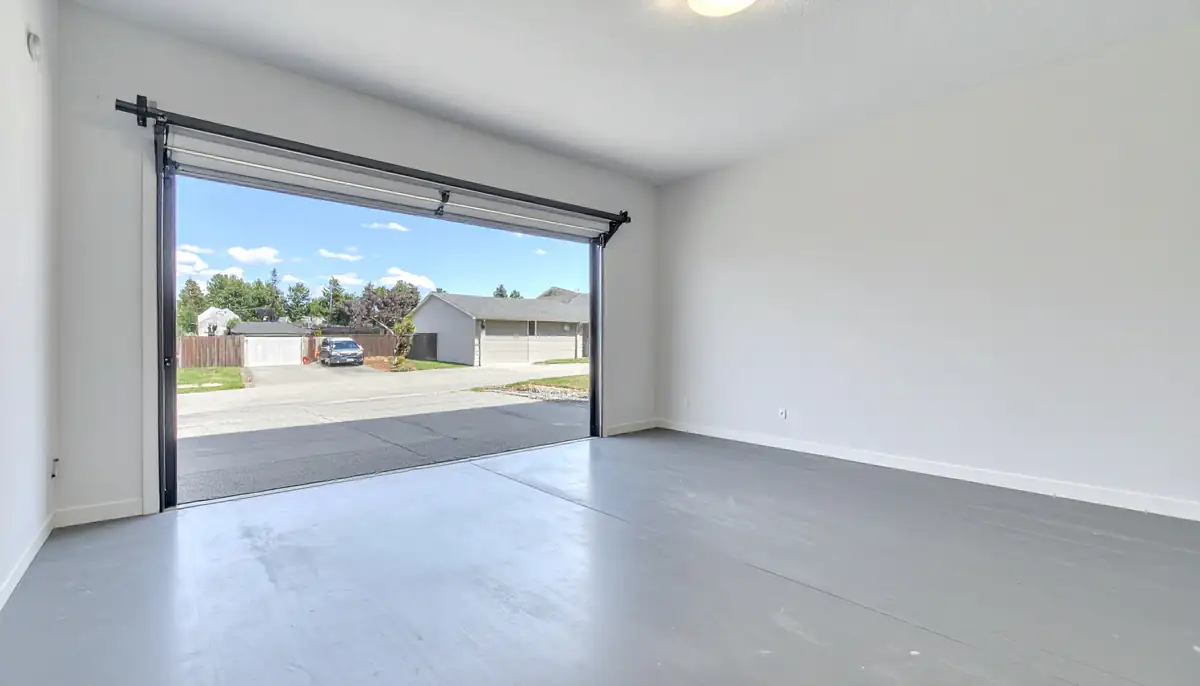
A properly installed garage epoxy floor — diamond-ground, moisture-tested, coated with a professional-grade system, and backed by a warranty that actually means something — should last 15 to 20 years in a Hartford County climate. It should handle the road salt, the freeze-thaw cycles, the hot tires, and the occasional oil spill without complaint. That’s what it’s supposed to do. The goal is to do it once and not think about it again.
If you’re in West Hartford, Glastonbury, Simsbury, Avon, or anywhere else in Hartford County and you want to talk through what your floor actually needs, we’re based right here in East Hartford and happy to take a look.
—
**What is a flake garage floor and is it worth it?** A flake floor — sometimes called a chip floor or broadcast flake system — is a decorative finish where colored vinyl flakes are broadcast into the wet base coat before the topcoat goes down. The flakes serve two purposes: they give the floor a finished, textured appearance, and they add a natural slip resistance that’s especially useful in Hartford County garages that see wet boots and snow melt from November through April. For a space that doubles as a workshop, home gym, or anything beyond parking, the added durability and appearance are usually worth the modest cost difference. For a basic parking garage, a solid-color system works just as well.
**How much does epoxy garage floor coating cost per square foot in Connecticut?** Professional installations in Hartford County typically run between $5 and $12 per square foot, depending on the coating system, the condition of the concrete, and the size of the space. A standard two-car garage — roughly 400 to 450 square feet — usually falls between $2,000 and $5,400 for a professional job. Polyaspartic systems sit toward the higher end of that range, but the faster cure time and better performance in cold climates make them the more practical choice for homeowners dealing with Hartford County winters. DIY kits run $100 to $500 upfront, but a kit that fails in 18 months costs more per year than a professional installation that lasts 15.
**How much does garage floor refinishing cost if the old coating has already failed?** If there’s an existing coating that needs to come off before refinishing, expect the cost to be higher than a first-time installation. Removing failed epoxy or paint adds labor and sometimes requires additional grinding passes to get the surface back to bare concrete. The total cost depends on how much coating is present and how well it’s adhered, but most garage floor refinishing jobs in Hartford County run $500 to $1,500 more than a standard installation. This is one of the clearest arguments for doing it right the first time — the cost of fixing a failed floor almost always exceeds what it would have cost to hire a qualified contractor from the start.
**How much does a polyaspartic garage floor coating cost compared to standard epoxy?** Polyaspartic systems typically cost $1 to $3 more per square foot than traditional epoxy — so for a two-car garage, you’re looking at roughly $400 to $1,350 more for the full job. For most Hartford County homeowners, that premium is worth it. Polyaspartic coatings cure faster, resist UV yellowing, and stay flexible across the temperature range Connecticut experiences year-round — from sub-zero January nights to humid August afternoons. Standard epoxy can become brittle in cold weather, which is a real liability in a climate that sees 40-plus days below freezing every winter. If your garage is in Simsbury, Avon, or anywhere in the Farmington Valley where temperature swings are sharp, polyaspartic is the more durable long-term choice.
Summary:
Share: