Connecticut winters destroy bare concrete faster than a teenager destroys a data plan. Epoxy garage floors protect against road salt, stains, and freeze-thaw damage while transforming your most-ignored room into a space you’ll actually want to show off.
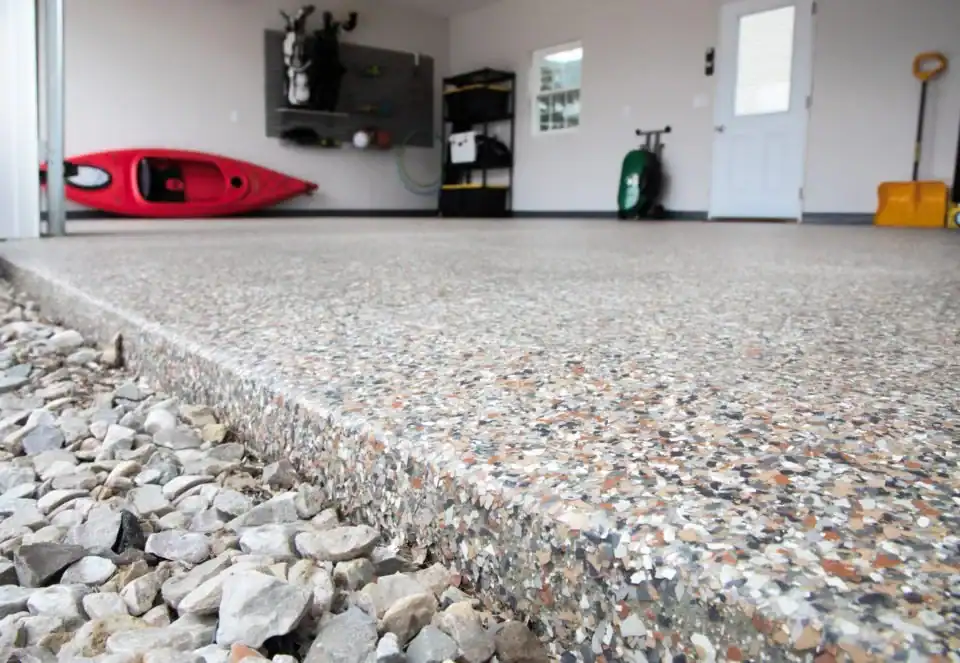
If you’ve browsed the aisles of a big-box hardware store, you’ve seen “epoxy paint.” It’s cheap, it comes in a pretty box, and the marketing suggests you’ll be done by lunchtime. Spoilers: you won’t be. In the world of flooring, calling DIY paint “epoxy” is like calling a tricycle a Harley—they both have wheels, but only one is getting you across the state.
Paint sits on top of your concrete like a nervous guest, barely hanging on. Epoxy coating, however, is a two-part chemical marriage of resin and hardener that bonds with your concrete at a molecular level. It doesn’t just “dry”; it cures into a rock-hard shield that’s about five times thicker than paint.
Think of it this way: paint is a cheap windbreaker. Epoxy is a suit of armor. When your SUV tracks in road salt and slush all winter, paint starts peeling faster than a sunburn. Epoxy stays put, keeping that salt from ever reaching your concrete, which is mandatory in Hartford and New Haven counties where “mild winter” is a myth told to out-of-staters.
Between November and March, your garage floor is basically an experimental lab for corrosion. Every time you pull in after a drive on I-91, your tires deposit a salty brine that makes your concrete look like a giant pretzel. That salt seeps into the porous concrete, water follows, it freezes, it expands, and—pop—there goes your surface. This is “freeze-thaw damage,” and it’s the reason your garage floor is currently flaking off in chunks.
Bare concrete is a giant sponge. It drinks up oil, antifreeze, and road salt like it’s at an open bar. Once those fluids get inside, they start an internal demolition project. The surface starts to “spall,” which is a fancy way of saying your floor is literally shedding its skin like a reptile. A professional epoxy finish flips the script. It creates a non-porous, sealed surface. Salt can’t get in. Water can’t get in. When spring finally arrives, you don’t need a jackhammer—you just need a hose. Everything rinses away, leaving your slab intact and your dignity preserved.
And let’s talk about “concrete dust.” If your floor is bare, it’s constantly disintegrating. That’s why your black car is always gray and your holiday decorations look like they were stored in a flour mill. Epoxy seals the “leak.” No more dust, no more mystery sneezing. Plus, it resists “hot tire pickup,” which is what happens when your summer-heated tires literally peel the floor up when you pull out of the driveway. With epoxy, the floor stays where it belongs: under the car.
Let’s get real about the “DIY weekend kit.” Most of those products are just latex acrylic with a sprinkle of epoxy for marketing flavor. They dry by evaporation, leaving a thin, brittle film. It looks great for exactly three days—usually until the first time you park a hot car on it.
True epoxy is a chemical reaction. When the resin and hardener meet, they cross-link to form a surface that is essentially a new part of your home’s structure. It’s designed for industrial warehouses and airplane hangars. If it can handle a forklift carrying three tons of widgets, it can definitely handle your lawnmower and the kids’ bikes.
Here’s the “paper towel test”: Spill motor oil on paint, and you’ve got a permanent souvenir. Spill it on epoxy? You wipe it up with a towel, and it’s like it never happened. No stains, no smells, no drama.
Paint also hates traffic. If you walk on it, it wears thin. If you drive on it, it flakes. Epoxy, meanwhile, is the marathon runner of flooring. You don’t have to repaint every other summer like you’re maintaining the Golden Gate Bridge. You install it once, and for the next 15 to 20 years, you’re done. You can use that saved time to finally learn how to use your smoker or clear out those boxes from 2012.
Want live answers?
Connect with a American Poly Floor expert for fast, friendly support.
You might be wondering why you can’t just slap this stuff down on a Saturday morning. The secret isn’t in the pouring; it’s in the prep. Professional installation is 90% preparation and 10% perspiration (and maybe a little bit of art).
We don’t just “clean” the floor; we profile it. We use industrial diamond grinders to shave off the top layer of concrete, opening up the “pores” so the epoxy can grab hold. If there’s old paint, oil, or mystery stains, they’re gone. We fill the cracks, level the divots, and make sure the slab is bone-dry. If you skip this, the epoxy will peel—guaranteed. It’s why those hardware store kits usually end up as a flaky mess within six months.
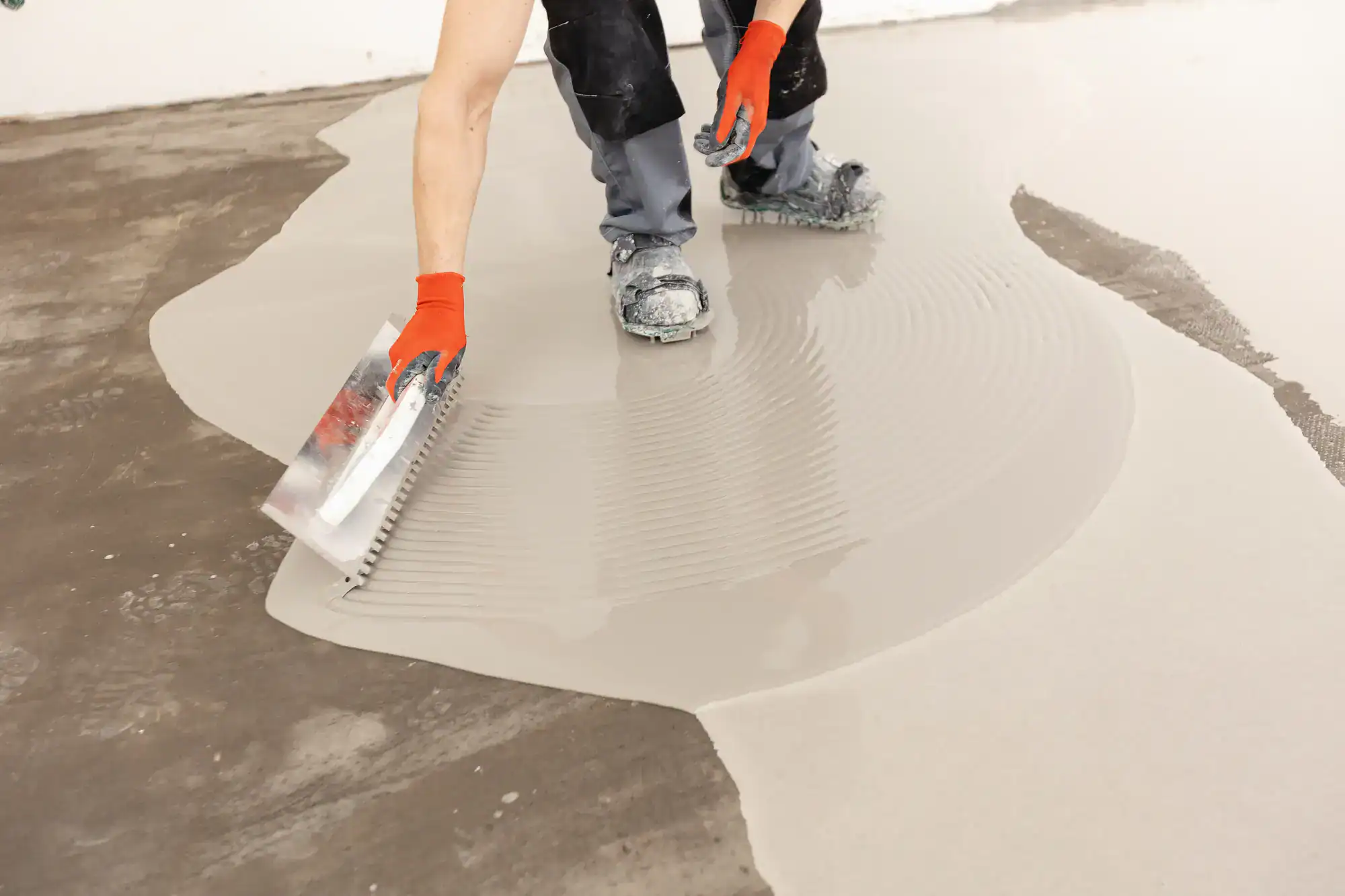
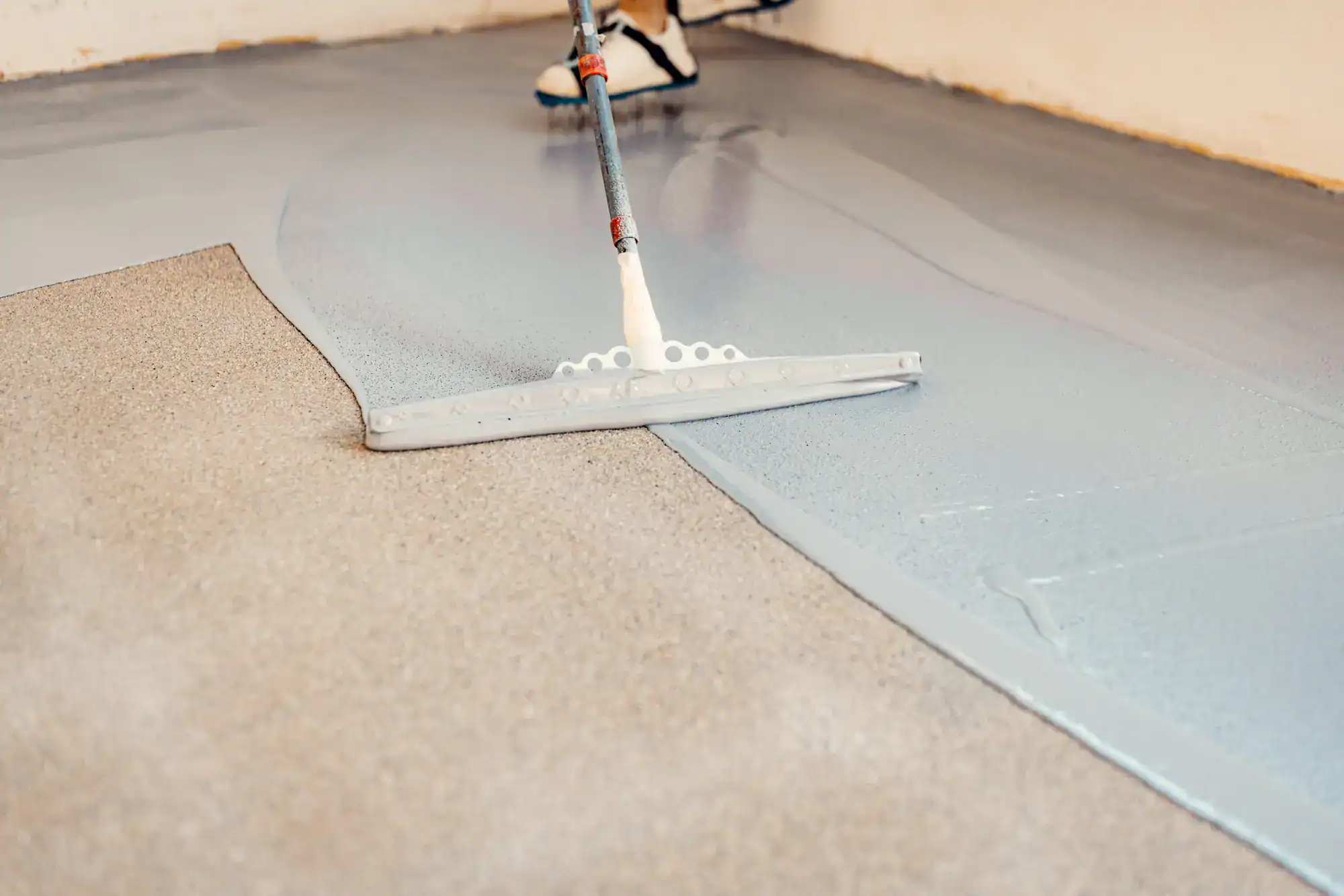
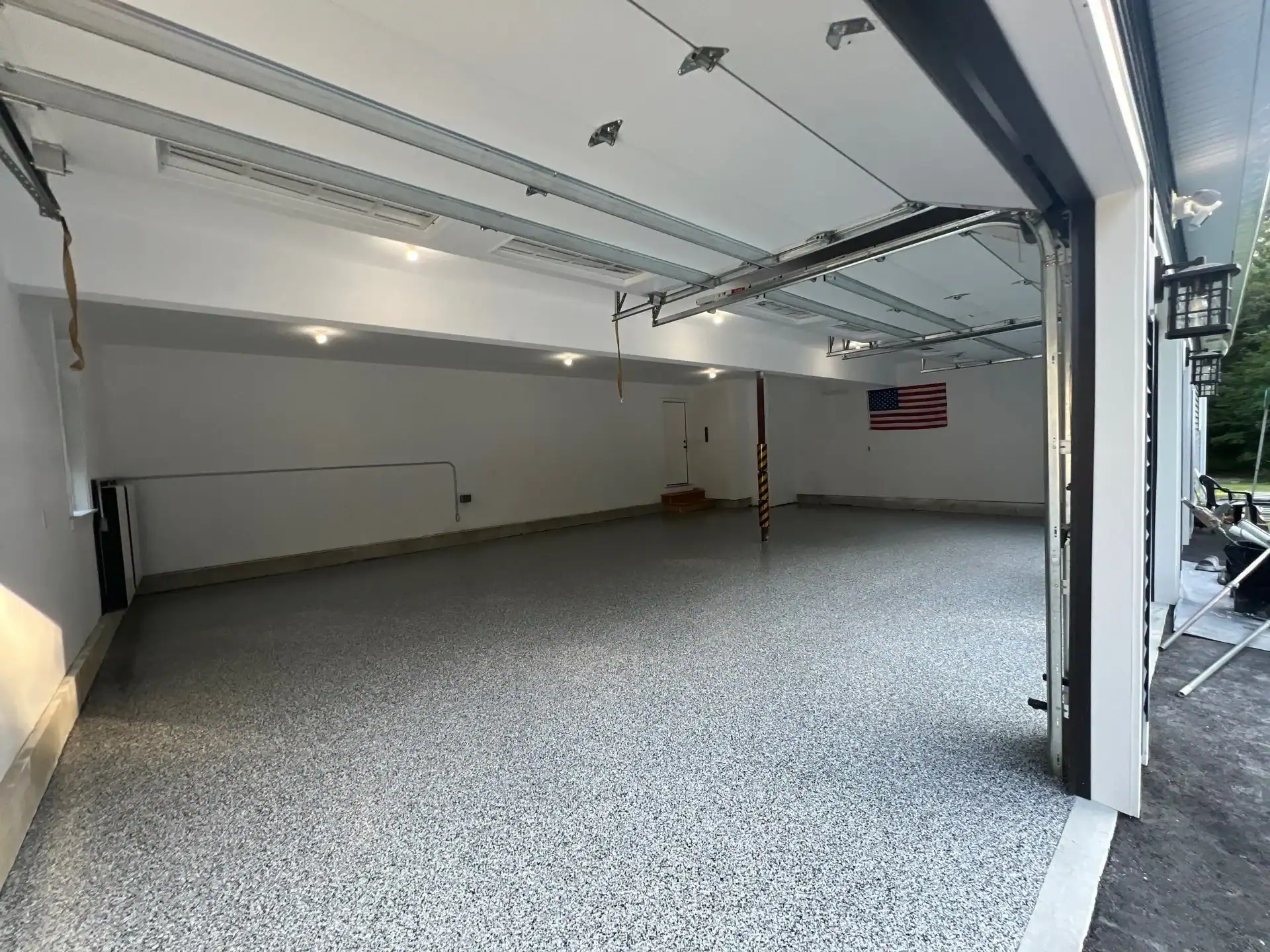
Once the surface is ready, we apply the layers. First, a deep-penetrating primer. Then, the heavy-duty epoxy base coat. If you want that “granite look,” this is when we broadcast the decorative flakes (which also prevent you from sliding across the floor like a cartoon character when it’s wet). Finally, a clear topcoat seals the deal, providing UV protection so your floor doesn’t turn yellow like an old newspaper.
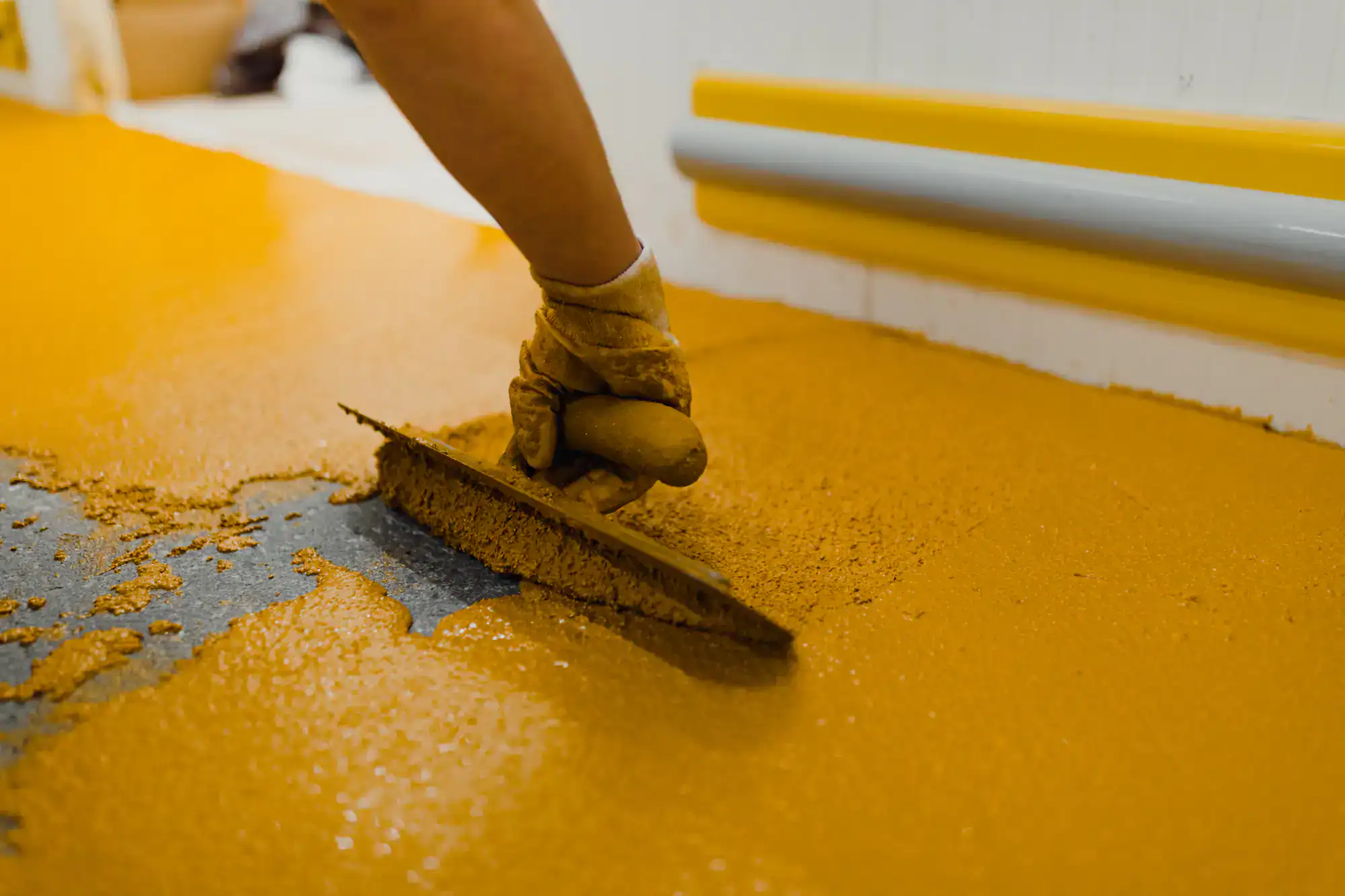
Most professional installs take one to two days.
Day One: The “Loud and Dusty” phase. We grind the concrete, fix the cracks, and lay the base coats and flakes.
Day Two: The “Finishing Touch.” We scrape the excess flakes and apply the high-performance topcoat.
The installation is fast, but the curing requires a bit of “hurry up and wait.” You can usually walk on the floor in 24 hours. You can move your lighter stuff back in after 48 hours. But before you pull the heavy SUV back in? Wait 72 hours to a week. If you drive on it too soon, your tires will leave a permanent impression, and not the good kind.
Pro Tip: In Connecticut, timing is everything. Epoxy loves “Goldilocks” weather—not too hot, not too cold. Spring and fall are prime time. We can work around the elements, but we’re flooring experts, not wizards; we still have to respect the laws of chemistry.
Ten years from now, your car might have a few more dings, and your lawnmower might be on its last legs, but your floor should still look like a million bucks. A professional-grade system is built for the long haul.
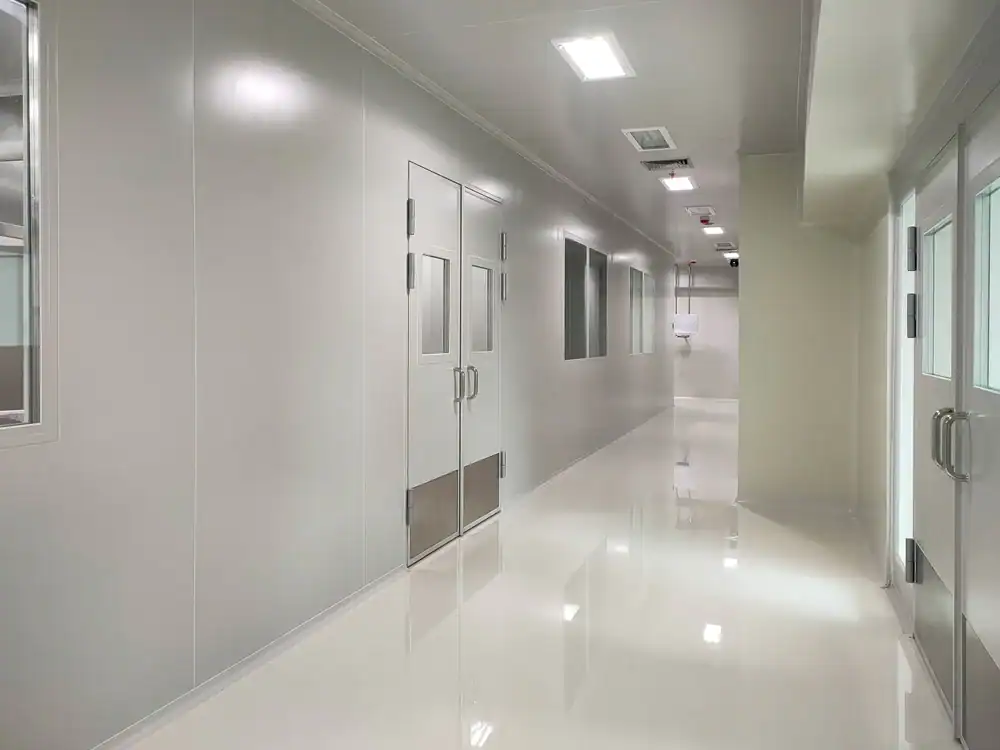
Maintenance is so easy it’s almost boring. You don’t need a degree in chemistry to clean it. A broom, a bucket of water, and a mild cleaner are all you need. You’ll also notice your garage is suddenly 30% brighter because the glossy surface actually reflects the overhead lights instead of swallowing them.
If you somehow manage to damage it—say, by dropping a literal anvil—don’t panic. Unlike paint, epoxy can be spot-repaired without making the floor look like a quilt. We can blend repairs so you’ll forget the accident ever happened.
Most of our clients in Hartford and Middlesex counties tell us the same thing: once the floor is done, the garage stops being a “junk room” and becomes a workspace, a gym, or a “man cave” (or “she-shed”). You might even find yourself parking in the garage again instead of leaving your car in the driveway like a lawn ornament.
If your garage floor is currently a dusty, stained mess that makes you sigh every time the door opens, you have a choice. You can keep ignoring it, try a “bandage” DIY fix, or do it right once.
For Connecticut homeowners, epoxy isn’t just about aesthetics; it’s about survival. If you want a floor that laughs at road salt, ignores oil spills, and survives the freeze-thaw cycle without breaking a sweat, professional epoxy is the only way to go. It’s an investment that pays off in home value, usable square footage, and the sheer joy of not having to sweep up “floor dust” every Saturday.
We’ve been transforming Connecticut garages since 2020, and our team brings 30+ years of experience to the table. We’ve seen it all, from “mildly dusty” to “cratered moonscape.” Ready to stop hating your garage floor? Let’s talk.
Summary:
Share: