The criteria Costco and Amazon use to pick a flooring contractor aren't a secret. Here's what they look for — and how it applies to your facility.
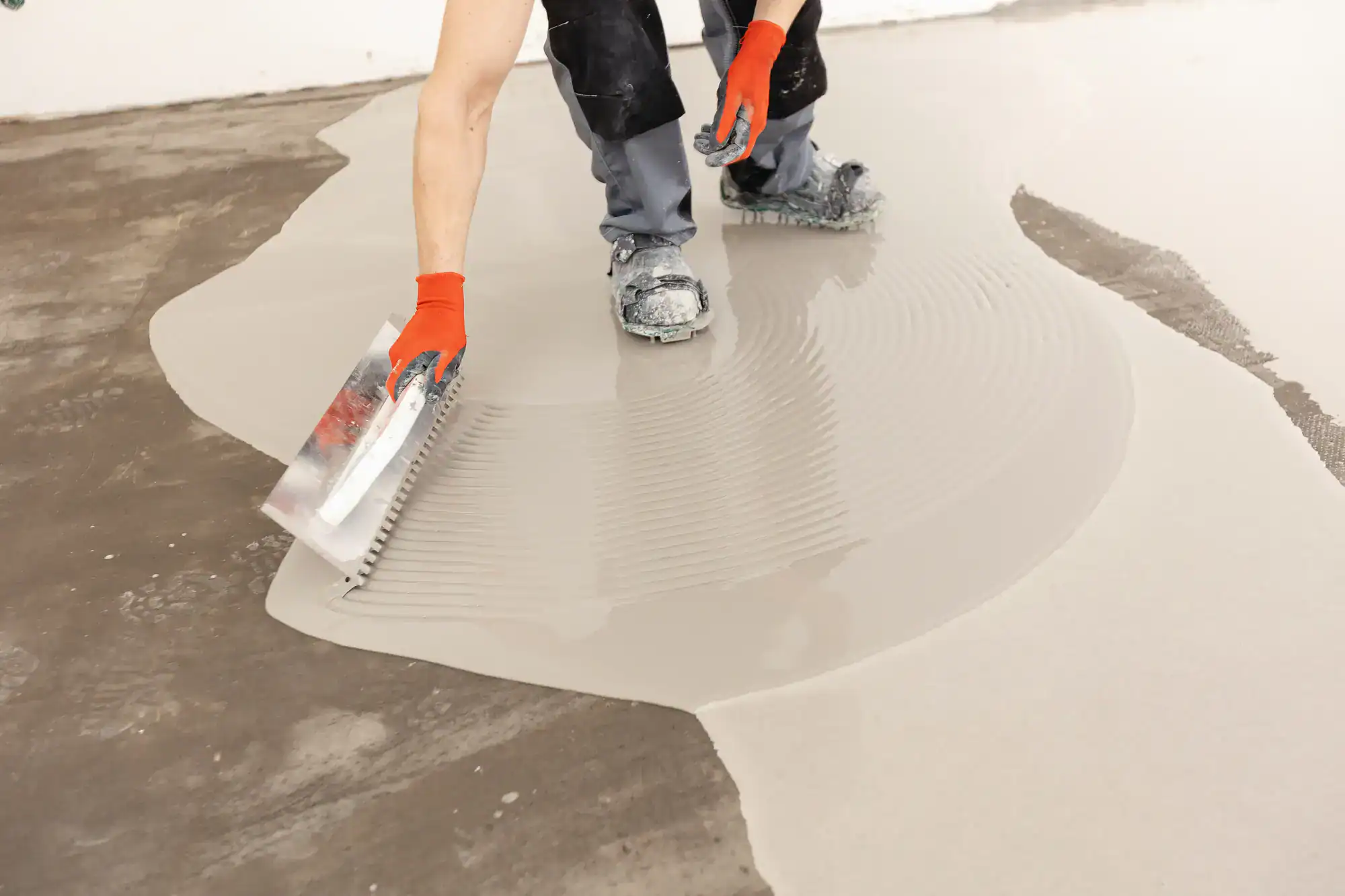
If you’ve ever watched a commercial flooring job go sideways — peeling within a year, bubbling after the first Connecticut winter, or failing a facility inspection — you already know that not all contractors are equal. The challenge is figuring out which ones actually are before you sign anything.
The good news is that the largest commercial buyers in the world have already solved this problem. Companies like Costco and Amazon have procurement processes built specifically to separate qualified contractors from the ones who learned epoxy from a YouTube video. Understanding how they think gives any Hartford County facility manager a reliable framework for making the same call.
Enterprise buyers don’t start with price. They start with risk. The first thing a procurement team wants to know is whether a contractor is legally operating, properly insured, and capable of handling the scope of work without creating liability exposure.
In Connecticut, that means verifying registration with the State Department of Consumer Protection — a legal requirement for all contractors operating in the state, and one that’s prominently required on all advertising and contracts. From there, it’s general liability insurance, project references, and a clear picture of what the contractor’s actual installation process looks like. Not what their website says. What they actually do on the floor.
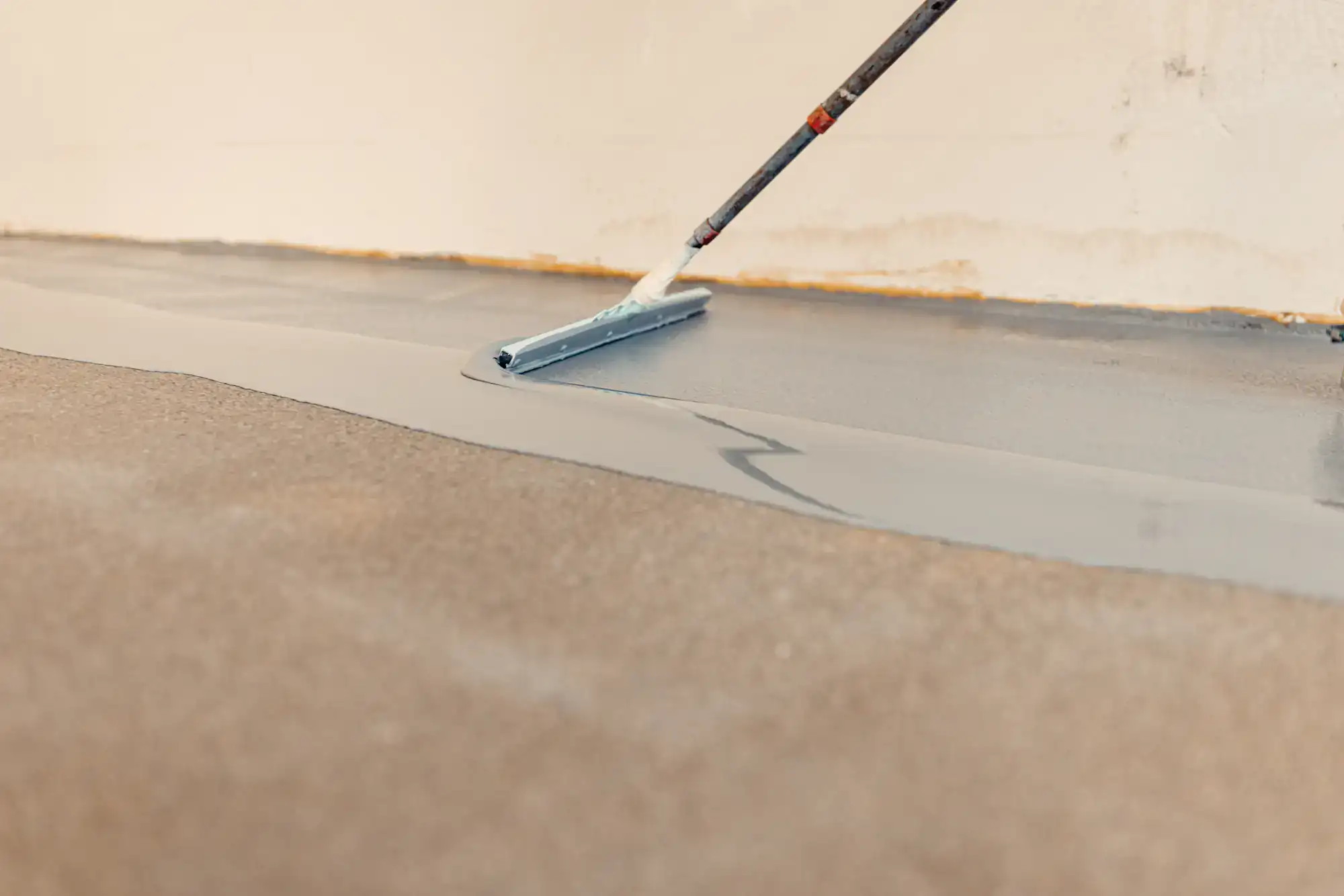
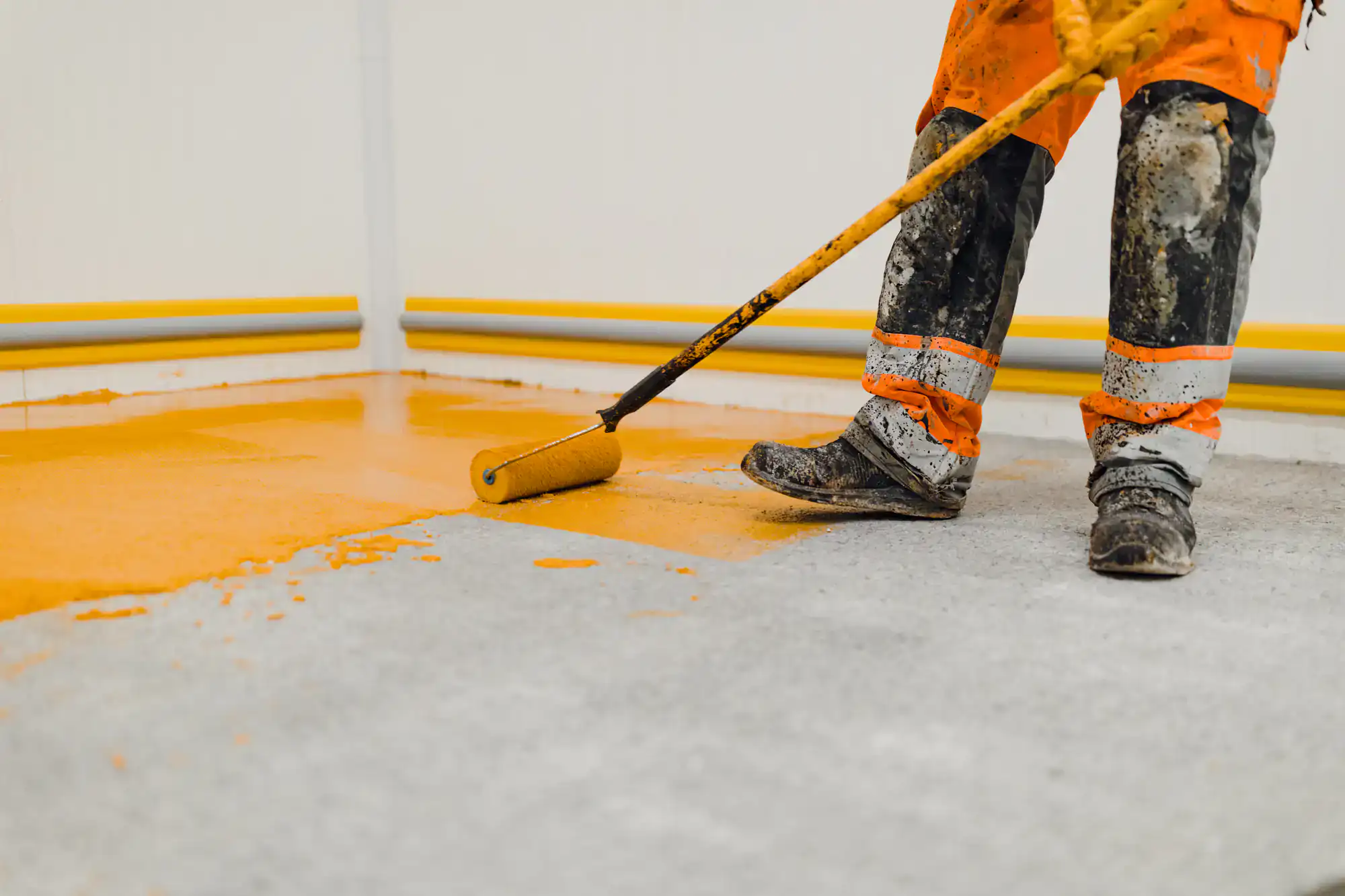
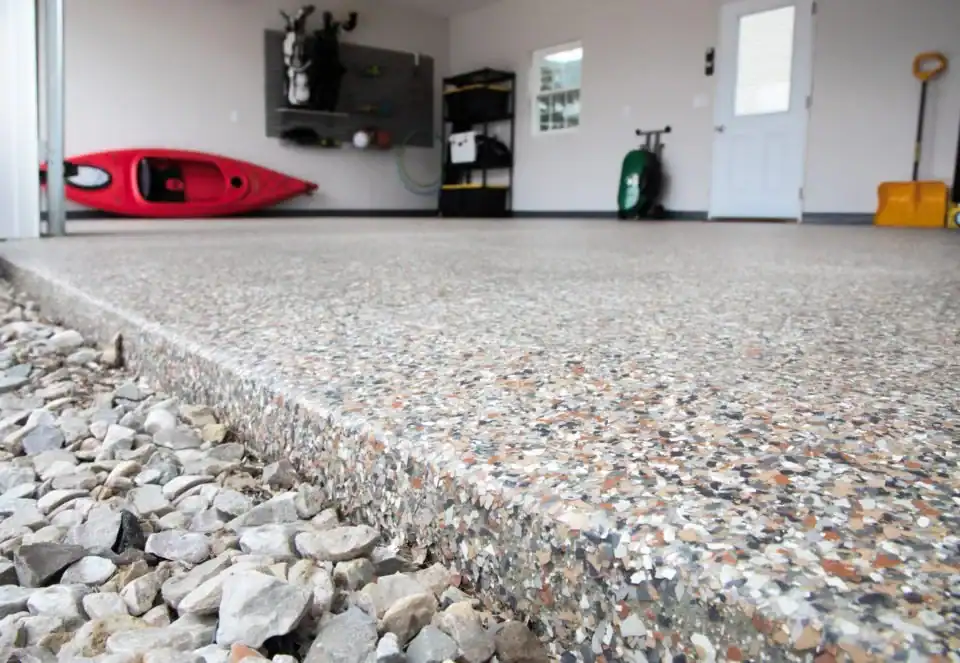
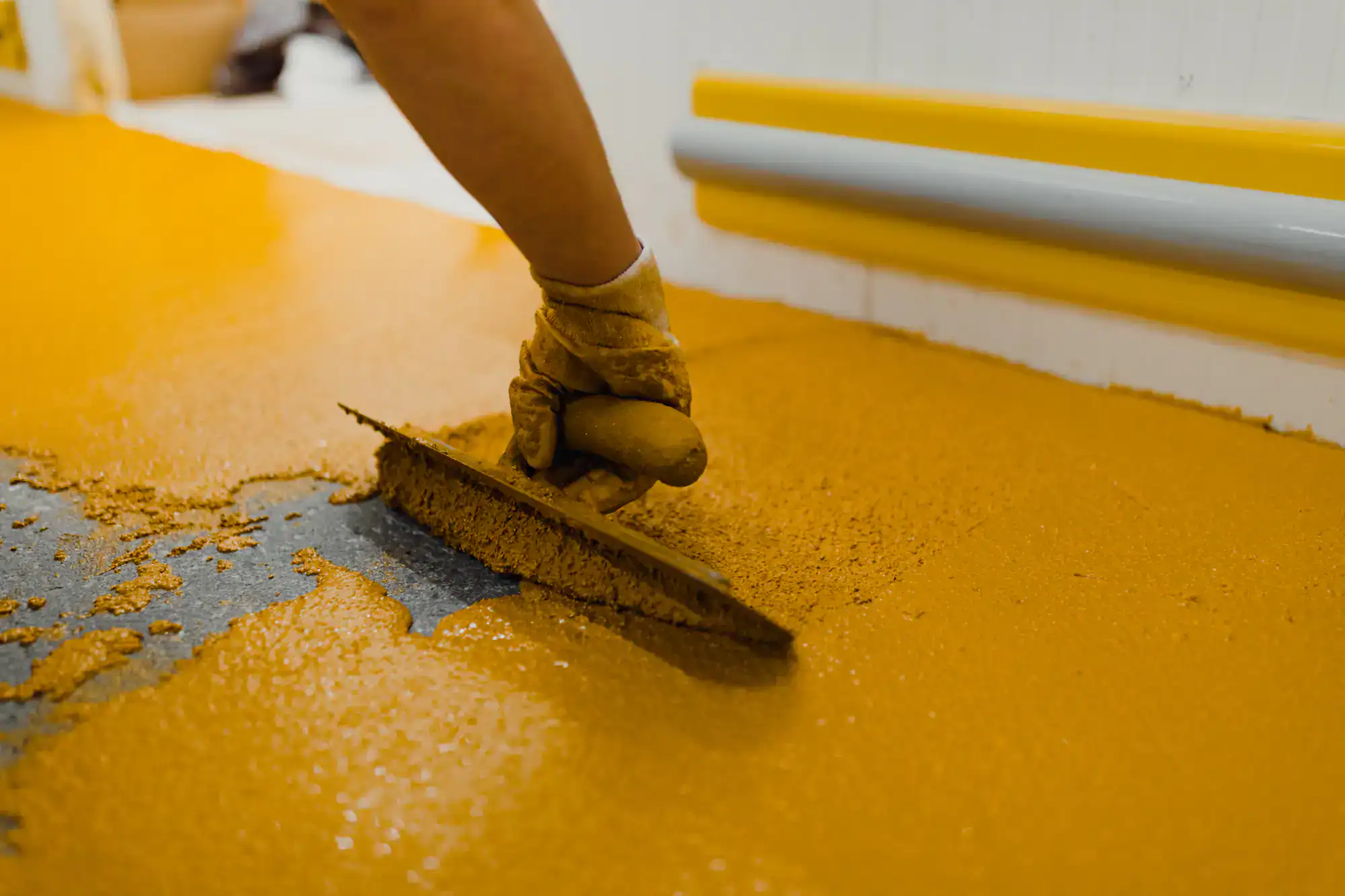
There’s a reason the flooring in a Costco warehouse or an Amazon fulfillment center isn’t standard painted concrete or vinyl tile. Those environments deal with forklift traffic, chemical spills, daily cleaning cycles, and foot traffic that would destroy most consumer-grade products within months. What they specify instead are resinous flooring systems — seamless, multi-layer epoxy or polyaspartic coatings applied over mechanically prepared concrete.
Resinous flooring isn’t a single product. It’s a category that includes 100% solids epoxy, polyaspartic topcoats, urethane systems, and hybrid combinations, each selected based on the specific demands of the environment. A food processing facility needs something different from a pharmaceutical manufacturer, which needs something different from a big-box retail floor. We know which system fits which environment — and we have the technical background to install it correctly.
What separates industrial-grade resinous systems from the kits you’ll find at a home improvement store comes down to a few measurable things. Commercial systems are engineered to meet ASTM standards for compressive strength, chemical resistance, water absorption, and adhesion. They’re applied at a significantly greater thickness than consumer products. And they’re designed to bond permanently to properly prepared concrete — not just sit on top of it until the first freeze-thaw cycle pulls them loose.
That last point matters enormously in Hartford County. Connecticut’s winters put concrete through 20 to 40 freeze-thaw cycles every year. Each cycle creates hydraulic pressure as water expands inside the slab. If a coating isn’t bonded properly — or if moisture vapor underneath the slab wasn’t addressed before installation — it will fail. It’s not a question of if. It’s a question of how soon.
This is the part most contractors either skip, rush, or do wrong — and it’s the single biggest predictor of whether a commercial floor holds up for 15 years or starts peeling in 18 months.
Professional commercial flooring starts with diamond grinding. Not acid etching, not a light sand, not a floor buffer from a rental shop. Industrial diamond grinders open the concrete at a mechanical level, removing weak surface layers, old sealers, and contaminants, and creating the surface profile that allows a coating to bond permanently. It’s the standard that demanding commercial clients specify because it’s the only preparation method that consistently produces lasting results.
After grinding comes moisture testing — and in Connecticut, this step is non-negotiable. Moisture vapor transmission through concrete slabs is endemic in this state. The soil conditions, the groundwater, and the seasonal temperature swings all contribute to a constant upward migration of moisture through the slab. A contractor who skips testing and coats over a wet slab is creating a floor that will delaminate. The coating doesn’t fail because epoxy is a bad product. It fails because the contractor didn’t do the work required to make it stick.
When moisture is present — which it often is in Hartford County facilities — the right move is a vapor barrier system applied before any coating goes down. This is a separate layer engineered specifically to block moisture transmission and give the epoxy a stable, dry surface to bond to. It adds time and cost to the project. It also adds years to the floor’s service life and eliminates the most common failure mode in Connecticut’s climate. Enterprise buyers know this. They ask about it during the vetting process. Contractors who can’t answer the question clearly don’t make the shortlist.
We test every slab before we coat it. If moisture is an issue, we address it before anything else goes down. That’s not an upsell — it’s the only way to install a floor that actually lasts in Connecticut.
Want live answers?
Connect with a American Poly Floor expert for fast, friendly support.
Hartford County has one of the largest industrial real estate footprints in New England — roughly 140 million square feet of industrial space, more than double what you’ll find in Stamford. That’s warehouses, distribution centers, manufacturing facilities, food processing operations, healthcare campuses, and retail locations spread across communities from East Hartford and Manchester to Farmington, Enfield, and Bristol.
Each of those environments has different flooring demands. A medical office near Hartford Hospital needs a seamless, non-porous surface that supports hygiene compliance. A manufacturer in East Hartford — where Pratt & Whitney has operated for decades — needs chemical resistance and durability under heavy equipment. A distribution center in Windsor needs a floor that can handle forklift loads without cracking and daily cleaning without degrading. One product doesn’t cover all of that. We have to know the difference.
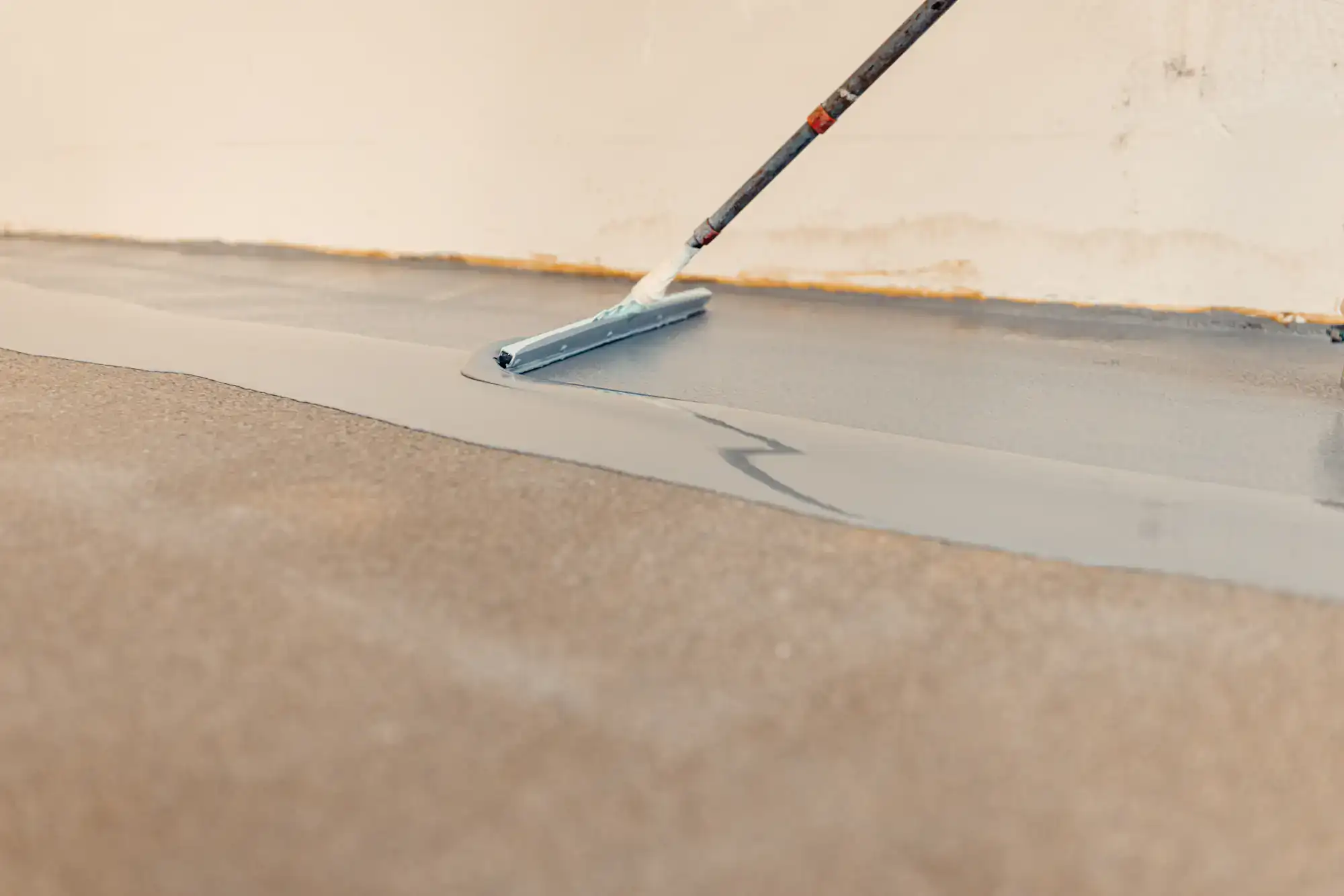
A flooring contractor who does good work in Georgia or Arizona isn’t automatically qualified to do the same work in Hartford County. The climate here is genuinely different in ways that affect every stage of the installation — product selection, surface preparation, moisture management, and cure conditions.
Connecticut’s winters bring freeze-thaw cycling, road salt tracked in from November through March, and ground moisture that stays elevated well into spring. Those conditions create a specific failure environment for coatings that weren’t properly installed. The road salt alone — the chemical residue left behind on concrete after vehicles and foot traffic bring it inside — is corrosive enough to degrade inadequately sealed floors over a single season.
Summer creates a different set of challenges. Humidity causes condensation on cool concrete slabs, which can compromise adhesion if a coating is applied under the wrong conditions. Hartford County’s temperature swings from roughly -10°F in deep winter to 95°F in summer — a 100-plus-degree range that puts real thermal stress on the bond between a coating and its substrate.
We’re based in East Hartford. We’ve installed floors through Connecticut winters and seen what happens when moisture isn’t addressed, when the wrong product is used for the climate, or when a contractor from out of state applies a system that wasn’t designed for freeze-thaw conditions. The flooring systems we use are specifically selected and installed to hold up here — not just in a controlled environment or a warmer climate.
**How do I know if a flooring contractor is actually qualified for commercial work?**
Start with the basics: Connecticut DCP registration, proof of general liability insurance, and a portfolio of completed commercial projects — not just residential garages. Then ask specifically about their surface preparation process. A contractor who leads with diamond grinding and moisture testing understands commercial work. One who mentions acid etching or skips the moisture conversation is a residential operator trying to scale up. For Hartford County facilities in regulated industries — food service, healthcare, pharmaceutical — also ask whether they install USDA or FDA-approved systems. Most residential-focused contractors can’t.
**How long does commercial epoxy flooring actually last?**
Installed correctly, a professional resinous flooring system should last 15 years or more. The operative phrase is “installed correctly.” Surface preparation, moisture management, product selection, and cure conditions all affect service life. A floor that was diamond ground, moisture tested, properly primed, and coated with a high-solids industrial system will outlast one that was lightly etched and rolled with a consumer product by a decade or more. We back our commercial installations with a 15-year warranty — and an insurance-backed 10-year warranty program for commercial clients — because we’re confident in the process that gets us there.
**Does it matter that a contractor is local to Hartford County?**
Absolutely. A contractor based in Hartford County — who’s installed floors in East Hartford warehouses, Manchester retail spaces, and Glastonbury medical offices — understands the specific conditions your facility deals with. We know the moisture patterns, the road salt exposure, the freeze-thaw dynamics that are unique to this region. We also have a local reputation to protect. We’ve done work for clients that include Costco, Amazon, and Foxwoods Casino. Those aren’t names you put on your website and then disappear. Local accountability matters, especially when there’s a 15-year warranty attached to the work.
**What if my facility can’t afford extended downtime during installation?**
This is one of the most common concerns we hear from Hartford County facility managers, and it’s a legitimate one. Polyaspartic systems cure significantly faster than traditional epoxy, which means faster return-to-service timelines. For larger facilities, we can phase the installation to keep portions of the space operational while others are being coated. We give you a firm timeline before work starts — not an estimate that drifts. The goal is to get your floor done right without turning your operation upside down.
The standard that Costco and Amazon apply when vetting a commercial flooring contractor isn’t complicated. They want someone licensed, insured, technically capable, and proven on projects that actually resemble theirs. That same standard is available to any Hartford County business owner who knows what to ask.
What you’re looking for is a contractor who treats surface preparation as the foundation of the job, not a step to rush through. One who tests for moisture before coating anything. One who can tell you exactly what system they’re installing and why it fits your specific environment — and who backs that work with a warranty that means something.
If you’re evaluating commercial flooring for a facility in Hartford County, American Poly Floor is worth a conversation. We’re locally based, veteran-owned, and we’ve done this work for some of the most demanding commercial clients in the country. Reach out and we’ll tell you exactly what your floor needs.
Summary:
Article details:
Share: