Not all epoxy floors are built the same. Here's what Connecticut homeowners in Hartford, New London, New Haven, and Middlesex Counties need to know before choosing one.
If your garage floor looks like it’s been through fifteen Connecticut winters — because it has — you already know the problem. Stains that won’t come out. Cracks that keep spreading. Maybe you tried a kit from the hardware store and watched it bubble and peel before the next snow season even started. You’re not alone, and it’s not your fault. Most of what’s sold as a “quick fix” for garage floors simply isn’t built for what New England throws at concrete. We’ve installed thousands of epoxy garage floors across Hartford County, New Haven County, New London County, and Middlesex County, and this guide covers what actually works, why, and how to spot the difference between a floor that lasts and one that doesn’t.
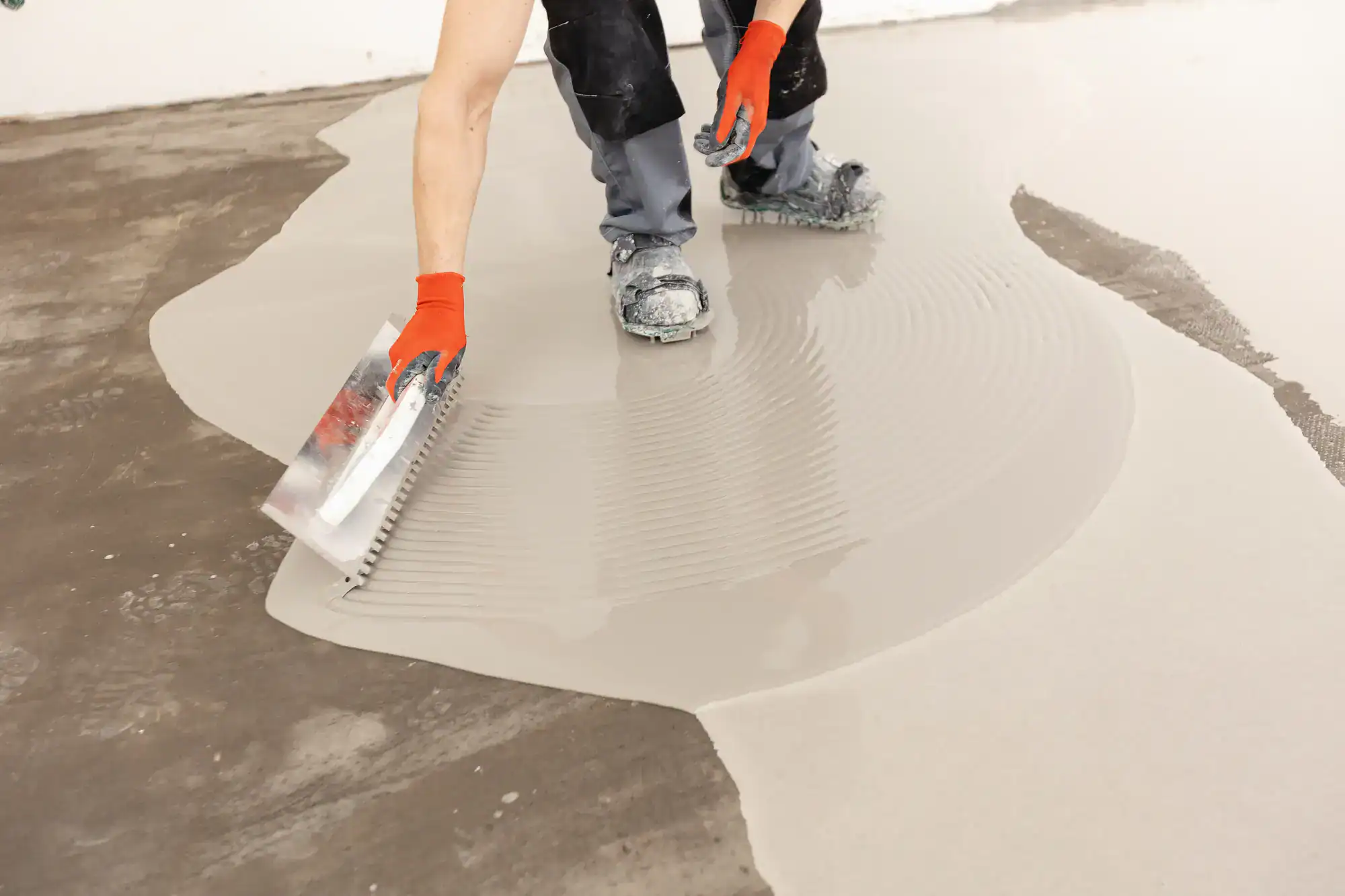
Real epoxy floor coating is a two-part resin system — a hardener and a resin — that chemically bonds to concrete at the surface level. It’s not paint. It doesn’t sit on top of the slab and hope for the best. When we install it correctly, the bond is actually stronger than the concrete beneath it.
That distinction matters everywhere, but it matters more in Connecticut. Between the freeze-thaw cycles that run from November through March, the road salt tracked in off I-84 and I-91, and the moisture that pushes up through slabs in the Connecticut River valley and along the Long Island Sound shoreline, your floor is under a kind of stress that a thin, water-based coating simply can’t handle. What works in a climate-controlled showroom doesn’t necessarily hold up in a Glastonbury garage or a Groton basement. We’ve seen it fail countless times, and we know exactly why.
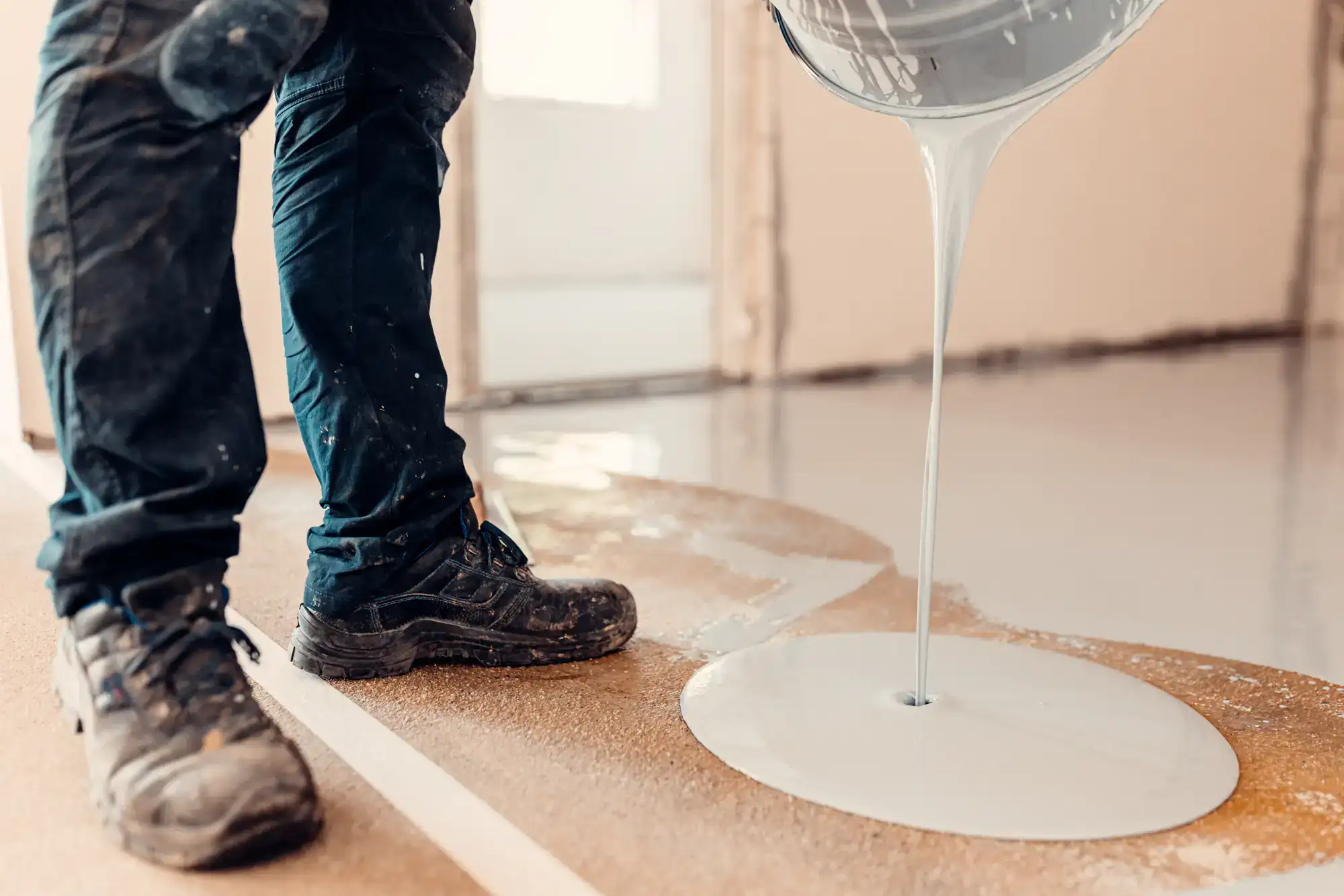
The most common reason epoxy floors fail in Hartford County, New Haven County, New London County, and Middlesex County has nothing to do with the coating itself. It’s what happens before the coating goes down. Specifically, moisture vapor moving up through the concrete slab — slowly, invisibly, constantly — and eventually pushing the coating right off the floor from below.
Concrete is porous. In a state where the water table runs high, where the Connecticut River valley keeps the ground saturated through much of the year, and where coastal towns from Milford to Mystic deal with ambient humidity that never fully disappears, moisture vapor transmission is an ongoing reality. If a contractor doesn’t test for it and install a proper vapor barrier before applying any coating, that floor is already on borrowed time.
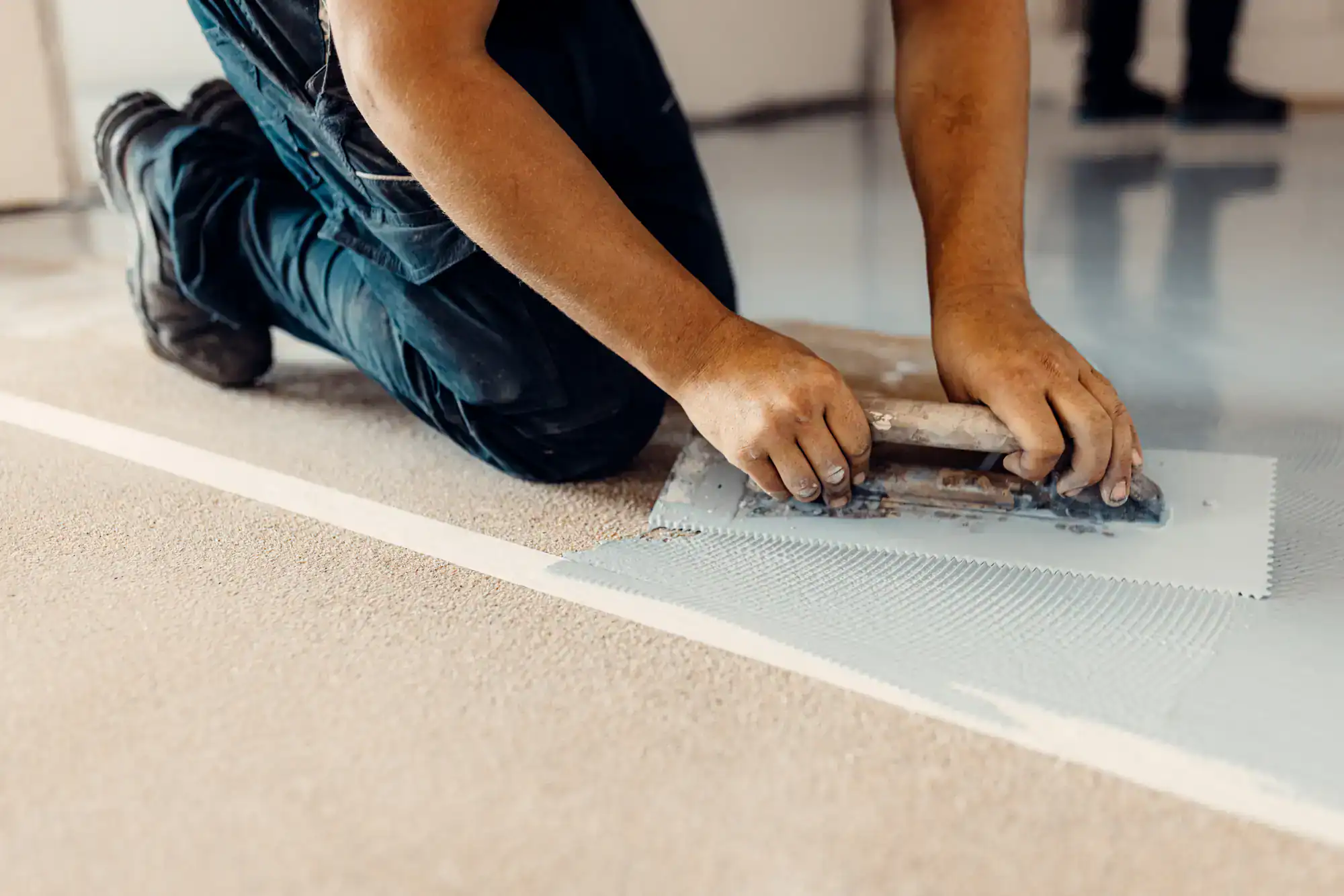
The second most common cause of failure is surface preparation — or the lack of it. Diamond grinding is the industry standard for a reason. It opens the concrete’s pores, removes old sealers and contaminants, and creates the surface profile that allows the epoxy to form a permanent mechanical bond. Acid etching, which is what most DIY kits rely on, produces a fraction of that surface profile. It’s faster and cheaper, which is exactly why it doesn’t last.
Box-store epoxy kits also apply at roughly 5 mils of thickness. Our professional systems go down at 15 to 30 mils — three to six times thicker. That difference shows up not in how the floor looks on day one, but in how it holds up under hot tires, chemical spills, and the kind of daily abuse a garage floor takes over years. A properly installed commercial-grade system should last 10 to 20 years. A thin, improperly prepped coating often fails within one to three.
There’s also the issue of hot tire pickup — something a lot of homeowners don’t learn about until it happens to them. When a vehicle’s tires heat up during a drive and then cool down on a thin or poorly bonded floor, they can literally pull the coating off the surface as they contract. A multi-layer professional system eliminates this entirely.
This question comes up a lot, and the honest answer is that for most Connecticut homeowners, the best result comes from a system that uses both — epoxy as the foundation and a UV-stable polyaspartic as the topcoat.
Here’s why. Traditional epoxy is excellent at bonding to concrete and building up a thick, durable base. But it has a known weakness: UV exposure causes it to yellow over time. If your garage gets direct sunlight, or if you’re coating a patio or pool deck, a pure epoxy system will lose its clarity and start to look dull and discolored within a few years. That’s not a flaw in the installation — it’s a limitation of the chemistry.
Polyaspartic coatings solve that problem. They’re UV-stable, which means they hold their color and clarity for the life of the floor. They also cure significantly faster — in some cases within 12 hours — which means less disruption to your daily routine. For homeowners in Middletown, Simsbury, or West Haven who don’t want to be without their garage for days, that matters.
Polyaspartic systems also perform better in temperature extremes, which is relevant in a state where a garage can go from below freezing in January to 90 degrees in July. They remain flexible enough to handle that thermal expansion and contraction without cracking or delaminating.
That said, polyaspartic alone — applied as a single thin coat in a one-day installation — is not the same as a proper multi-layer system. Rushing the process to fit a one-day schedule often means sacrificing film build, which is where the durability actually lives. A floor that takes two to three days to install correctly will outlast a one-day floor by years.
Want live answers?
Connect with a American Poly Floor expert for fast, friendly support.
The coating system matters. The surface preparation matters. But the contractor you hire is the variable that ties everything together — and in a market with no shortage of people willing to take your money and disappear, knowing what to look for is worth more than any product spec sheet.
A contractor worth hiring will talk about surface preparation before they talk about color options. We mention moisture testing without being prompted. We explain what our warranty actually covers — not just that we offer one, but what happens if the floor fails and when you can call us. These aren’t aggressive questions. They’re reasonable ones, and any professional installer should answer them without hesitation.
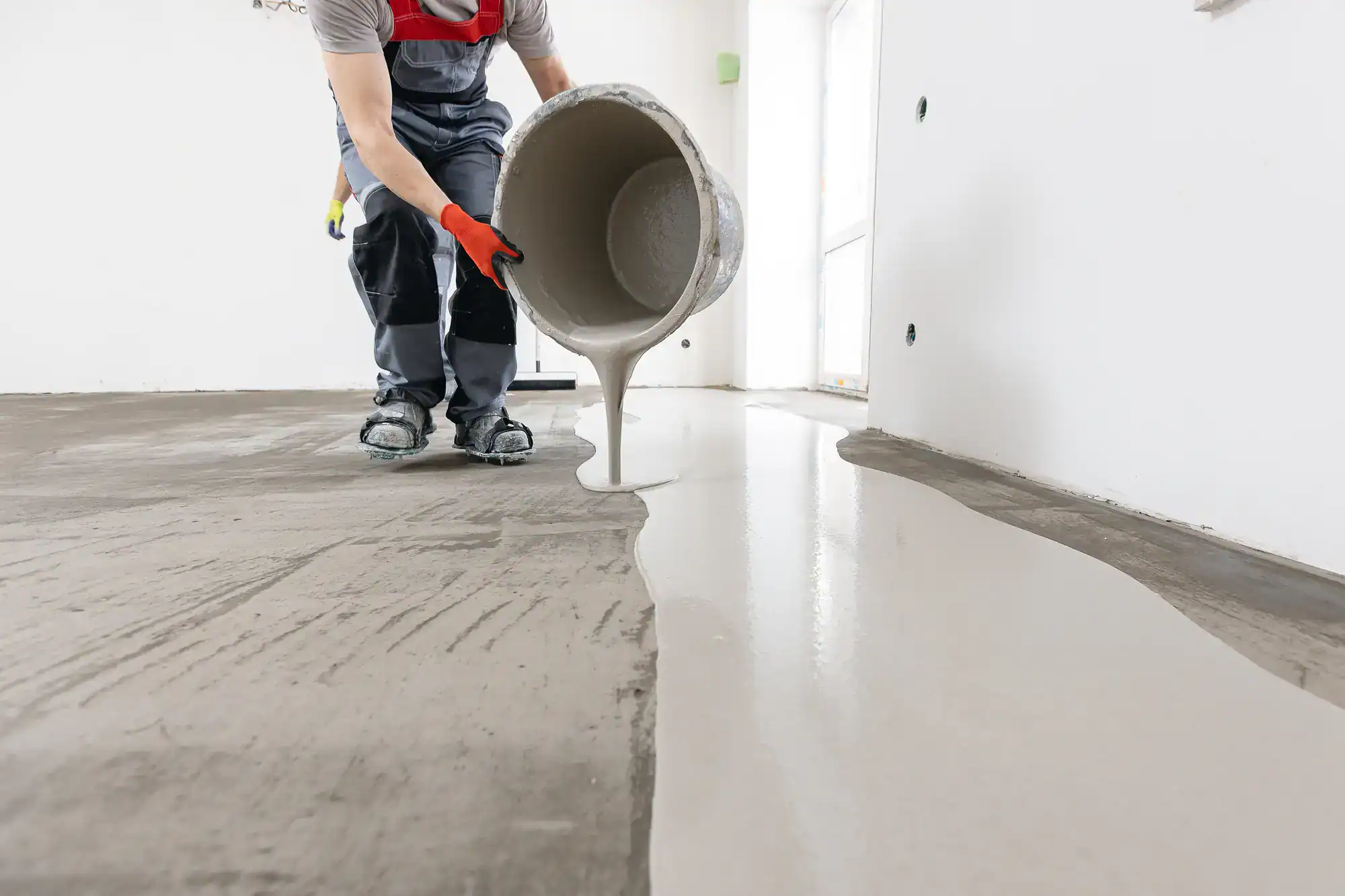
A warranty is only as useful as what it covers and whether the company will still be around to honor it. That sounds obvious, but it’s worth saying plainly, because a lot of contractors in this space use the word “warranty” loosely.
A real warranty on a professionally installed epoxy floor should cover delamination — meaning if the coating separates from the concrete, the contractor comes back and makes it right. It should cover moisture-related failure, which is the most common failure mode in Connecticut. And it should be long enough to mean something. A one-year warranty on a floor that’s supposed to last 20 years tells you exactly how confident the contractor is in their own work.
We offer a 15-year warranty on every floor we install. That’s not a marketing number — it’s a reflection of what we expect from the system when it’s installed correctly, and it’s a commitment we’re willing to put in writing. If you’re comparing contractors across New Haven County, throughout Hartford County, or anywhere along the Middlesex corridor, ask each one what their warranty covers specifically. The answers will tell you a lot.
Beyond the warranty, look for a contractor who has a verifiable track record in Connecticut specifically. Not just years in business, but actual completed projects in the local market — in homes that deal with the same water table, the same salt air, the same freeze-thaw stress your floor deals with. We’ve completed thousands of installations across Hartford, New Haven, New London, and Middlesex Counties, and we know what Connecticut concrete looks like after a hard winter.
BBB accreditation, manufacturer certifications in polyurea and polyaspartic systems, and a consistent rating from a meaningful number of real customers are all signals worth weighing. A 4.8-star rating from 148 or more verified customers means something different than five stars from a handful of reviews.
**How much does a professional epoxy garage floor cost in Connecticut?** Most residential garage floors in Hartford County, New Haven County, New London County, and Middlesex County run somewhere between $7 and $9 per square foot for a professionally installed multi-layer system. A standard two-car garage — typically 400 to 500 square feet — lands in the $2,800 to $4,500 range depending on the condition of the concrete, the system selected, and any crack or moisture repair needed before coating. That’s a meaningful investment, but spread over 20 years, it works out to less than $200 a year for a floor that handles everything your garage throws at it. A DIY kit that fails in two years and needs redoing costs more in the long run — and costs you a weekend every time.
**Does epoxy work in Connecticut basements?** Yes, but moisture has to be addressed first. Connecticut basements — especially in older homes throughout Waterbury, New Britain, and the river communities along the Connecticut River in Middlesex County — are notorious for humidity and groundwater pressure. The key is a proper moisture vapor barrier applied before any coating goes down. That system permanently stops water vapor from transmitting through the slab, which is what causes bubbling and peeling in basement floors. If you have active water intrusion — water coming in through walls or floor cracks during heavy rain — that needs to be resolved first. But typical basement humidity and vapor? That’s exactly what a vapor barrier is designed to handle, and we’ve installed hundreds of them across New Haven and Hartford Counties.
**How long does the installation take?** Most residential garage floors are completed in two to three days. With a polyaspartic topcoat, light foot traffic is typically possible within 24 hours. Full vehicle traffic — meaning you can park your car back in the garage — usually takes about a week for the coating to reach full cure. We communicate the timeline clearly before we start, so there are no surprises about when you can use your space again.
**Will the floor be slippery when it’s wet?** A high-gloss epoxy surface can be slippery when wet if nothing is done about it. That’s why slip-resistant additives — typically aluminum oxide or a fine sand broadcast — are incorporated into the topcoat as standard practice. The result is a surface that’s safe to walk on even when wet from rain, snow melt, or a car wash, while still looking clean and finished.
**What if my concrete is already cracked?** Cracks don’t disqualify a floor from being coated — they’re part of the assessment and repair process. Most cracks are filled and stabilized before the coating system goes down. Even floors with significant surface deterioration can usually be restored rather than replaced, which is a fraction of the cost of pouring new concrete. A proper on-site evaluation will tell you exactly what the floor needs.
If you’ve read this far, you probably already know your floor needs attention. Whether you’re in West Hartford dealing with a salt-damaged slab, in Groton with a garage that’s never been properly sealed, or in Middletown with a basement floor that sweats every spring, the path forward is the same: proper prep, the right system for your specific floor, and a contractor who will stand behind the work.
The difference between a floor that lasts 20 years and one that peels in two isn’t luck — it’s surface preparation, moisture management, and material quality. Those things don’t happen by accident, and they don’t come from a kit.
When you’re ready to have a real conversation about your floor — not a phone quote, but an actual look at what your concrete needs — reach out to us. We’ll come out, assess the space honestly, and give you a straight answer about what it takes to do it right. We serve homeowners throughout Hartford County, New Haven County, New London County, and Middlesex County, and we’re ready to help.
Summary:
Share: