Seamless resinous floors eliminate the grout lines and crevices where bacteria thrive, making them the smart choice for Connecticut restaurants and food processing facilities.
You’re dealing with health inspectors, constant spills, and floors that seem impossible to keep clean. The grout lines in your tile floor have turned dark. Your cleaning crew scrubs them every night, but the staining keeps coming back. You know what the inspector will say before they even walk in.
This isn’t just about aesthetics. It’s about contamination risk, compliance, and whether your floor can actually handle what a commercial kitchen throws at it. Seamless resinous flooring changes that equation entirely. Here’s why restaurant owners and food service operators across Connecticut are making the switch.
Traditional tile floors have a fundamental problem. Those grout lines—usually 1/16″ to 1/8″ wide—create thousands of tiny crevices across your kitchen floor. Food particles, moisture, oils, and bacteria get trapped in those spaces. Even aggressive scrubbing can’t reach what’s embedded deep in deteriorating grout.
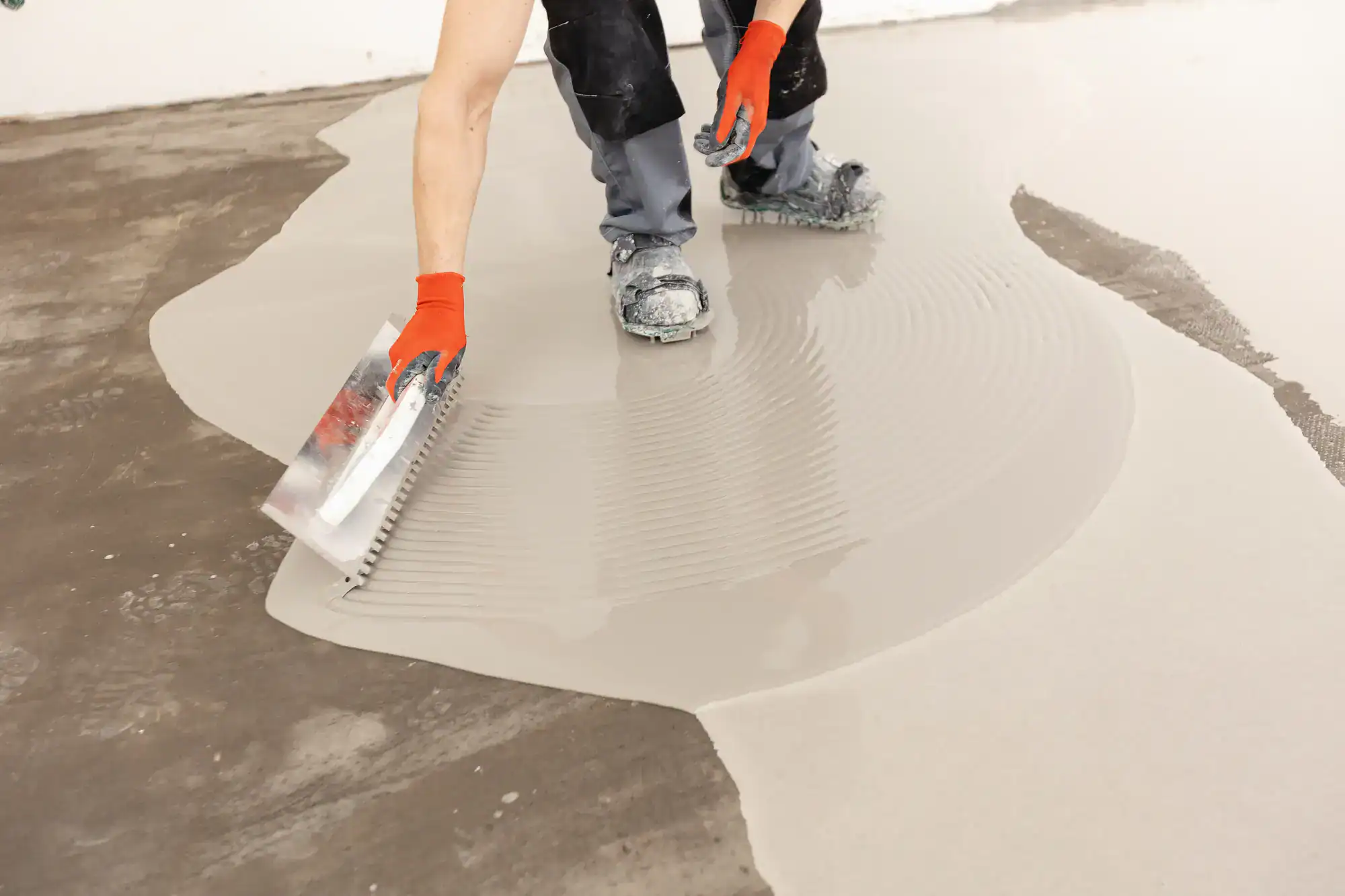
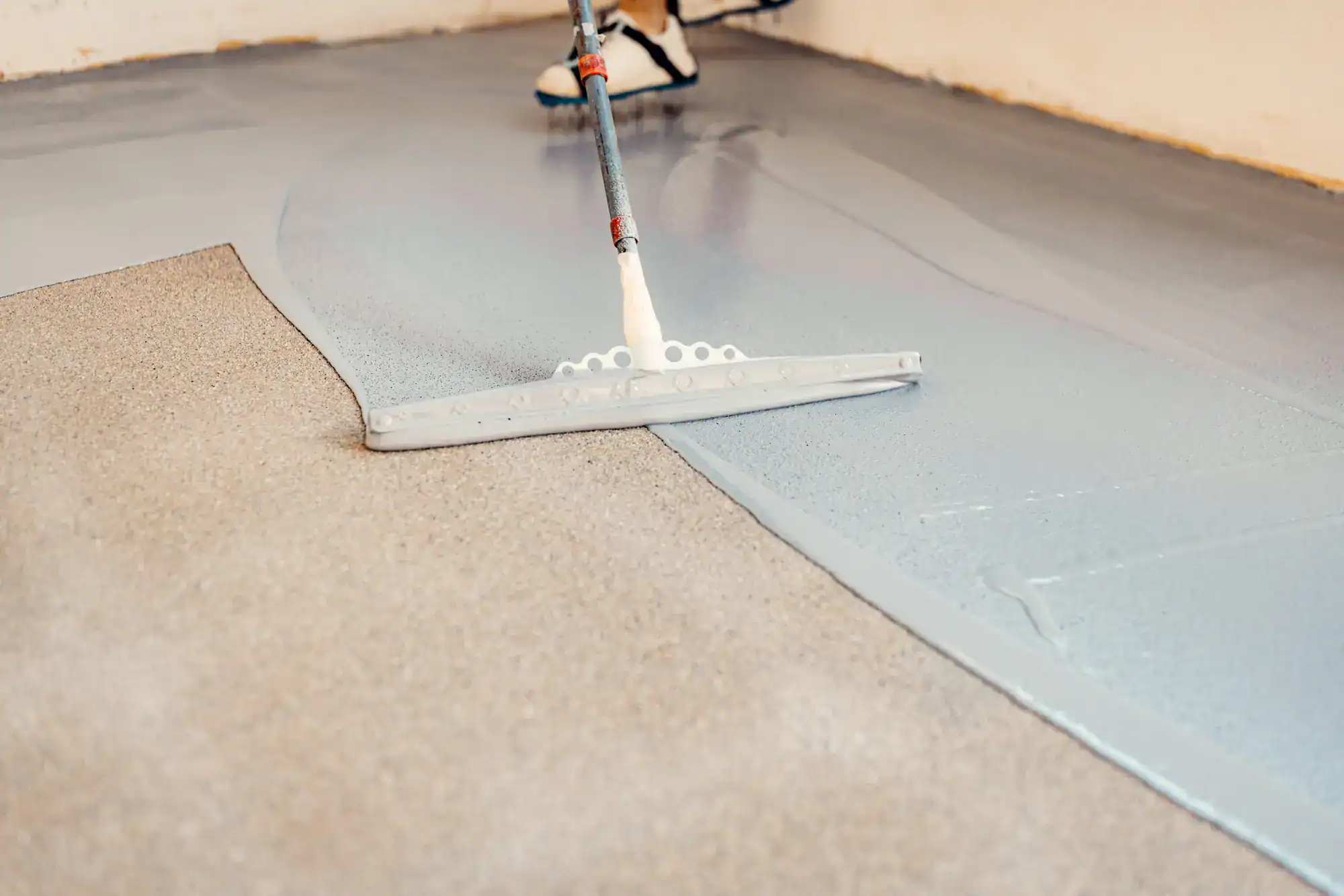
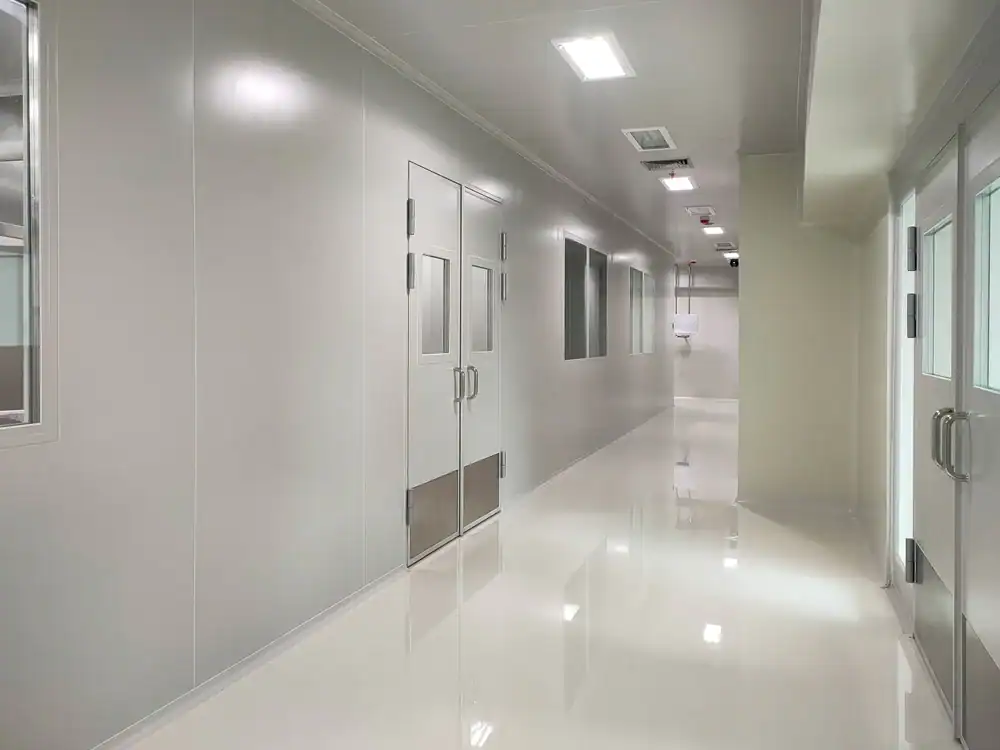
Seamless epoxy and resinous floors eliminate that problem completely. These systems are poured in place, creating a continuous surface with zero joints or seams. There’s nowhere for contaminants to hide. When you mop, everything stays on the surface where it can be removed.
Connecticut health departments require floors that are “washable, durable, non-absorbent, and stain resistant” under Section 19-13-B40 of the Connecticut Public Health Code. Seamless floors meet those standards by design. The FDA and USDA specifically recommend non-porous flooring in food prep areas to prevent contamination. You’re not just getting a better floor—you’re getting one that aligns with what regulators actually want to see.
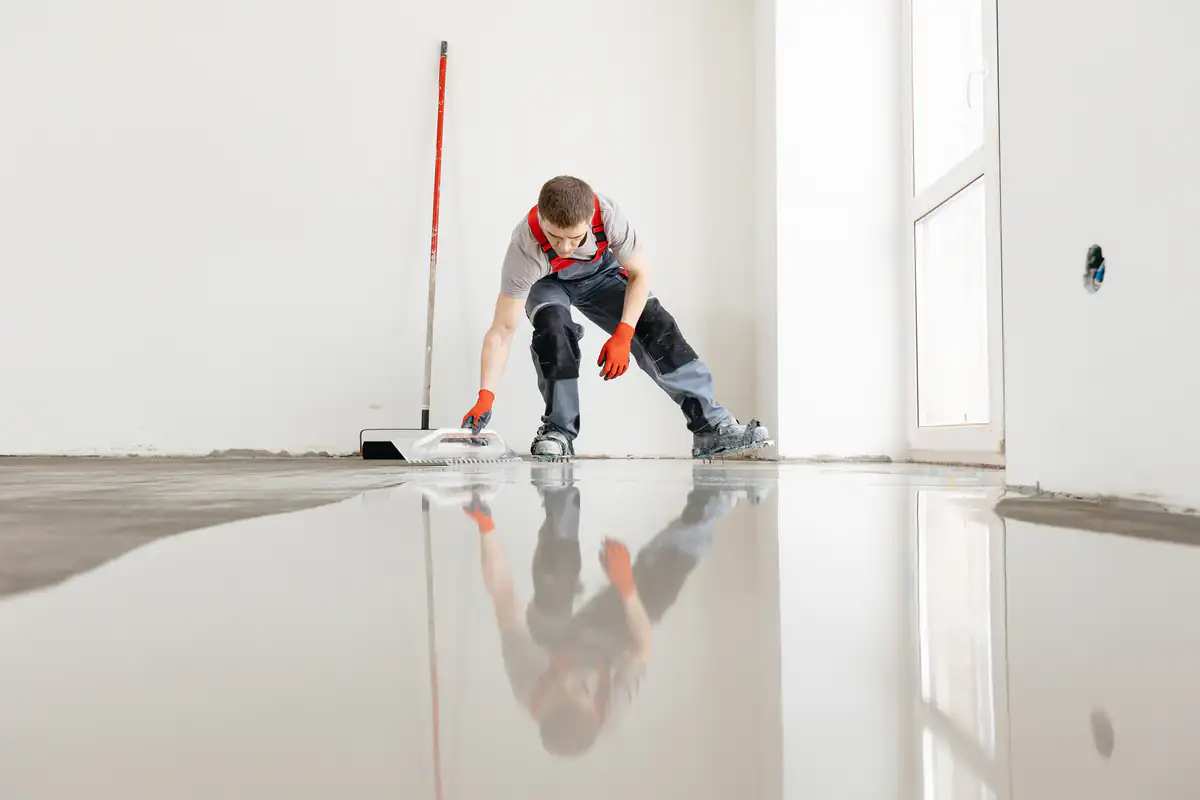
Porous materials absorb liquids. Concrete, unfinished tile, and worn grout all fall into this category. When oils, blood, dairy products, or cleaning chemicals soak into these materials, they create an environment where bacteria multiply below the surface. You can’t see it, and you can’t clean it.
Non-porous flooring blocks that absorption entirely. Epoxy and urethane-based resinous floors create an impermeable barrier. Liquids puddle on top instead of seeping through. That means spills stay where you can wipe them up, and moisture doesn’t reach the concrete substrate underneath.
This matters during health inspections. Inspectors look for signs of contamination risk—staining, odors, visible damage, and moisture intrusion. A floor that shows any of these issues raises red flags. Seamless resinous floors address the root cause by preventing moisture and contaminants from ever penetrating the surface.
The seamless design also simplifies your HACCP (Hazard Analysis Critical Control Point) compliance. These systems eliminate critical control points where contamination typically occurs—floor-to-wall transitions, drain perimeters, and equipment bases. When you install a cove base that runs seamlessly from floor to wall, you remove the 90-degree corner where debris accumulates. Health inspectors recognize this as a best practice.
Beyond regulatory compliance, non-porous floors reduce your daily labor costs. Your cleaning crew spends less time scrubbing and more time on other tasks. The floor doesn’t require stripping, waxing, or grout replacement. A simple mop-down with approved sanitizers keeps the surface clean. Over a year, that time savings adds up significantly.
Restaurants and food processing facilities across Hartford County, New London County, New Haven County, and Middlesex County are seeing these benefits firsthand. The floors that were once a constant maintenance headache become one less thing to worry about.
Not all epoxy systems are built for commercial kitchens. The thin-mil coatings you might use in a garage won’t survive a week in a restaurant environment. Commercial kitchen epoxy flooring requires specific performance characteristics that standard products simply don’t offer.
First, thickness matters. Professional-grade systems for food service are typically 100% solids epoxy or urethane cement, applied at thicknesses ranging from 1/8″ to 1/4″. This isn’t a paint—it’s a structural surface that can handle impacts, thermal shock, and chemical exposure. Some health departments and industrial facilities specifically require minimum 1/8″ thickness for compliance.
Thermal shock resistance is critical. When hot fryer oil hits the floor, or when you steam-clean with water at 200°F, the surface experiences rapid temperature swings. Standard epoxy can crack or delaminate under these conditions. Food-grade systems are formulated to withstand temperatures from subzero freezer conditions up to 350°F without losing integrity.
Chemical resistance is equally important. Commercial kitchens use aggressive degreasers, sanitizers, and enzymatic cleaners daily. These products contain acids and alkalis that break down inferior coatings. USDA-compliant epoxy systems are engineered to resist this chemical attack. The floor maintains its protective properties even after years of harsh cleaning routines.
Slip resistance is non-negotiable. Wet floors plus grease equals accidents. Professional installations incorporate slip-resistant additives—typically aluminum oxide or quartz aggregates—broadcast into the coating. This creates texture that provides traction even when the floor is wet. You can adjust the level of slip resistance based on your specific needs, balancing safety with ease of cleaning.
Antimicrobial protection adds another layer of defense. Many commercial-grade systems include EPA-registered antimicrobial additives dispersed throughout the entire floor thickness, not just the top layer. These additives inhibit the growth of bacteria, mold, fungi, and yeast. If the surface gets scratched or worn, the antimicrobial protection remains active because it’s embedded in every layer.
The installation process itself differs significantly from residential applications. Commercial kitchen floors require proper substrate preparation, moisture testing, crack repair, and often the creation of sloped drainage to prevent standing water. Transitions to drains, walk-in coolers, and equipment areas need careful detailing. This isn’t DIY territory—it requires experienced installers who understand food service requirements.
Want live answers?
Connect with a American Poly Floor expert for fast, friendly support.
Cleaning a commercial kitchen floor shouldn’t feel like an archaeological dig. But that’s what happens with tile and grout. Your crew scrubs the same spots every night, trying to remove buildup from crevices that are impossible to fully clean. It’s frustrating, time-consuming, and ultimately ineffective.
Seamless resinous floors flip that script. The smooth, continuous surface means dirt, grease, and food particles sit on top where they’re easy to remove. A standard wet mop with approved cleaning solution handles daily maintenance. No special equipment, no intensive labor, no endless scrubbing of grout lines.
This simplicity translates directly to cost savings. Less time spent cleaning means lower labor costs. The floor doesn’t require periodic stripping and waxing like VCT tile. It doesn’t need grout replacement or tile repairs. Your maintenance budget shrinks while your floor continues performing at a high level year after year.
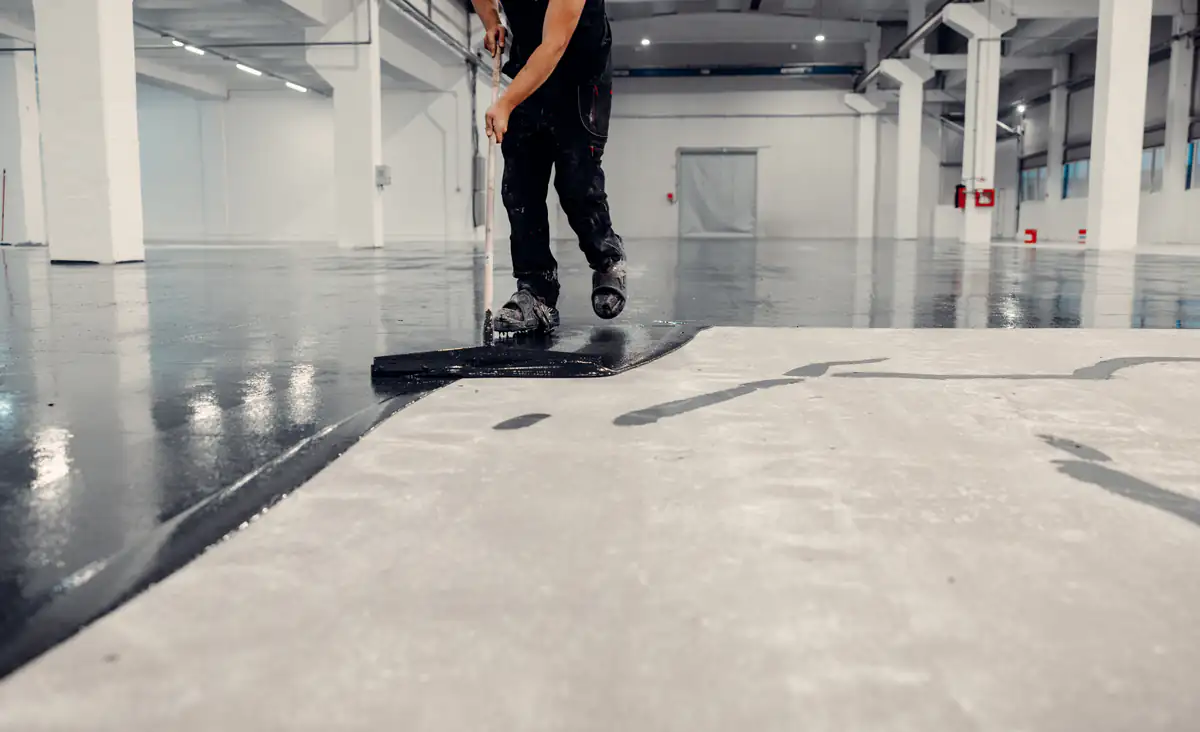
Food processing environments push flooring systems to their limits. You’re dealing with constant moisture from washdowns, temperature extremes in different zones, heavy forklift traffic, and chemical exposure from both food products and cleaning agents. Standard flooring fails quickly under these conditions.
Epoxy flooring designed specifically for food processing facilities addresses each of these challenges. The seamless, non-porous surface handles multiple daily washdowns without degrading. Water doesn’t penetrate the coating or reach the concrete beneath, preventing the moisture-related failures that plague other systems.
Temperature cycling is particularly brutal in food plants. A floor might be in a freezer at -20°F one minute, then exposed to hot washdown water the next. This thermal shock causes expansion and contraction. Urethane cement systems—often considered the gold standard for food processing—are specifically engineered to handle these temperature swings from -200°F to 240°F without cracking or delaminating.
Heavy equipment creates its own challenges. Forklifts, pallet jacks, and rolling carts subject floors to constant impact and abrasion. Industrial-grade resinous floors have the compressive strength and impact resistance to withstand this traffic. They don’t chip, crack, or spall like tile or inferior coatings.
Chemical resistance becomes even more critical in food processing than in restaurants. You’re dealing with acids from food products, alkalis from cleaning solutions, and oils and fats that can break down inadequate coatings. FDA-compliant epoxy and urethane systems are formulated to resist this chemical attack. The floor maintains its protective barrier even after years of exposure.
Drainage is essential in food processing facilities. Standing water creates slip hazards and provides an environment for bacterial growth. Professional installations incorporate proper floor pitch—typically 1/4″ per foot—directing water toward drains. The seamless flooring system extends right up to the drain, creating a watertight transition that prevents moisture intrusion.
The floor-to-wall transition deserves special attention. This is where many floors fail in food processing environments. A seamless cove base—typically 4″ to 6″ high—creates a smooth, radiused transition from floor to wall. This eliminates the 90-degree corner where debris accumulates and moisture can penetrate. It’s easier to clean, more sanitary, and creates a waterproof “tub” effect that health inspectors appreciate.
Connecticut restaurants and food service facilities face specific challenges. The state adopted the 2022 FDA Food Code, which means inspections now focus more on food handling practices and critical control points. Your floor plays a significant role in meeting these updated standards.
Local health departments across Hartford County, New London County, New Haven County, and Middlesex County conduct routine inspections looking for violations. Unclean floors, walls, and food prep surfaces rank among the most common citations. A floor that’s difficult to clean or shows signs of deterioration creates an immediate compliance issue.
The cost of non-compliance isn’t trivial. Failed inspections lead to reinspection fees, potential closure, and damage to your reputation. In some cases, facilities receive ratings that must be posted publicly. A poor rating affects customer perception and can impact your business significantly.
Investing in proper flooring prevents these issues. Commercial kitchen epoxy flooring in Connecticut typically costs $4-10 per square foot installed. That’s competitive with tile ($10-20 per square foot) and significantly less than hardwood options. More importantly, the long-term value proposition is compelling.
A properly installed epoxy or resinous floor lasts 15-20+ years in commercial kitchen environments. Tile floors often need replacement every 5-10 years due to grout failure and cracked tiles. When you factor in the reduced maintenance costs, fewer repairs, and decreased cleaning labor, the ROI becomes clear.
Downtime matters too. Replacing a failed tile floor in an operating restaurant is disruptive and expensive. You’re either closing for a week or trying to work around construction. With proper planning, a resinous floor installation can be scheduled during slow periods or completed in phases to minimize operational impact. The floor is typically ready for light traffic within 24 hours and fully cured within a few days.
Connecticut’s climate adds another consideration. Humidity and temperature fluctuations affect flooring performance. Resinous systems handle these conditions well because they’re designed for industrial environments. The coating remains stable and continues protecting your concrete substrate regardless of seasonal changes.
Local operators who’ve made the switch report consistent benefits. Easier cleaning. Fewer maintenance headaches. Better inspection results. Floors that still look good years after installation. These aren’t marketing claims—they’re the practical outcomes of choosing a flooring system that’s actually designed for what you’re putting it through.
Your floor is more than a surface—it’s a critical component of your food safety program. Seamless resinous flooring eliminates the bacteria breeding grounds that plague traditional tile systems. It simplifies cleaning, reduces maintenance costs, and helps you maintain compliance with Connecticut health codes and FDA requirements.
The right flooring system depends on your specific operation. A quick-service restaurant has different needs than a food processing plant. Temperature exposure, chemical use, traffic patterns, and cleaning protocols all factor into the decision. That’s why working with experienced flooring professionals who understand food service environments matters.
If you’re dealing with failing floors, upcoming renovations, or just want to stop worrying about your next health inspection, it’s worth having a conversation about what seamless flooring can do for your facility. We work with restaurant owners and food service operators throughout Connecticut to install flooring systems that actually perform in real-world conditions.
Summary:
Share: