You’re tired of floors that can’t keep up. The constant waxing, the dull spots that reappear weeks after a fresh coat, the cracks that turn into safety hazards. Epoxy flooring in Thompsonville, CT changes that equation entirely.
Once it’s down, you’re done worrying. Spills wipe up in seconds. Heavy equipment rolls over it without leaving marks. Foot traffic that would destroy standard concrete barely registers on a properly installed epoxy coating garage floor.
Your space looks cleaner because it actually stays cleaner. The seamless surface doesn’t trap dirt in grout lines or porous concrete. You’re not scheduling maintenance crews every few months or budgeting for floor repairs that shouldn’t be necessary yet.
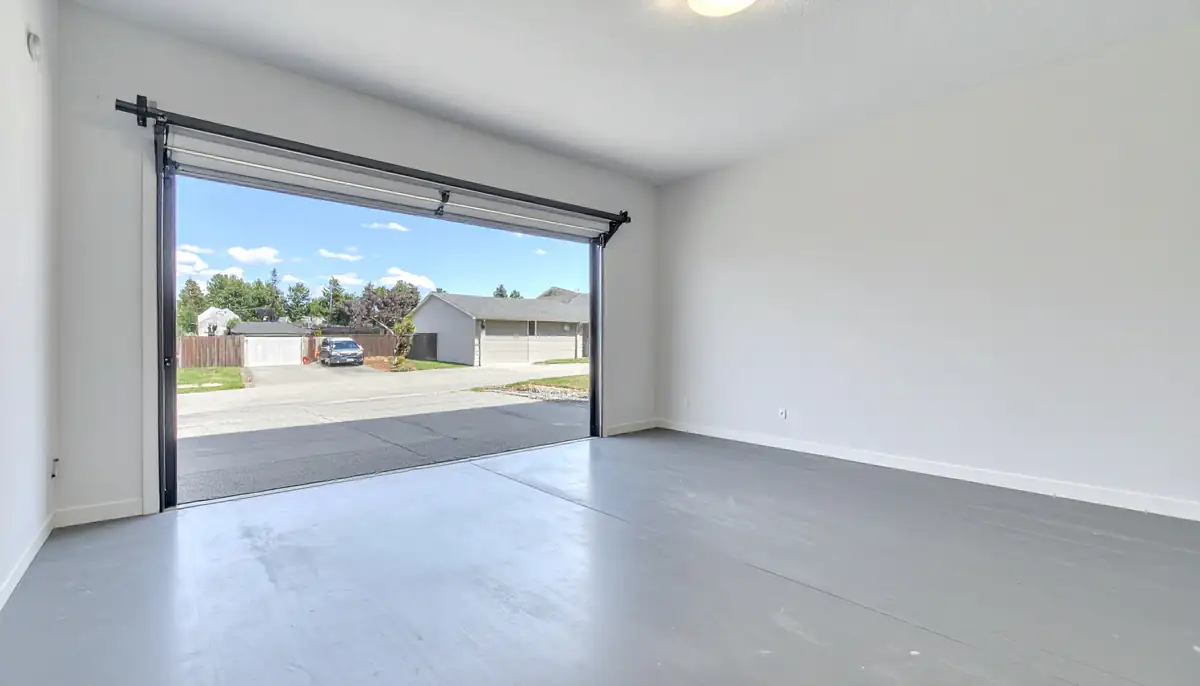
Whether it’s your garage floor coating or a warehouse that sees forklifts daily, epoxy resin garage floor systems deliver the kind of durability that makes you forget floors were ever a problem. That’s not marketing talk—it’s what happens when you install a surface engineered to outlast everything you throw at it.
We work throughout Connecticut, and we’ve seen what Thompsonville properties deal with. Freeze-thaw cycles that crack untreated concrete. Humidity that makes standard coatings peel. Road salt tracked in all winter that eats away at garage floors.
We’re not guessing at solutions. We’ve installed epoxy flooring in Thompsonville, CT homes, warehouses, and commercial spaces that face these exact conditions. Our systems account for the climate, the substrate, and how you actually use the space.
You’re not getting a one-size-fits-all approach. You’re getting a flooring solution built for Connecticut weather and the way you operate. That’s why our garage floor covering epoxy installations hold up when others start failing.
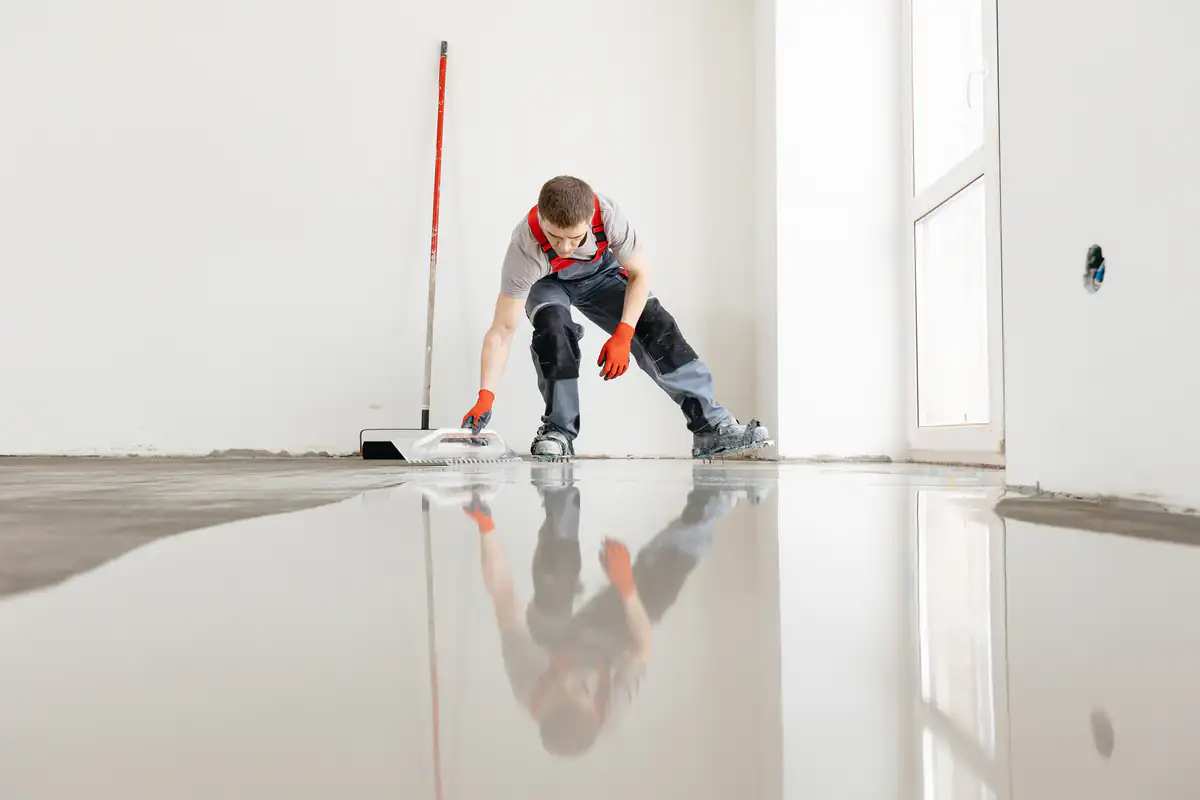
First, we assess your existing surface. Cracks, moisture issues, old coatings—everything gets evaluated before we recommend a system. Skipping this step is how other epoxy flooring contractors end up with failures six months later.
Next comes surface prep. We grind down the concrete to create the profile epoxy needs to bond properly. Any repairs happen now—filling joints, patching holes, addressing drainage issues. This stage determines whether your floor lasts three years or thirty.
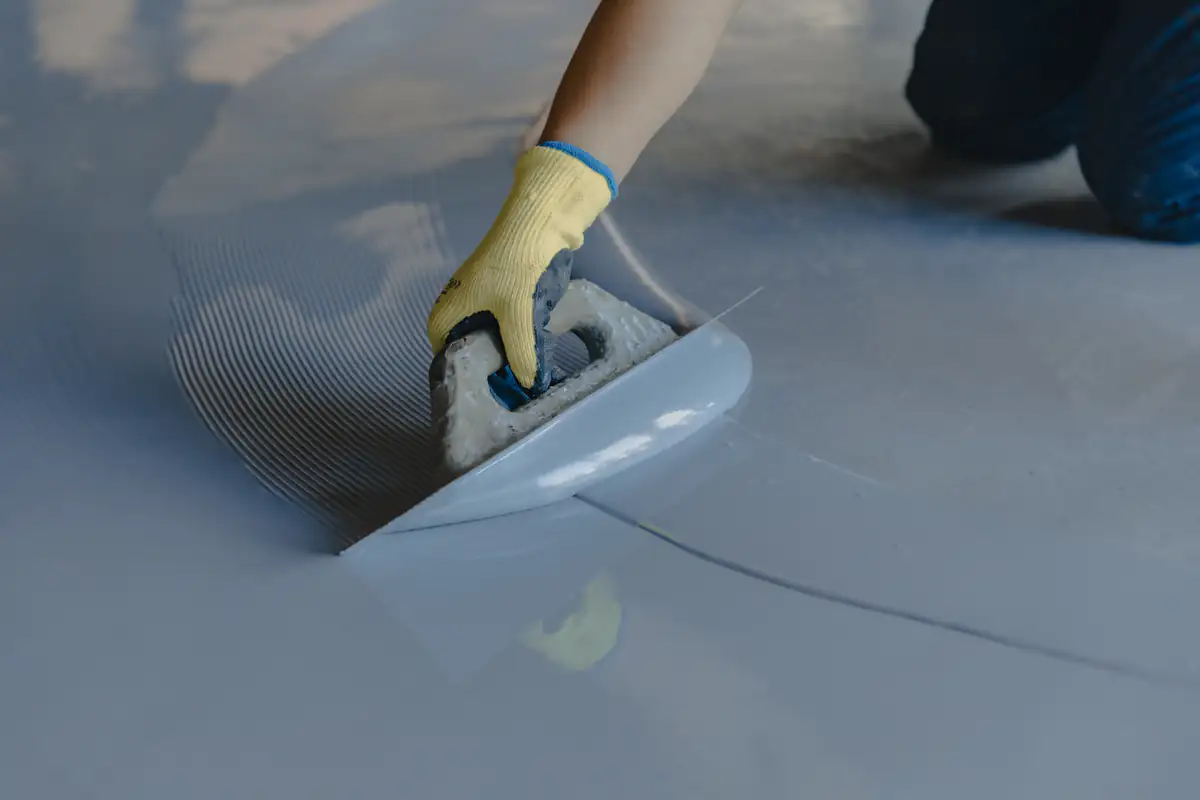
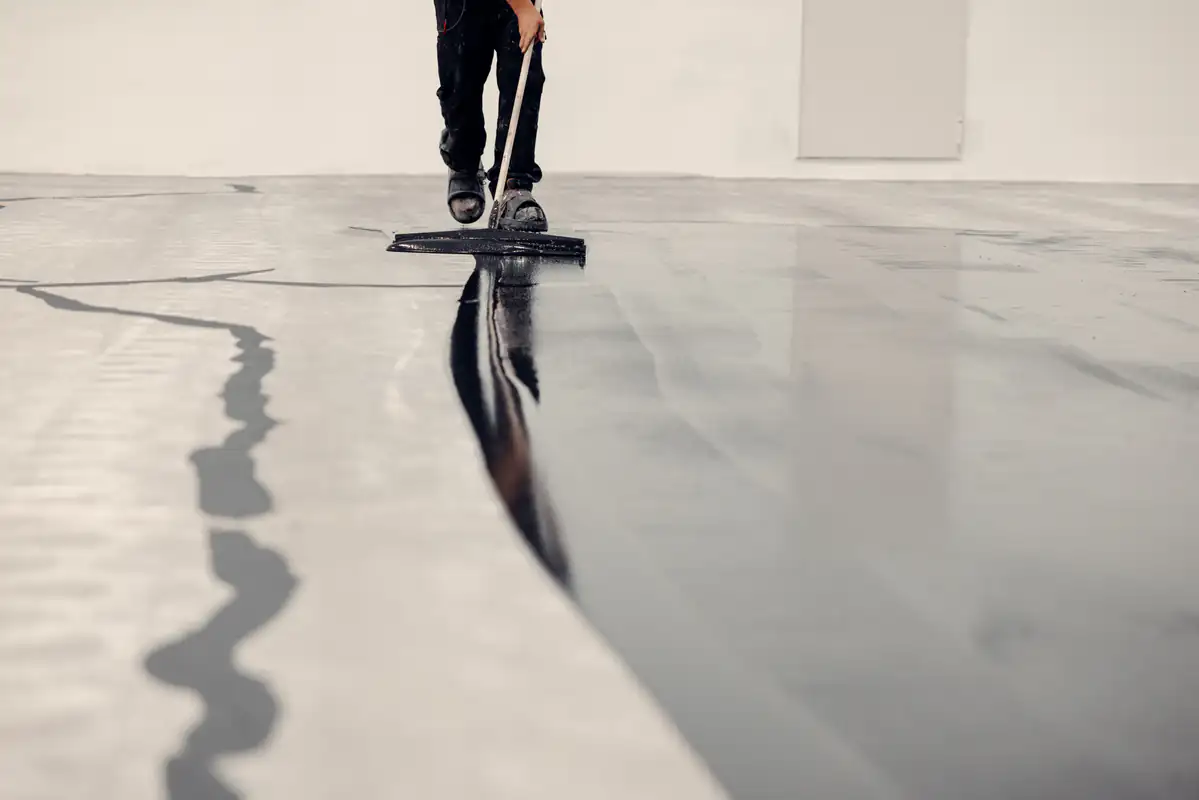
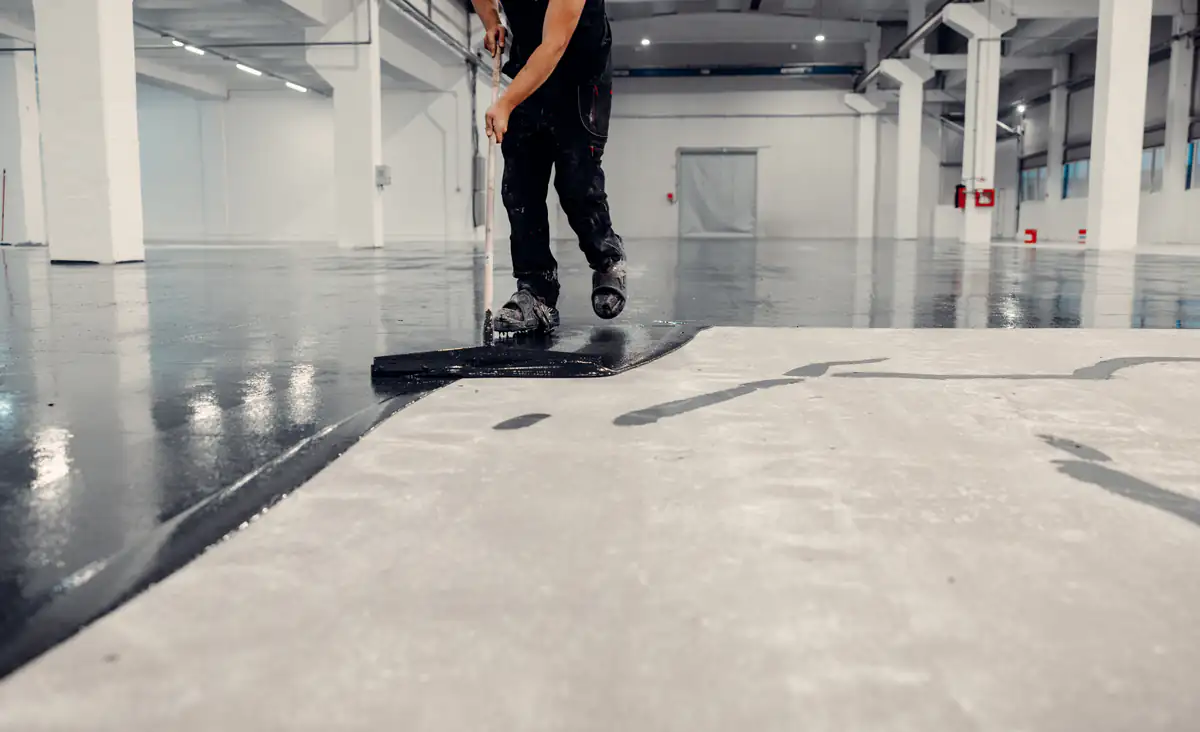
Then we apply the epoxy system in layers. Base coat, optional color flakes or quartz for texture, and a clear topcoat that provides UV stability and chemical resistance. Each layer cures fully before the next goes down.
Most garage floor coating projects in Thompsonville, CT finish in one to two days depending on size and complexity. Commercial installations take longer but we work around your schedule to minimize downtime. You’re back to normal operations faster than you’d expect, and the floor is ready to handle full loads within days.
The result is a seamless, waterproof surface that looks sharp and performs even better. No ongoing maintenance contracts. No reapplication every few years. Just a floor that works.
Ready to get started?
Our epoxy flooring in Thompsonville, CT includes full surface preparation, crack and joint repair, moisture testing, and a multi-layer coating system designed for your specific use case. Residential garage floor coating gets a different build than a commercial warehouse floor—because they face different demands.
You’re getting chemical resistance that handles automotive fluids, de-icing salts, and cleaning products without staining or etching. The topcoat provides slip resistance even when wet, which matters in Connecticut where you’re tracking in snow and rain half the year.
Thompsonville properties deal with temperature swings that cause concrete to expand and contract. Our systems flex with that movement instead of cracking. We’re also addressing the moisture that comes up through concrete slabs, especially in older buildings without proper vapor barriers.
For commercial clients, we offer fast-cure options that reduce downtime and high-build systems that handle forklift traffic and pallet jacks. Warehouses near Thompsonville’s industrial areas need floors that won’t fail under constant heavy use—that’s exactly what these systems deliver.
Color and finish options let you match existing aesthetics or completely transform a space. Solid colors, decorative flakes, metallic finishes—the look is up to you, but the performance stays consistent across every option.
A properly installed epoxy coating garage floor in Connecticut typically lasts 15 to 20 years in residential garages with normal use. That assumes you’re parking cars, storing equipment, and doing occasional projects—not running a commercial auto shop out of your garage.
The lifespan depends heavily on surface prep and the quality of materials used. Cheap DIY kits from big box stores might last two to three years before they start peeling. Professional-grade epoxy resin garage floor systems with proper concrete profiling and moisture mitigation last significantly longer.
Connecticut’s freeze-thaw cycles are hard on floors, but epoxy handles temperature changes better than paint or standard sealers. The key is making sure the concrete is properly prepared and any existing moisture issues are addressed before installation. Skip those steps and even the best epoxy won’t last.
Epoxy is a two-part system that chemically bonds to concrete at a molecular level. Garage floor paint just sits on top of the surface. That’s why paint peels and epoxy doesn’t—assuming it’s installed correctly.
Epoxy flooring in Thompsonville, CT provides a much thicker, more durable layer than paint. You’re looking at 10 to 20 mils of thickness with professional epoxy versus 2 to 3 mils with paint. That extra thickness means better impact resistance, chemical resistance, and longevity.
Other coatings like polyurethane or polyaspartic have their place, but epoxy offers the best balance of durability and cost for most applications. Polyaspartic cures faster, which is useful in commercial settings where downtime matters. But for residential garage floor coating projects, epoxy delivers better value without compromising performance.
Usually, yes—but the existing concrete needs to meet certain conditions. It has to be structurally sound, free of major cracking or spalling, and not contaminated with oils or previous sealers that prevent bonding.
We test for moisture levels before any epoxy coating garage floor installation. If your slab is releasing too much moisture vapor, the epoxy won’t bond properly and you’ll have delamination issues within months. Older Thompsonville properties sometimes lack vapor barriers under the slab, which creates problems that need addressing first.
Surface preparation involves grinding or shot blasting to remove any existing coatings and create the concrete profile epoxy needs. If there are cracks, we fill them. If there are drainage issues causing water pooling, we address those. The goal is a clean, dry, properly profiled surface that gives the epoxy the best chance of lasting decades instead of years.
Professional epoxy flooring in Thompsonville, CT typically runs between $3 and $12 per square foot depending on the system, surface condition, and project complexity. A standard two-car garage usually falls in the $1,200 to $3,500 range for a quality installation.
That’s not cheap compared to painting garage floor surfaces yourself for a few hundred dollars. But DIY epoxy kits fail quickly because most people skip the surface prep or don’t have the equipment to do it right. You end up recoating every few years, which costs more in the long run.
Commercial and industrial projects cost more per square foot because they require thicker systems, more extensive prep, and faster cure times to minimize business downtime. Warehouse floor sealing with high-build epoxy systems can run $8 to $15 per square foot, but you’re getting a floor that handles forklift traffic and heavy equipment for decades. The upfront cost is higher, but you’re eliminating the ongoing maintenance expenses that eat into your budget year after year.
Most residential garage floor coating installations take one to two days from start to finish. Day one is surface prep and base coat application. Day two is topcoat and any decorative elements like color flakes.
Cure time depends on temperature and humidity, but you can typically walk on the surface after 24 hours. Light vehicle traffic is safe after 72 hours. Full cure—where the epoxy reaches maximum hardness and chemical resistance—takes about seven days.
Commercial epoxy flooring projects in Thompsonville, CT take longer because of square footage and complexity, but we schedule work to minimize disruption to your operations. If you need faster turnaround, we offer rapid-cure systems that allow full use within 24 hours. Those cost more but make sense when every day of downtime means lost revenue. The tradeoff is slightly less working time during application, which requires more experienced installers to get right.
Yes, but the installation has to happen when temperatures are right. Epoxy needs ambient temperatures above 50°F during application and initial cure. Once it’s fully cured, it handles cold just fine—well below zero without cracking or losing adhesion.
Unheated spaces in Thompsonville, CT see significant temperature swings between summer and winter. Quality epoxy systems are designed to flex with concrete as it expands and contracts. That’s why proper surface prep and using the right product for the application matters so much.
The bigger concern in unheated spaces is moisture. Cold concrete can cause condensation, and if moisture is present during installation, the epoxy won’t bond. We test for this and sometimes need to wait for conditions to improve. Rushing an installation in poor conditions guarantees failure, which is why timing matters more than speed. A floor installed correctly in the right conditions will outlast three floors installed quickly in bad conditions.
Other Services we provide in Thompsonville