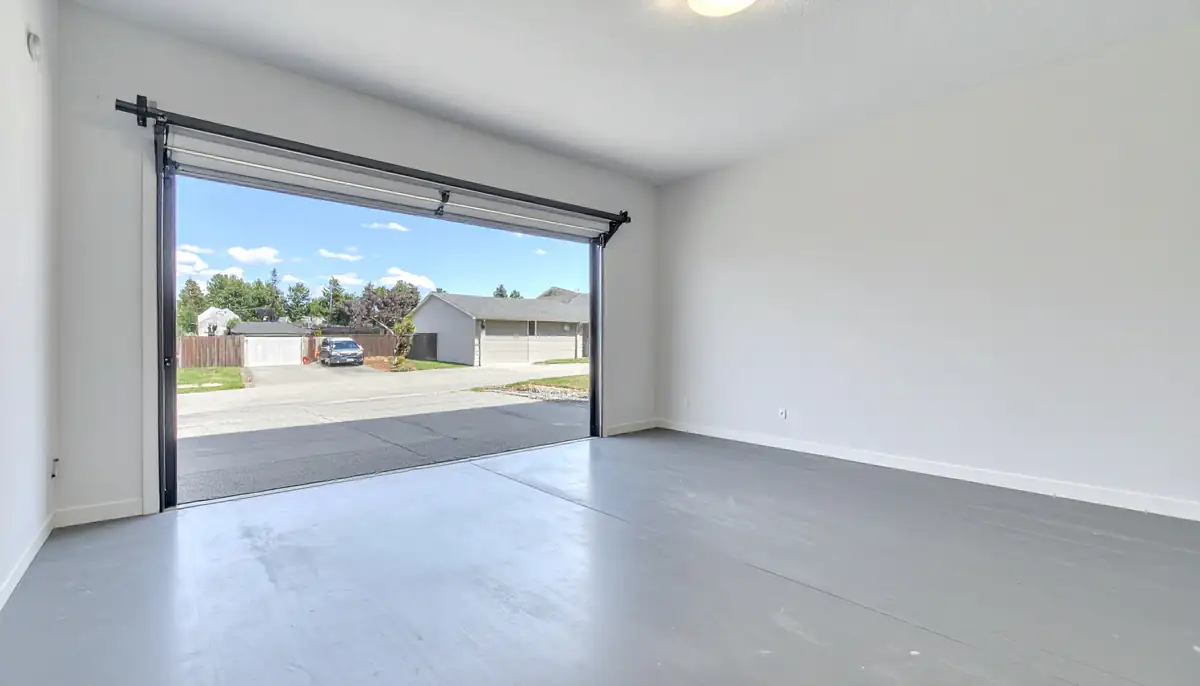
You stop worrying about oil stains soaking into your garage floor. That’s the first thing you notice.
The second is how much easier it is to clean. Spills wipe up instead of seeping in. Dust doesn’t stick. Your floor looks like it belongs in a showroom, not a 20-year-old garage.
If it’s a commercial space, your team stops complaining about slippery spots and cracked concrete. Forklifts roll smoother. Chemicals don’t eat through the surface. You’re not calling someone back every six months to patch and repaint.
As epoxy flooring contractors in Norwich, CT, we see the same problems in every building: moisture creeping up through the slab, cracks spreading from poor joint placement, stains that won’t come out no matter what you try. An epoxy coating garage floor fixes that. It seals the surface, stops moisture, and creates a non-porous barrier that actually lasts.
You’re not repainting next year. You’re not dealing with peeling or bubbling. You’re getting a floor that works as hard as you do.
American Poly Floor is a locally owned epoxy flooring company serving Norwich, Connecticut and the surrounding areas. We’ve completed thousands of projects across residential garages, commercial warehouses, and industrial facilities.
Our owners bring over 30 years of business experience to every job. We’re BBB Accredited and uphold their standards because we know trust matters when you’re letting someone into your space.
Norwich properties deal with moisture issues, temperature swings, and heavy use. We’ve seen it all. Cracked slabs in older homes. Stained concrete in manufacturing plants. Worn-out floors in retail spaces that need to look good and perform under pressure. We know what works here because we’ve done the work here.
We start by inspecting your concrete. We’re looking for cracks, moisture issues, and surface damage that could cause problems later. If there’s a crack, we repair it before we coat. If moisture is pushing up through the slab, we address it. Skipping this step is why most epoxy jobs fail within a year.
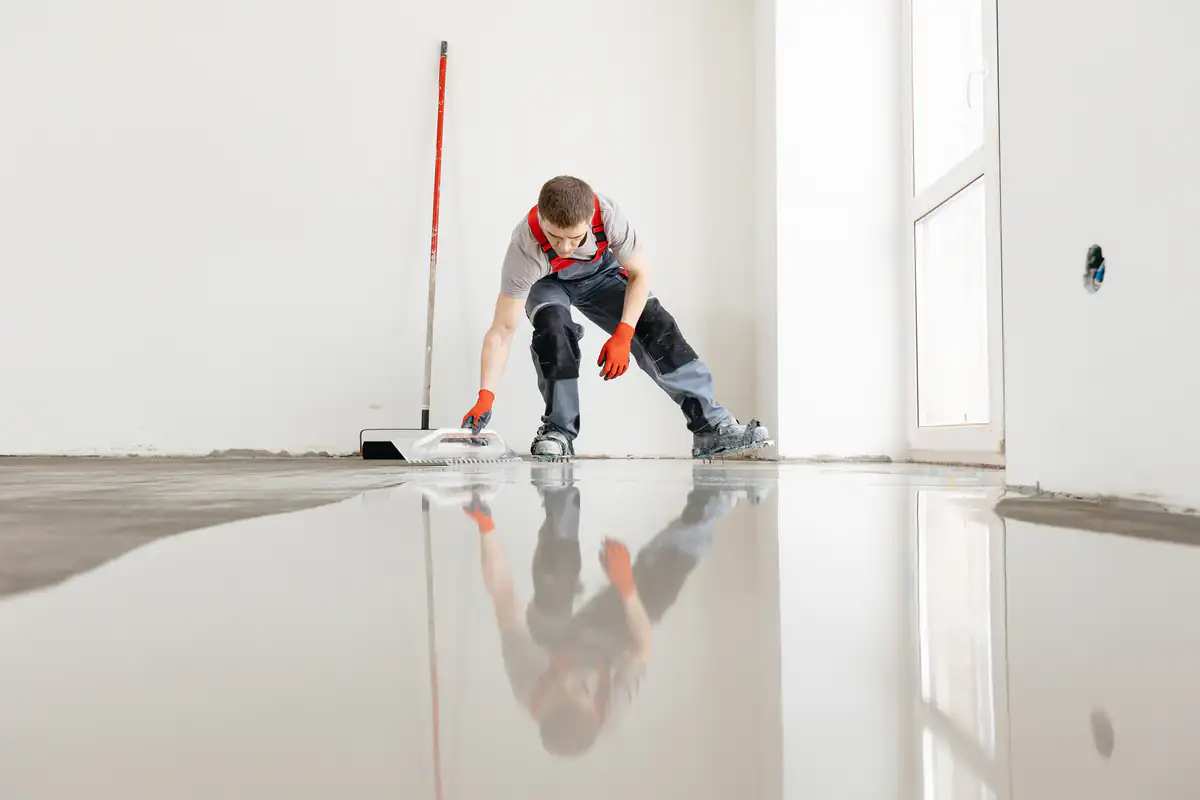
Next, we grind the surface. This isn’t optional. Concrete has to be properly profiled for epoxy resin garage floor coatings to bond correctly. We use professional-grade grinders and vacuums to prep the surface without leaving a mess behind.
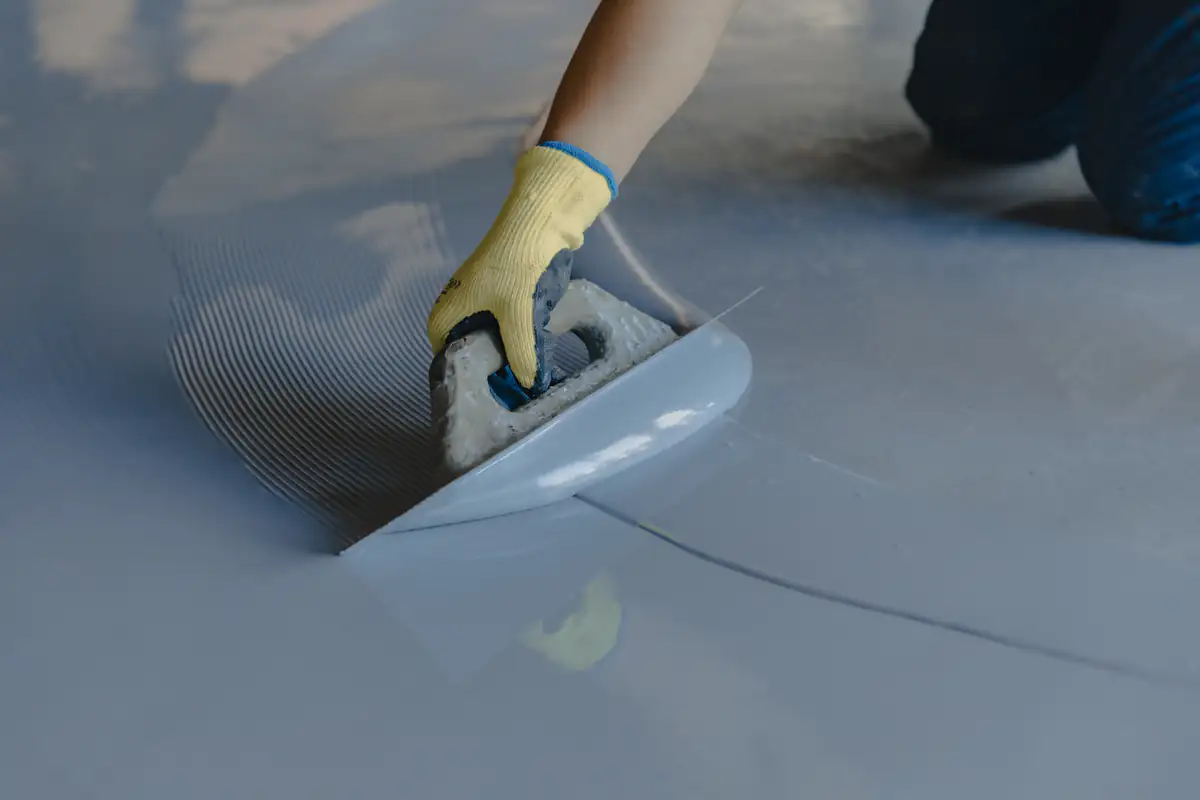
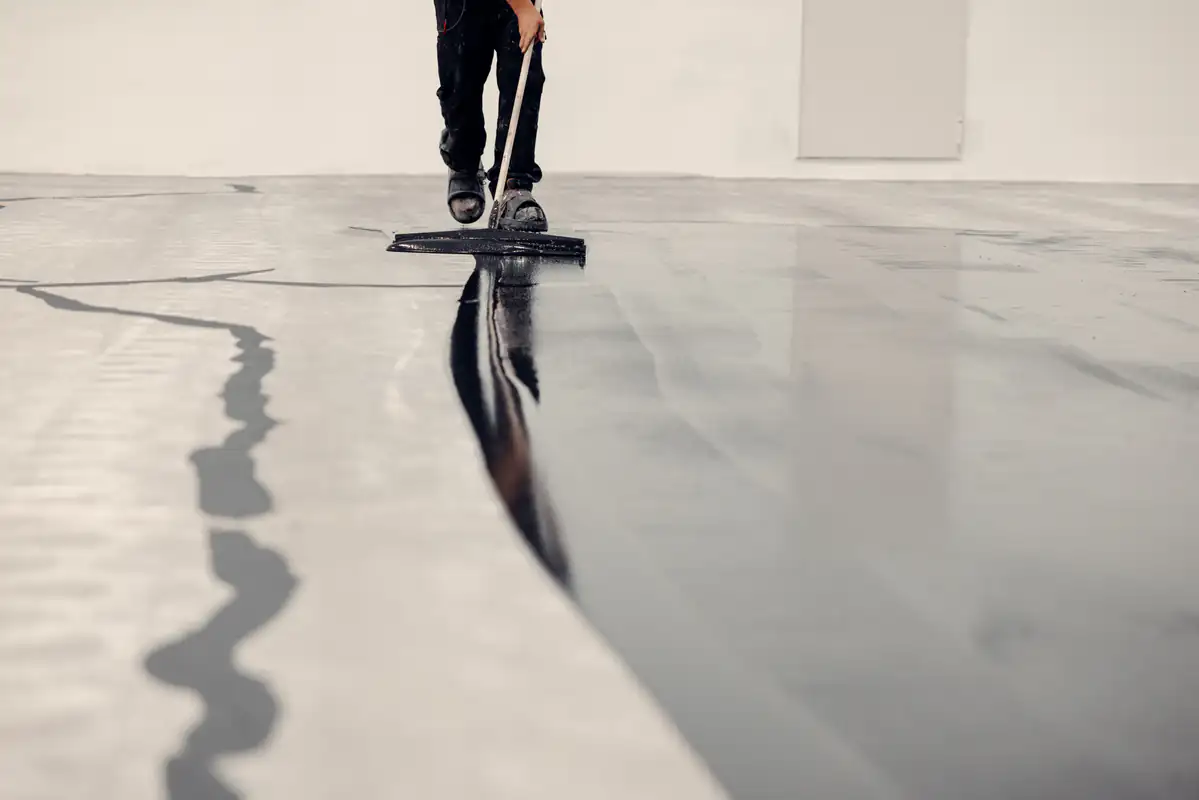
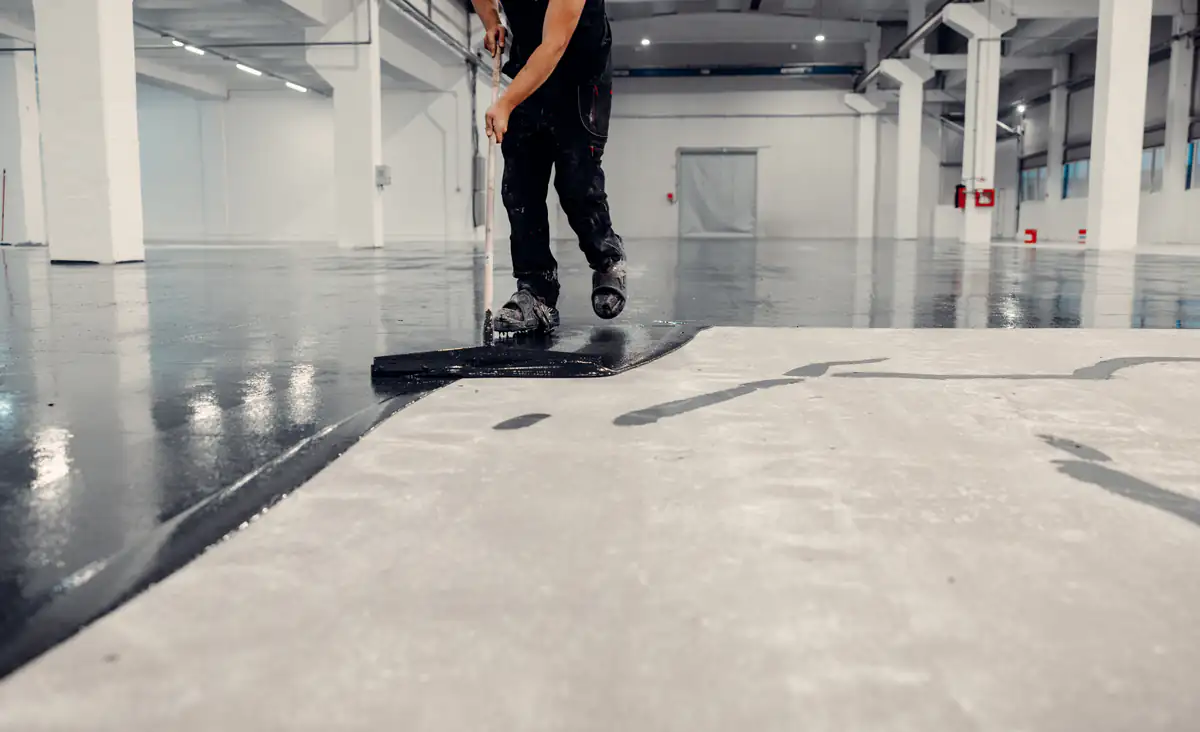
Then we apply the epoxy system. Depending on your needs, that might be a solid color, a decorative flake finish, or a high-performance industrial coating with chemical resistance. We’re not brushing it on and calling it done. We’re using proven application methods that ensure even coverage and proper curing.
Most garage floor coating jobs in Norwich, CT are done in 1-2 days. Commercial and industrial projects take longer depending on square footage and complexity. Either way, you’ll know the timeline upfront. We cure the floor properly before you use it. Rushing that part ruins everything.
Ready to get started?
You’re getting more than just a coating. Every epoxy flooring project in Connecticut starts with surface preparation, crack repair if needed, and a thorough cleaning to remove contaminants. We’re not coating over problems. We’re fixing them first.
The epoxy system itself is customizable. You can choose a high-gloss finish, a slip-resistant texture, or decorative color flakes that hide dirt and add grip. For commercial and industrial spaces, we offer chemical-resistant formulations that stand up to solvents, oils, and heavy machinery.
Norwich properties—especially older homes and buildings—often deal with moisture vapor pushing up through concrete slabs. That’s common in this area. We use moisture mitigation primers when needed to prevent bubbling and delamination down the road. It’s an extra step most contractors skip, but it’s the difference between a floor that lasts two years and one that lasts twenty.
We also handle floor sealing, joint repair, and concrete restoration if your slab needs structural work before coating. Some floors aren’t ready for epoxy yet. We’ll tell you that upfront instead of taking your money and hoping for the best.
Every project includes a warranty covering materials and workmanship. You’re protected if something goes wrong, and we stand behind the work we do.
Most residential garage floors in Norwich, CT run between $3 and $12 per square foot depending on the system you choose. A basic solid-color epoxy coating sits on the lower end. Decorative flake finishes, metallic epoxies, or high-performance industrial coatings cost more because they require additional materials and labor.
Commercial and industrial projects vary more because of size, surface condition, and performance requirements. A 10,000-square-foot warehouse floor with chemical resistance needs costs more per square foot than a small retail space with light foot traffic.
If your concrete has significant cracking, moisture issues, or structural damage, you’ll need repairs before we coat. That adds to the cost, but it’s necessary. Coating over damaged concrete doesn’t fix the problem. It just hides it until the epoxy fails.
We give you a detailed estimate after inspecting your floor. No surprises, no upselling. You’ll know exactly what you’re paying for and why.
A professionally installed epoxy coating garage floor lasts 10 to 20 years in a residential garage with normal use. That means parking cars, occasional spills, and regular foot traffic. If you’re using your garage as a workshop with heavy equipment or constant chemical exposure, expect the lower end of that range.
The lifespan depends on three things: surface prep, product quality, and how you maintain it. DIY kits from big-box stores fail within 1-3 years because they skip proper surface preparation and use thin, low-quality coatings. Professional-grade epoxy systems bond deeper and hold up longer.
Commercial and industrial floors see heavier use, so they wear faster. A manufacturing floor with forklift traffic might need recoating every 7-10 years. A retail space with foot traffic only could go 15-20 years without issues.
Maintenance matters too. Sweeping regularly and mopping with a pH-neutral cleaner keeps the surface in good shape. Dragging sharp metal across it or letting corrosive chemicals sit will shorten its life. But compared to bare concrete or painted floors, epoxy requires almost no upkeep.
Not without fixing the cracks first. Epoxy bonds to the surface of concrete, but it doesn’t repair structural issues underneath. If your slab is cracked, settling, or heaving, the epoxy will crack too.
We repair cracks before coating. Small hairline cracks get filled with epoxy crack filler. Larger structural cracks need routing and sealing with flexible polyurea or urethane to allow for movement. If the slab is severely damaged or the base underneath has shifted, you might need concrete repair or replacement before epoxy makes sense.
Moisture is another issue. If water is pushing up through the slab, epoxy will bubble and peel. We test for moisture vapor transmission before starting any job. If it’s too high, we use a moisture-blocking primer or recommend a different coating system that can handle it.
Skipping these steps is why most epoxy jobs fail. The coating looks great for six months, then it starts lifting or cracking. We don’t cut corners. If your floor isn’t ready for epoxy yet, we’ll tell you what needs to happen first.
Paint sits on top of concrete. Epoxy bonds into it. That’s the main difference, and it’s why epoxy lasts 10 times longer.
Garage floor paint is thin—usually just a few mils thick. It peels when tires roll over it. It stains when oil sits on it. It wears through in high-traffic areas within a year or two. You’re repainting constantly, and it never looks good for long.
Epoxy resin garage floor coatings are thicker and chemically bond to the concrete surface. They create a hard, durable layer that resists abrasion, chemicals, and moisture. You can drop tools, spill oil, and drive over it every day without damaging the finish.
Epoxy also seals the concrete, so moisture and stains can’t soak in. Paint doesn’t do that. It just covers the surface temporarily.
The upfront cost is higher for epoxy, but you’re not redoing it every couple of years. You’re getting a floor that actually holds up. If you’re tired of repainting or dealing with stained, ugly concrete, epoxy is the fix.
Most residential garage floors take 1-2 days to install. Day one is surface prep—grinding, crack repair, and cleaning. Day two is applying the epoxy system and letting it cure. You can’t use the floor right away. Epoxy needs time to harden properly.
Light foot traffic is usually fine after 24 hours. You can walk on it without damaging the surface. But you shouldn’t drive on it or move heavy equipment back in for at least 3-5 days. Full chemical resistance and hardness take about 7 days.
Commercial and industrial projects take longer depending on square footage and complexity. A 5,000-square-foot warehouse might take 3-5 days. A large manufacturing floor could take a week or more if we’re doing joint repairs, multiple coats, or specialized chemical-resistant systems.
Weather and temperature affect cure times too. Epoxy cures slower in cold conditions and faster in heat. We schedule jobs based on conditions to make sure everything sets up correctly.
Rushing the cure is a mistake. If you use the floor too soon, you’ll damage the coating before it’s fully hardened. We give you a clear timeline so you know when your space is ready to use again.
Yes. We install epoxy flooring in commercial and industrial spaces across Norwich, Connecticut regularly. Warehouses, manufacturing plants, retail stores, auto shops, and healthcare facilities all use epoxy because it handles heavy use better than any other flooring option.
Commercial epoxy flooring systems are thicker and more durable than residential coatings. They’re designed for forklift traffic, constant foot traffic, and heavy equipment. We can add slip-resistant additives for safety in areas prone to spills or moisture.
Industrial facilities need chemical-resistant epoxy that stands up to solvents, oils, acids, and cleaning agents. We use high-performance formulations that won’t break down under exposure. These systems also create seamless, non-porous surfaces that meet strict hygiene standards in food processing and pharmaceutical environments.
The installation process is similar to residential projects, but the timeline is longer because of square footage and performance requirements. We work around your schedule to minimize downtime. Most commercial projects are done in phases so you can keep operating.
If your facility has specific needs—anti-static properties, high UV resistance, or extreme chemical exposure—we’ll recommend the right system. Not all epoxy is the same, and we match the coating to the environment.
Local Resources
Other Services we provide in Norwich