
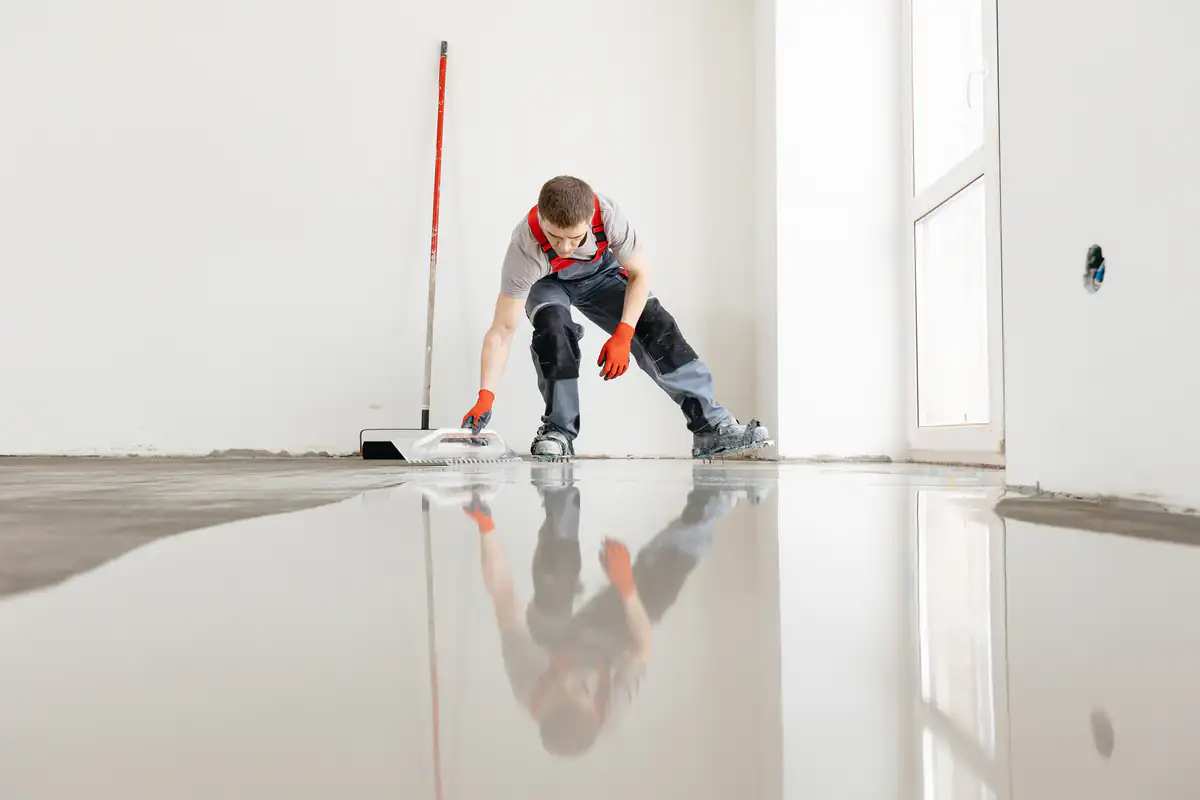
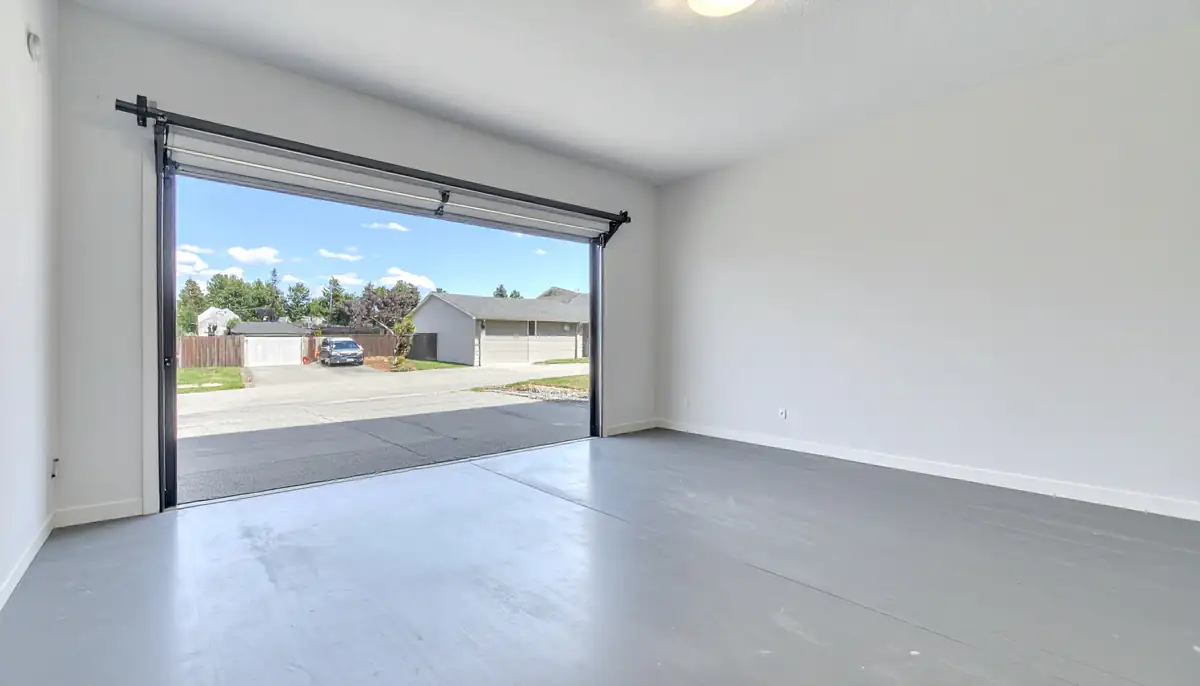
You’re done sweeping concrete dust every week. Done watching oil stains spread across your garage. Done worrying about whether your floor coating will peel up when summer hits.
A proper epoxy coating on your garage floor creates a sealed surface that won’t absorb spills, won’t crack under temperature swings, and won’t need replacing in three years. You can pull in with hot tires, track in road salt all winter, and hose it down without thinking twice.
The difference is in how it’s installed. Most epoxy resin garage floors fail because the concrete wasn’t prepped right or the wrong product was used. When your floor is done correctly with professional-grade materials and a moisture barrier designed for New England humidity, it stays put. You get a surface that looks clean, stays clean, and actually protects your concrete instead of just sitting on top of it.
We specialize in epoxy flooring in Simsbury Center, CT and throughout the Hartford area. We’re not a general contractor trying to upsell you on flooring. This is what we do.
We’ve seen what happens when garage floor coatings are installed without proper prep or when someone uses a big-box epoxy kit. Those floors don’t last through a Connecticut winter. That’s why we use commercial-grade materials, apply a moisture barrier that prevents delamination, and prep every surface like it matters—because it does.
Simsbury Center homeowners deal with the same challenges: fluctuating temperatures, high humidity, and road salt that eats through weak coatings. We account for all of it before we ever open a bucket.
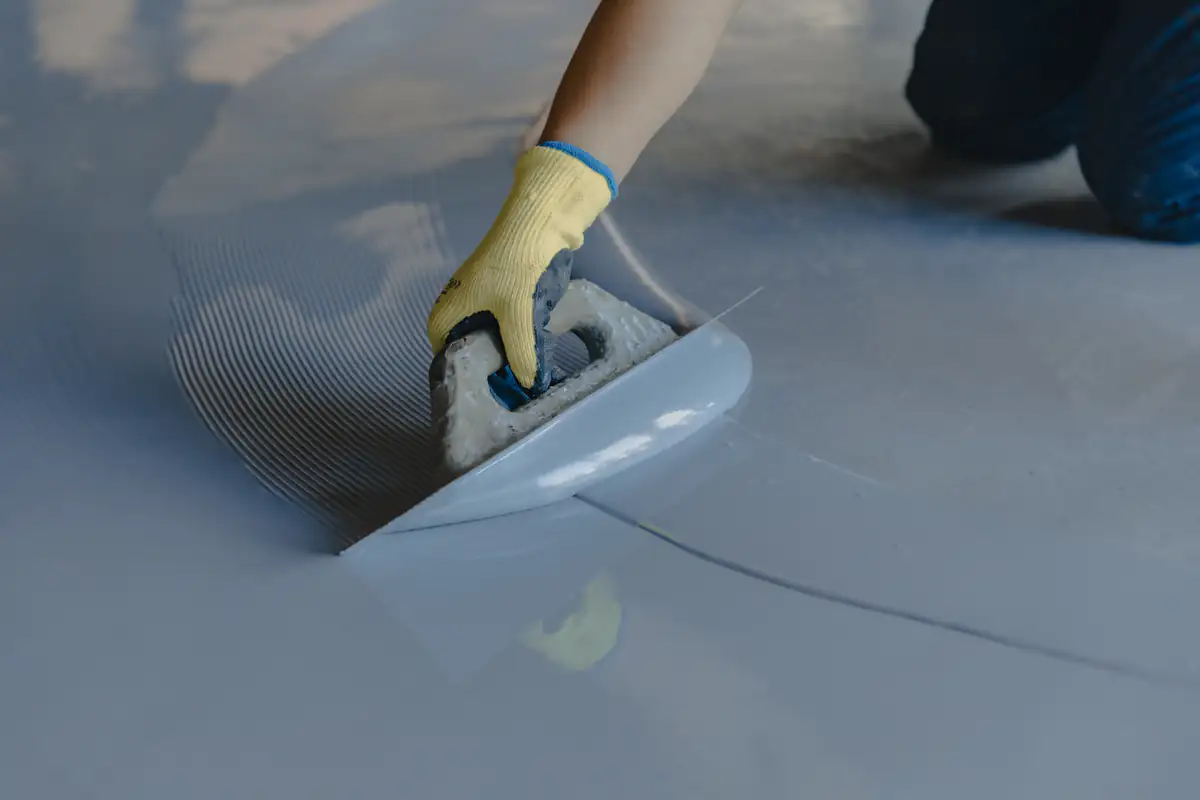
We start with the concrete itself. If there are cracks, spalling, or moisture issues, we address them first. Grinding and profiling the surface opens up the pores so the epoxy coating actually bonds instead of just sitting on top.
Next comes the moisture barrier. This step separates floors that last from floors that bubble and peel. Connecticut basements and garages hold moisture, especially in spring and fall. The barrier locks it out.
Then we apply the base coat, broadcast the color flakes if you want them, and seal everything with a topcoat that resists chemicals, abrasion, and UV yellowing. Most garage floor coverings with epoxy are done in two to three days. You’ll need to stay off it while it cures, but once it’s ready, it’s ready for anything.

Ready to get started?
You’re not just getting a coat of epoxy slapped on your concrete. You’re getting full surface prep, crack and joint repair if needed, a moisture barrier application, and a professionally installed epoxy resin garage floor system with a slip-resistant finish.
We also offer metallic epoxy finishes, decorative flake options, and custom colors if you want something beyond the standard gray. For Simsbury Center homeowners, we typically recommend slip-resistant additives since garages get wet during winter months.
Commercial and industrial spaces get the same attention. If you’re coating a warehouse floor, workshop, or retail space, we’ll match the system to your traffic level and chemical exposure. The process doesn’t change—we just adjust the product to fit the environment. Connecticut properties need coatings that handle temperature swings, and that’s what we install.
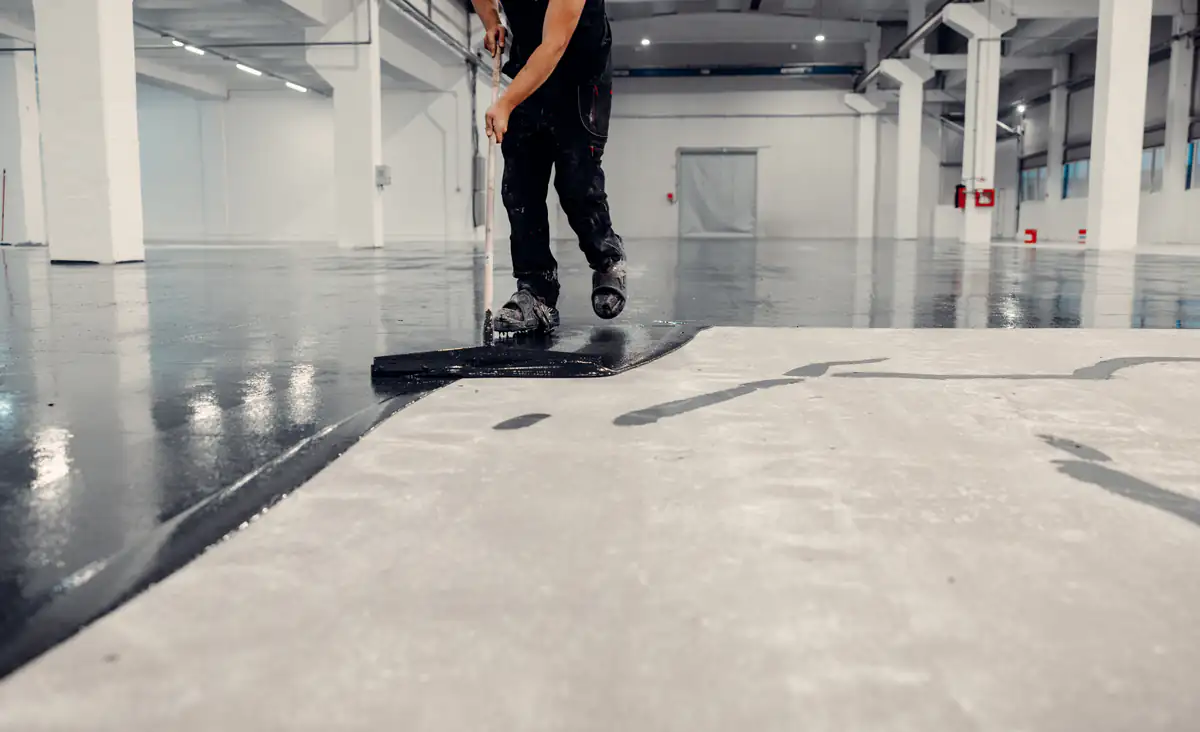
A professionally installed epoxy coating on your garage floor should last 10 to 20 years in Connecticut if it’s done right. The key is proper surface prep and using a moisture barrier.
Connecticut’s freeze-thaw cycles are brutal on concrete. When water seeps into cracks and freezes, it expands and pushes coatings off from underneath. That’s why surface prep matters so much. We grind the concrete to open the pores, repair any cracks, and apply a barrier that keeps moisture from getting between the epoxy and the slab.
DIY kits and cheap installations skip these steps. They might look fine for six months, but once winter hits and your garage goes through a few freeze-thaw cycles, the coating starts lifting. If you’re seeing bubbles, peeling, or hot tire pickup, that’s a prep issue, not an epoxy issue.
Garage floor paint sits on top of concrete. Epoxy bonds into it. That’s the difference between a coating that lasts and one that doesn’t.
Paint is thin, usually latex or acrylic-based, and it wears off quickly under traffic. You’ll see tire marks, hot tire pickup, and peeling within a year. Painting your garage floor might be cheap upfront, but you’ll redo it constantly.
Epoxy flooring in Simsbury Center, CT creates a thick, chemical-resistant surface that can handle oil, road salt, and heavy use without breaking down. It’s not indestructible, but it’s designed for garages, workshops, and commercial spaces where floors actually get used. The upfront cost is higher, but you’re not recoating every couple of years.
Yes, but the cracks need to be repaired first. Epoxy won’t fix structural problems—it just covers them until they get worse.
If your concrete has minor cracks, spalling, or surface damage, we’ll grind them out, fill them, and level the surface before applying the epoxy resin garage floor system. For bigger issues like settling, heaving, or deep structural cracks, you might need concrete repair before we can coat it.
Simsbury Center homes built on slabs sometimes develop cracks from settling or freeze-thaw movement. We assess the slab first and let you know what needs fixing. Skipping repairs means the epoxy will crack in the same spots, and you’ll be back to square one. We’d rather do it right the first time.
You can walk on it after 24 hours. You can drive on it after 72 hours. Full cure takes about a week.
Most garage floor coatings in Simsbury Center, CT are installed over two to three days depending on the size and condition of the slab. Day one is prep and priming. Day two is the base coat and flake broadcast. Day three is the topcoat.
After the final coat goes down, the floor is dry to the touch within hours, but it’s not fully cured. Walking on it too soon won’t ruin it, but dragging heavy equipment or parking a car can leave marks. We’ll give you a specific timeline based on temperature and humidity when we’re done. Connecticut’s humidity can slow cure times slightly, especially in summer.
It can, but only if we address the moisture first. Basements in Connecticut are notorious for humidity, condensation, and groundwater seepage.
If your basement has active water intrusion—like puddles after rain or visible seepage—you need to fix that before any floor coating goes down. Epoxy won’t stop water from coming up through the slab, and it’ll fail if moisture gets trapped underneath.
For basements with typical humidity but no standing water, we apply a moisture barrier as part of the epoxy flooring installation. This prevents the coating from delaminating when humidity levels fluctuate. We also test the slab for moisture content before starting. If the concrete is too wet, we’ll tell you. Installing over a damp slab is a waste of your money and our time.
Most residential garage floor coatings with epoxy run between $3 and $12 per square foot depending on the system, prep work, and finish you choose. A standard two-car garage is typically 400 to 600 square feet.
If your concrete needs significant crack repair, moisture mitigation, or leveling, that adds to the cost. Decorative finishes like metallic epoxy or custom flake blends cost more than a solid color with standard flakes. Commercial and industrial epoxy flooring in Simsbury Center, CT is priced based on square footage, traffic level, and chemical resistance requirements.
We don’t give quotes over the phone because every slab is different. We’d rather look at your floor, test for moisture, and give you an accurate number than guess. You’re not paying for the cheapest option—you’re paying for a floor that lasts.
Local Resources
Other Services we provide in Simsbury Center