Tired of cracked tile and grout that looks like a science experiment? Connecticut business owners are upgrading to epoxy floors for durability, hygiene, and a polished look that survives everything from road salt to dropped wrenches.
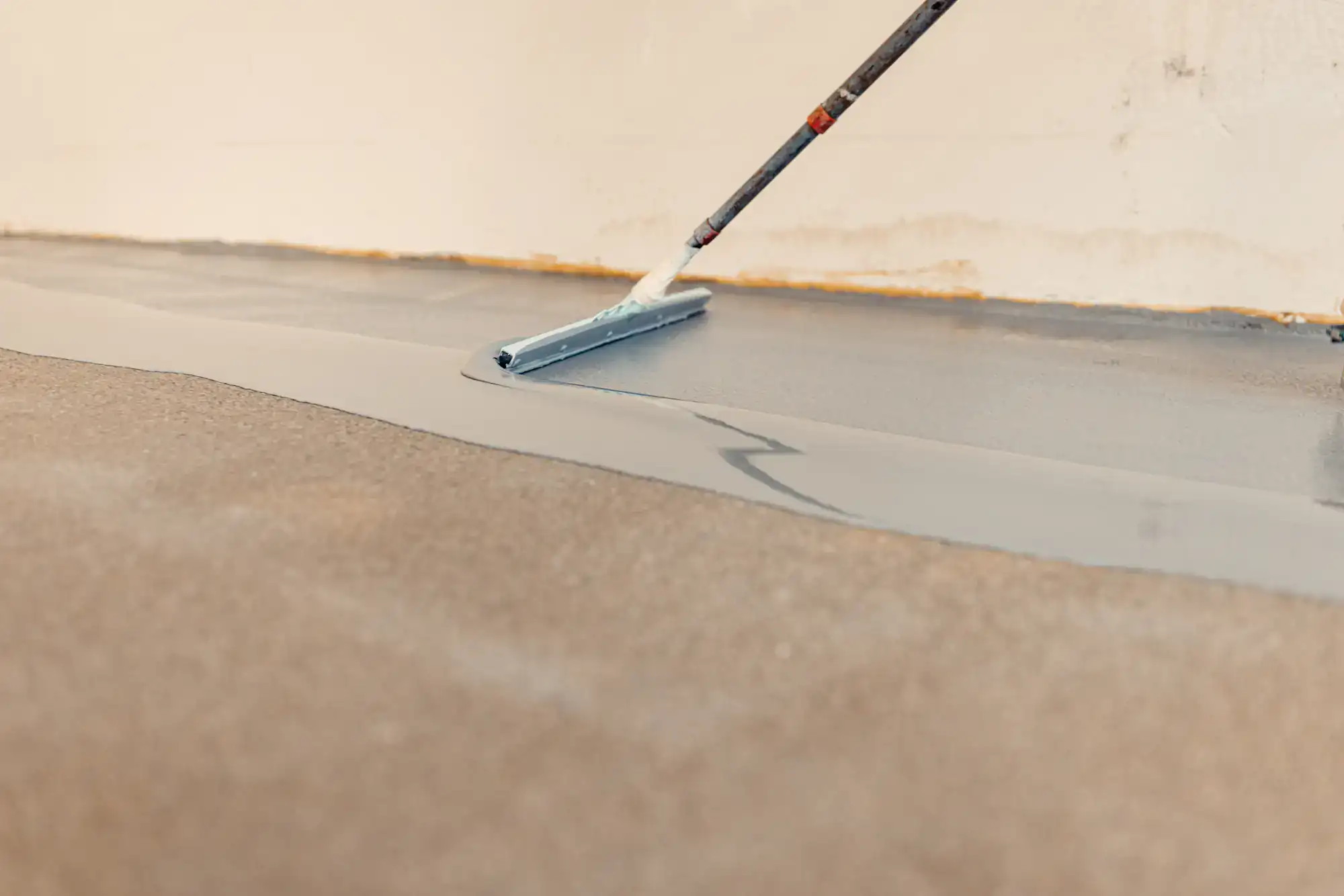
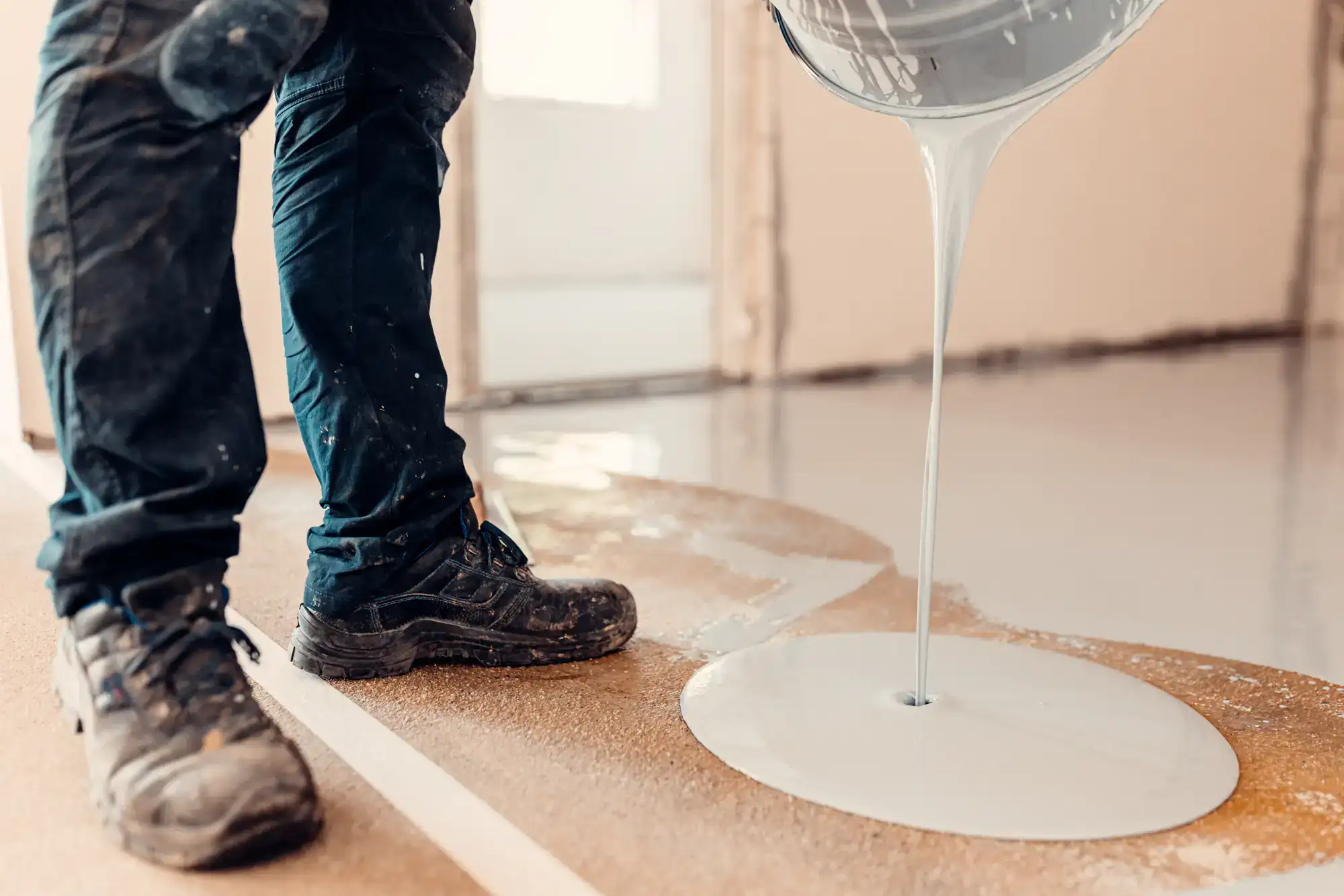
First things first: epoxy flooring isn’t just “fancy paint.” If paint is a light windbreaker, epoxy is a full suit of Kevlar. It’s a high-performance system made from resin and hardener that undergoes a chemical “marriage” to bond directly to your concrete slab. Once it cures, you get a rock-solid surface that can handle forklifts, heavy foot traffic, and the occasional “oops” with a gallon of solvent.
Think of it as a structural bodyguard for your concrete. It doesn’t crack under pressure, peel when things get sweaty, or fade when the sun hits it. Restaurants love it because it’s waterproof; warehouses rely on it for heavy-duty loading; and retail shops use it to get that “high-end gallery” look without the high-end price tag.
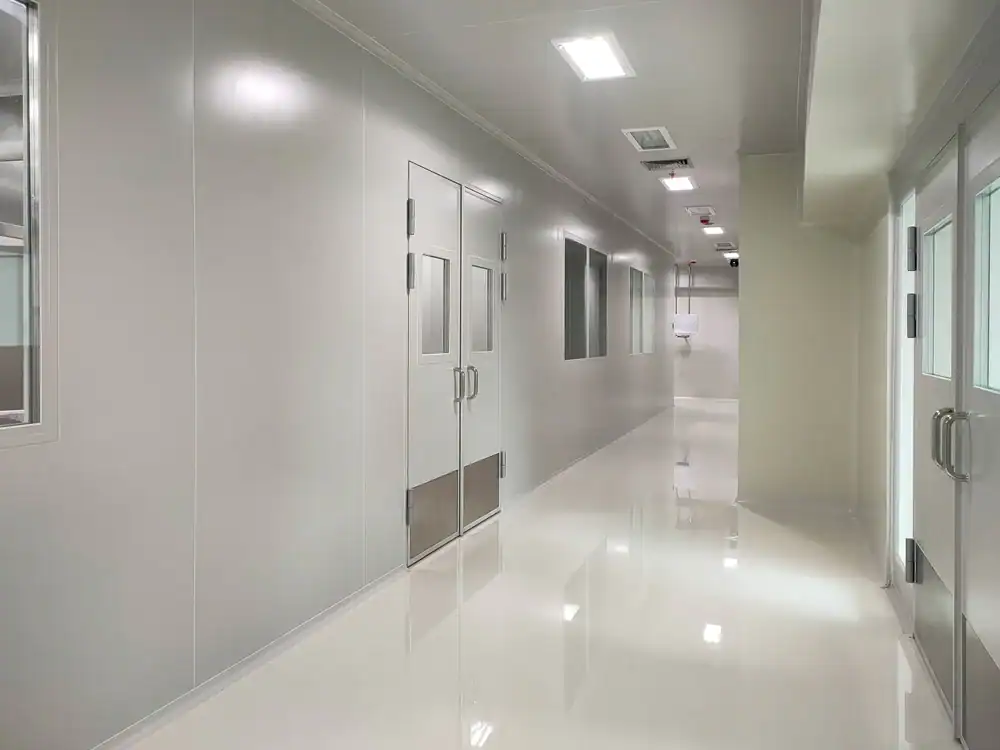
Plus, it’s seamless. That means no grout lines to act as a retirement home for dirt and bacteria. It’s chemical-resistant, slip-resistant (if you don’t want your employees doing accidental ice-skating routines), and available in more colors than a jumbo box of crayons.
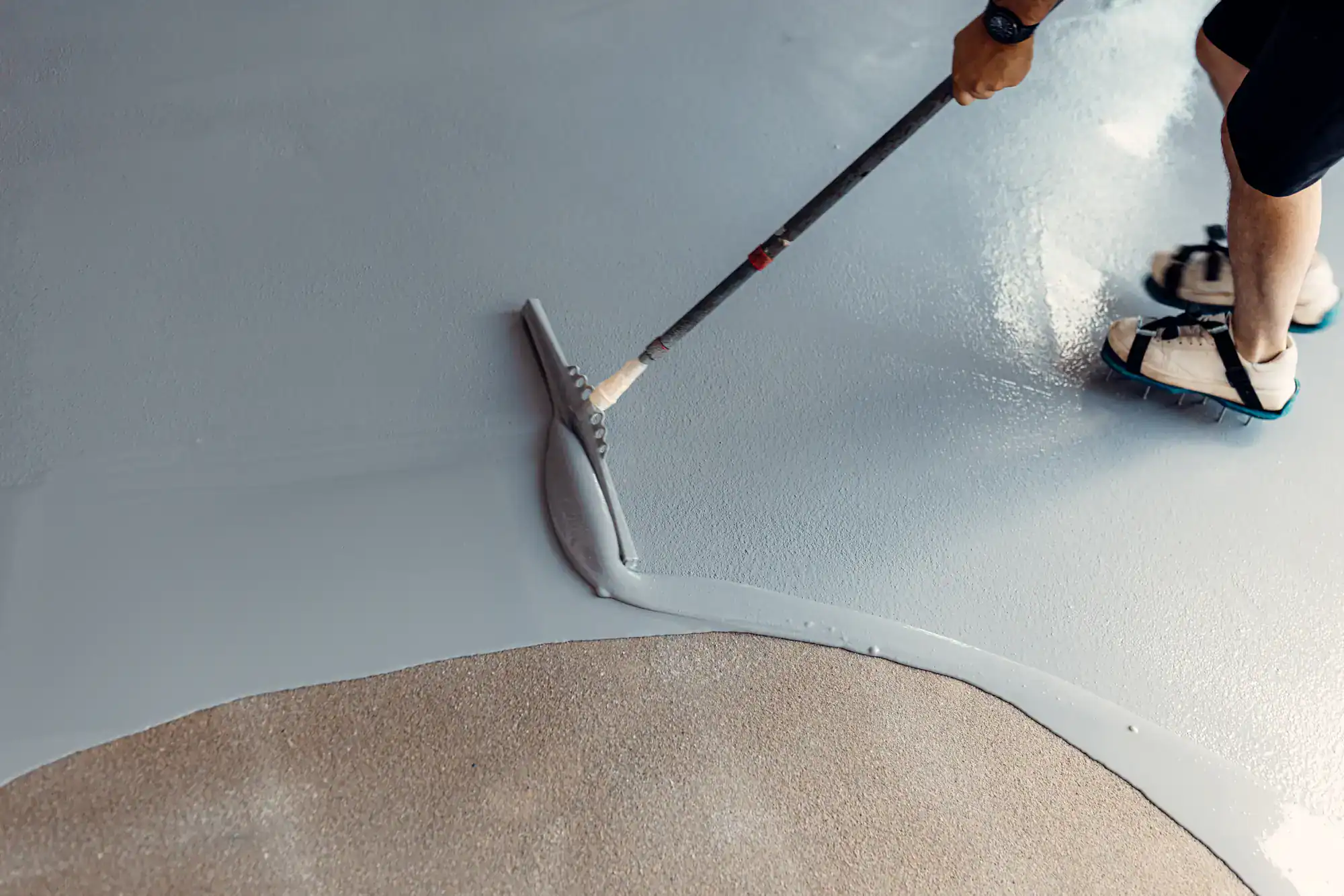
A proper epoxy installation doesn’t start with a roller; it starts with a diamond. Specifically, industrial diamond grinders. We “shave” the concrete to open up the pores—because if the epoxy can’t “grip” the floor, it’s just a very expensive sticker.
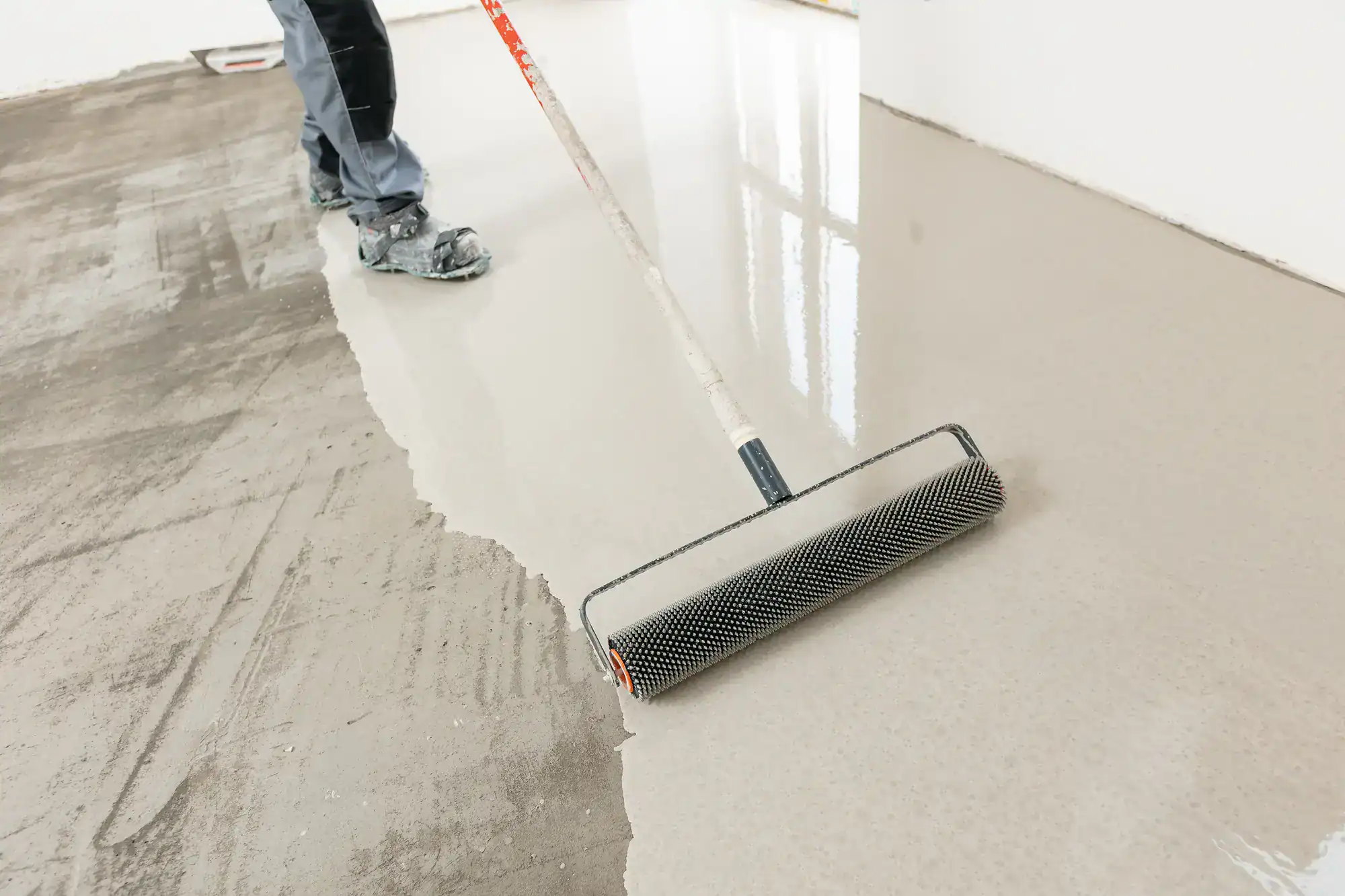
Next comes the moisture mitigation primer. This is vital in Connecticut, where the ground stays about as dry as a used sponge. Without this, your floor would bubble up faster than a pot of pasta. After that, the base coat goes down, followed by your choice of decorative flakes or metallic pigments. These aren’t just for the “wow” factor; they add texture and hide the fact that you haven’t swept in three days.
Finally, we seal the deal with a clear polyaspartic or polyurethane topcoat. This is the “shield” that provides scratch resistance and UV stability. The whole process usually takes 1-2 days. Compare that to tile, where you’re waiting for thin-set to dry, grout to cure, and your soul to return to your body. You’re usually back in business within 72 hours.
Tile has been the default for years because it’s “safe.” But “safe” usually means “cracked.” Grout is porous, which is fancy talk for “it drinks spilled coffee and oil.” Once a tile floor gets dirty, it stays dirty.
Epoxy doesn’t have a “weakest link” because it’s one single, continuous surface. There are no grout lines to scrub. Cleaning becomes a simple “swish and flick” with a mop rather than a full-body workout. For healthcare or food service, where “clean” is a legal requirement, epoxy is a total game-changer.
And durability? If you drop a heavy wrench on tile, you’ve got a project for next weekend. If you drop it on epoxy, the wrench might be the one that gets hurt. Epoxy is engineered to flex and absorb impact, whereas tile just gives up and shatters.
Even better, the maintenance budget for epoxy is practically zero. No regrouting, no resealing, no individual tile replacements. Business owners who switch often find their floor maintenance costs drop by 50%. That’s more money for things that actually matter—like office coffee or a company bowling night.
Want live answers?
Connect with a American Poly Floor expert for fast, friendly support.
Connecticut weather is a floor’s worst nightmare. We have freeze-thaw cycles that can split boulders and road salt that eats through metal like a snack. Tile and cheap coatings just can’t hack it.
Business owners from Middletown to New Haven are switching because they’re tired of the “annual floor repair” tradition. We’ve helped breweries that needed a floor to survive hot wash-downs and heavy kegs, and manufacturing plants in Hartford that needed color-coded safety lanes that wouldn’t rub off after a week. Epoxy handles the New England grind without breaking a sweat.
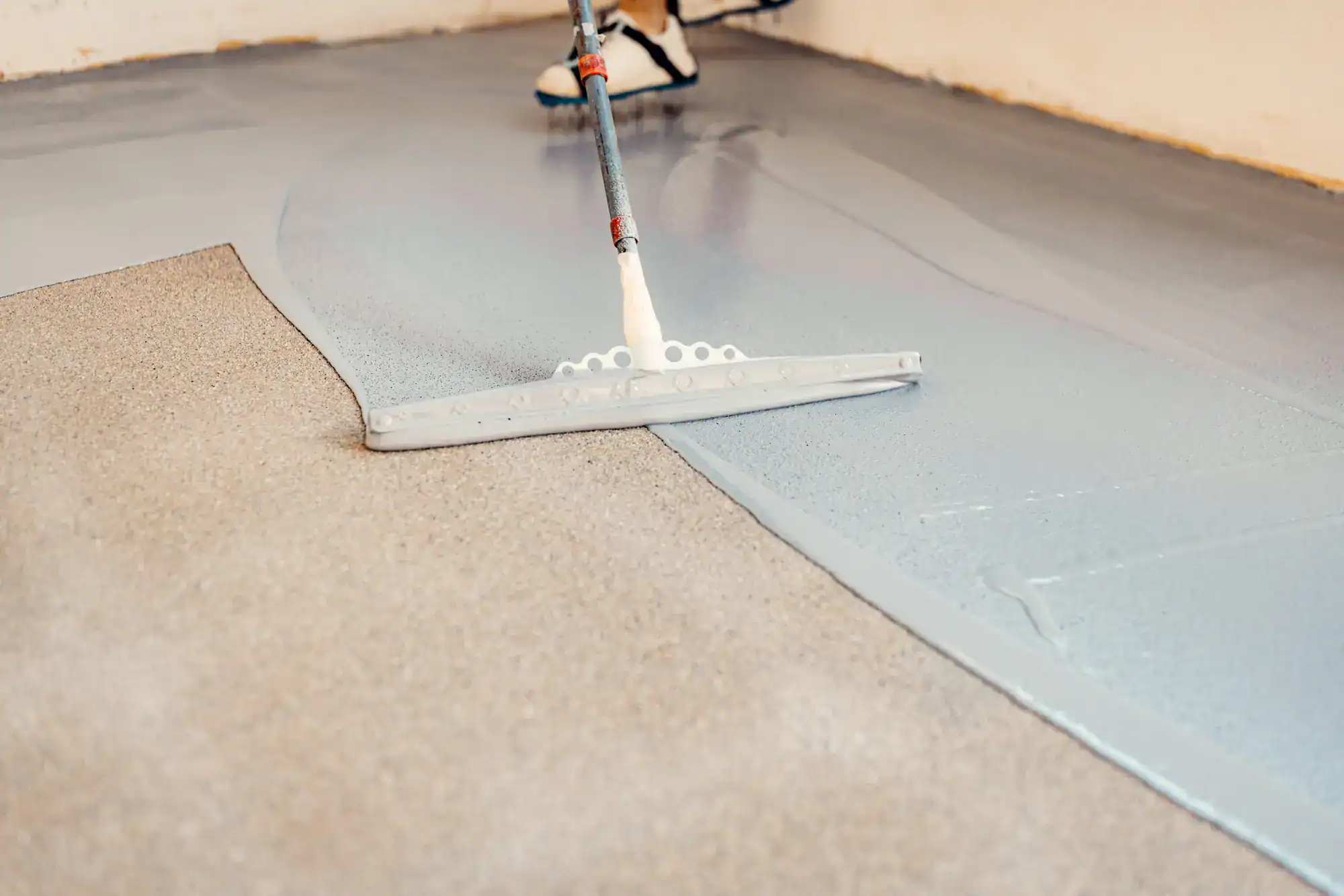
Let’s clear the air: “Garage floor paint” and “Professional epoxy” are not the same thing. One is a weekend project that peels the first time your tires get hot; the other is a 20-year solution.
When we step onto a job in New London or Middlesex County, we’re checking for moisture levels and structural integrity. We use mechanical prep (grinding), not acid etching. Acid etching is the “thoughts and prayers” of floor prep—it rarely works. Our industrial-grade materials are designed to bond chemically to the slab, ensuring that “hot tire pickup” is a myth rather than a Monday morning reality.
The best part about an epoxy finish is that it’s low-maintenance, not no-maintenance (you still have to sweep, sorry). But since it’s non-porous, oil, antifreeze, and brake fluid just sit on the surface like they’re waiting for a bus. Wipe ’em up, and you’re good.
The polyaspartic topcoat takes the brunt of the abuse so the pretty stuff underneath stays safe. And unlike tile, if you want to “refresh” the floor in ten years, we can often just scuff and apply a new topcoat rather than starting from scratch. It’s the floor that keeps on giving.
Your floor is more than just something to stand on; it’s an investment in your sanity and your brand. Tile had a good run, but modern epoxy outperforms it in durability, hygiene, and long-term cost.
If you’re ready to stop apologizing for your floors and start showing them off, let’s talk. We specialize in turning sad Connecticut concrete into high-performance masterpieces.
Summary:
Share: