Not sure whether to paint your garage floor or invest in epoxy? This guide breaks down the real differences in durability, cost, and long-term value for Connecticut homeowners.

Garage floor painting is exactly what it sounds like—a coating you roll onto concrete, similar to painting a wall. Most garage floor paints are either latex acrylic or one-part epoxy paint. You clean the floor, maybe do a quick acid etch, then roll on a couple coats.
It’s straightforward. No special equipment needed. You can pick up a kit at any home improvement store for $40 to $100 and knock it out over a weekend. The appeal is obvious—low cost, easy application, instant improvement in how your garage looks.
But here’s the thing about garage floor paint: it sits on top of your concrete. It doesn’t bond with it. It dries, but it doesn’t cure into a hardened shell. That difference matters more than you’d think, especially when you start parking on it or dragging heavy equipment across the surface. For homeowners in Hartford County, New Haven County, or anywhere in Connecticut dealing with road salt and temperature swings, that weak bond becomes a problem fast.
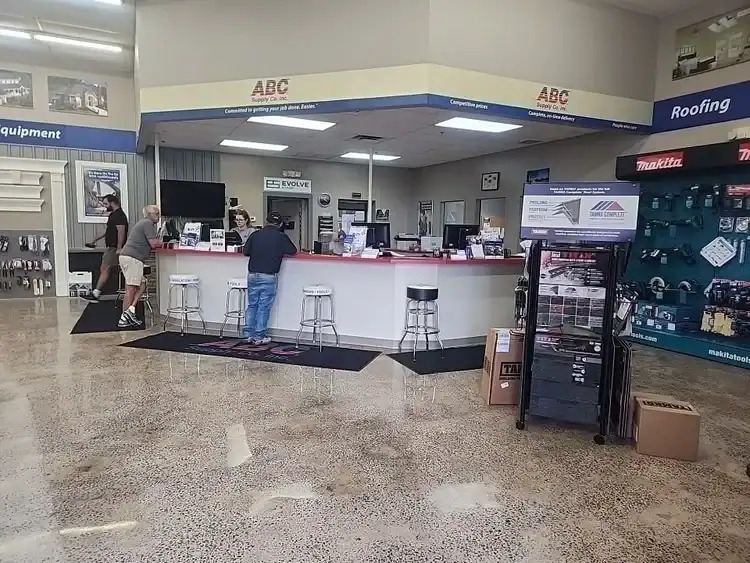
Most garage floor paint lasts somewhere between one and five years before you’re looking at touch-ups or a complete redo. If you went with basic latex paint, you’re probably on the shorter end of that range—often just two to three years. One-part epoxy paint might stretch closer to five years if conditions are ideal and you’re gentle with the floor.
What kills paint isn’t always dramatic. It’s the slow grind of daily use. Hot tires soften the paint and pull it up. Road salt from Connecticut winters eats away at the surface. Oil drips soak in and leave permanent stains because paint isn’t truly non-porous. Even just walking across it with grit on your shoes wears down the thin layer.
The real issue is that paint doesn’t have the thickness or chemical structure to handle what a garage floor deals with. It’s designed to cover and protect lightly used surfaces, not concrete that sees cars, chemicals, temperature swings, and constant abrasion. You might get lucky with a few good years, but eventually, you’ll see chipping along high-traffic areas, fading where sunlight hits, and peeling where tires sit.
And when it starts to fail, you can’t just patch it. You’re either living with a floor that looks worse than when you started, or you’re back at square one, prepping and repainting. That’s the cycle most people don’t anticipate when they’re standing in the paint aisle thinking they found a budget-friendly solution. Over 15 years, you could easily repaint three to five times—turning that $100 investment into $500 or more, plus all the hours spent clearing out your garage and doing the work.
Garage floor paint can handle light use. If your garage is mostly for storage, you park carefully, and you’re not doing heavy work in there, paint might hold up reasonably well for a few years. It’ll give you a cleaner look than bare concrete, and it does offer some resistance to stains—at least initially.
But it can’t handle the realities of an active garage, especially in Connecticut where road salt, moisture, and temperature changes are part of the deal. Paint doesn’t resist chemicals well. Brake fluid, antifreeze, gasoline—these will stain or even dissolve the paint film. It’s not built for that. Hot tires are another weak point. When your car’s been on the highway and you pull into the garage, those tires are hot enough to soften paint and cause what’s called “hot tire pickup.” You’ll see the paint literally stuck to your tires.
Impact resistance is minimal. Drop a toolbox or a heavy part, and you’re likely looking at a chip or crack. Paint is thin—usually just a few mils thick—so there’s not much material there to absorb impact. It also doesn’t do well with abrasion. Dragging anything across it repeatedly will wear through the coating.
Then there’s the maintenance side. Painted floors need careful cleaning. Harsh chemicals can damage the finish. You can’t pressure wash without risking peeling. And if you do get a stain, it’s often permanent because the paint has already absorbed it. The floor might look better than raw concrete for a while, but it’s not a true protective barrier. It’s more of a temporary cosmetic fix that requires you to be gentle with your own garage—which defeats the purpose for most people who actually use their space.
Want live answers?
Connect with a American Poly Floor expert for fast, friendly support.
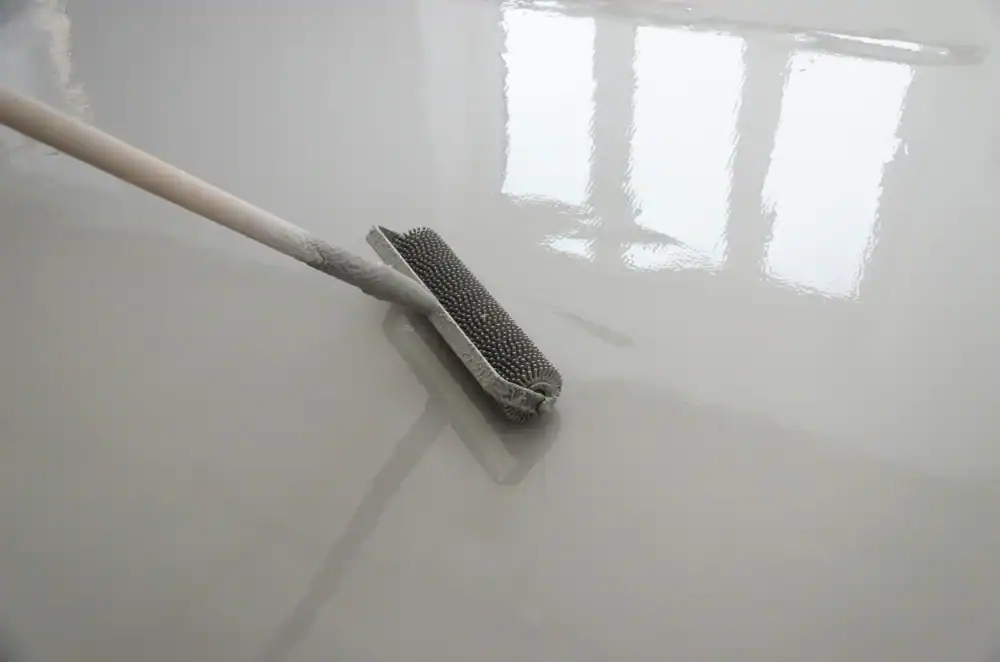
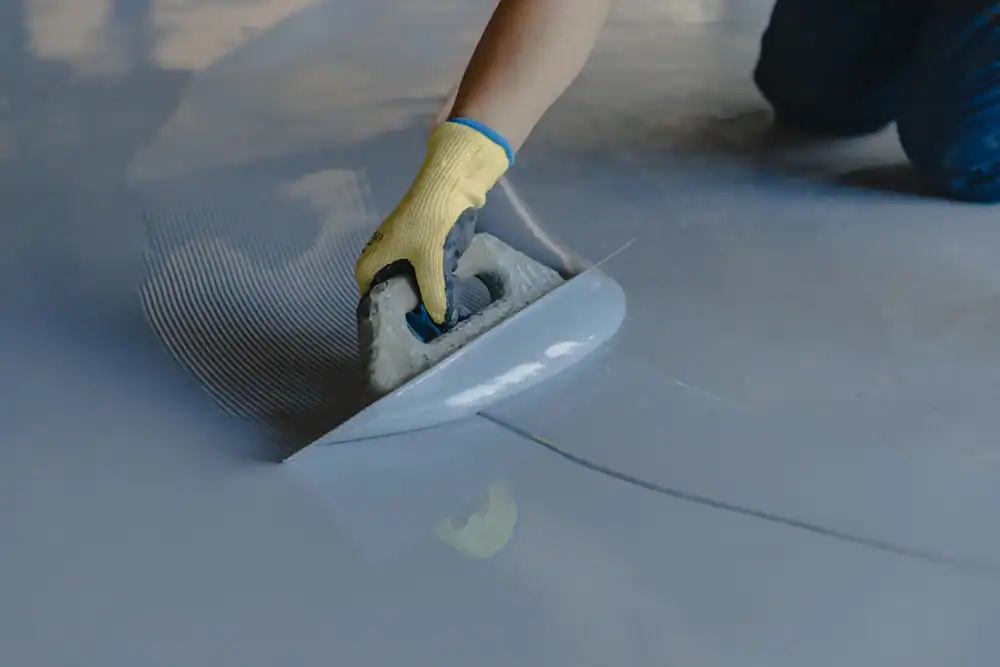
Professional epoxy garage floor coating is a completely different animal. It’s not paint with some epoxy mixed in—it’s a true two-part system made of epoxy resin and a polyamine hardener that chemically reacts when combined. This reaction creates a bond with your concrete that’s actually stronger than the concrete itself.
The application process is more involved. We grind or shot-blast the concrete to open up the pores, repair any cracks, test for moisture, and then apply multiple layers. You’re looking at a base coat, often a broadcast layer with decorative color flakes, and a clear topcoat. The whole system ends up being significantly thicker than paint—sometimes 10 to 20 mils or more.
This isn’t a weekend DIY project unless you really know what you’re doing and have the right equipment. But that’s also why it performs the way it does. The prep work and professional-grade materials create a garage floor epoxy system that’s built to last 10 to 20 years in residential settings, sometimes 30 years or longer with proper care. For Connecticut homeowners, that means a floor that handles everything from winter road salt to summer heat without breaking down.
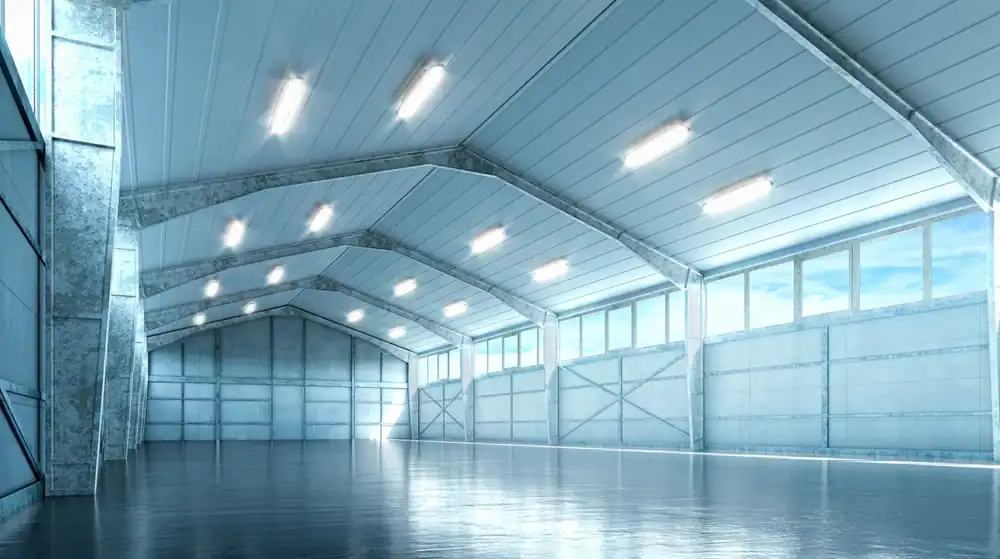
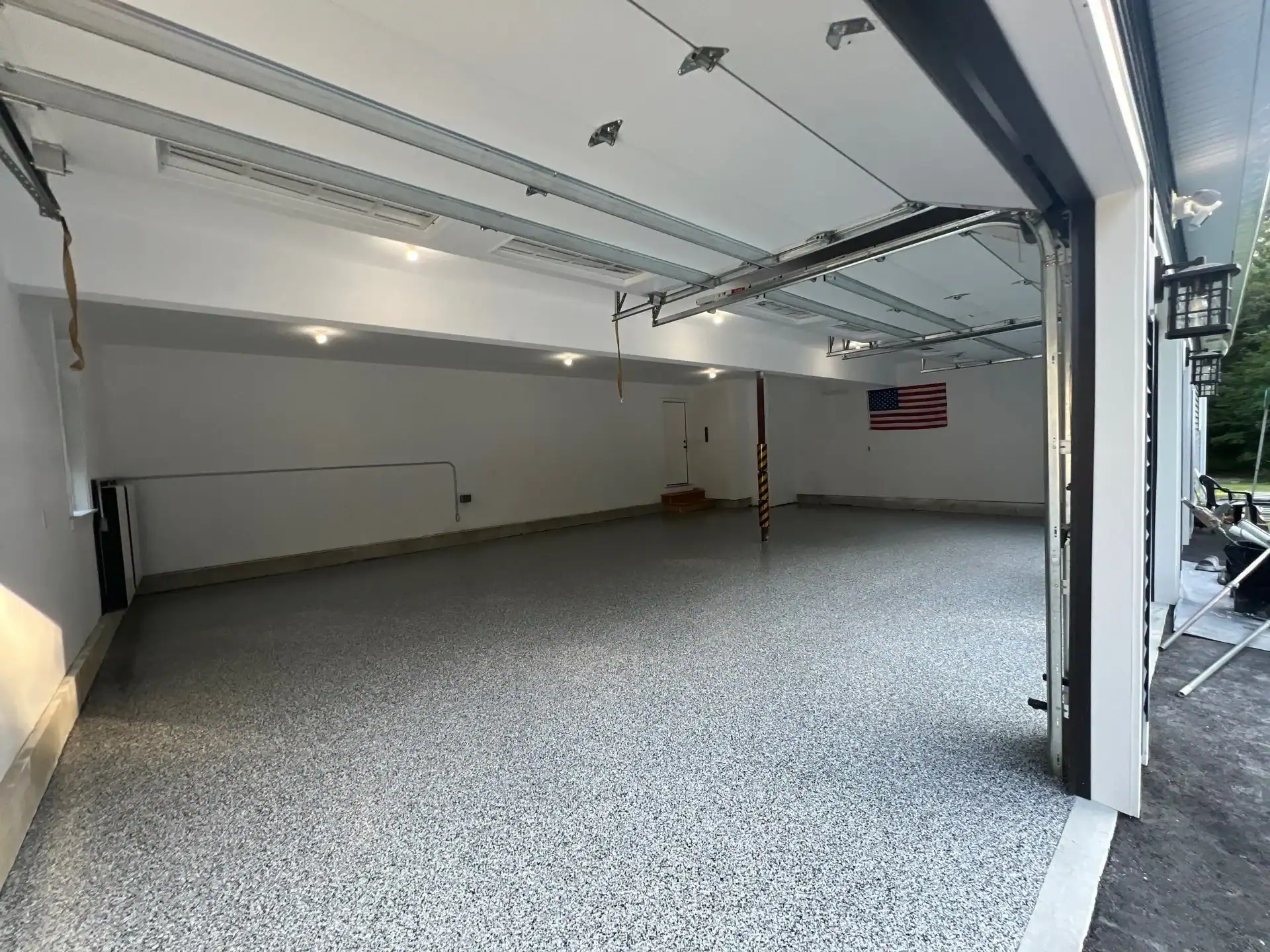
Epoxy garage flooring creates a hard, dense surface that resists just about everything your garage can throw at it. It’s chemical-resistant, so oil, gas, brake fluid, and road salt won’t stain or damage it. Spills sit on top and wipe away. It’s impact-resistant, meaning dropped tools or equipment won’t chip through the coating. And it handles hot tires without softening or peeling—a problem that plagues painted floors.
The non-porous surface is one of the biggest advantages. Nothing soaks in. Stains don’t happen because there’s nowhere for liquids to penetrate. This also makes cleaning incredibly easy—sweep up debris, mop with water or a mild cleaner, and you’re done. No special products needed, no babying the floor. For busy homeowners in New Haven County, Middlesex County, or Hartford County, that simplicity matters.
Durability-wise, you’re looking at 10 to 20 years for a professionally installed epoxy garage floor coating in a typical residential garage. Some systems last even longer, especially if you add a polyaspartic or polyurethane topcoat for extra UV resistance and flexibility. Compare that to repainting every two to three years, and the value proposition becomes pretty clear.
The coating also doesn’t fade or yellow the way some cheaper products do, assuming it’s installed with a UV-stable topcoat. It maintains its appearance and performance year after year. You’re not watching it slowly deteriorate. It just works, quietly doing its job in the background while you use your garage the way you actually want to use it—parking cars, working on projects, storing equipment—without worrying about damaging the floor.
Professional epoxy coating costs more upfront. You’re typically looking at $4 to $12 per square foot installed, which translates to around $1,600 to $6,900 for a standard two-car garage in Connecticut. That’s a real investment compared to a $100 paint kit from the hardware store.
But here’s where the math gets interesting. If you paint your floor and it lasts three years, you’ll repaint at least three or four times over the lifespan of a single epoxy installation. Each time you repaint, you’re spending money on materials, spending time on prep and application, and dealing with the hassle of clearing out your garage. Add up those costs and hours over 15 or 20 years, and the paint “savings” evaporate. You could easily spend $500 to $800 on paint alone, plus countless weekends of labor.
Epoxy also adds value to your home in a way that paint doesn’t. A professionally coated garage floor is a selling point, especially in markets like Hartford County, New London County, and New Haven County where buyers expect quality upgrades. It signals that the home has been maintained and upgraded thoughtfully. Buyers notice. Paint, on the other hand, is expected to need attention soon, so it doesn’t move the needle.
Then there’s the polyaspartic option, which we use as a topcoat or even a full system. Polyaspartic garage flooring cures faster than epoxy—often ready for light traffic in hours instead of days—resists UV damage better, and can be applied in a wider range of temperatures. That’s helpful in Connecticut’s variable climate where garage temperatures can swing significantly. It costs slightly more than standard epoxy, usually $5 to $12 per square foot, but it can last 15 to 30 years or more. For homeowners who want the absolute longest-lasting solution and don’t want to think about their garage floor again, polyaspartic makes sense. It’s not the cheapest option, but it’s the one that delivers the most value over time if you plan to stay in your home or want a true set-it-and-forget-it floor that handles Connecticut weather without flinching.
Garage floor painting and professional epoxy garage floor coating serve different purposes. Paint is a short-term fix that works if you need something quick and inexpensive and you’re okay with redoing it every few years. Epoxy is a long-term solution that costs more upfront but eliminates the maintenance cycle and gives you a floor that actually protects your concrete for decades.
For most Connecticut homeowners dealing with road salt, temperature swings, and daily use, epoxy or polyaspartic coating is the smarter move. You get 10 to 30 years of performance, easy maintenance, and a floor that looks good and works hard without constant attention. If you’re tired of dealing with stained, cracked concrete or paint that’s already failing, it’s worth having a conversation with us to see what a real coating system would look like in your space.
We specialize in high-performance epoxy and polyaspartic systems for garages, basements, and other concrete surfaces throughout Hartford County, New Haven County, New London County, and Middlesex County. If you’re ready to stop repainting and start protecting your garage floor for the long haul, reach out and let’s talk about what makes sense for your home.
Summary:
Article details:
Share: