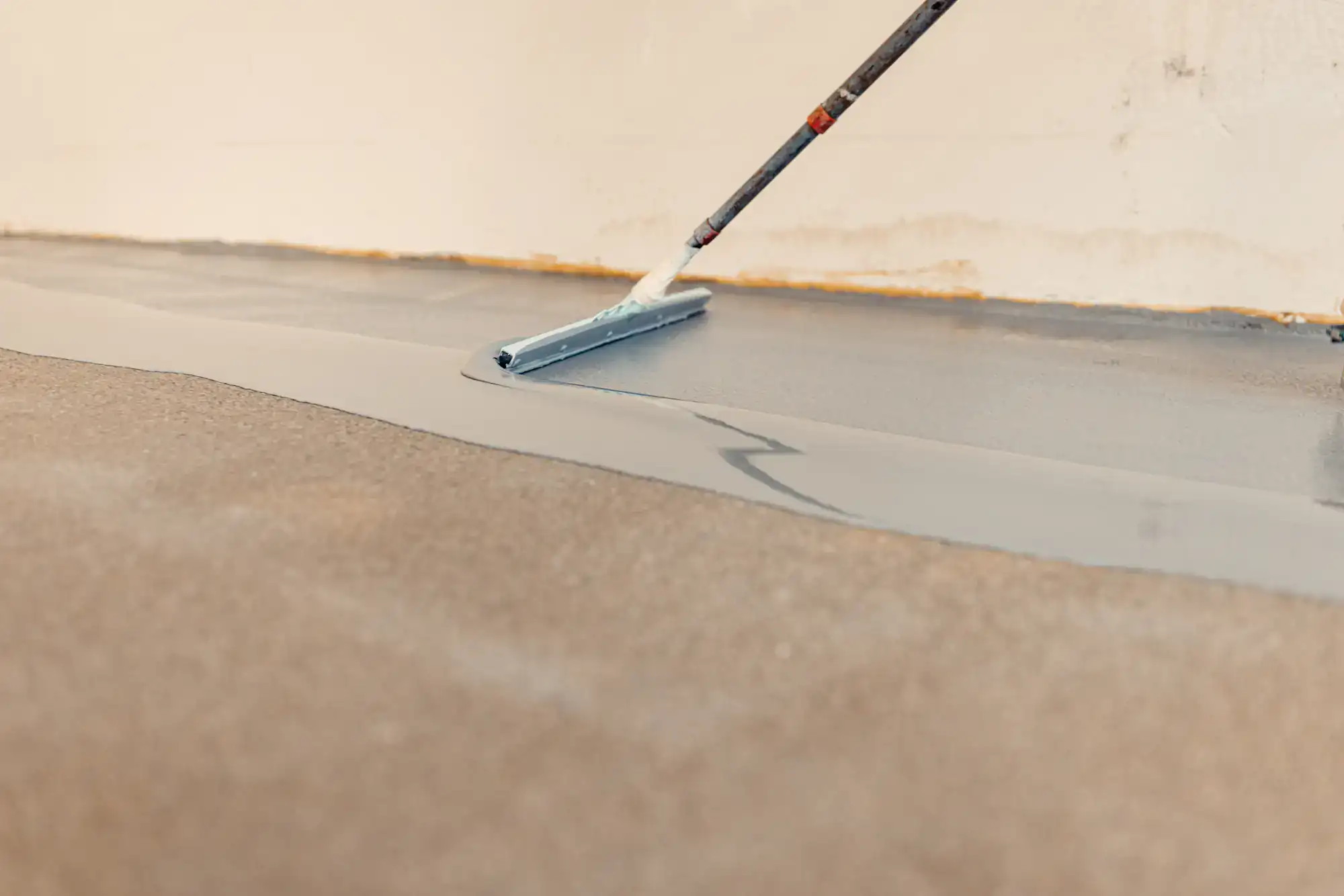
Cracked, stained garage floors hurt your home's value (and your soul). Discover how professional epoxy transforms Connecticut concrete into a surface so durable, you could practically host a gala on it.
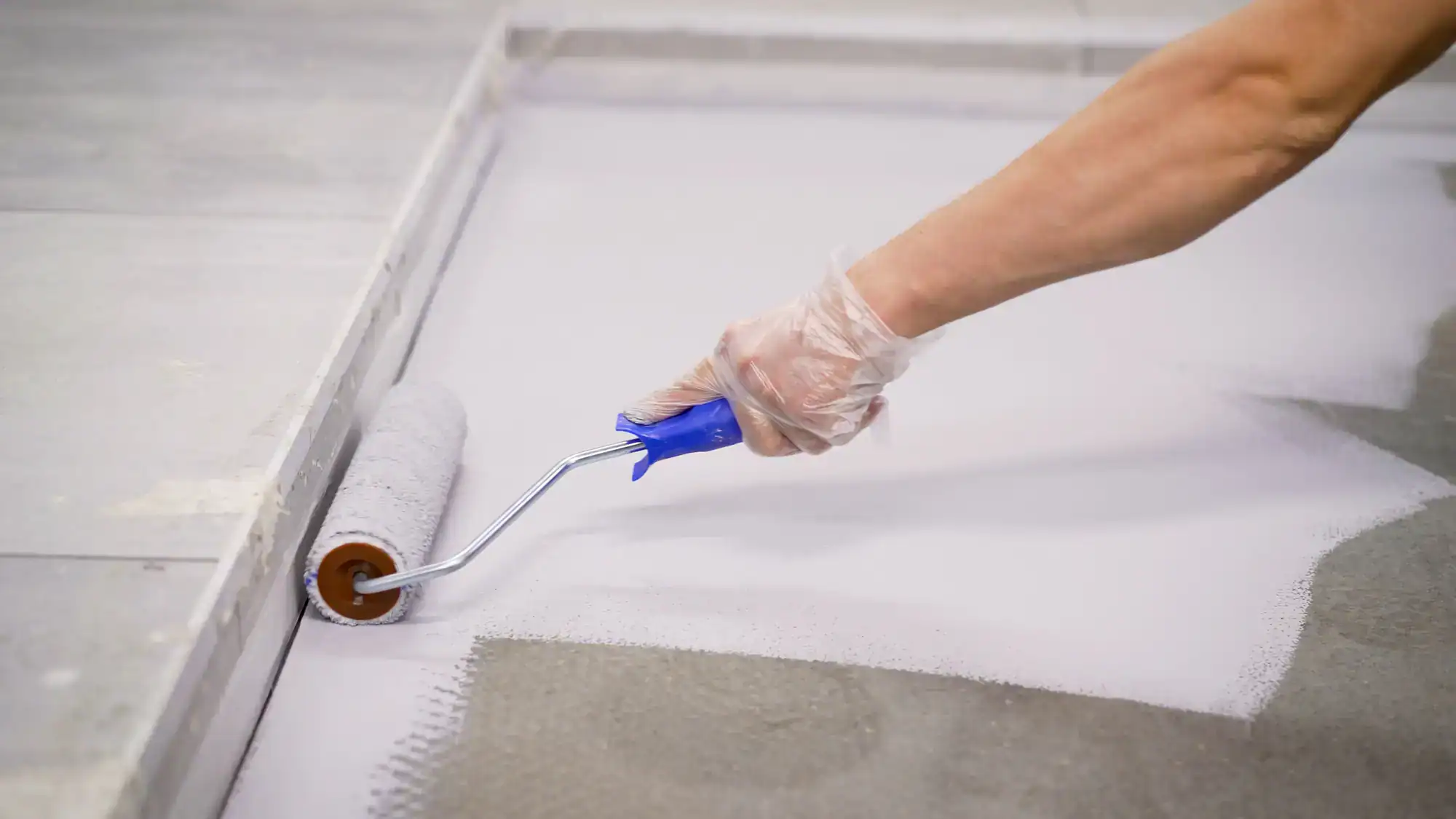
Most people ignore their garage floor until they realize their black shoes have turned gray just from walking to the trash can. That’s “concrete dusting,” and it’s your floor’s way of saying it’s tired of existing.
Your garage is the true “front door” for most Connecticut families. Whether it’s neighbors popping over or potential buyers squinting at your property value, that floor tells a story. A cracked, stained floor says, “I gave up in 1998.” A clean, finished epoxy floor says, “I have my life together and probably have a very organized spice rack.”
In Connecticut, unprotected concrete is basically a giant sponge for misery. Road salt and moisture are the ultimate “frenemies” of your slab, working together to turn your foundation into a crumbly mess. From Hartford to Middlesex, we’re seeing homeowners realize that a “bare” floor is really just an “unfinished” problem.
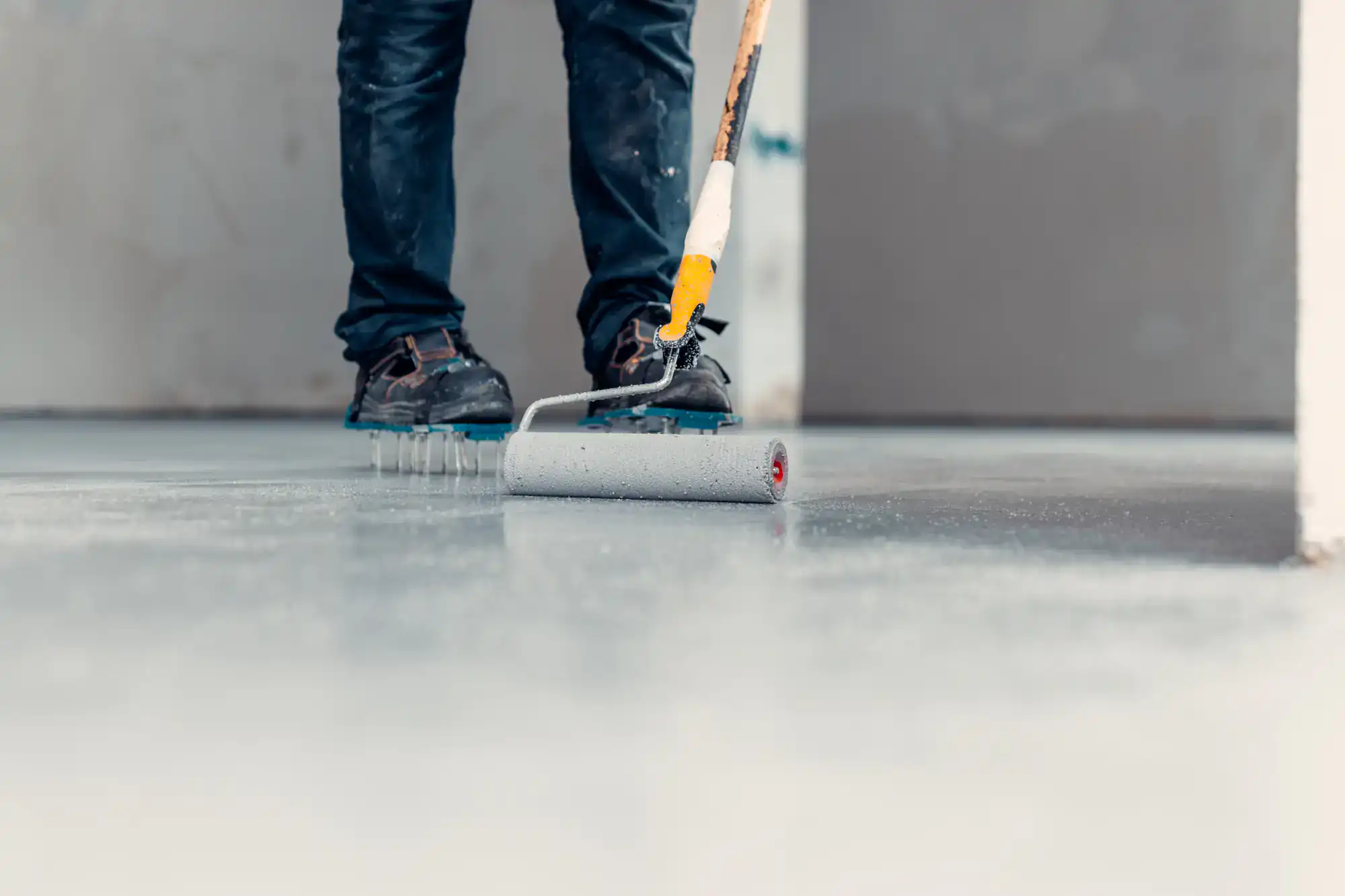
Bare concrete looks tough, but it’s actually as porous as a piece of artisan sourdough bread. It drinks up everything: motor oil, spilled fertilizer, and that nasty road salt brine your tires track in all winter. Once that stuff is in there, it’s not coming out without a fight (or a jackhammer).
The real villain is the freeze-thaw cycle. Water seeps into those pores, freezes overnight, expands like an over-ambitious balloon, and creates microscopic cracks. Do this 50 times a winter for ten years, and suddenly you’re dealing with “spalling”—where chunks of your floor start flaking off like a bad sunburn.
And let’s talk about that “magic” gray dust. It’s not dirt from outside; it’s your floor literally disintegrating. Every time you sweep, you’re just helping the floor disappear. If you’re in New Haven or New London County, you know the struggle is real. Every year you wait, the damage goes deeper, the cracks get wider, and the “to-do” list gets scarier.
A crusty garage floor costs you more than just aesthetics. It costs you time. Think of the hours spent scrubbing oil spots that have already moved in permanently.
Then there’s your “stuff.” Everything stored in a dusty garage—your tools, your holiday decorations, your mid-life crisis motorcycle—gets coated in that abrasive concrete powder. It’s like sandpaper for your belongings.
But the biggest hit is to your wallet during resale. Real estate pros will tell you: a finished garage is a “wow” factor. Stained, cracked floors signal “deferred maintenance,” which makes buyers wonder what else is broken. A professional epoxy floor can add $5,000 to $10,000 in perceived value. It turns a “utility room” into a “bonus room.” Regardless of if you want a home gym, a workshop, or just a place to park without cringing, a protected floor is the foundation of that dream.
Want live answers?
Connect with a American Poly Floor expert for fast, friendly support.
So, what is this “epoxy” wizardry? First off, it’s not paint. Calling epoxy “paint” is like calling a steak a “hamburger patty”—they might be related, but one is clearly superior. Paint just “sits” there, waiting for a hot tire to peel it off like a cheap sticker.
Epoxy is a two-part chemical marriage between resin and hardener. When they meet, they don’t just dry; they cure. This process creates a molecular bond with the concrete. When applied correctly, the epoxy becomes part of the floor itself, creating a shield that’s tougher than the concrete it’s protecting.
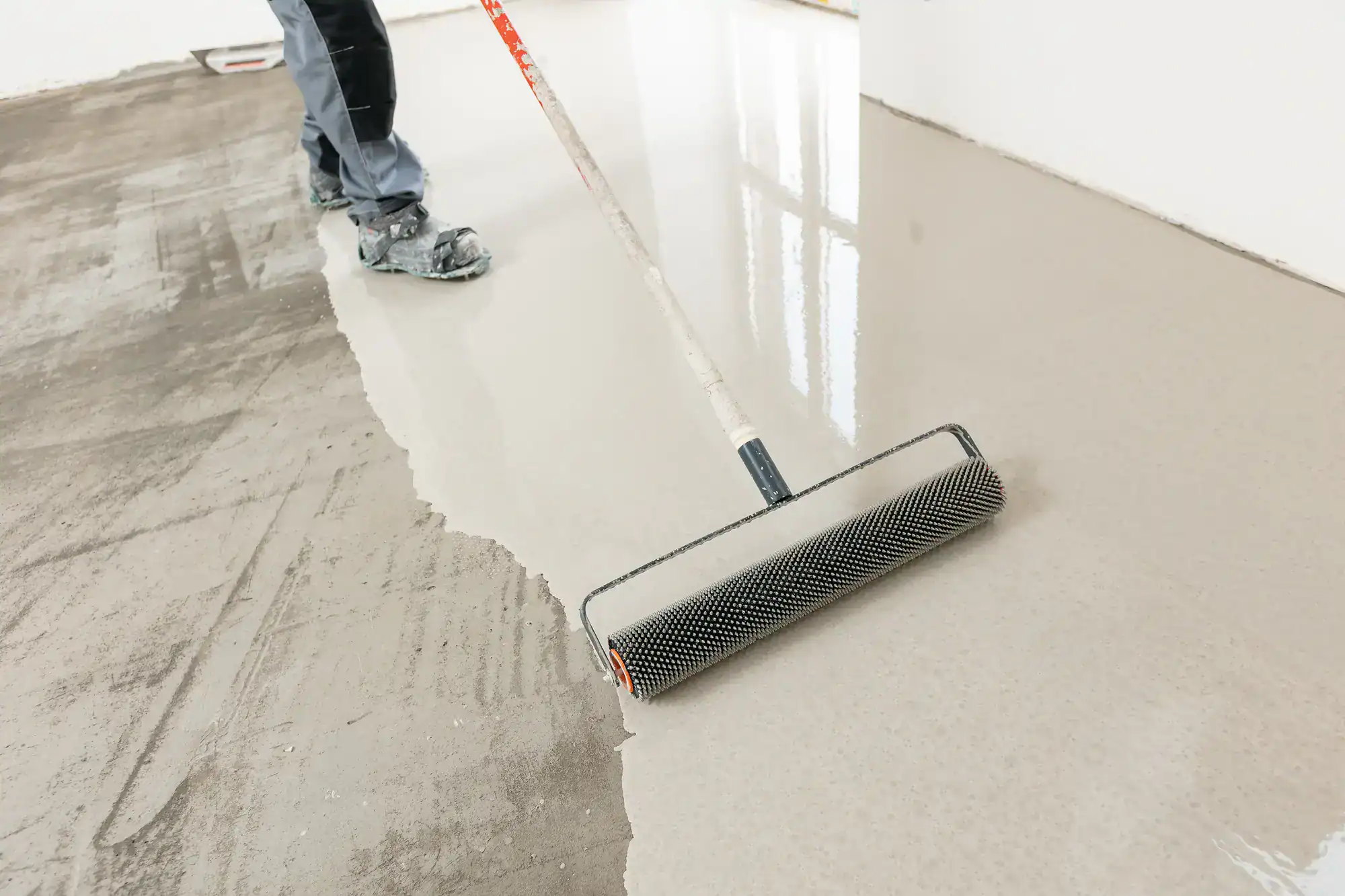
We get it. The $80 kit at the big-box store looks tempting. But those kits are usually water-based and about as thick as a coat of nail polish. Professional-grade “100% solids” epoxy is a different beast entirely. A DIY kit might last 3 years; a professional job lasts 20.
The secret sauce is the prep work. We don’t just “wash” the floor; we use industrial diamond grinders to shave off the top layer of concrete. This “opens the pores” so the epoxy can grab on for dear life. DIY acid etching is like trying to prep for a marathon by taking a brisk walk to the fridge—it just isn’t enough.
At American Poly Floor , serving Hartford and beyond since 2021, we handle the heavy lifting. We manage moisture (because wet concrete hates epoxy), we repair the cracks, and we apply a multi-layer system that includes a primer, a beefy base coat, decorative flakes, and a bulletproof topcoat. No more “hot tire pickup” where your floor decides to leave with your car.
Ready for the transformation? Here’s the play-by-play.
Day One: The “Loud and Dusty” part. We grind the floor to perfection. We have industrial vacuums, but it’s still a construction zone. We fix the cracks so your floor doesn’t look like a jigsaw puzzle, and then we lay the primer and base coat.
The “Confetti” Phase: If you chose a flake system, this is when we broadcast the decorative chips. It looks like a giant party happened in your garage. These flakes aren’t just for style; they hide imperfections and keep you from slipping when the floor is wet.
The Finish Line: We apply a high-performance topcoat (Polyaspartic or Polyurethane). This is the stuff that resists UV rays and chemicals. You can usually walk on it in 24 hours, and park your car on it in 48-72 hours.
The result? A floor that’s easier to clean than your kitchen counter. If you spill oil, you wipe it up with a paper towel. No stain, no scrubbing, no swearing.
Your garage floor doesn’t have to be a source of stress. It’s an asset waiting to happen. No matter if you’re in Hartford, New Haven, or Middlesex County, our mission is to kill the dust, hide the cracks, and give you a floor that lasts longer than your next three cars combined.
Don’t let another Connecticut winter eat your concrete alive. If you’re tired of the “Garage of Gloom,” let’s fix it. Get in touch with us for a free quote, and let’s turn that slab into something you’ll actually want to show off to the neighbors.
Summary:
Article details:
Share: