Industrial epoxy floors outperform bare concrete with superior abrasion resistance, chemical protection, and slip-resistant surfaces that last 15-20 years.
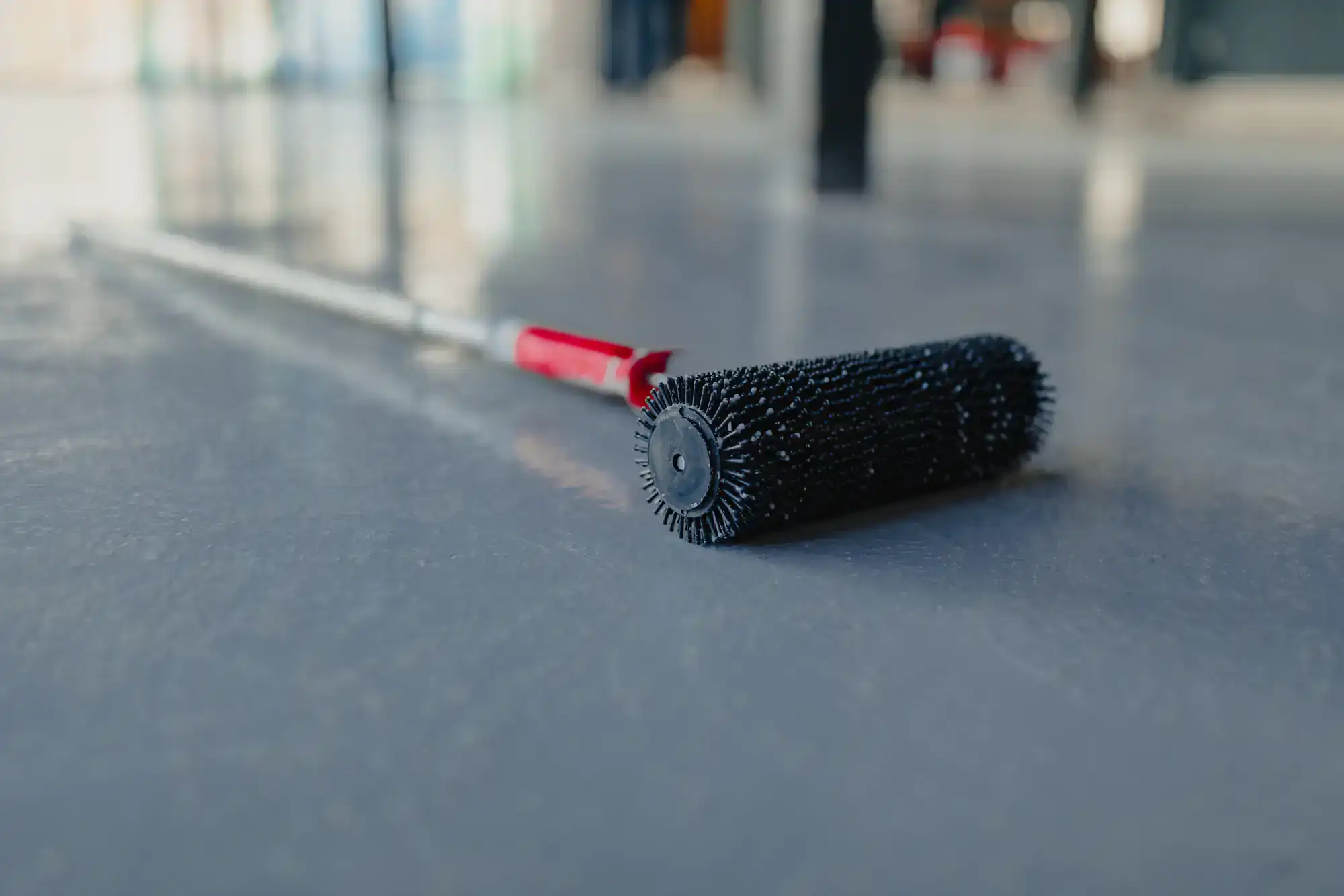
Concrete is strong under compression but vulnerable to surface wear, chemical attack, and moisture penetration. That’s the fundamental problem every facility manager faces.
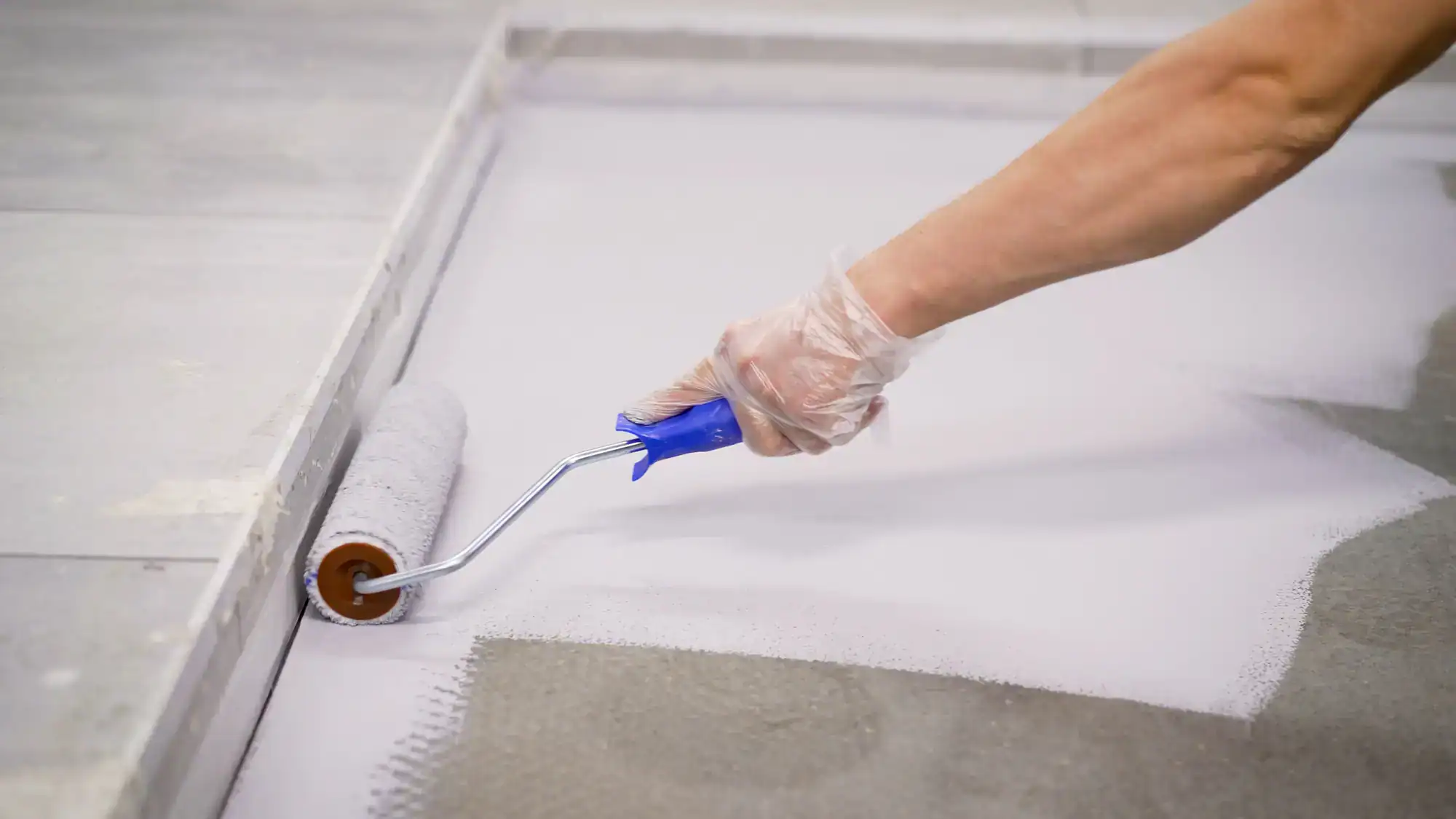
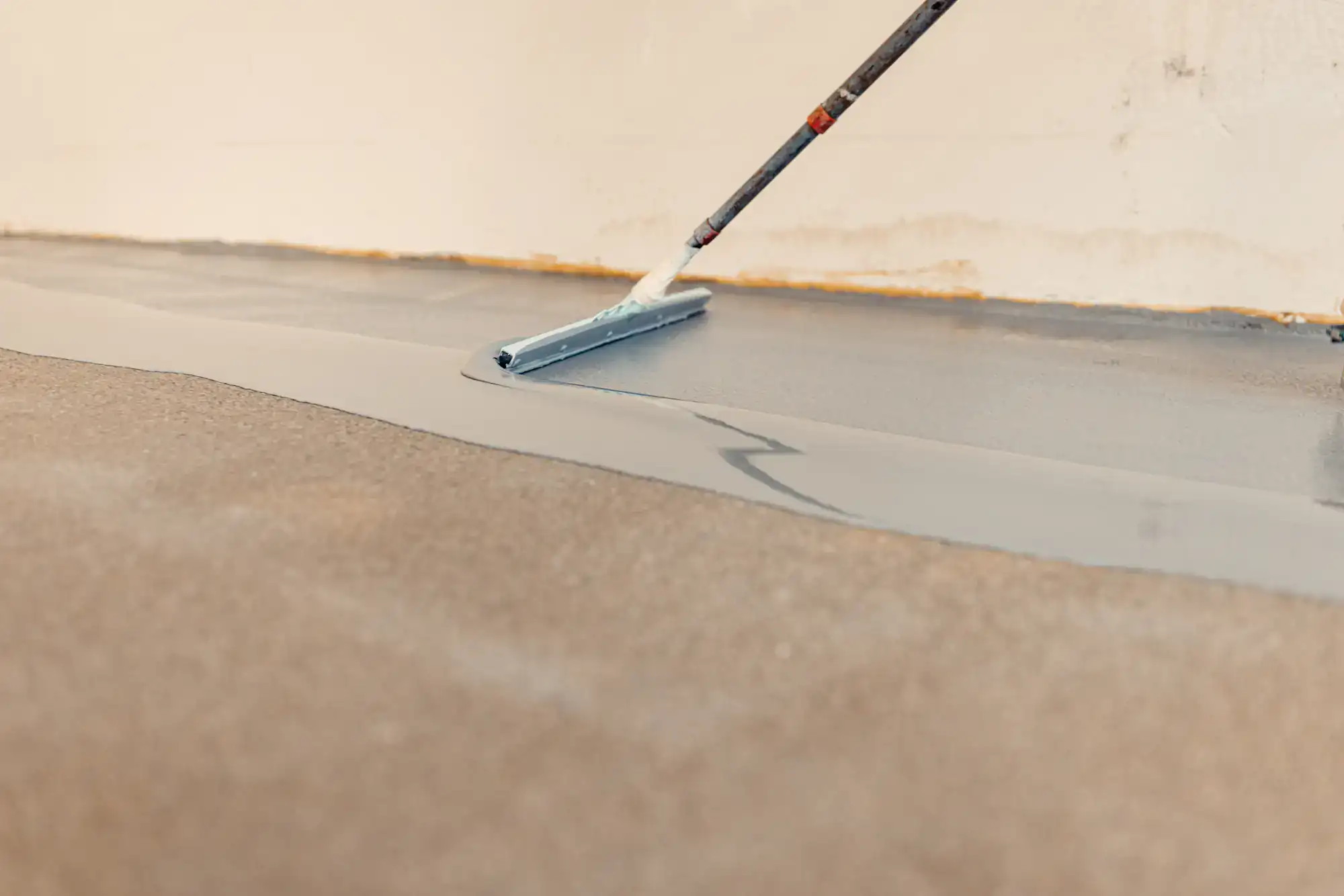
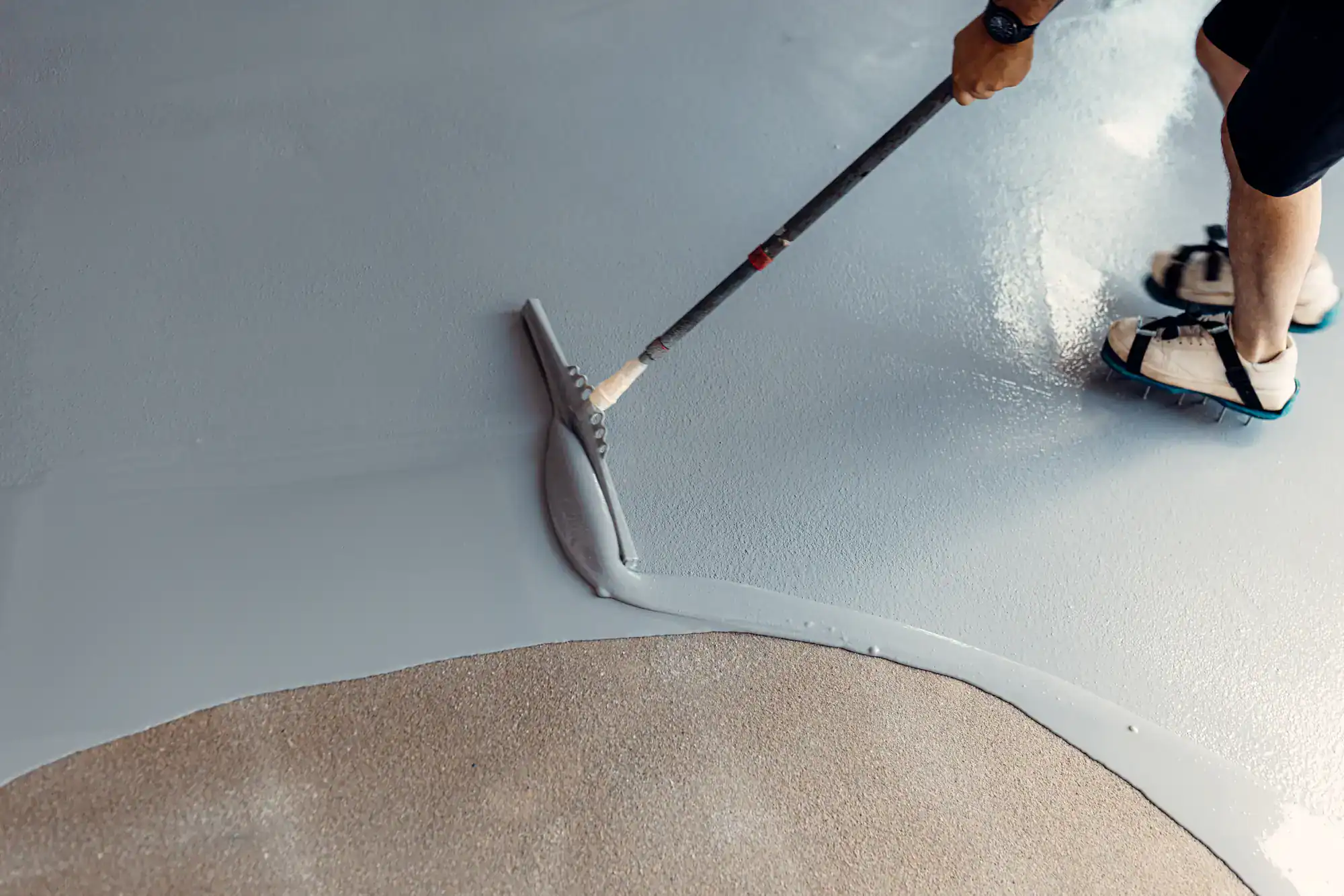
An epoxy flooring system bonds directly to prepared concrete, creating a seamless barrier that shields the substrate from everything your operations throw at it. The coating penetrates into the concrete pores during application, forming a chemical bond that’s stronger than the concrete itself. Once cured, you have a non-porous surface that resists abrasion, chemicals, moisture, and impact damage that would otherwise compromise bare concrete.
This isn’t cosmetic. Unprotected concrete in industrial environments develops cracks from tensile stress, absorbs oils and chemicals that weaken the matrix, and generates dust from surface degradation. Commercial epoxy flooring stops these processes before they start, which is why facilities across Connecticut that install quality systems see 15 to 20 years of service life instead of constant repair cycles.
Forklift traffic is one of the most demanding conditions any floor faces. Hard wheels, constant turning, point loads concentrated in small areas—it all adds up to serious abrasion over time. Bare concrete simply can’t handle it without degrading.
Commercial-grade epoxy systems are engineered with abrasion loss ratings as low as 8 milligrams, compared to 30+ milligrams for typical floor coatings. Lower numbers mean better resistance. That difference translates directly to how long your floor maintains its integrity under daily use. Military-grade topcoats and high-build systems ranging from 10 to 250 mils thick create a wear layer that absorbs punishment without exposing the concrete beneath.
In warehouses and distribution centers across Hartford County, CT and Middlesex County, CT, this matters because floor failure doesn’t just mean aesthetic problems. Worn-through coatings expose concrete to moisture and chemical penetration. Rough, degraded surfaces increase forklift maintenance costs and create trip hazards. A proper industrial epoxy floor eliminates those concerns by maintaining a smooth, intact surface that supports your material handling equipment year after year.
The thickness and formulation make the difference. Water-based DIY kits from big-box stores cure at 3 to 4 mils—thinner than a sheet of paper. They can’t handle commercial traffic. Professional epoxy flooring systems deliver 14 to 30+ mils of protection, with primer, base coat, and topcoat layers working together to distribute loads and resist wear. That’s why facilities spec industrial epoxy floors for spaces where operations can’t afford downtime from premature floor failure.
Think about what happens when concrete wears down. You get dust that settles on products. Uneven surfaces that damage forklift wheels and suspensions. Cracks that propagate and require expensive repairs. Commercial epoxy flooring prevents all of that by creating a hardened surface that’s 4 to 5 times more durable than bare concrete—10,000 PSI versus 5,000 PSI compressive strength.
Manufacturing floors see exposure that bare concrete can’t handle. Hydraulic fluids. Cutting oils. Solvents. Acids. Alkalis. These substances penetrate unprotected concrete, causing staining, weakening, and eventual structural damage that compromises your facility.
Epoxy flooring systems create a chemical barrier that prevents penetration. Properly formulated coatings resist common industrial chemicals including motor oils, cleaners, ammonia, and even harsher substances like nitric acid and hydrogen peroxide. For service bays and commercial garages, this means brake cleaner spray, transmission fluid spills, and battery acid drips won’t eat through your floor. In food processing or pharmaceutical manufacturing, chemical-resistant floors support washdown procedures and sanitation protocols without degrading.
The key is matching the system to your exposure. Standard epoxy handles most oils and mild chemicals. Heavy chemical environments benefit from urethane topcoats or specialized novolac epoxy formulations that offer enhanced resistance. This is where working with experienced contractors matters—we assess your actual conditions and specify the right chemistry for your application.
Connecticut facilities dealing with winter road salt tracked in by vehicles also benefit from this protection. Salt accelerates concrete deterioration through freeze-thaw cycles and chemical attack. An epoxy floor barrier stops salt penetration, preventing the spalling and surface damage common in unprotected commercial garages and loading docks throughout New Haven County, CT and New London County, CT.
Chemical resistance also simplifies cleanup. Spills that would permanently stain bare concrete wipe away easily from epoxy’s non-porous surface. That reduces labor, prevents contamination of stored products, and maintains a professional appearance. For facilities with strict cleanliness requirements—whether you’re storing sensitive electronics in a warehouse or maintaining food-grade standards in a processing plant—this advantage alone justifies the investment in commercial epoxy flooring.
Want live answers?
Connect with a American Poly Floor expert for fast, friendly support.
Workplace safety isn’t optional, and your floor plays a bigger role than you might think. Slip-and-fall accidents cost businesses thousands in workers’ compensation claims, lost productivity, and potential OSHA violations.
Industrial epoxy flooring addresses this directly through customizable slip resistance. During installation, we can incorporate textured aggregates—aluminum oxide, quartz sand, or silica—into the coating to create a surface that provides traction even when wet or contaminated with oils. OSHA sets a minimum dynamic coefficient of friction of 0.42 for wet conditions; properly designed slip-resistant epoxy systems exceed 0.6, reducing accident risk by up to 60%.
This matters in any environment where moisture, oils, or cleaning procedures create slippery conditions. Manufacturing washdown areas, commercial kitchen floors, service bay work zones—these spaces need reliable traction to protect workers and maintain compliance.
OSHA regulations require employers to provide walking and working surfaces free from recognized hazards. Damaged, uneven, or slippery floors create liability exposure and potential citations that cost thousands of dollars per violation—money that comes straight from your bottom line.
Epoxy flooring helps facilities meet these standards in multiple ways. Slip-resistant formulations address traction requirements in wet or oily areas. Seamless surfaces eliminate trip hazards from cracked or spalled concrete. Color-coded zones and line striping integrated into the floor system improve traffic flow and hazard awareness—bright visual cues direct foot and vehicle traffic away from high-risk areas, reducing accidents before they happen.
For warehouses in Hartford County, CT and manufacturing plants in Middlesex County, CT, this means fewer incidents and better compliance during safety inspections. The floor becomes part of your safety program rather than a source of violations. Properly maintained epoxy systems demonstrate your commitment to providing a safe work environment, which matters to employees, insurance carriers, and regulatory auditors who evaluate your facility.
Beyond slip resistance, industrial epoxy floors reduce other hazards. Concrete dusting—the fine powder generated by bare concrete degradation—creates respiratory issues and contamination problems. Epoxy’s sealed surface eliminates dusting entirely, improving air quality and reducing cleanup requirements. For facilities handling sensitive products or operating in regulated industries, this benefit supports both safety and quality control objectives.
The seamless nature of epoxy flooring also prevents bacterial growth in the joints and cracks where traditional flooring harbors contaminants. This is why epoxy systems are approved by USDA for use in food processing facilities and healthcare environments where hygiene is critical. The non-porous surface can be cleaned with harsh disinfectants without degrading, maintaining a 100% germ-free environment.
Regular inspections ensure your floor maintains its safety properties over time. While epoxy is durable, high-traffic areas may eventually show wear. Identifying and addressing these spots before they become hazards keeps your facility compliant and your workers safe. We can assess floor condition and recommend maintenance or recoating schedules that maintain performance without major disruption.
The economics of epoxy flooring become clear when you compare total cost of ownership against alternatives. Bare concrete requires constant maintenance—sealing, crack repair, joint filling, and eventual replacement. Basic floor paints wear through in months under commercial traffic. Tile and other traditional flooring materials crack, require grout maintenance, and fail under heavy loads.
Industrial epoxy floors installed correctly deliver 15 to 20 years of service with minimal maintenance. That’s not marketing—it’s the result of proper surface preparation, quality materials, and professional installation. The upfront investment is higher than a DIY coating, but you’re not replacing or repairing the floor every few years. You’re making one investment that protects your concrete and supports your operations for decades.
Maintenance requirements are straightforward. Sweep or blow out debris regularly. Mop with pH-neutral cleaners when needed. That’s it. No waxing, no special treatments, no expensive maintenance contracts. The non-porous surface resists stains, so spills wipe up easily before they become permanent problems. For busy facilities in New Haven County, CT and New London County, CT where labor costs matter, this simplicity translates directly to savings you can measure.
Durability also means fewer operational disruptions. Concrete repair projects shut down work zones for days while patches cure and coatings dry. Epoxy flooring installation happens quickly—most commercial systems cure enough for light traffic within 24 hours and full service in 48 hours. Once installed, the floor stays in service year after year without the downtime associated with ongoing concrete maintenance.
Consider the alternative costs. Replacing failed concrete sections runs $8 to $18 per square foot just for labor, plus materials and lost productivity while that section is offline. Constant crack repairs, joint maintenance, and surface treatments add up over time. A quality epoxy flooring system costs $5 to $8 per square foot installed and eliminates most of those recurring expenses. The ROI becomes obvious within the first few years when you’re not calling contractors for emergency repairs.
For commercial garages and fleet service depots, epoxy garage floors also protect against hot tire pickup—the phenomenon where fresh asphalt or rubber deposits transfer to floor surfaces. This keeps your garage floor looking professional and prevents the sticky residue that accumulates on unprotected concrete. Combined with resistance to automotive fluids and road salt, epoxy creates a low-maintenance surface that handles everything vehicle service operations demand without constant attention.
The increased light reflectivity—up to 300% improvement over bare concrete—also reduces lighting costs. Brighter workspaces mean you can reduce wattage or number of fixtures while maintaining visibility, cutting electricity bills month after month. That’s another cost savings that compounds over the life of your epoxy finish garage floor.
Not all epoxy systems are created equal, and matching the right solution to your specific conditions determines whether you get 20 years of performance or premature failure that costs you twice.
Your floor needs depend on traffic type, chemical exposure, moisture conditions, and operational requirements. Warehouses need abrasion resistance and smooth surfaces for material handling equipment. Manufacturing facilities require chemical resistance and easy cleanup for production environments. Commercial garages benefit from hot tire resistance and fast cure times that minimize downtime. Working with experienced contractors who understand these differences ensures you get a system engineered for your application, not a one-size-fits-all product that fails under your conditions.
For commercial buildings throughout Hartford County, CT, New Haven County, CT, New London County, CT, and Middlesex County, CT, industrial epoxy flooring delivers measurable advantages in safety, durability, and cost-effectiveness. The investment protects your concrete, reduces maintenance burdens, and supports efficient operations for years to come. When you’re ready to upgrade your facility’s flooring, we at American Poly Floor specialize in resinous floor systems designed for demanding commercial and industrial environments across Connecticut.
Summary:
Article details:
Share: