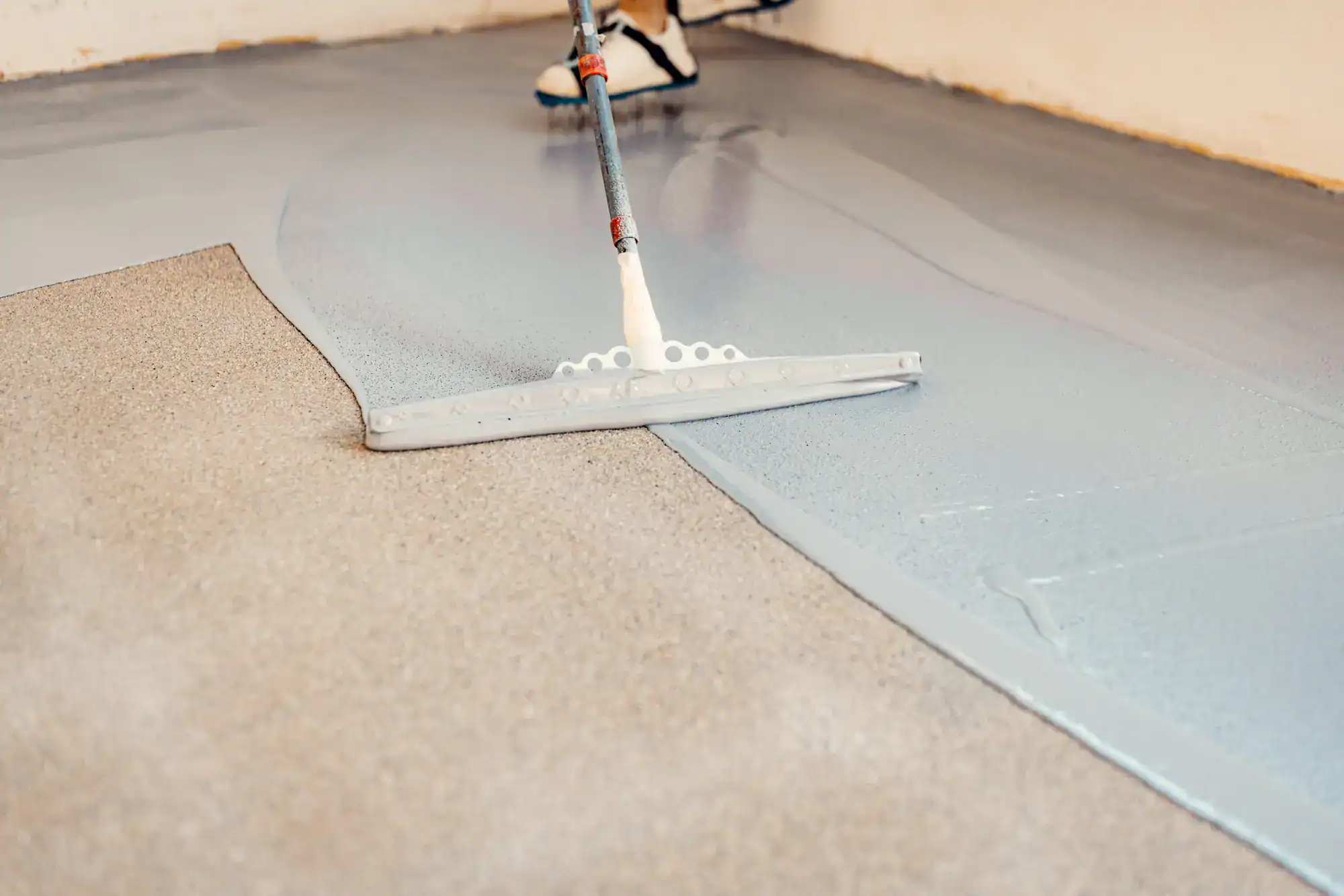
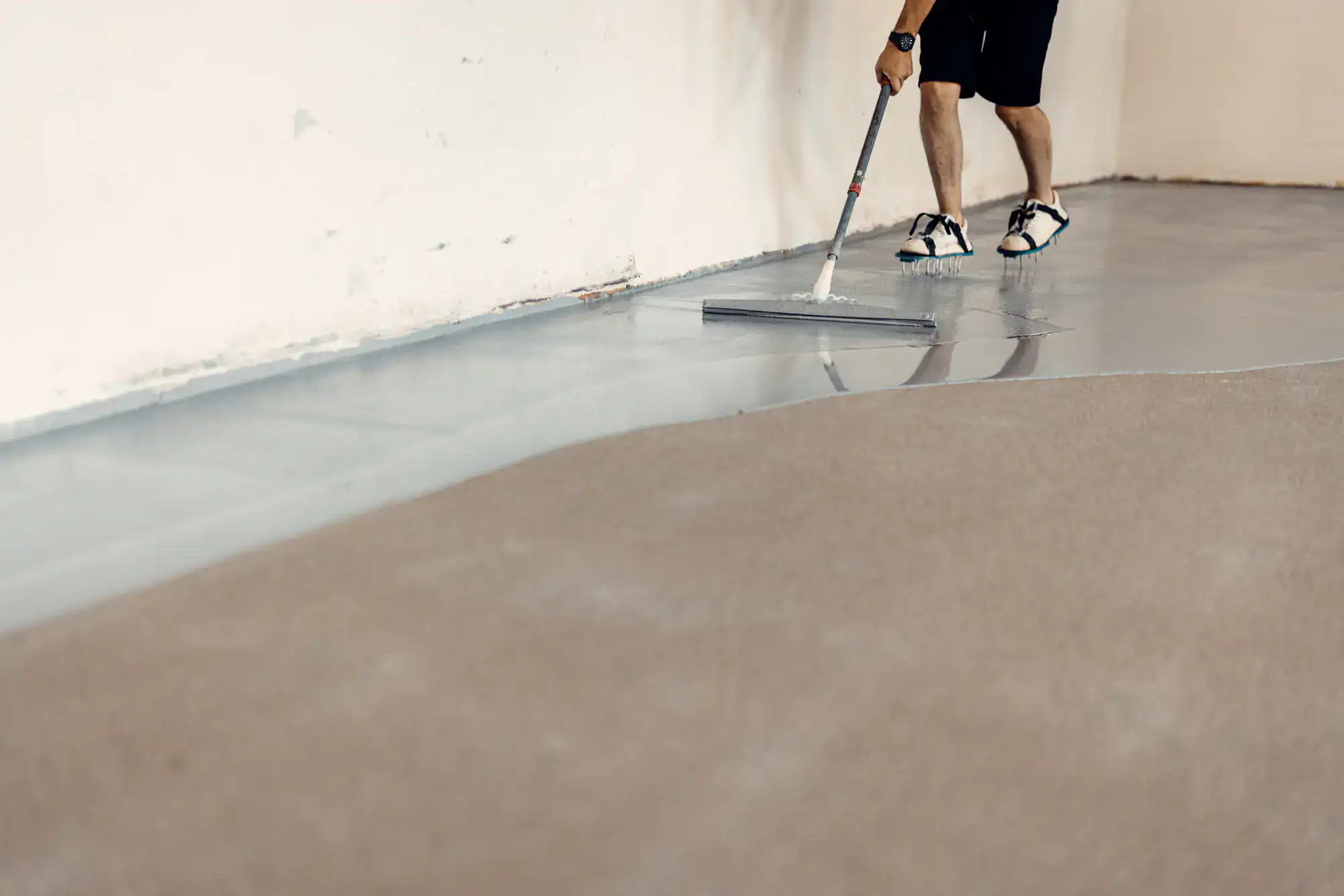
Your garage doesn’t have to be the forgotten space in your home anymore. When we finish your epoxy garage floor in Moodus, you’ll have a surface that’s not just functional—it’s impressive.
No more oil stains that won’t come out. No more concrete dust tracking through your house. No more avoiding your garage because it looks like a construction zone.
Instead, you get a floor that’s easy to clean with just soap and water, resistant to everything your garage throws at it, and looks so good your neighbors will ask who did the work.
We’ve been transforming Connecticut garages since we opened our doors at American Poly Floor. We’re veteran-owned, locally operated, and we’ve seen what happens when garage floors are done wrong.
That’s exactly why we do things differently. Every project starts with proper moisture evaluation and surface preparation—the step that 80% of failed floors skip. We use commercial-grade materials, not the stuff you find at big box stores.
Moodus homeowners choose us because we show up when we say we will, work around your family’s schedule, and stand behind every square foot we install.
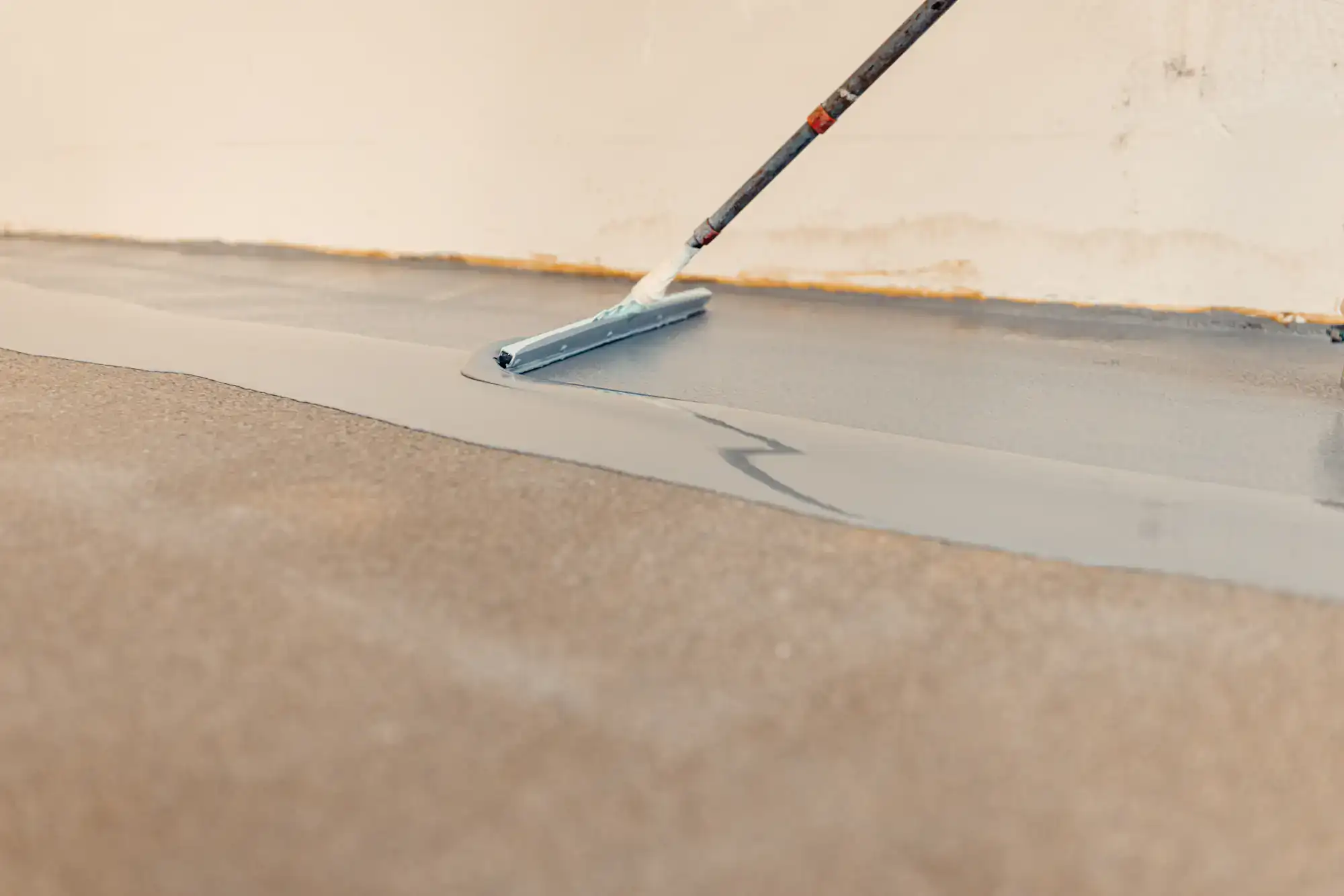
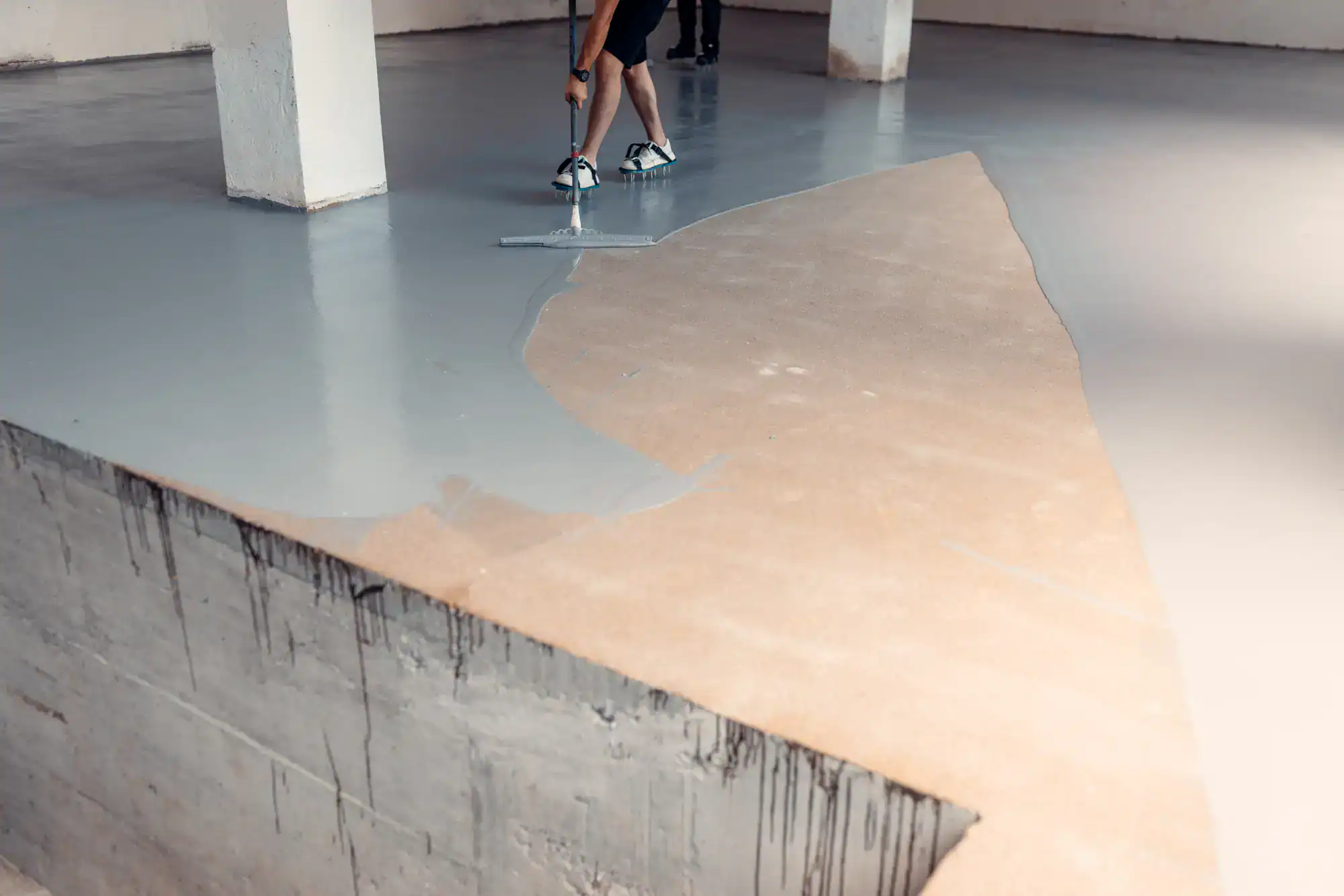
We start with a moisture evaluation of your concrete—something most contractors skip but accounts for most floor failures. Then comes proper surface preparation using diamond grinding equipment to create the profile your epoxy needs to bond permanently.
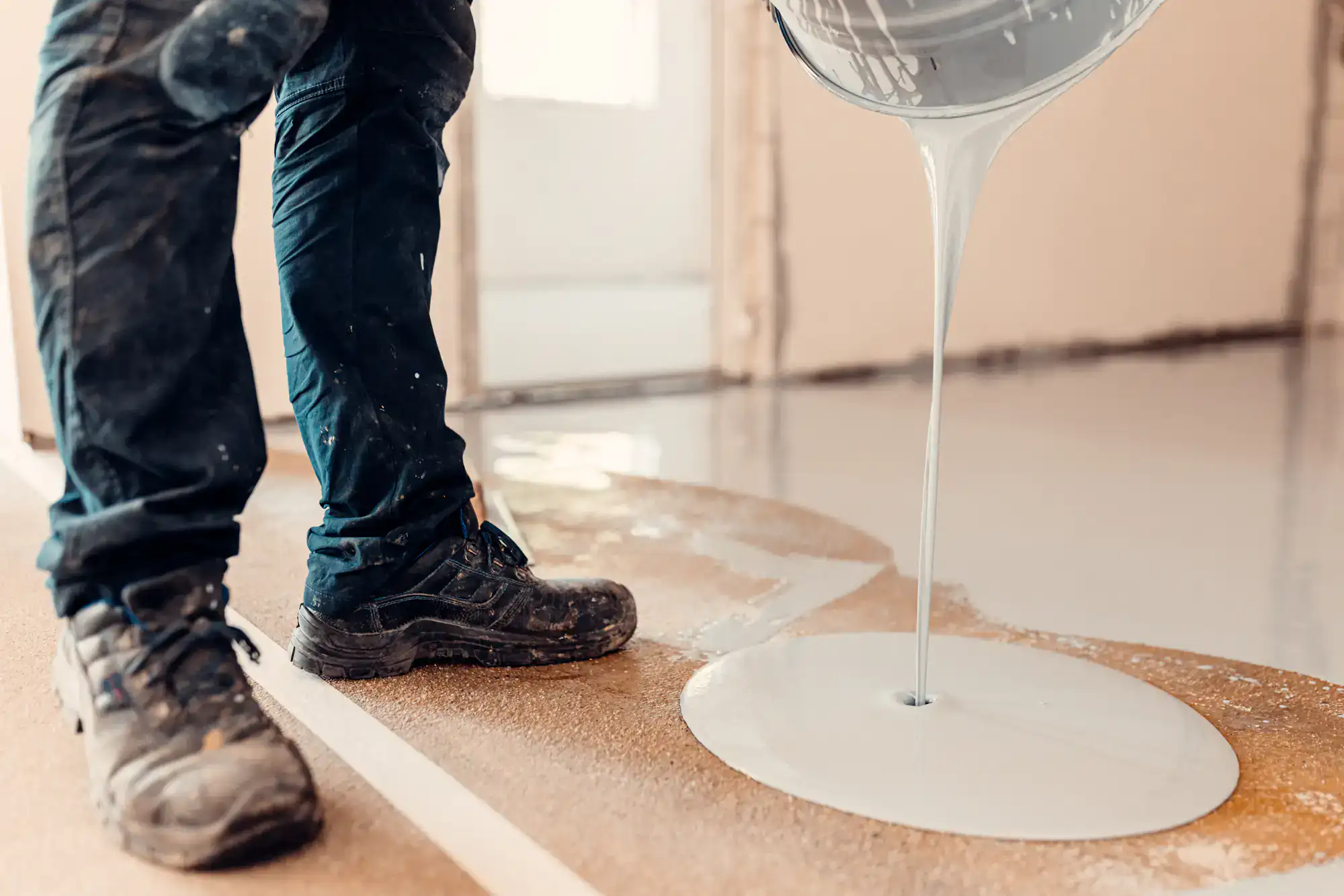
Next, we repair any cracks or spalls before applying our primer system. We select build coats based on your garage’s specific traffic patterns and temperature conditions. Decorative options like color flakes are reviewed against your budget so style and cost align perfectly.
Our polyaspartic topcoats cure faster than traditional epoxy and offer superior UV stability. We sequence the work to minimize disruption to your routine, often completing installation in tightly scheduled phases with exact return-to-service times communicated upfront.
Ready to get started?
Connecticut’s freeze-thaw cycles are brutal on concrete, but our epoxy systems are engineered for exactly these conditions. We use moisture-tolerant primers that work even when humidity levels fluctuate with the seasons.
Your Moodus garage faces unique challenges—from road salt tracked in during winter to the high humidity of summer months. Our coating systems resist chemical damage from deicing salts while maintaining their bond through temperature swings that would crack inferior products.
We also understand that many Moodus homes were built before modern vapor barriers were standard. That’s why moisture evaluation isn’t optional for us—it’s the foundation of every successful installation. When other contractors guess, we test.
With proper installation and quality materials, your epoxy garage floor should last 15-20 years in Connecticut’s climate. The key is starting with the right surface preparation and using commercial-grade products designed for temperature fluctuations.
Many homeowners see failures in 2-3 years, but that’s almost always due to moisture issues or inadequate surface prep. We test every floor for moisture and use diamond grinding to create the proper concrete profile. This isn’t optional—it’s what separates floors that last from floors that fail.
Connecticut’s freeze-thaw cycles and road salt can be tough on any floor coating, which is why we use polyaspartic topcoats that offer superior chemical resistance and UV stability compared to standard epoxy.
The difference is dramatic, and it starts with surface preparation. DIY kits include weak citric acid etching solutions that barely scratch the surface. We use diamond grinding equipment to create the mechanical profile epoxy needs for permanent adhesion.
Store-bought kits are typically water-based with lower solids content, resulting in thinner coatings that don’t adhere as well. Professional systems use 100% solids epoxy that cures to a much thicker, more durable finish.
Most importantly, DIY installations skip moisture testing entirely. Since moisture issues cause 80% of epoxy failures, you’re essentially gambling with a floor that might peel within months. We evaluate every concrete slab before we start work.
It depends on what caused the stains and how deep they penetrate. Oil and grease stains must be completely removed before epoxy application, or the coating will fail to adhere properly in those areas.
We use industrial degreasers and mechanical preparation to remove contamination that’s invisible to the naked eye. Even residue you can’t see will prevent proper bonding and cause coating failure down the road.
For stubborn stains that have penetrated deeply into the concrete, we may need to use specialized primers or mechanical grinding to reach clean concrete. This is why proper evaluation is crucial—what looks like a simple stain might require extensive preparation to ensure long-term success.
Moisture is the silent killer of garage floor coatings, especially in older Moodus homes built without vapor barriers. We start every project with moisture testing using plastic sheet tests and calcium chloride moisture meters.
If we detect excessive moisture vapor transmission, we have several solutions. Moisture-tolerant primers can handle moderate levels, while severe cases might require specialized breathable systems or moisture mitigation treatments applied to the concrete first.
The key is identifying moisture issues before installation, not after your floor starts bubbling. Many contractors skip this step entirely, which is why so many epoxy floors fail within the first year. We’d rather delay a project to address moisture properly than install a floor that’s destined to fail.
Properly installed epoxy floors require minimal maintenance, which is one of their biggest advantages. Regular sweeping and occasional mopping with mild soap and water is typically all you need.
For tougher stains, you can use a garden hose or pressure washer without worry—the coating is completely waterproof. Avoid harsh chemicals like paint thinners or acetone, which can dull the surface over time, though they won’t damage the structural integrity.
The non-porous surface means spills stay on top rather than soaking in, making cleanup simple. Oil, antifreeze, and other automotive fluids wipe up easily. Most homeowners find their garage stays cleaner overall because the smooth surface doesn’t trap dirt and dust like bare concrete.
The vast majority of epoxy failures come down to three issues: inadequate surface preparation, moisture problems, or using inferior materials. Proper surface preparation accounts for about 80% of long-term success, but it’s the step most often skipped or done incorrectly.
Many contractors use acid etching instead of mechanical grinding, which doesn’t create sufficient surface profile for strong adhesion. Others skip moisture testing entirely, installing over concrete that’s still releasing water vapor that will eventually lift the coating.
DIY kits compound these problems by using water-based formulations with lower solids content and weak etching solutions. When you combine poor materials with inadequate preparation, failure is almost inevitable. That’s why we use commercial-grade products and never skip the prep work—it’s the foundation of everything else.
Local Resources
Other Services we provide in Moodus