You sweep your garage and the dust comes back the next day. You park in the same spot and oil stains keep spreading. You tried a DIY kit or painted floor and it peeled under your tires within a year.
That’s what happens when concrete isn’t properly sealed or when coatings aren’t designed to handle real use. The slab keeps breaking down at the surface. Spills bond to bare concrete. Thin coatings lift when tires heat them up.
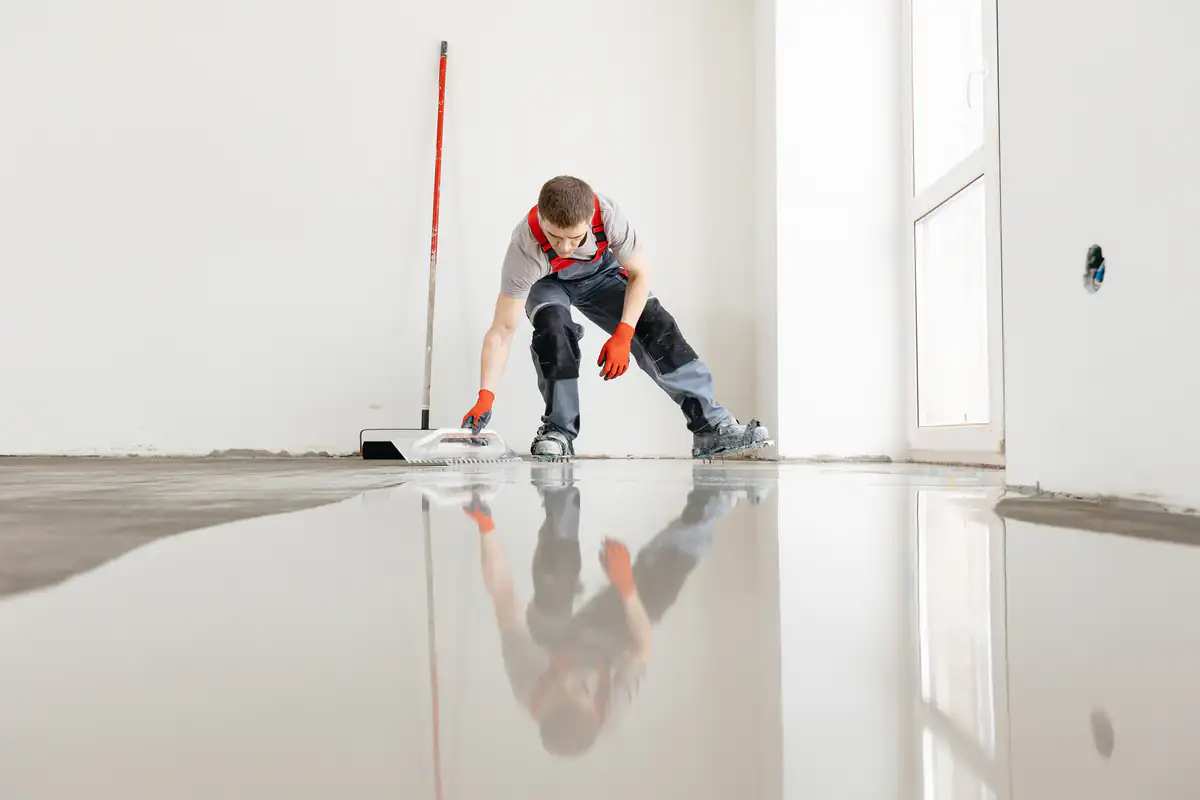
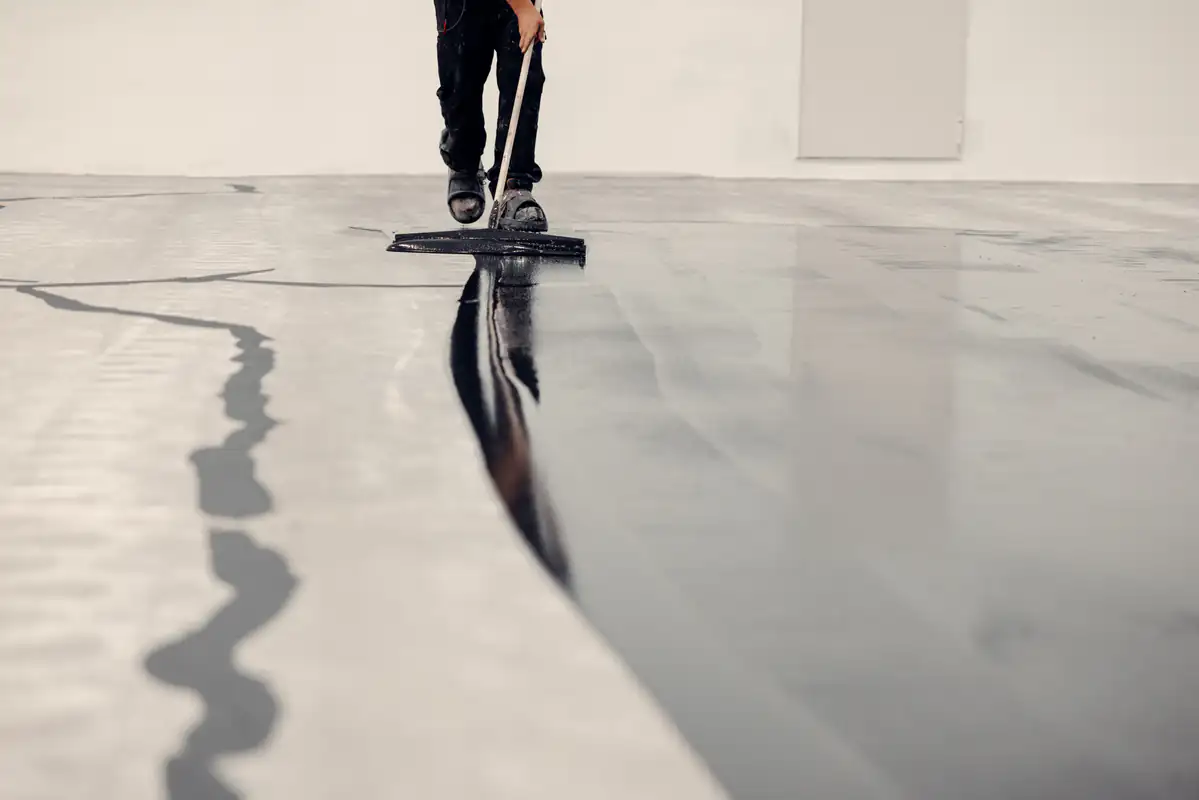
A professional epoxy flooring system stops all of that. The concrete gets mechanically ground so the coating actually bonds. Multiple layers seal the surface completely, so dust stops forming and spills wipe up instead of soaking in. You can hose it down, squeegee it dry, and move on with your day.
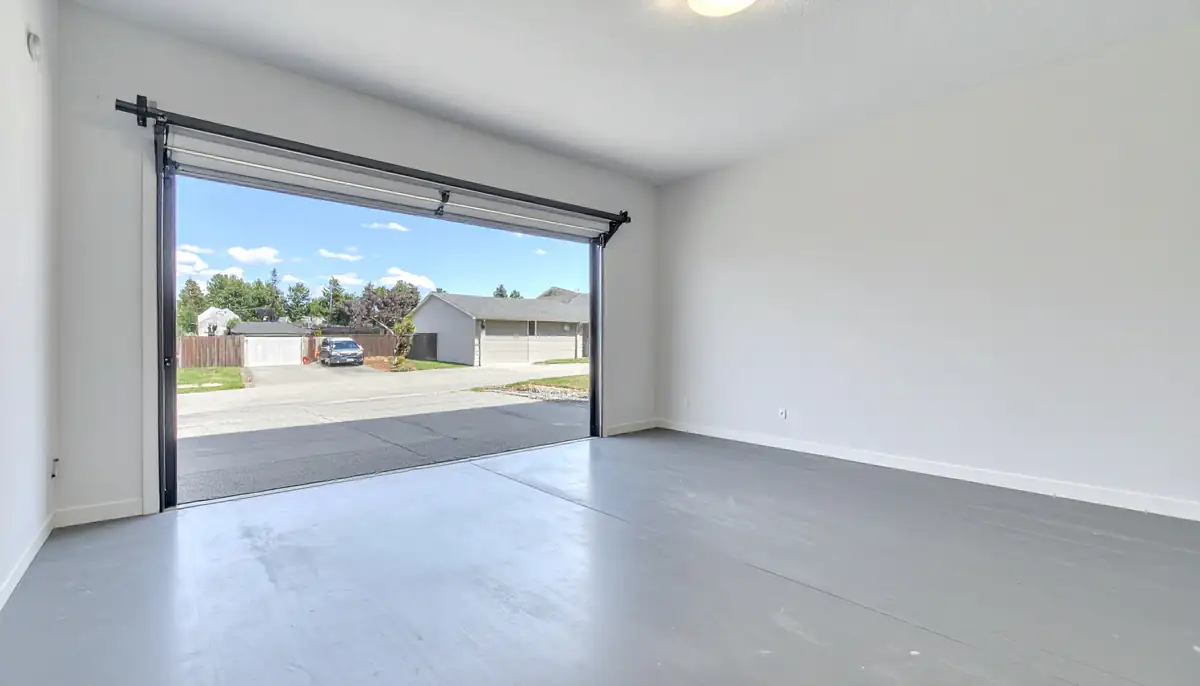
Your garage stops looking like the neglected part of your home. You stop tracking dust inside. And you stop wondering if this floor is ever going to hold up, because it already is.
American Poly Floor is a veteran-owned business based in East Hartford, serving homeowners and businesses throughout Connecticut since 2020. We’re not a franchise or a national chain. We’re two lifelong friends who started this company during COVID and built it on quality work and straight answers.
Dave’s a former U.S. Marine. Craig handles the business side. We both know what it’s like to deal with contractors who overpromise and underdeliver, so we don’t operate that way.
Poquonock Bridge homeowners deal with the same concrete issues you see across New London County: humidity that accelerates slab breakdown, salt and chemicals tracked in during winter, and garages that were never finished when the house was built. We’ve handled all of it. You’re not getting a sales pitch from someone who’s never done the work. You’re getting a crew that knows how to prep the surface, apply the system correctly, and make sure it lasts.
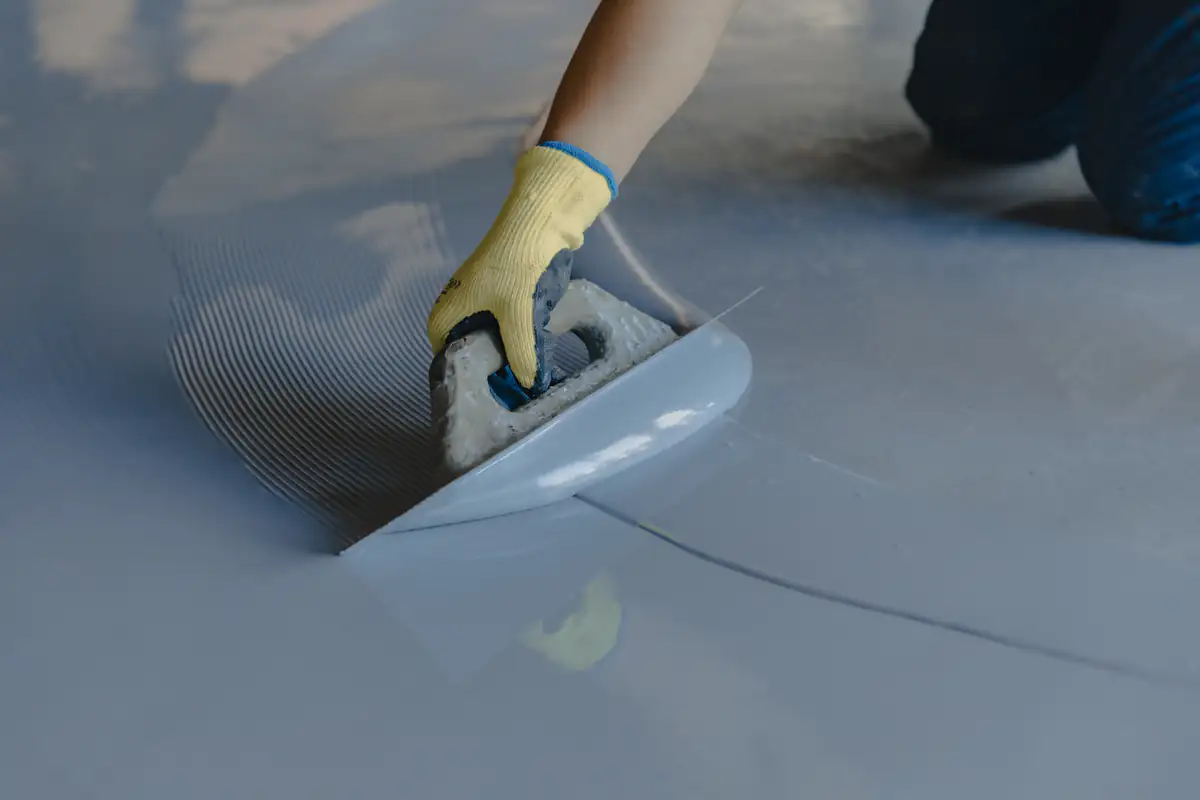
We start with mechanical surface preparation. That means diamond grinding the concrete, not acid etching. Grinding opens the pores so the epoxy bonds properly. Acid etching doesn’t cut deep enough, which is why most DIY kits fail.
Once the surface is prepped, we apply a moisture-mitigating primer if your slab needs it. Then comes the base epoxy layer, which seals the concrete and stops dust from forming. We add color flakes if you want them, then finish with a clear polyaspartic topcoat that resists UV yellowing, chemicals, and abrasion.
The whole process takes one day for most residential garages. You’re not dealing with a week-long project or multiple coats that take days to cure. We show up, prep the floor, apply the system, and you’re walking on it the next day.
The floor doesn’t peel because the surface was prepped correctly. It doesn’t stain because the coating is chemical-resistant. And it doesn’t keep creating dust because the concrete is fully encapsulated. That’s what happens when the system is designed to work together and installed by people who know what they’re doing.
Ready to get started?
You’re getting a multi-layer system, not a single coat of paint. The base layer bonds to the concrete and stops moisture from pushing up through the slab. The epoxy layer seals everything and provides the structure. The topcoat protects against UV, chemicals, hot tires, and daily wear.
We offer over a dozen color options, so you’re not stuck with generic gray. You can match your car, your brand, or just pick something that makes the space feel finished. Custom color blends are available if you want something specific.
In Poquonock Bridge and throughout New London County, garages take a beating from road salt, fertilizer runoff, and the humidity that comes with being near the coast. A properly installed epoxy coating garage floor handles all of it. Salt doesn’t eat through the coating. Fertilizer wipes up. And humidity doesn’t cause the floor to break down or delaminate.
You’re also getting a floor that’s easy to maintain. Sweep it, hose it down, use a squeegee. That’s it. No special cleaners, no resealing every year, no constant upkeep. The floor works, and it keeps working.
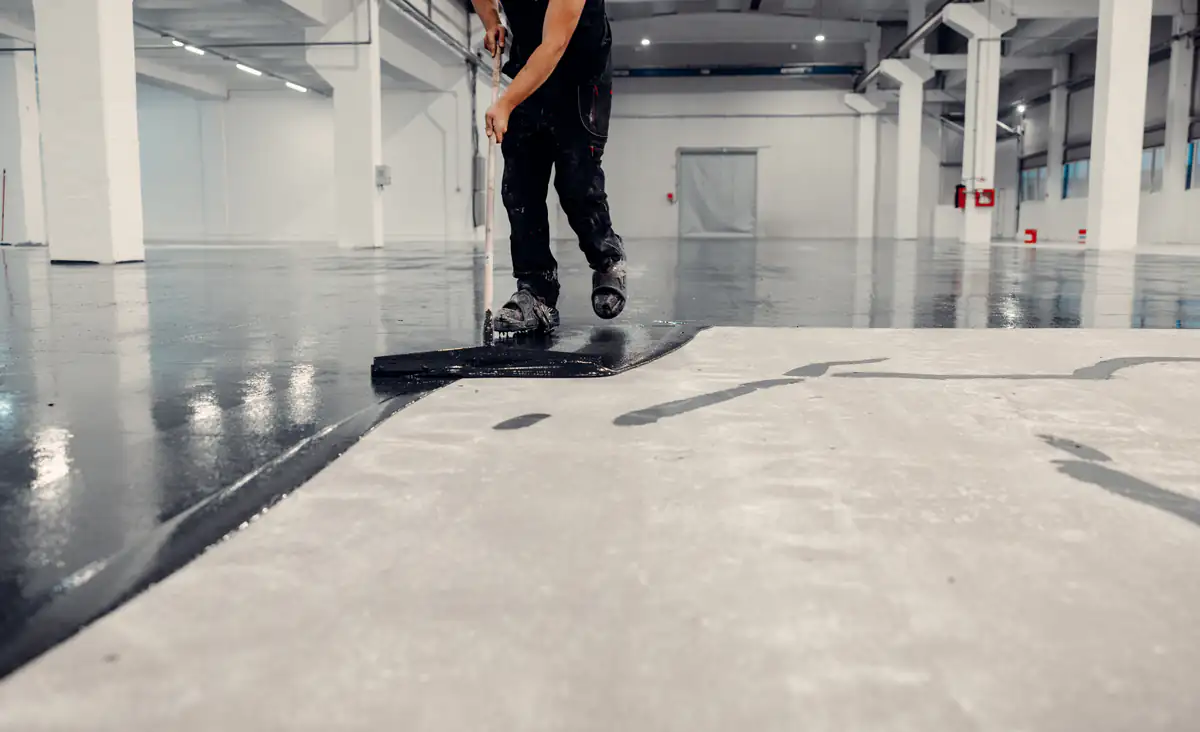
A professionally installed epoxy floor lasts 10 to 20 years, depending on use and maintenance. That’s not a guarantee you’ll see from DIY kits or painted floors, because those aren’t built the same way.
The longevity comes from proper surface prep and a multi-layer system. When the concrete is mechanically ground and the epoxy bonds at the pore level, it’s not sitting on top of the surface waiting to peel. It’s locked in. The polyaspartic topcoat adds UV resistance and abrasion protection, so the floor doesn’t yellow, scratch, or wear down under traffic.
If you’re parking cars, storing equipment, or using the space as a workshop, the floor holds up. If you maintain it by keeping it clean and avoiding harsh solvents that aren’t necessary, it lasts even longer. You’re not recoating every few years or dealing with sections that start peeling. You’re done.
Paint doesn’t work for garage floors, and that’s not an opinion. Paint sits on the surface. It doesn’t bond to concrete the way epoxy does, and it can’t handle the heat from tires, the weight of vehicles, or the chemicals that end up on a garage floor.
You’ll see it start to peel within months, especially in the tire tracks. Hot tires soften the paint, and when you drive out, the paint lifts. Once it starts, it spreads. You end up with a floor that looks worse than it did before you painted it.
Epoxy resin garage floor coatings are different. They chemically bond to the concrete, and they’re designed to handle heat, weight, and chemicals. The system flexes slightly with temperature changes instead of cracking. It resists staining instead of absorbing spills. And it lasts years instead of months. If you want a floor that actually works, epoxy is the only real option.
Concrete dust happens because the surface layer of the slab is breaking down. Every time you walk on it, drive on it, or drag something across it, tiny particles come loose. Sweeping helps temporarily, but the slab keeps creating more dust because the surface paste is deteriorating.
The only way to stop it permanently is to seal the concrete with a professional-grade coating. Epoxy flooring in Poquonock Bridge, CT encapsulates the entire surface, so the slab can’t break down anymore. The coating takes the wear instead of the concrete, and because epoxy is non-porous, dust doesn’t form.
Once the floor is sealed, you’ll notice the difference immediately. Sweeping actually works because the floor isn’t actively creating debris. You stop tracking dust into the house. Storage bins stay clean. And your garage finally feels like a finished space instead of a construction zone. It’s one of those problems you don’t realize how much it’s bothering you until it’s gone.
The difference is in surface prep, materials, and whether the crew has actually done this before. A lot of contractors will acid etch the concrete, roll on a thin epoxy layer, and call it done. That floor peels within a year because acid etching doesn’t open the concrete pores enough for a strong bond.
We use mechanical grinding. That means diamond grinding equipment that removes the surface layer and creates the texture the epoxy needs to bond properly. It’s more work, it’s louder, and it takes longer, but it’s the only way to do it right.
The materials matter too. Cheap epoxy yellows under UV, scratches easily, and doesn’t hold up to chemicals. Our systems include a moisture-mitigating primer, a thick epoxy base, and a polyaspartic topcoat that resists everything your garage throws at it. You’re not getting a one-coat solution. You’re getting a system that’s designed to last. And you’re working with a crew that knows how to install it correctly, not someone who watched a YouTube video and bought a sprayer.
Yes, if it’s installed correctly. Road salt is corrosive, and it will damage bare concrete or low-quality coatings. But a professional epoxy coating garage floor system is chemically resistant, which means salt doesn’t eat through it.
The key is making sure the floor is fully sealed. If there are gaps, thin spots, or areas where the coating didn’t bond, salt and moisture will get under the epoxy and cause it to lift. That’s why surface prep matters so much. When the concrete is properly ground and the epoxy is applied in full, even coats, there’s nowhere for salt or moisture to penetrate.
Connecticut winters are tough on garage floors. You’re tracking in salt, sand, ice melt, and whatever else is on the roads. A good epoxy floor handles all of it. You hose it down at the end of winter, squeegee it dry, and the floor looks the same as it did in October. No pitting, no staining, no damage. That’s what you’re paying for.
Most residential garage floors run between $3 and $12 per square foot, depending on the size of the space, the condition of the concrete, and what system you choose. A standard two-car garage is usually 400 to 600 square feet, so you’re looking at $1,200 to $7,200 for a complete installation.
That’s more than a DIY kit, but it’s also a floor that lasts 10 to 20 years instead of peeling in six months. You’re paying for proper surface prep, professional-grade materials, and a crew that knows how to install the system so it actually holds up.
If your concrete needs repairs, moisture mitigation, or extra prep work, that adds to the cost. If you want custom colors or a thicker topcoat for high-traffic areas, that’s extra too. But you’re getting a clear quote upfront, and you’re not dealing with surprise charges or hidden fees. The price reflects the work, the materials, and the fact that you won’t be redoing this floor in two years.
Local Resources
Other Services we provide in Poquonock Bridge