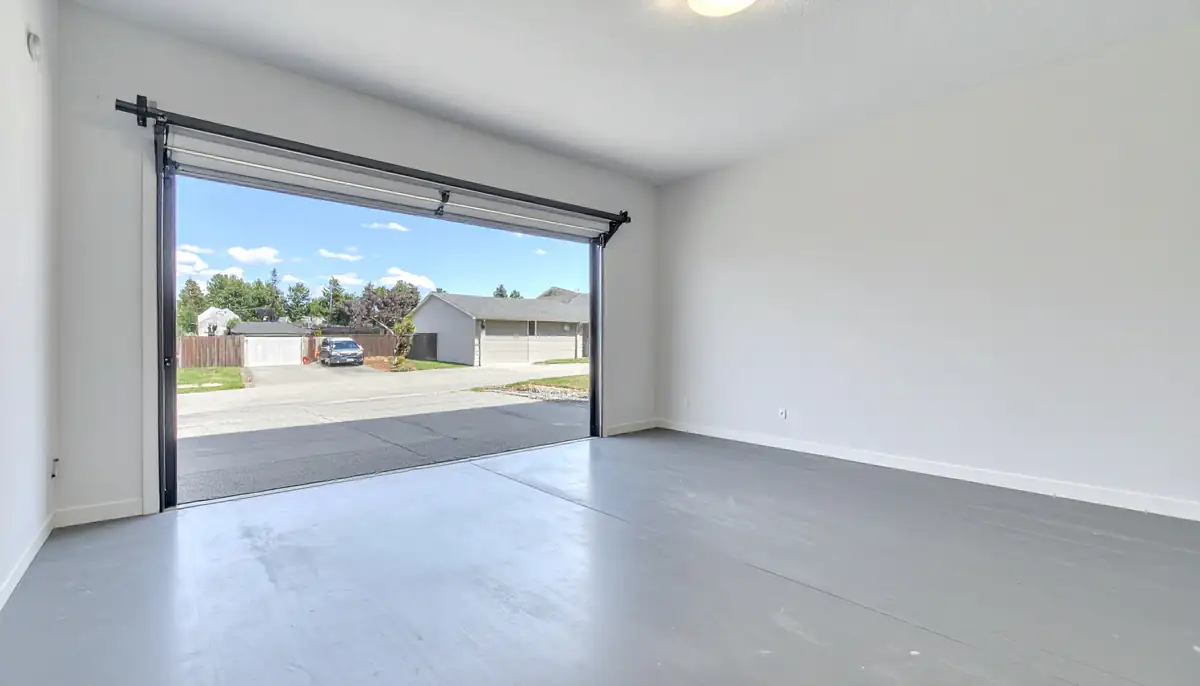
You’re not looking for a floor that looks good for six months. You need something that holds up when road salt gets dragged in all winter, when oil drips from the car, when temperatures swing 60 degrees in a week.
That’s what epoxy flooring in Hazardville, CT is supposed to do. Stop the concrete dust. Handle the spills. Give you a surface that doesn’t need constant attention.
Most coatings fail because they weren’t built for Connecticut. They crack when the slab moves during frost heave. They bubble when moisture pushes up from below. They yellow under UV exposure or peel when chemicals sit too long.
We use industrial polyaspartic and epoxy resin systems designed specifically for climates like ours. That means proper moisture barriers under every floor, flexible coatings that move with your slab, and chemical resistance that actually works. You get a garage floor coating that looks clean, stays clean, and doesn’t fall apart when winter hits.
We’ve been installing epoxy flooring in Hazardville, CT and throughout Hartford County since 2020. We’re licensed, insured, and BBB accredited because we do the work right the first time.
Most epoxy flooring contractors skip the moisture barrier or use products that weren’t designed for New England basements. That’s why floors fail. Connecticut has high water tables, freeze-thaw cycles, and humidity that other regions don’t deal with. If you don’t account for that during installation, the coating won’t last.
We’ve seen what happens when shortcuts get taken. Bubbling. Peeling. Delamination within two years. Our team uses specialized primers that stop water vapor transmission permanently, and we back every install with a real warranty. You’re not getting a DIY kit or a one-day wonder. You’re getting a floor built to last 15+ years in conditions that destroy lesser systems.
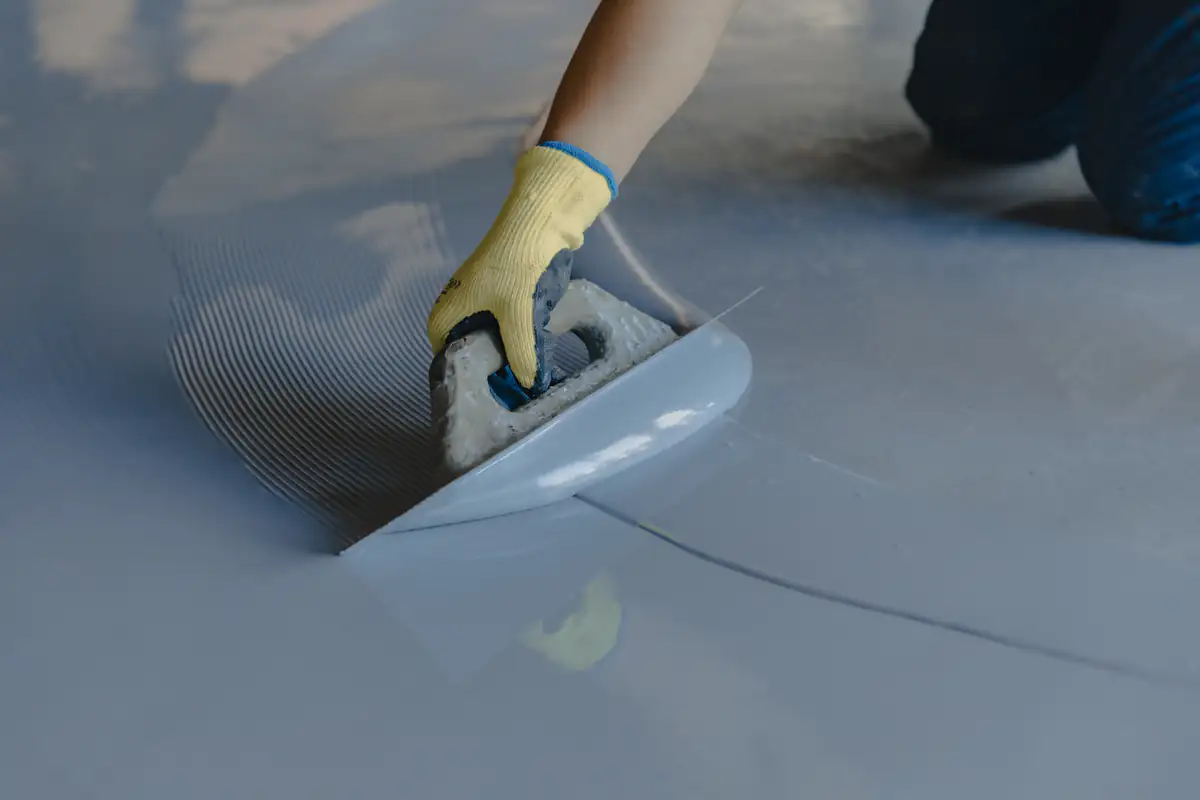
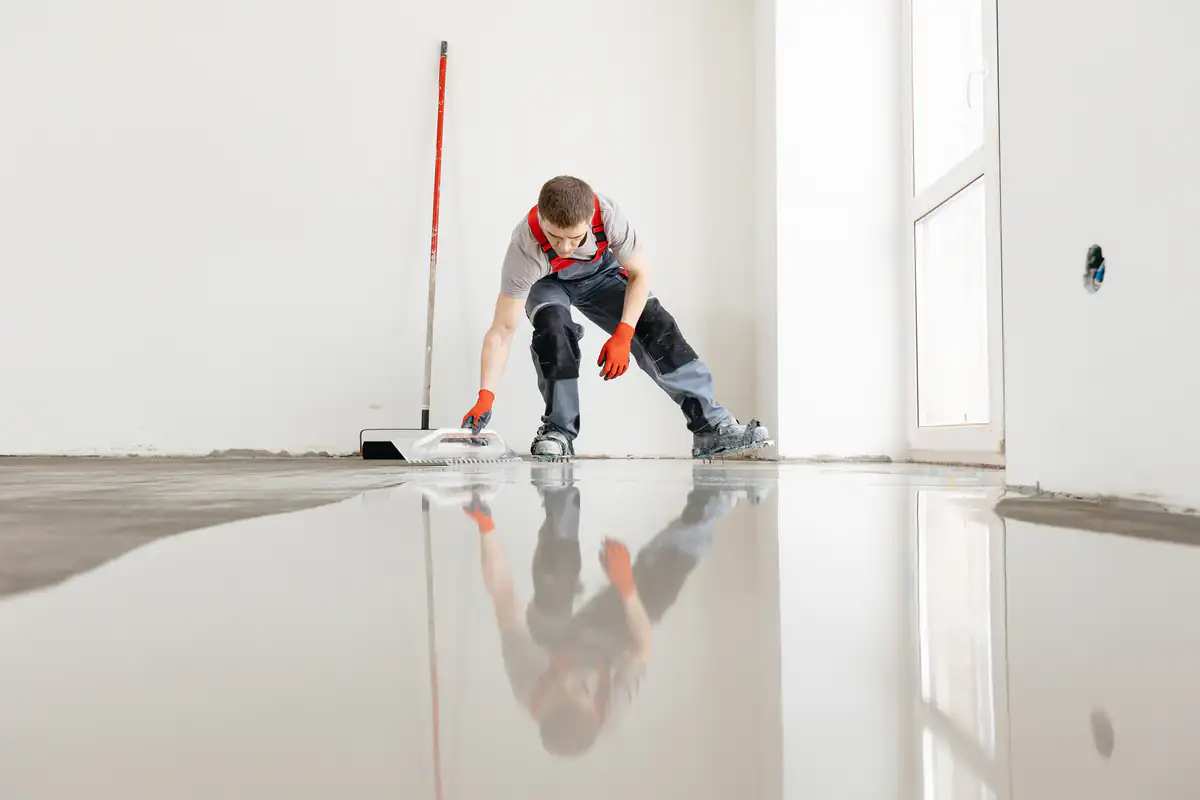
First, we prep the concrete. That means grinding the surface to open the pores, repairing any cracks or damage, and making sure the slab is structurally sound. If there’s moisture coming through—and in Hazardville, CT, there usually is—we apply a vapor barrier primer that stops it permanently.
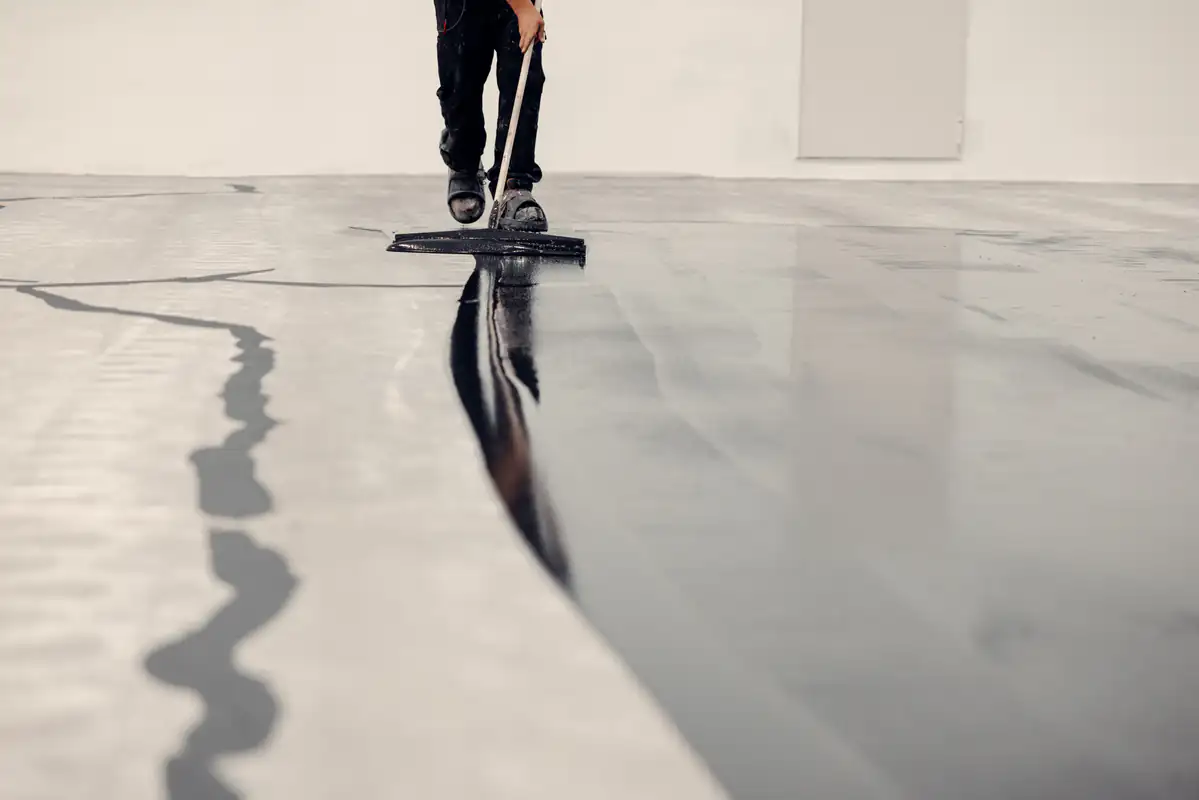
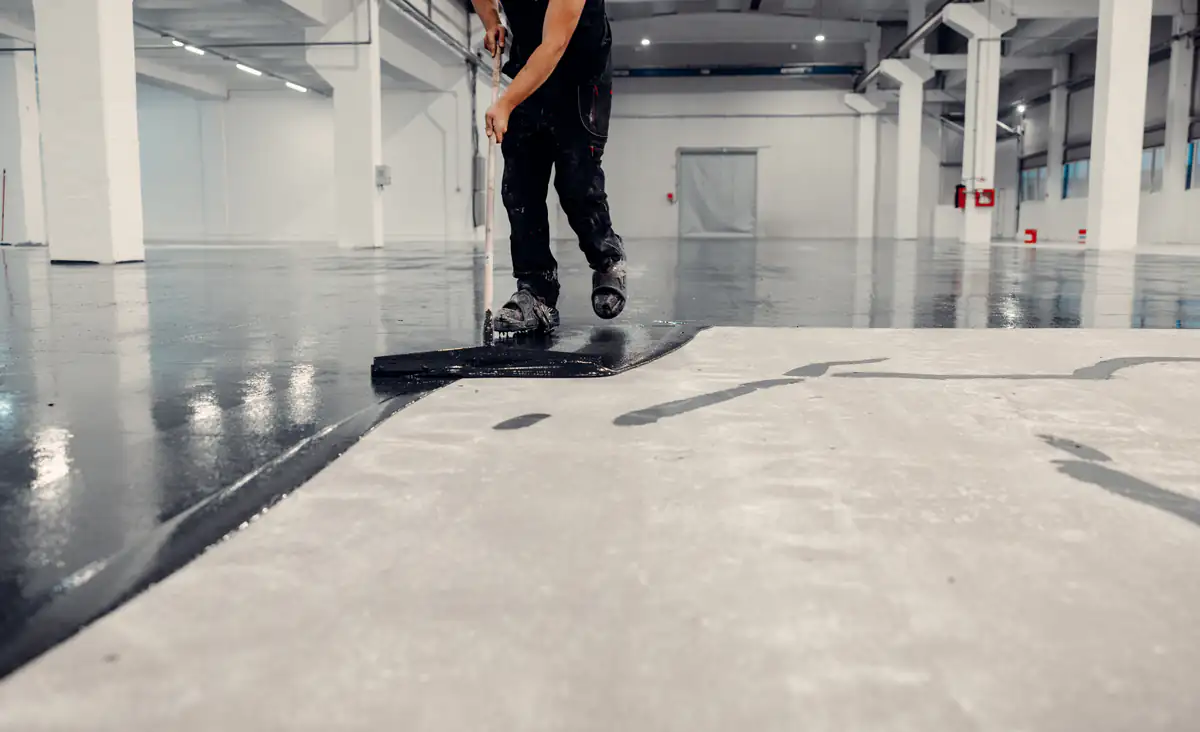
Next, we install the base epoxy or resin layer. This isn’t a thin topcoat. It’s a thick, industrial-grade system that bonds to the concrete and creates a waterproof, chemical-resistant foundation. We add decorative flakes if you want them, or keep it clean and solid.
Then we seal everything with a polyaspartic topcoat. This layer is UV-stable, scratch-resistant, and cures fast so you’re not waiting a week to use your garage. Most residential jobs are done in two to three days. Commercial and industrial projects depend on square footage and downtime requirements, but we work around your schedule.
You’ll know exactly what to expect before we start. No surprises, no upselling, no waiting around for a crew that doesn’t show up.
Ready to get started?
Every epoxy flooring project in Hazardville, CT starts with a moisture test. We don’t guess. If your slab is pushing vapor, we handle it with the right primer before any coating goes down.
You get full surface prep—grinding, crack repair, and cleaning. Then a moisture barrier if needed. Then the base epoxy resin system, applied in multiple coats depending on the environment. For garages, that usually means a broadcast flake system for texture and grip. For commercial kitchens or healthcare facilities, we install seamless, non-porous surfaces that meet USDA and FDA standards.
The topcoat is always polyaspartic. It cures in hours, not days. It won’t yellow under sunlight. It resists chemicals, stains, and abrasion better than standard epoxy. And it’s flexible enough to handle the slab movement that happens during Connecticut winters.
You also get a 15-year warranty that covers materials and workmanship. That’s not common in this industry, but it should be. If we’re confident the floor will last, we’ll stand behind it. Most painting garage floor projects don’t come with that kind of protection because they’re not built the same way.
If it’s installed correctly, 15 to 20 years. That means proper surface prep, a moisture barrier if needed, and industrial-grade materials that can handle freeze-thaw cycles.
Most failures happen because the installer skipped steps. Concrete in Hazardville, CT deals with frost heave, road salt, temperature swings, and moisture from below. If the coating isn’t designed for that, it’ll crack, peel, or bubble within a few years.
We use flexible polyaspartic topcoats and vapor-blocking primers specifically because of Connecticut’s conditions. The floor moves with your slab instead of fighting it. That’s what makes it last.
Epoxy is the base layer. It’s thick, durable, and bonds to concrete. Polyaspartic is the topcoat. It cures faster, resists UV damage better, and stays flexible in cold weather.
Most garage floor covering epoxy systems use both. The epoxy provides strength and chemical resistance. The polyaspartic seals everything and protects against scratches, stains, and yellowing. You get the benefits of both without the weaknesses of either one alone.
Some contractors only use epoxy because it’s cheaper. That’s fine for indoor spaces with no sunlight, but it’ll yellow in garages with windows. Polyaspartic won’t. It also cures in a few hours instead of a few days, so you’re back in your garage faster.
Yes, but only if we address the moisture first. Concrete absorbs water from the soil beneath your house. If you seal the surface without stopping that vapor transmission, the coating will fail.
We test every slab before installation. If moisture is present, we apply a specialized primer that blocks water vapor permanently. It’s not a temporary fix. It’s a chemical barrier that lets us install the epoxy resin garage floor system without worrying about bubbling or delamination later.
Most basement floor failures happen because this step gets skipped. Contractors assume the concrete is dry, or they use a product that wasn’t designed for high moisture. We don’t guess. We test, we treat, and we warranty the result.
For a standard two-car garage, expect $3 to $6 per square foot depending on the system and prep work required. That includes surface grinding, moisture barrier if needed, base epoxy, decorative flakes, and polyaspartic topcoat.
If your slab has significant cracking, needs leveling, or requires extra moisture mitigation, the cost goes up. Commercial and industrial projects vary based on square footage, chemical resistance requirements, and whether you need USDA or FDA compliance.
We don’t give estimates over the phone because every floor is different. We’ll come out, test the concrete, measure the space, and give you an exact price. No surprises, no upselling once we’re on-site. You’ll know what you’re paying before we start.
With polyaspartic topcoats, you can walk on the floor in 4 to 6 hours. Light use after 24 hours. Full vehicle traffic after 48 to 72 hours.
That’s significantly faster than traditional epoxy, which can take up to a week to fully cure. The difference is in the chemistry. Polyaspartic cures through a different process that isn’t as temperature-dependent, so it hardens quickly even in cooler weather.
Most residential garage floor coating projects in Hazardville, CT are completed in two to three days total. Day one is prep and base coat. Day two is topcoat. Day three is cleanup and final inspection. You’re not losing your garage for a week.
Yes, if it’s a proper industrial system. Road salt is corrosive, and oil can penetrate coatings that aren’t chemically resistant. That’s why we use commercial-grade epoxy resin and polyaspartic topcoats designed for automotive environments.
The surface is non-porous, so fluids sit on top instead of soaking in. You can wipe up spills without staining. Salt gets tracked in all winter and won’t damage the coating. The floor is also resistant to antifreeze, brake fluid, gasoline, and most household chemicals.
DIY kits and cheap coatings don’t offer that level of protection. They might look fine initially, but after a season or two of Connecticut winters, they start breaking down. We install floors that handle real-world use without constant maintenance or early replacement.
Other Services we provide in Hazardville