
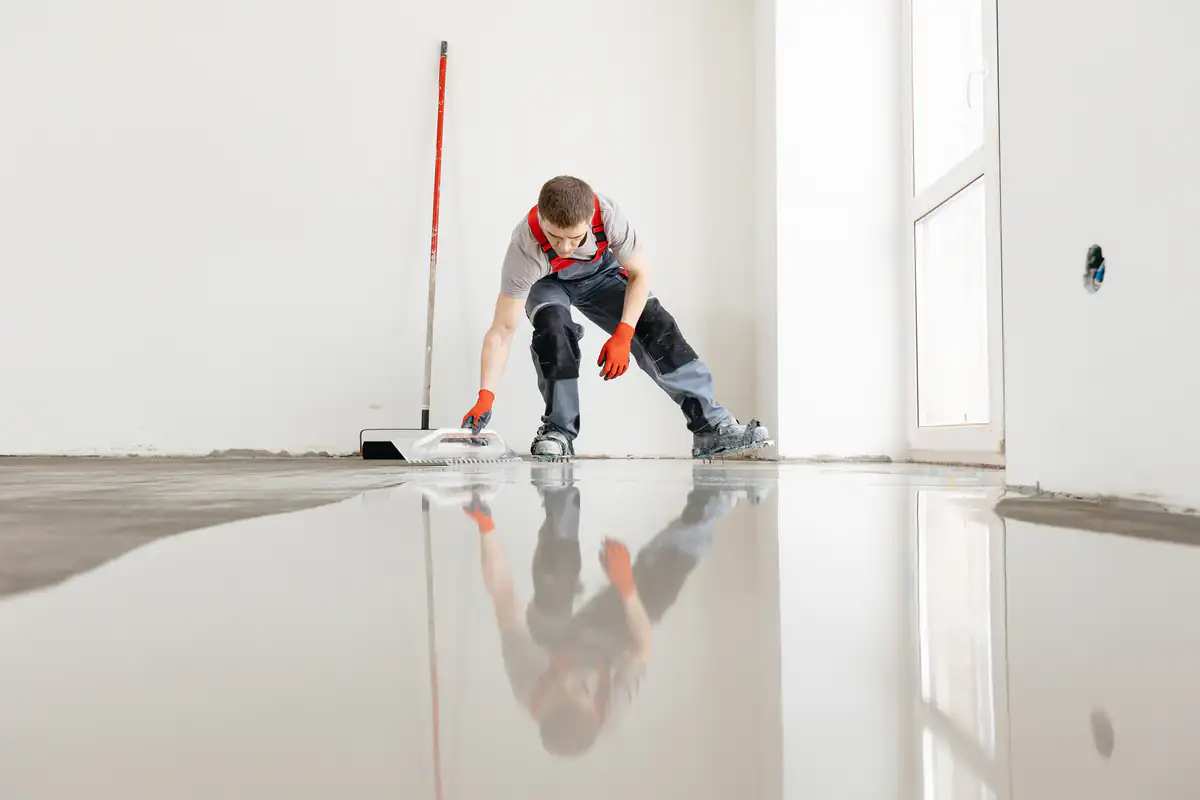
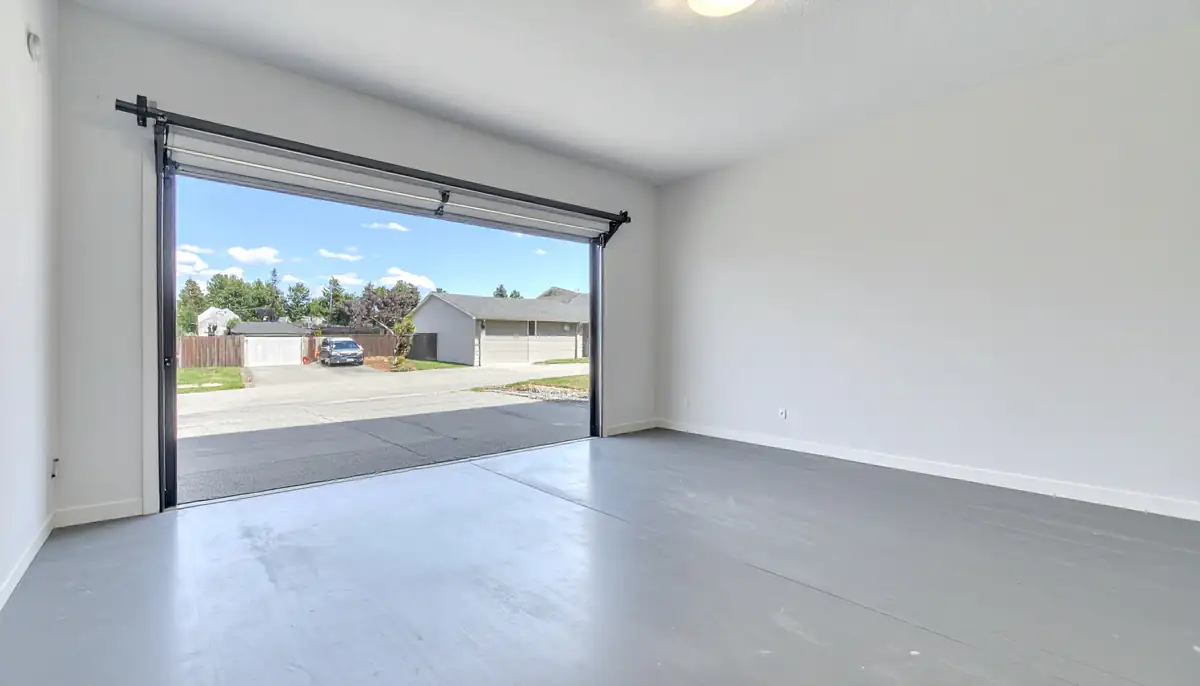
You’re tired of concrete dust coating everything in your garage. Your tools have a film on them. Your car picks it up. You track it into the house on your shoes.
Oil stains soak into bare concrete and never come out, no matter how much you scrub. Every winter, the freeze-thaw cycle cracks untreated concrete a little more. Road salt accelerates the damage.
An epoxy coating garage floor changes all of that. Spills wipe up in seconds instead of soaking in. The surface stays clean without constant sweeping. No more dust, no more permanent stains, no more watching your concrete deteriorate every winter.
You get a floor that actually makes your garage easier to use. That’s what matters when you’re working in the space or just trying to park without making a mess.
We specialize in epoxy flooring Connecticut homeowners can count on through temperature swings, humidity, and brutal winters. We’re not a general contractor dabbling in coatings. This is what we do.
Essex Village properties face specific challenges. Salt air from the Connecticut River. Freeze-thaw cycles that crack lesser systems. Temperature swings that cause cheap coatings to delaminate within months.
We use professional-grade epoxy resin garage floor systems engineered to flex with concrete as it expands and contracts. Our surface preparation process removes contaminants and opens the concrete pores so the coating actually bonds instead of sitting on top waiting to peel.
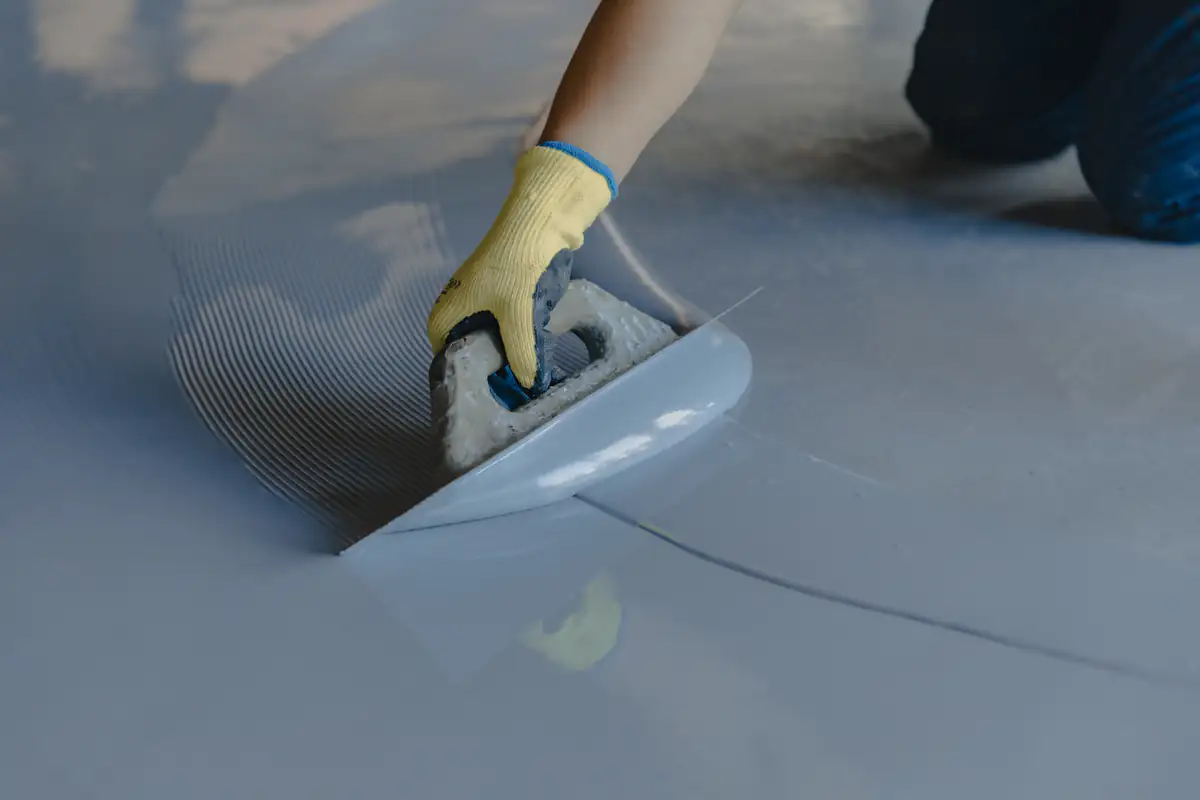
We start with surface preparation. This step separates coatings that last from those that fail in six months. We grind the concrete to remove any existing sealers, oils, or contaminants. Then we repair cracks and level any uneven areas.
Next comes the primer coat. This bonds directly to the prepared concrete and creates the foundation for the epoxy layers. We inspect every square foot to ensure proper coverage.
The epoxy coating goes on in multiple layers. We’re not brushing on a single coat and calling it done. Each layer adds thickness, durability, and chemical resistance. You can add decorative flakes between coats if you want texture and visual interest.
The topcoat seals everything. This is what you’ll walk on, drive on, and clean. It’s formulated to resist hot tire pickup, UV yellowing, and chemical damage from road salt or automotive fluids.
Most residential garage floor covering epoxy installations are ready for light foot traffic in 24 hours. You can drive on it in 48-72 hours depending on temperature and humidity.
Ready to get started?
Our epoxy flooring in Essex Village, CT includes complete surface preparation, crack repair, primer, multiple epoxy layers, and a protective topcoat. You’re not getting a single-coat system that looks good for a few months.
We offer solid colors, metallic finishes, and flake systems. Flakes add slip resistance and hide minor imperfections in the concrete. Metallics create depth and visual movement. Solid colors give you a clean, professional look.
Every system includes chemical resistance. Gasoline, oil, antifreeze, brake fluid—they wipe up without staining. The coating also stops moisture from wicking up through the concrete, which matters in Connecticut’s humid summers.
You can add anti-slip additives if you’re coating a pool deck or outdoor patio. We adjust the formula based on where you’re installing it and how you’ll use the space.
Essex Village homeowners typically choose our systems for garages, but we also coat basement floors, workshop spaces, and commercial areas. The same durability that handles tire traffic works just as well for foot traffic in retail spaces or manufacturing facilities.
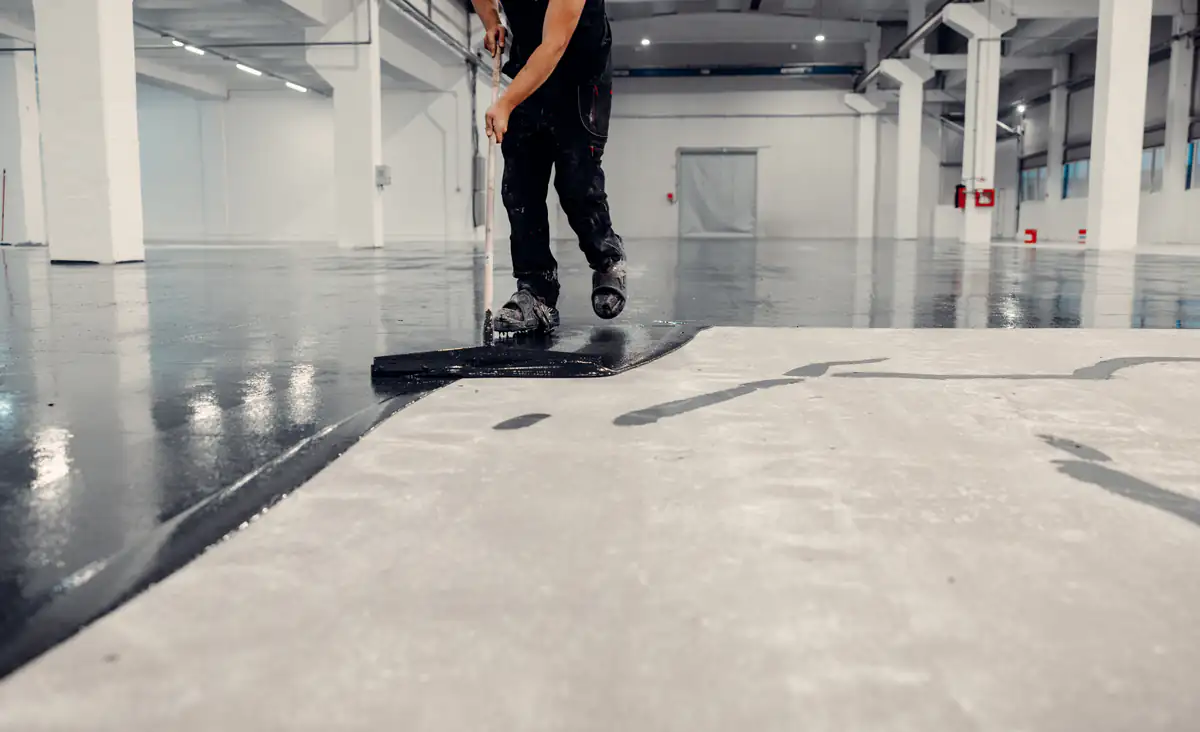
A properly installed epoxy resin garage floor lasts 10-15 years in residential settings with normal use. Commercial and industrial applications see 7-10 years depending on traffic and chemical exposure.
The key is proper installation. Surface preparation determines how well the coating bonds. If the concrete isn’t ground and cleaned correctly, the epoxy sits on top instead of bonding into the pores. Those systems peel within months.
Connecticut’s freeze-thaw cycles test every coating system. Our epoxy formulations flex with the concrete as it expands and contracts. Rigid coatings crack. Flexible systems move and stay intact. That’s why we don’t use home center products—they’re not engineered for this climate.
Hardware store kits use water-based epoxy or acrylic coatings. They’re thin, typically applied in one coat, and they don’t bond as aggressively as professional systems. Most fail within 6-18 months.
We use 100% solids epoxy. It’s thicker, bonds deeper into the concrete, and creates a harder surface. We apply it in multiple layers with proper cure times between coats.
Surface prep makes the biggest difference. DIY kits tell you to acid etch the concrete. That’s not enough. We mechanically grind the surface to open the pores and remove any existing sealers or contaminants. Without that step, nothing bonds correctly.
You’re also getting professional-grade topcoats that resist UV yellowing, hot tire pickup, and chemical damage. The clear coat on a hardware store kit starts breaking down within months of exposure to Connecticut weather.
No. We need to remove any existing paint or sealer before applying epoxy flooring in Essex Village, CT. Epoxy bonds to concrete, not to whatever’s sitting on top of it.
If we coat over old paint, the epoxy only bonds to the paint. When the paint fails—and it will—the epoxy comes up with it. You’ve wasted time and money on a system that’s doomed from the start.
We grind off existing coatings during surface preparation. This gets us down to bare concrete so the epoxy can penetrate and create a mechanical bond. It’s extra work, but it’s the only way to install a coating that actually lasts.
Some contractors will coat over paint to save time. That’s a red flag. They’re cutting corners, and you’ll be calling someone else to fix it within a year.
Sweep or blow off dirt and debris regularly. Mop with water and a mild cleaner when needed. That’s it.
Epoxy coating garage floors don’t need waxing or special treatments. The topcoat is the protective layer. You’re not maintaining the coating—you’re just keeping it clean.
Spills wipe up immediately. Oil, antifreeze, gasoline—they don’t soak in like they do with bare concrete. Grab a rag or paper towel and wipe it up. If something sits for a while, it still cleans up with soap and water.
Avoid using harsh chemicals or abrasive scrubbers. You won’t damage the epoxy, but there’s no reason to be aggressive. The coating is designed to release dirt and stains easily. A mop and regular cleaner handle 99% of what you’ll encounter.
If the concrete cracks, the epoxy will show the crack. Epoxy bonds to concrete—it doesn’t replace it or prevent structural movement.
We repair existing cracks before installation. Small cracks get filled with epoxy filler. Larger cracks or control joints get routed and filled with flexible polyurea. This minimizes the chance of the crack telegraphing through the coating.
But concrete moves. If your foundation shifts or the ground settles, new cracks can form. The epoxy coating won’t prevent that. It’s not a structural repair—it’s a surface coating.
Most cracks that appear after installation are hairline and don’t affect the coating’s performance. The floor still protects against stains and moisture. It’s still easy to clean. The crack is visible, but the coating remains intact around it.
Professional garage floor coating in Essex Village, CT costs more upfront than paint. A typical two-car garage runs $1,500-$3,000 depending on the system you choose. Paint costs $200-$400 in materials if you do it yourself.
But paint lasts 1-2 years before it needs recoating. You’ll repaint that garage 5-7 times over the lifespan of one epoxy installation. Add up the materials, your time, and the hassle of moving everything out of the garage every couple years.
Epoxy also performs better. Paint stains. It doesn’t resist chemicals. It doesn’t stop concrete dust. It doesn’t handle hot tires or road salt. You’re saving money upfront but dealing with constant maintenance and poor performance.
The cost difference makes sense when you factor in durability and how the floor actually works. You’re not recoating every two years. You’re not scrubbing stains that won’t come out. You’re using your garage without thinking about the floor.
Local Resources
Other Services we provide in Essex Village