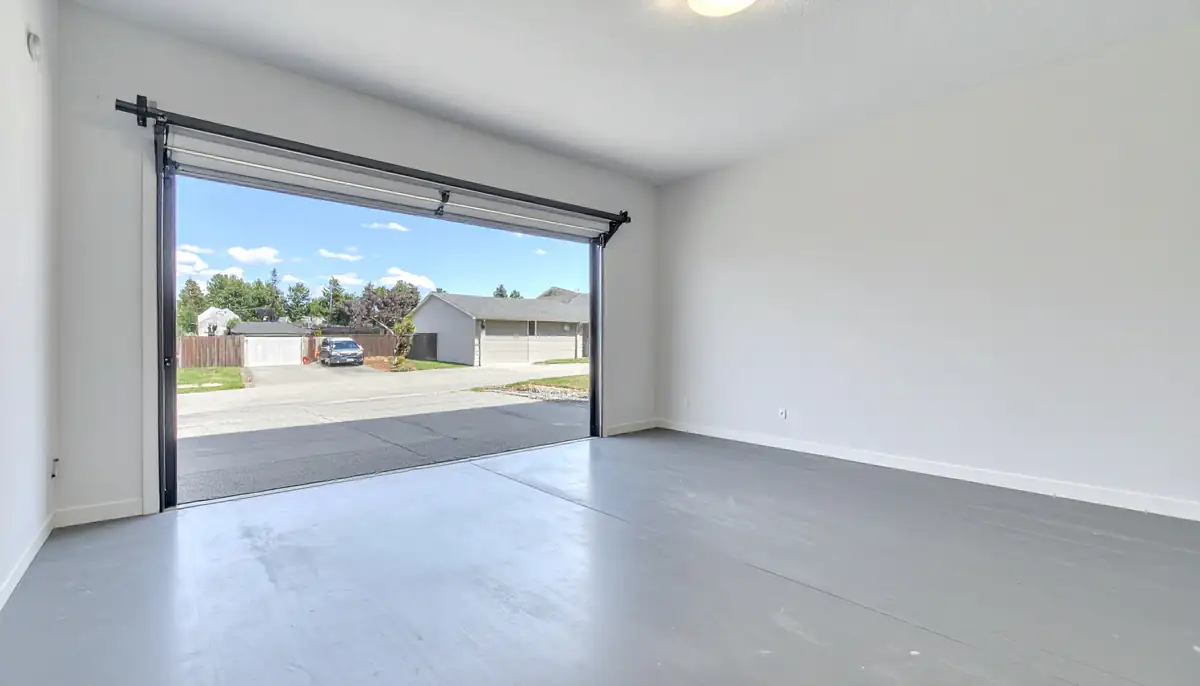
Your garage floor takes a beating every winter. Salt from Crystal Lake roads seeps into untreated concrete, creating white stains and surface pitting that gets worse each season. That concrete dust coating your car and tools? It’s your floor breaking down from the inside out.
Epoxy flooring in Crystal Lake, CT changes that. You get a thick, chemical-resistant barrier that stops salt damage before it starts. Oil spills wipe clean with a damp cloth instead of soaking in permanently. The floor stays glossy and bright for 15-20 years, not 2-3 like those big-box kits that start peeling after one winter.
No more scrubbing stains that won’t come out. No more concrete dust tracked through your house. Just a floor that looks sharp and cleans easily, year after year, even when you’re dragging in snow, slush, and road salt all winter long.
We’ve been installing epoxy resin garage floors across Connecticut since 2020, and our owners bring over 30 years of business experience to every project. We’re licensed, insured, and locally operated, which means we understand exactly what Crystal Lake floors deal with—temperature swings, moisture issues, and salt damage that never stops.
We’re not the cheapest option in Crystal Lake, CT, and that’s intentional. You’re paying for industrial-grade materials, professional moisture barriers under every floor, and a 15-year warranty that actually means something. Most epoxy flooring contractors offer one year. We offer fifteen because we use coatings designed to last, not just look good at installation.
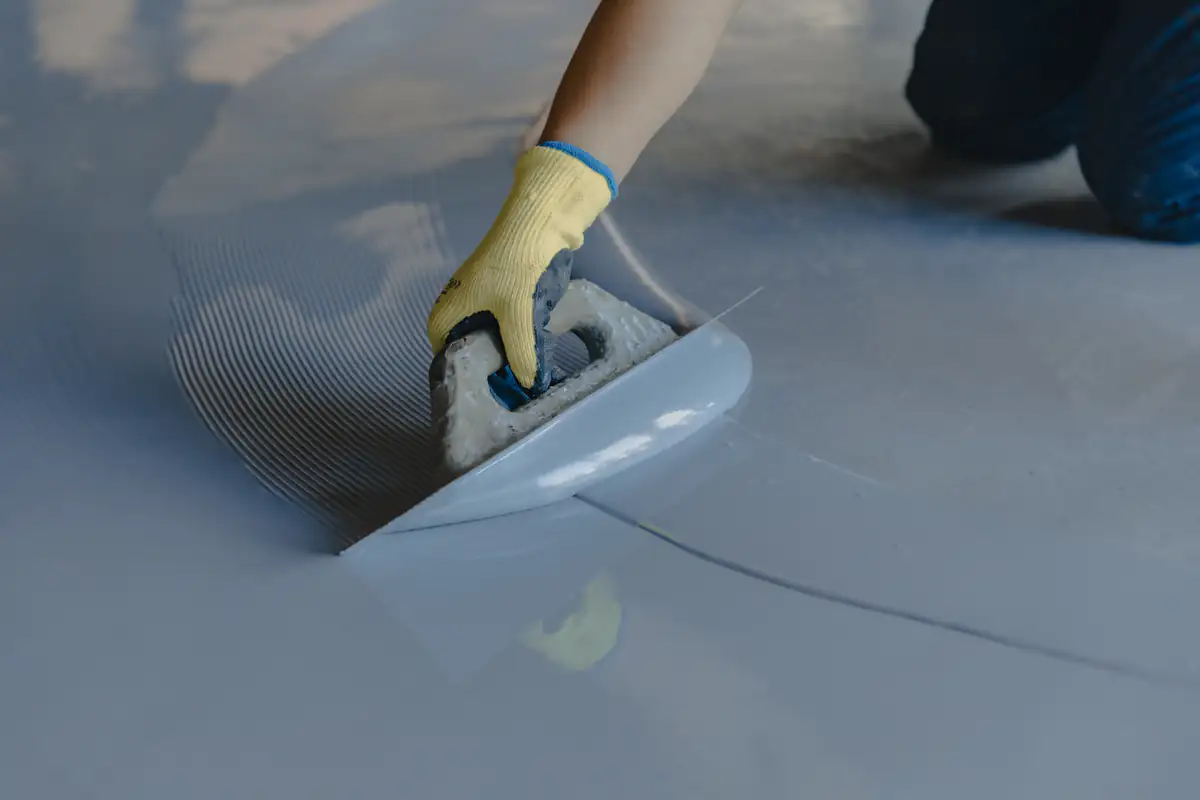
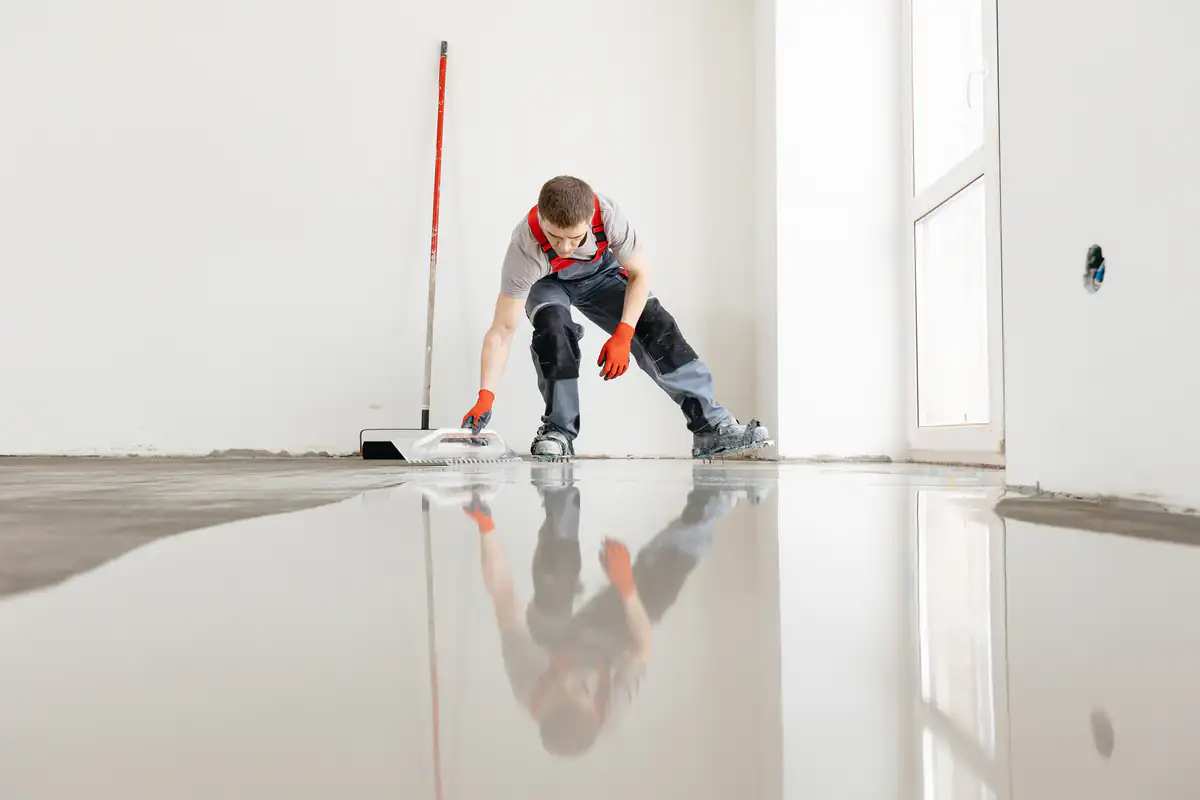
First, we prep your concrete properly. That means diamond grinding the surface to open the pores, not just acid etching like DIY kits recommend. We also apply a professional-grade moisture barrier beneath every floor—critical in Crystal Lake, CT where basements and garages deal with high water tables and moisture vapor transmission.
Next comes the base coat. We use high-solids epoxy formulations that create a thick, durable bond with your concrete. This isn’t the thin stuff that wears through in high-traffic areas. It’s industrial-grade material designed for heavy use, temperature cycling, and chemical exposure.
The topcoat is a polyaspartic sealer that cures in hours instead of days. It resists UV yellowing, stays flexible to handle concrete movement, and includes anti-slip additives for safety when you’re tracking in snow and ice. Most residential garage floor coating projects in Crystal Lake wrap up in 2-3 days, and you can park on it 24 hours after we finish.
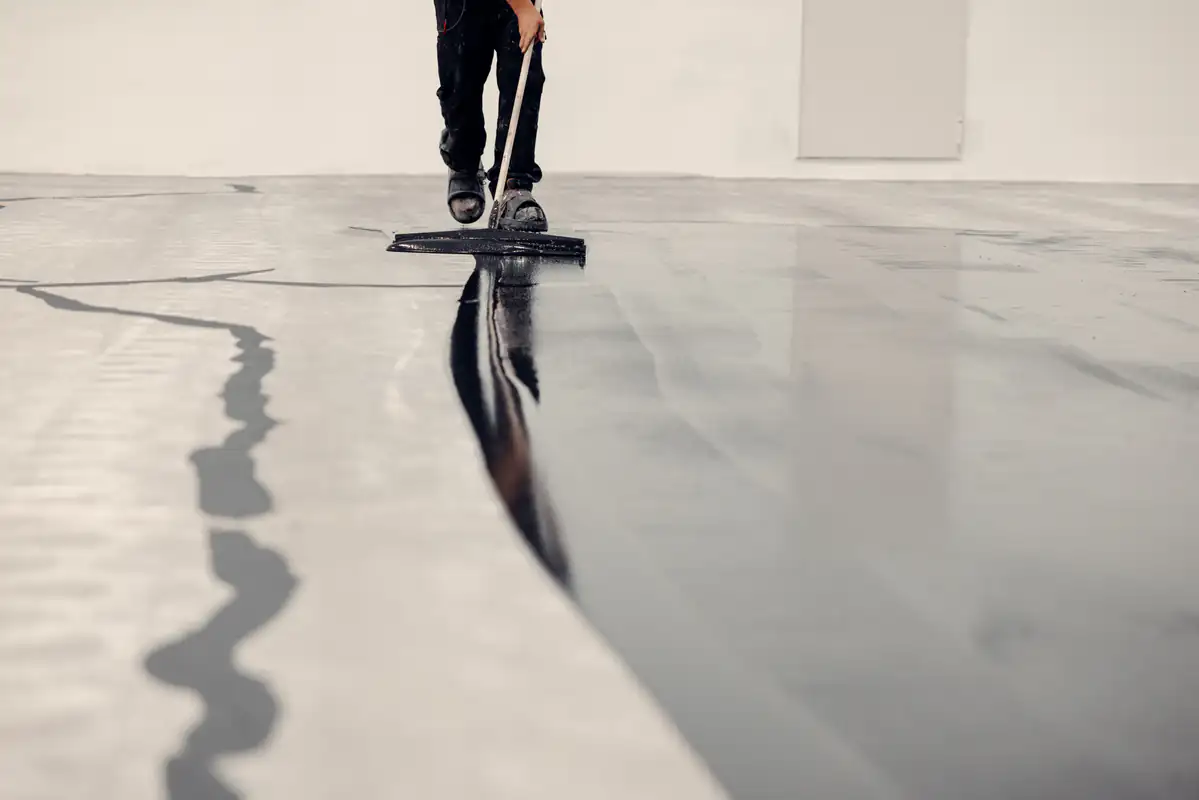
Ready to get started?
Every epoxy flooring installation in Crystal Lake, CT includes diamond grinding, moisture barrier application, high-solids epoxy base coat, polyaspartic topcoat, and anti-slip additives. You also get a 15-year warranty covering both materials and workmanship—not the standard one-year coverage most epoxy flooring contractors offer.
Connecticut winters are brutal on garage floors. Municipal de-icers, calcium chloride, and rock salt attach to your tires and get dragged into your garage every time you park. Untreated concrete absorbs that salt, which crystallizes and causes the surface to fracture and spall. Our epoxy coating garage floor systems stop that process completely by creating a waterproof, chemical-resistant barrier.
We also handle moisture issues that are common in Crystal Lake basements and garages. High water tables and poor drainage cause moisture vapor to push up through concrete slabs, which makes cheaper coatings bubble and peel. Our moisture barrier stops vapor transmission permanently, so your floor stays bonded and intact even during wet seasons. That’s the difference between painting garage floor surfaces with consumer-grade products and installing a professional system designed for long-term performance in real-world conditions.
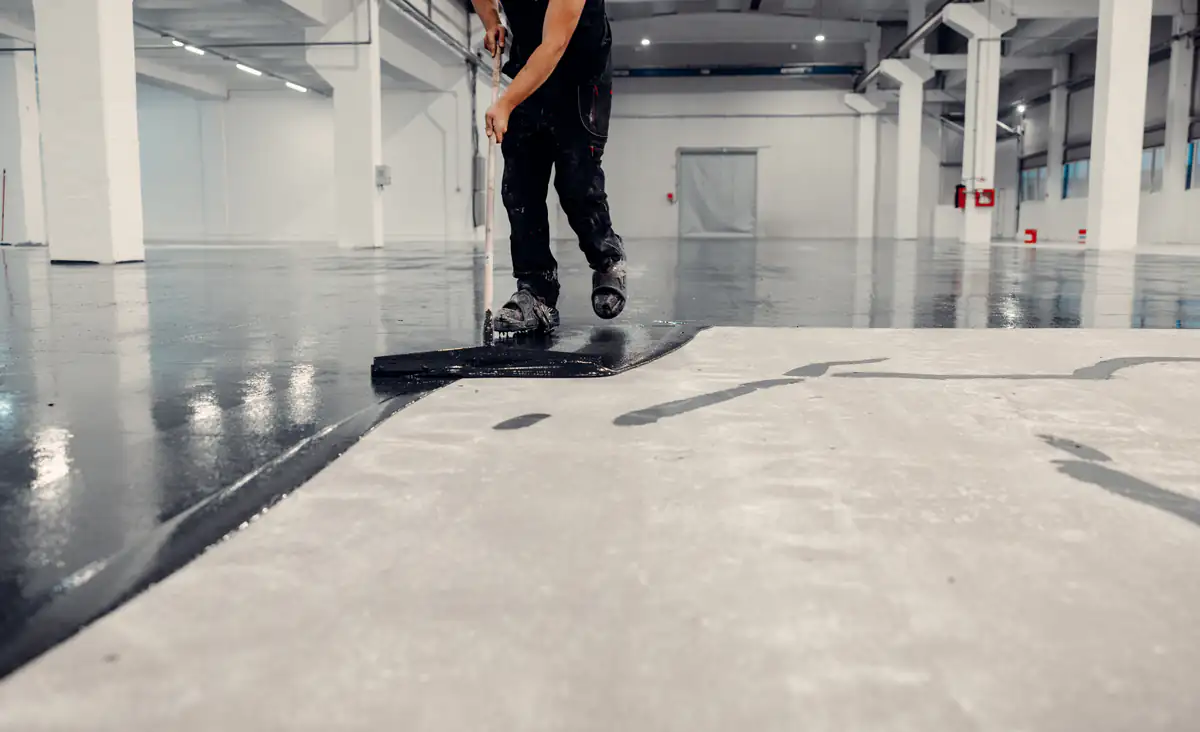
Professional epoxy flooring in Crystal Lake, CT lasts 15-20 years when installed correctly with proper surface prep and moisture barriers. That’s significantly longer than DIY kits, which typically start showing wear in 6-18 months and fail completely within 2-5 years.
The difference comes down to materials and installation. We use high-solids epoxy formulations that create a thick, durable coating designed to handle freeze-thaw cycles, road salt exposure, and temperature swings. The polyaspartic topcoat stays flexible, resists UV yellowing, and bonds permanently to the base layer. DIY kits use thinner materials that can’t handle Connecticut winters—they crack when temperatures drop, peel when moisture pushes up through the concrete, and fade from UV exposure within a couple of seasons.
Your floor’s lifespan also depends on moisture management. Crystal Lake sits in an area with high water tables, and untreated concrete slabs often deal with vapor transmission issues. We apply professional moisture barriers beneath every floor to stop water vapor before it reaches the coating. Without that step, even good epoxy will eventually delaminate.
Epoxy creates a chemical bond with concrete that’s exponentially stronger than paint. Garage floor paint sits on top of the surface and starts chipping within months, especially in high-traffic areas or anywhere you park vehicles. Epoxy resin garage floor coatings penetrate into the concrete and cure into a hard, durable surface that can handle heavy loads, chemical spills, and abrasion without breaking down.
Paint also can’t handle moisture. When water vapor pushes up through your concrete slab—common in Crystal Lake, CT due to seasonal moisture and high water tables—paint bubbles and peels almost immediately. Epoxy flooring systems installed with moisture barriers stop vapor transmission and stay bonded to the concrete permanently.
There’s also a massive difference in durability. Painting garage floors might look acceptable for 6-12 months, but you’ll be repainting every year or two as it wears through. Professional epoxy coating garage floor installations last 15-20 years with zero maintenance beyond occasional cleaning. You’re not comparing similar products—you’re comparing a temporary cosmetic fix to a long-term flooring system.
Yes, but the cracks need to be properly repaired first. We fill and seal cracks before applying epoxy so the finished floor is smooth and structurally sound. Small hairline cracks aren’t a problem—we grind the surface, fill them with epoxy filler, and the coating bonds over them without issue.
Larger cracks or areas with significant spalling require more prep work. If your concrete is breaking apart from freeze-thaw damage or salt exposure—common issues in Crystal Lake—we’ll assess whether the slab is stable enough for coating or if it needs repair first. Applying epoxy over severely damaged concrete doesn’t fix the underlying problem; it just hides it temporarily until the damage continues underneath.
Surface preparation is critical for long-term performance. We diamond grind every floor to remove contaminants, open the concrete pores, and create the profile needed for proper adhesion. That process also reveals any hidden damage or weak spots that need attention. Skipping this step is why most DIY epoxy flooring projects fail—homeowners don’t have the equipment or experience to prep concrete correctly, so the coating doesn’t bond and starts peeling within months.
We apply a professional-grade moisture barrier beneath every epoxy flooring installation in Crystal Lake, CT. This barrier stops water vapor from pushing up through your concrete slab, which is the main reason cheaper coatings fail in Connecticut. High water tables, poor drainage, and seasonal moisture create vapor transmission issues that cause epoxy to bubble, delaminate, and peel if you don’t address them upfront.
The moisture barrier we use is a specialized primer that penetrates deep into the concrete and cures into a waterproof membrane. It’s not the same as the sealers included in DIY kits—those are surface treatments that don’t stop vapor transmission. Our system blocks moisture at the source, so the epoxy coating stays bonded permanently even during wet seasons or in below-grade spaces like basements.
We also test for moisture before installation. If your slab has active water intrusion—not just vapor, but actual water coming through cracks or joints—we’ll recommend fixing that issue before coating. Epoxy flooring contractors who skip moisture testing or don’t use proper barriers are setting you up for failure. You’ll get a floor that looks great for a few months, then starts failing as soon as moisture builds up underneath.
Not when it’s installed correctly. Every epoxy coating garage floor we install in Crystal Lake includes anti-slip additives mixed into the topcoat. These additives create texture on the surface so you’re not walking or driving on a slick, glossy finish. It’s especially important in Connecticut, where you’re constantly tracking in snow, slush, and ice melt during winter months.
The level of slip resistance depends on the additive we use. For residential garages, we typically apply a medium-grit texture that provides traction without being rough or uncomfortable to walk on. For commercial or industrial floors where heavy equipment operates, we can increase the texture for additional grip. The polyaspartic topcoat also stays flexible in cold temperatures, so it doesn’t become brittle or slick when your garage drops below freezing.
Untreated concrete is actually more dangerous when wet. The porous surface holds moisture, and once it freezes, you’re dealing with a slippery, uneven surface that’s difficult to navigate. Garage floor coating systems shed water instead of absorbing it, and the anti-slip texture gives you consistent traction whether the floor is dry, wet, or covered in road salt and snow melt.
DIY epoxy flooring kits cost $200-600 for a two-car garage, while professional installation typically runs $3-8 per square foot depending on the condition of your concrete and the coating system you choose. That puts a professionally installed garage floor coating in Crystal Lake, CT around $1,500-4,000 for most residential projects.
Here’s what you’re actually paying for: proper surface preparation with diamond grinding equipment, professional moisture barriers that stop vapor transmission, high-solids epoxy formulations that are 3-4 times thicker than DIY products, polyaspartic topcoats that cure quickly and resist UV damage, and a 15-year warranty covering materials and workmanship. DIY kits include none of that. You get thin coatings, basic instructions, and zero recourse when the floor starts failing in 6-18 months.
About 30% of our epoxy flooring installations in Crystal Lake are replacements for homeowners who tried DIY first. They spend $400 on a kit, invest a weekend doing the work, and end up with a floor that peels, fades, or wears through within a year. Then they pay for professional installation anyway. You’re not saving money with DIY—you’re just delaying the inevitable and adding frustration to the process. Professional installation costs more upfront, but it’s the only option that actually lasts in Connecticut’s climate.
Other Services we provide in Crystal Lake