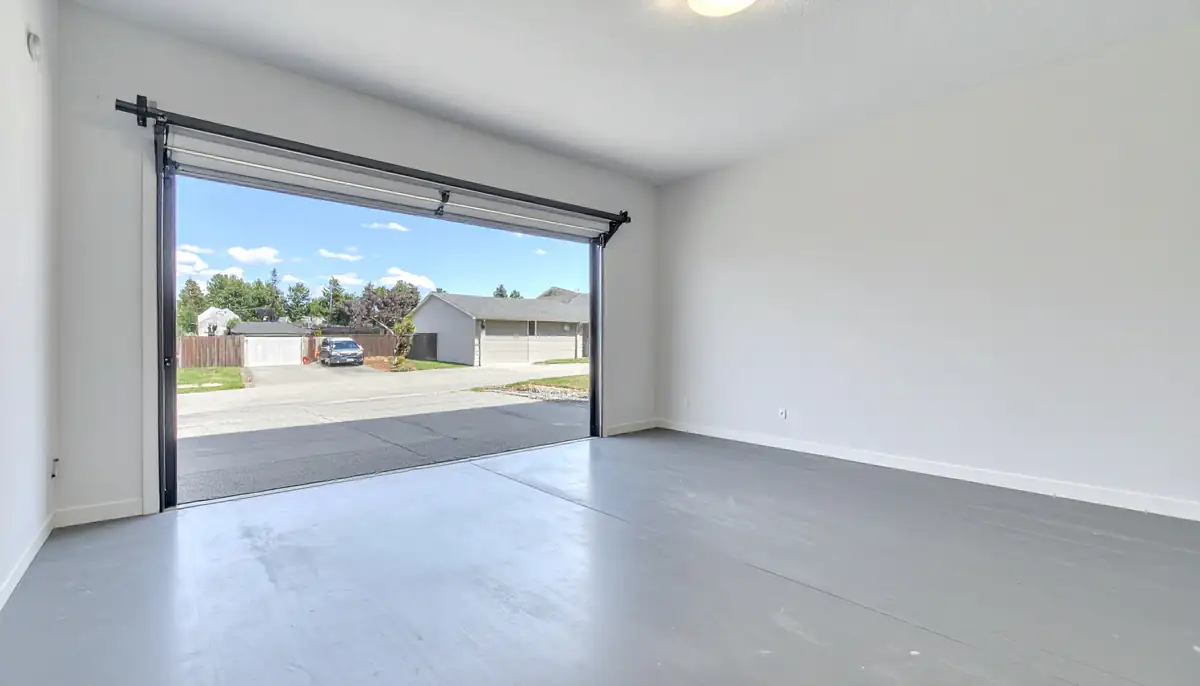
You already know what happens. November hits, you start tracking in salt, and by March your garage floor looks like it aged ten years. Those white stains aren’t just ugly—they’re subfluorescence, which means salt is crystallizing under your concrete and breaking it apart from the inside.
A proper epoxy coating garage floor creates a sealed barrier. No moisture gets through. No salt penetrates. Your concrete stops deteriorating because nothing can reach it anymore.
And the maintenance part? You’re done scrubbing stains that won’t come out. Spills wipe up in seconds. Dirt doesn’t stick. Your floor stays clean without you spending your Saturday afternoon on your hands and knees with a wire brush.
This isn’t about making your garage pretty—though it will look better than it ever has. It’s about stopping the cycle of damage before you’re looking at concrete replacement, which costs a whole lot more than coating it right the first time.
We’ve been installing epoxy flooring in Connecticut since 2020, but the people behind American Poly Floor bring over 30 years of experience to every job. We’re locally owned, BBB accredited, and EPA Lead Safe Certified.
Baltic homeowners deal with specific challenges. Your houses are older—the median age here is over 50 years. Your winters are harsh. Your concrete wasn’t built to handle modern road salt treatments, and it shows.
We’ve coated hundreds of garage floors across Connecticut. We know what works in this climate and what fails. We’ve seen every DIY disaster, every peeling big-box kit, every moisture issue that comes with New England basements and garages. That’s why we test for moisture before we start, prep your concrete properly, and use commercial-grade materials that actually hold up.
First, we assess your concrete. Not every floor is ready for epoxy, and we’re not going to take your money if moisture or structural issues will cause problems later. We test for hidden moisture—the number one reason epoxy fails in Connecticut—and address it before we coat.
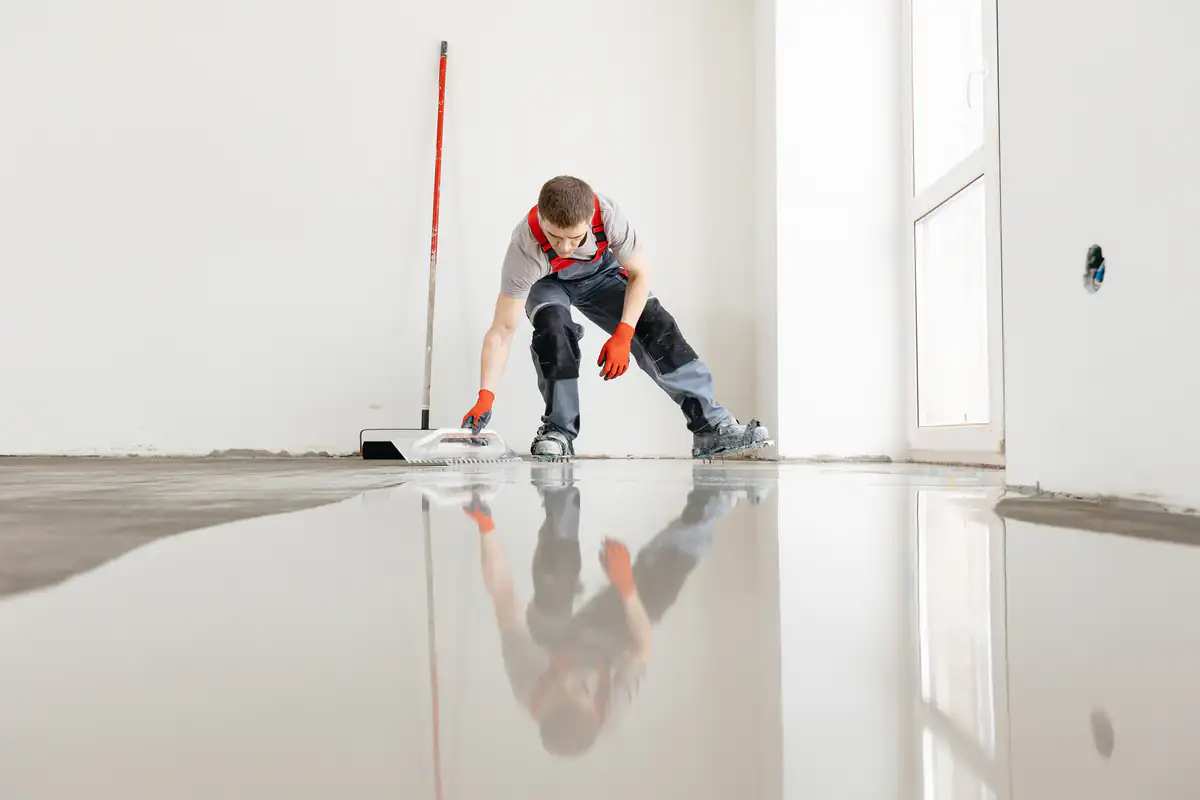
Next comes surface prep. This is where most DIY jobs and cheap contractors fail. We diamond-grind your concrete to open the pores and create a profile that epoxy can actually bond to. If you have cracks or joints that need attention, we repair them. If you skip this step, your coating will peel. It’s not a question of if, it’s when.
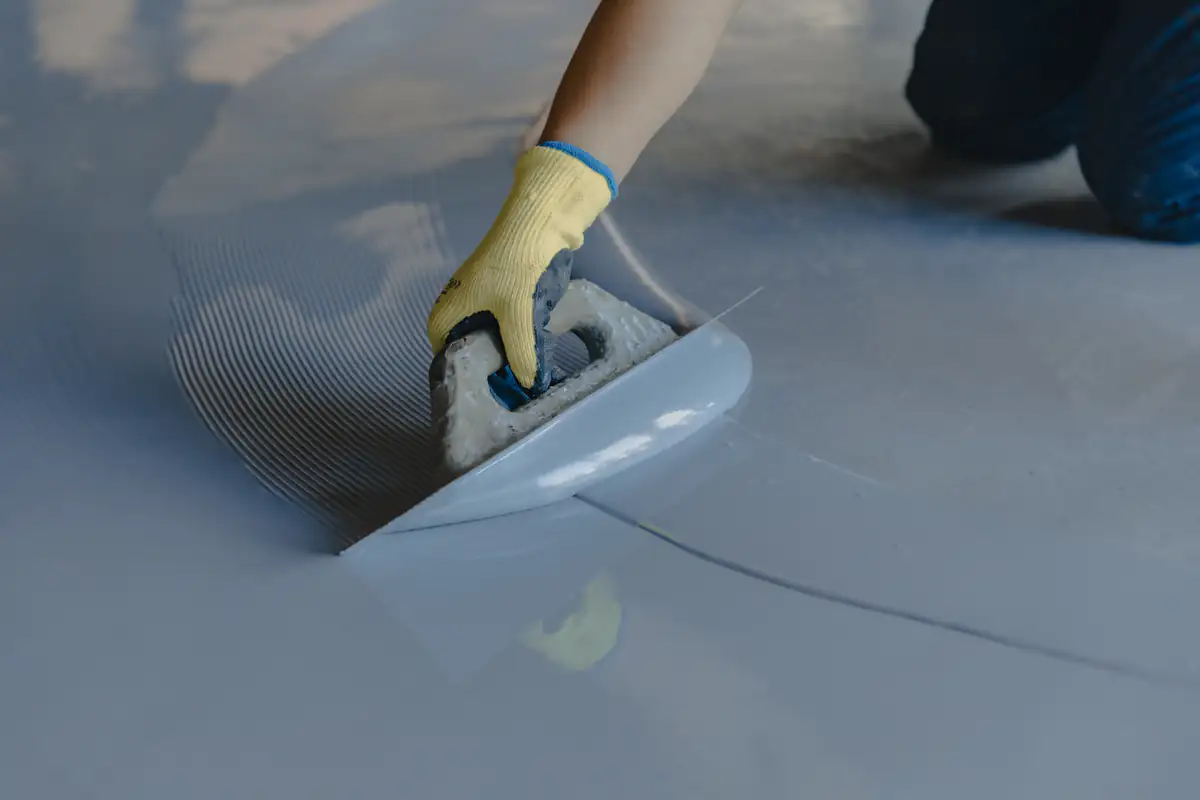
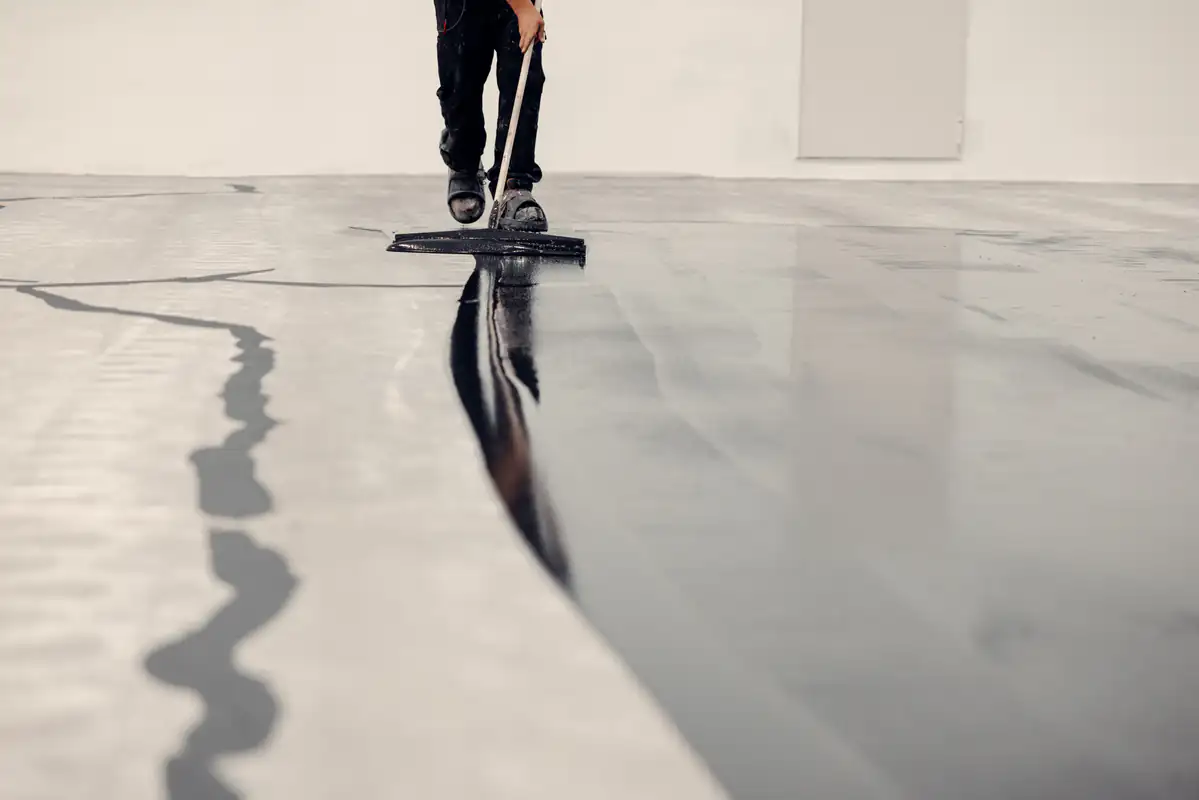
Then we apply the epoxy system. Depending on your floor and what you need, this might be a multi-layer process with a base coat, color flakes for texture and grip, and a clear topcoat. We’re using professional-grade epoxy resin garage floor materials—not the stuff you find in a box at the hardware store.
Cure time matters. You’ll need to stay off it for at least 24 hours, and we recommend waiting a full week before parking heavy vehicles. Rushing this is how you end up with tire marks that won’t come off.
Ready to get started?
You’re getting a garage floor coating that’s built for Baltic winters. That means a system designed to handle freeze-thaw cycles, road salt exposure, and the kind of moisture that seeps into every concrete slab in this part of Connecticut.
We offer multiple finish options—solid colors if you want clean and simple, decorative flakes if you want texture and visual interest, or metallic finishes if you’re going for a showroom look. The choice is yours, but the durability is the same across the board.
Every job includes proper surface preparation, moisture testing, crack and joint repair if needed, and a multi-coat system that bonds to your concrete at a molecular level. We’re also adding slip resistance where it makes sense, especially near entry doors where water and snow get tracked in.
Baltic homes typically have older garages with concrete that’s seen decades of use. We account for that. Your floor might need more prep than a newer build, and we price accordingly. But once it’s done, you’re looking at a floor that will outlast the next several winters without breaking down the way bare concrete does.
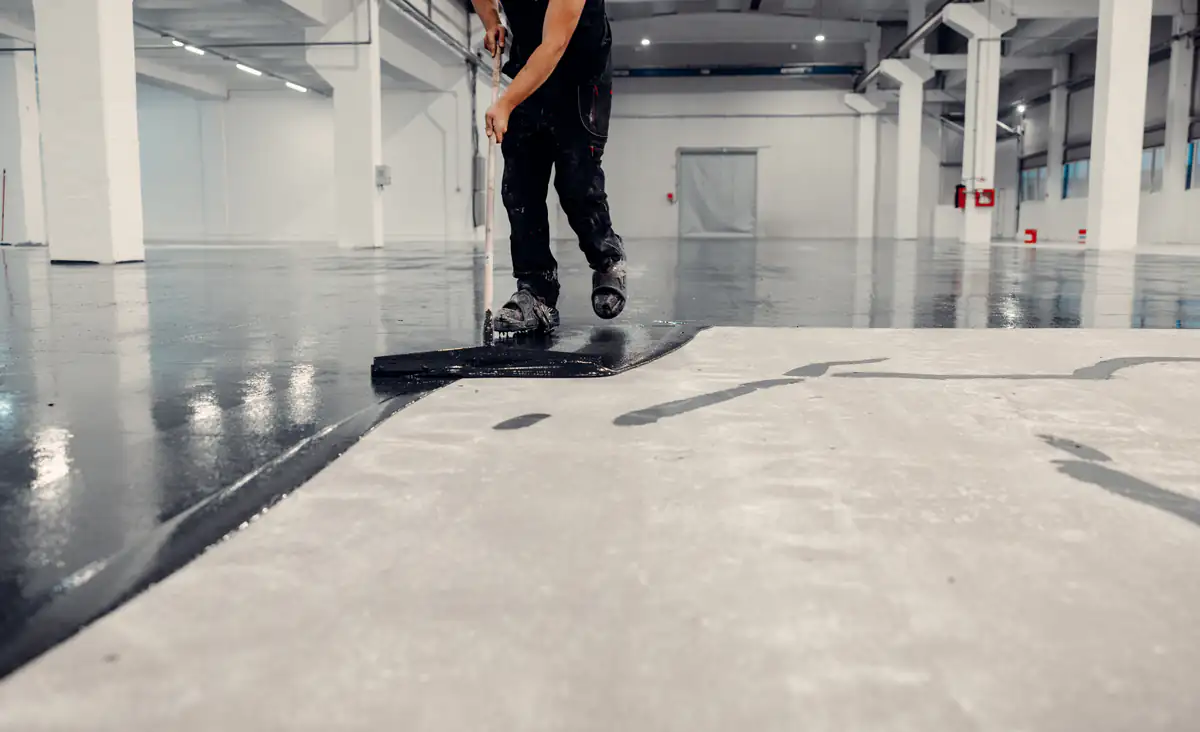
A professionally installed epoxy coating garage floor should last 15 to 20 years in a residential garage, assuming normal use. That’s with cars driving on it, salt and chemicals being tracked in, and typical Connecticut weather conditions.
The lifespan depends entirely on installation quality. If the concrete wasn’t prepped right, if moisture wasn’t tested, or if low-grade materials were used, you might see failure in under a year. That’s why DIY kits and discount contractors often create more problems than they solve.
We use commercial-grade epoxy resin garage floor systems that are thicker and more chemical-resistant than consumer products. The topcoat is what takes the abuse, and ours is formulated to resist UV yellowing, hot tire pickup, and the kind of salt exposure that Baltic garages see every winter. You’re not recoating this in three years.
Not usually, and here’s why. Epoxy cures through a chemical reaction that’s highly temperature-dependent. If your garage is below 50 degrees, the epoxy won’t cure properly. It’ll stay soft, it won’t bond right, and you’ll have problems.
Most epoxy flooring contractors in Connecticut install from late spring through fall. October and November are actually ideal months—the temperatures are stable, humidity is lower, and your garage isn’t freezing yet. If you’re thinking about coating your floor, fall is the time to call.
If you need winter installation, we’d have to heat your garage and maintain that temperature for several days during application and curing. It’s possible, but it adds cost and complexity. Better to plan ahead and book during the optimal window when conditions are naturally right for a solid cure.
Two reasons: thin coatings and poor surface prep. The kits you buy at big box stores are usually 2 to 3 mils thick when applied. Professional systems are 10 to 20 mils or more. Thicker coatings are more durable, more chemical resistant, and far less likely to peel or wear through.
But thickness doesn’t matter if the concrete wasn’t prepped. Epoxy bonds mechanically, meaning it grips into the pores of the concrete. If you just clean and acid-etch like the kit instructions say, you’re not opening up the surface enough. We diamond-grind because it creates the profile epoxy needs to actually hold.
Most DIY failures happen within the first year. You’ll see peeling at the edges, bubbling where moisture got trapped, or tire marks that won’t come off because the coating is too soft. Once it fails, you can’t just recoat it. The old epoxy has to be ground off completely, which costs more than hiring a professional in the first place.
Garage floor paint is a topical coating that sits on the surface. It’s thin, it wears quickly, and it doesn’t bond the way epoxy does. You’ll see traffic patterns within months, and it’ll need repainting every couple of years. Paint also doesn’t seal your concrete—moisture and salt still get through.
Epoxy flooring is a thick, chemically bonded system that becomes part of your concrete. It seals the surface completely, protects against moisture and salt penetration, and resists chemicals, abrasions, and impacts that would destroy paint. It’s not a cosmetic fix. It’s a protective barrier.
If you’re just looking to freshen up the appearance and you’re okay repainting regularly, garage floor paint is cheaper upfront. But if you want to stop concrete damage, eliminate maintenance, and not think about your floor again for 15 years, epoxy is the only real option. Different products for different goals.
For a standard two-car garage, expect to pay between $3 and $8 per square foot for professional epoxy flooring in Connecticut. That’s roughly $1,500 to $4,000 for a 500-square-foot space, depending on the condition of your concrete and the system you choose.
Price varies based on how much prep your floor needs. If we’re dealing with significant cracking, moisture issues, or old coatings that need removal, costs go up. Decorative options like metallic finishes or custom colors also add to the total. But you’re paying for a system that lasts decades, not a quick cosmetic fix.
Cheaper quotes usually mean corners are being cut—thin coatings, minimal prep, or inexperienced installers. We’ve recoated plenty of floors where someone went with the lowest bid and regretted it a year later. You’re better off paying for quality once than paying twice to fix a bad job.
A smooth epoxy finish can be slippery when wet, especially near doorways where snow and water get tracked in. That’s why we add slip-resistant additives to the topcoat in areas where traction matters. You won’t even notice them visually, but they make a real difference underfoot.
If you choose a flake system—where we broadcast colored chips into the base coat—you’re getting built-in texture. The flakes create a slightly rougher surface that improves grip naturally. It’s one reason why decorative flake floors are popular in garages.
We talk through slip resistance during the consultation because every garage is different. If you’re in and out frequently during winter, if you have kids or older family members using the space, or if the garage has a slope, we’ll make sure the floor is safe. A beautiful floor that causes falls isn’t worth having.
Local Resources
Other Services we provide in Baltic