Choosing the right epoxy garage floor means balancing style with real-world performance. This guide walks you through flake, metallic, and quartz options—plus how to pick colors that work.
The best epoxy garage floor isn’t just about picking a color you like. It’s about choosing a garage floor coating that protects your concrete, handles the demands you put on it, and looks good year after year.
Epoxy creates a chemical bond with concrete—not just a coating that sits on top. When installed correctly, it seals the pores, stops moisture penetration, and creates a surface that resists stains, chemicals, and impact. That’s why it’s the go-to solution for garages in Hartford County, CT, New London County, CT, New Haven County, CT, and Middlesex County, CT—places where road salt and freeze-thaw cycles destroy unprotected concrete.
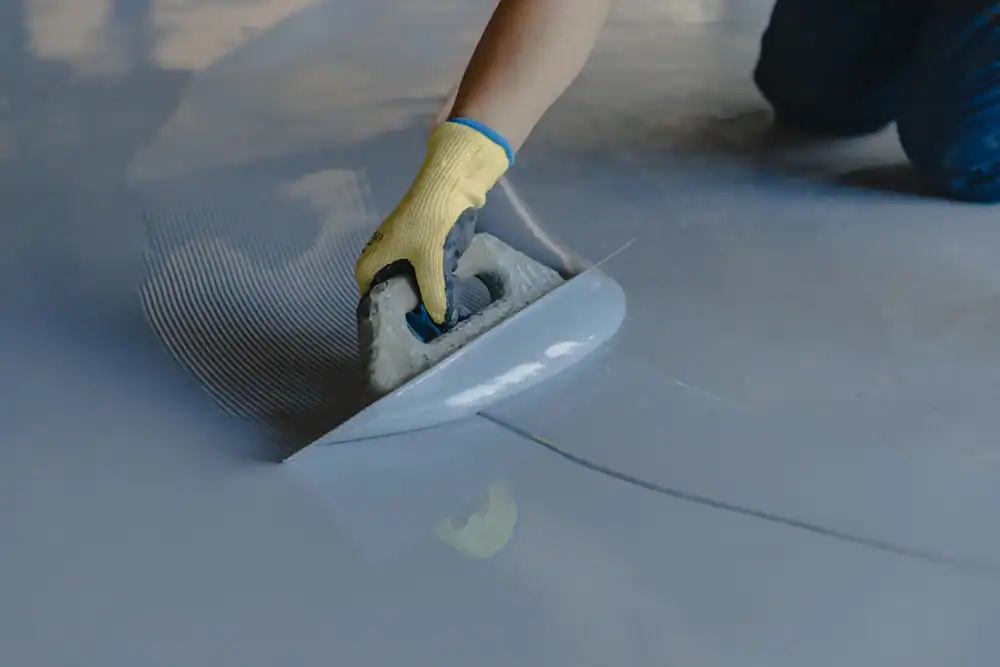
But not all epoxy systems perform the same. The best ones use professional-grade materials—100% solids epoxy or polyaspartic coatings—that are exponentially thicker and tougher than big-box store kits. We apply them over properly prepared concrete and finish with a UV-stable topcoat that prevents yellowing and hot-tire pickup. That’s the difference between a floor that lasts 15-20 years and one that starts peeling in 18 months.
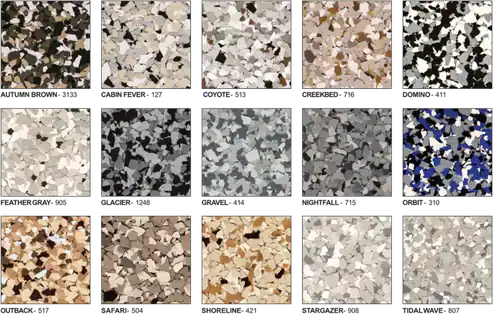
If you’ve seen a garage floor that looks like a terrazzo countertop or speckled granite, that’s a flake system. It’s the most common choice for residential garages, and for good reason—it balances durability, style, and practicality better than anything else.
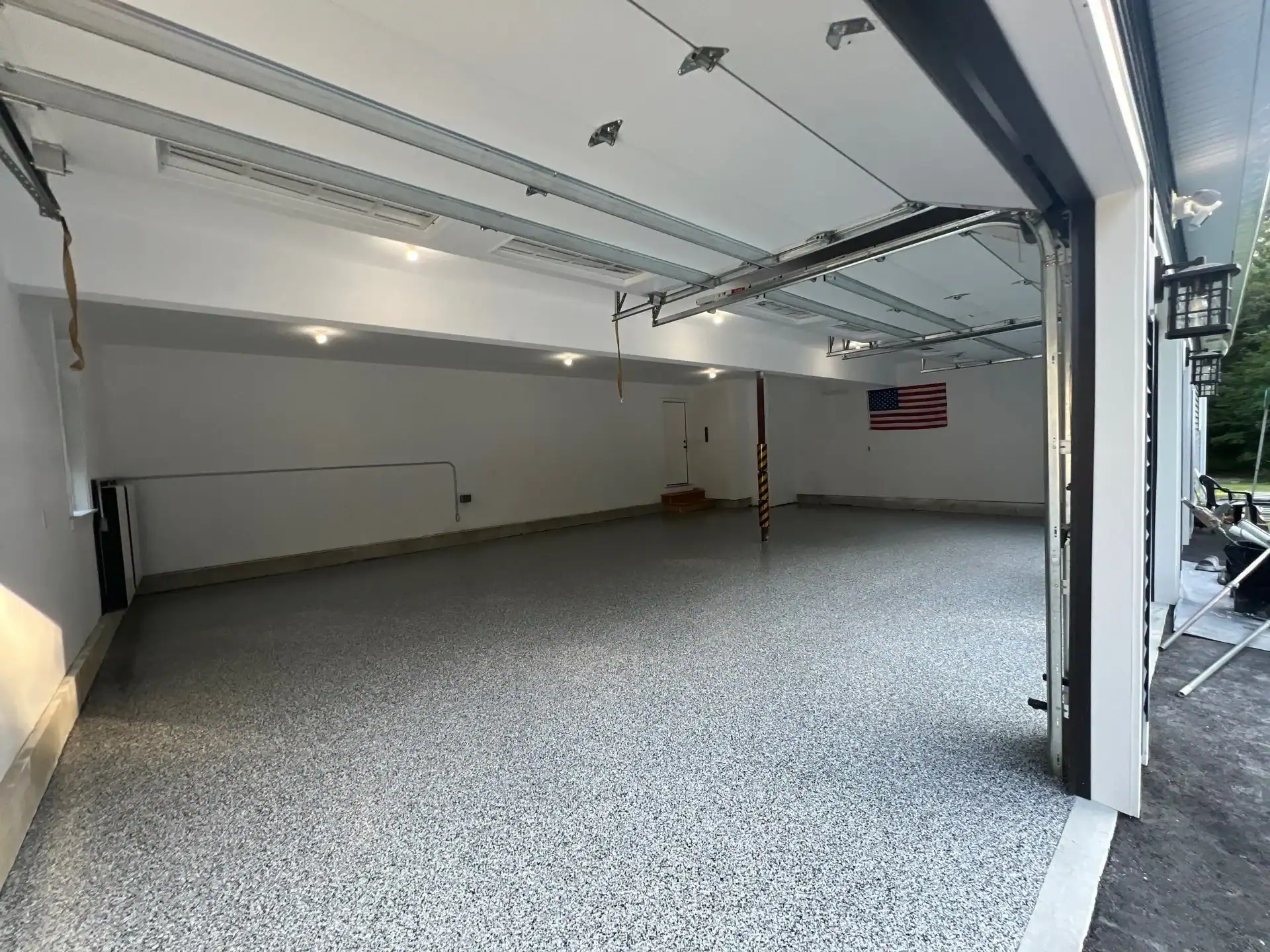
Flake systems work by broadcasting decorative vinyl chips—usually 1/4″ in size—into a wet epoxy base coat. The flakes are then sealed with a clear polyaspartic topcoat, creating a seamless, durable surface with visual depth and texture. The result is an epoxy finish garage floor that hides dirt, adds slip resistance, and gives you a polished look without the high-gloss sterility of a solid color.
The beauty of flake floors is the sheer number of garage epoxy floor ideas available. You can go with earth tones for a natural stone look, gray blends for a modern industrial vibe, or bold colors if you want something that stands out. A full broadcast—where flakes are applied “to rejection,” covering the base coat completely—gives you the best hide and durability. Partial broadcasts use less material and let some of the base color show through, which works if you want a lighter, more subtle effect.
Flake systems are also forgiving. They hide minor imperfections in your concrete and camouflage the kinds of stains and scuffs that come with regular use. If you’re parking cars, using your garage as a workshop, or dealing with Connecticut winters, a flake floor gives you the performance and aesthetic flexibility to handle it all. Plus, the texture provides better traction than smooth finishes—especially important when snow melt and road salt make their way into your garage.
One thing to keep in mind: not all flakes are the same size. Smaller 1/8″ or 1/16″ flakes create a more refined, quartz-like appearance with subtle texture. Larger flakes give you that classic granite countertop look with more visual impact. The size you choose affects both the style and the feel underfoot.
Metallic epoxy floors are for homeowners who want something truly custom. These systems use metallic pigments suspended in clear epoxy resin to create swirling, three-dimensional effects that mimic marble, flowing water, or molten metal. No two metallic floors are exactly alike—the way the pigments move and settle during installation creates a unique pattern every time.
The process is more complex than a standard flake system. After the concrete is prepped, a base coat is applied, followed by a metallic epoxy layer that’s manipulated with rollers, squeegees, or even air to create the desired effect. The floor is then sealed with a high-performance polyaspartic topcoat to protect the metallic layer and bring out the depth and shimmer of the pigments. The result is a showroom-quality finish that makes your garage feel more like a high-end living space.
Metallic floors are stunning, but they’re not for everyone. The installation requires skill and experience—if the installer doesn’t know what they’re doing, you can end up with streaks, uneven color, or a finish that doesn’t flow the way you envisioned. They’re also more expensive than flake systems because of the materials and labor involved.
But if you’re looking to make a statement—whether it’s a garage that doubles as an entertainment space, a high-end basement, or a workshop you’re proud to show off—metallic epoxy delivers. You’ll have 50+ metallic colors to choose from, and you can layer multiple colors to create even more complex effects. The visual impact is dramatic, and the floor becomes a conversation piece.
One practical note: metallic floors need a protective topcoat to prevent wear and UV exposure from dulling the finish. Without it, the metallic layer can scratch or lose its luster over time. A quality polyaspartic topcoat solves that problem and adds a glossy, glass-like finish that enhances the visual depth.
If you’re considering a metallic system, make sure you’re working with an experienced installer who can show you past projects and walk you through the design process. The best metallic floors are collaborative—you’ll work together to choose colors, decide on the level of movement and pattern, and create something that fits your vision.
Want live answers?
Connect with a American Poly Floor expert for fast, friendly support.
Color choice matters more than you might think. Your garage floor is one of the first things you see when you pull in, and if you have an attached garage, it’s part of your home’s interior flow. Picking the right epoxy garage floors colors means thinking about your home’s existing palette, the amount of natural light your garage gets, and how you want the space to feel.
Neutral tones—grays, tans, beiges—are popular because they’re versatile and hide dirt well. They work with almost any home style and won’t clash with your vehicles or storage setup. If you want something bolder, earth tones like browns, rusts, and greens give you a natural, grounded look that pairs well with traditional or craftsman-style homes.
For a modern, industrial vibe, consider cooler tones like charcoal, slate, or even black with metallic accents. These colors create a sleek, high-contrast look that works especially well in contemporary homes or if you’re going for a showroom aesthetic. Just keep in mind that darker solid colors will show dust and tire marks more easily than lighter, multi-toned flake blends.

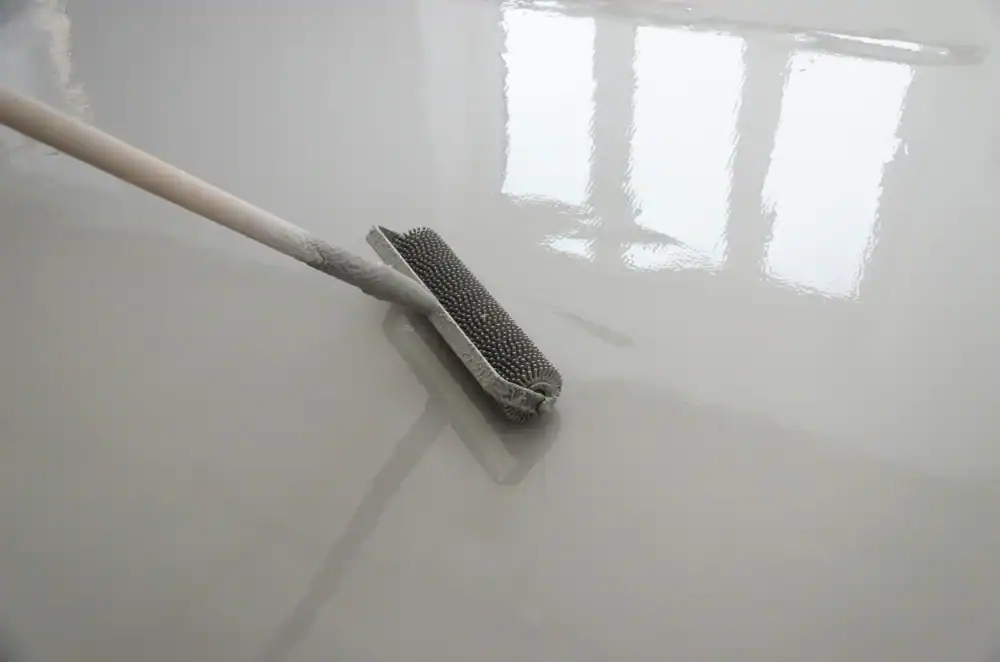
Solid color epoxy floors are exactly what they sound like—a single, uniform color applied across the entire surface. They’re the simplest garage floor coating to install and the most cost-effective option if you’re working with a tight budget. Solid colors give you a clean, minimalist look with a high-gloss finish that reflects light and makes your garage feel brighter and more spacious.
The downside? Solid colors show everything. Dust, footprints, tire marks, and any imperfections in your concrete will be more visible than they would be with a flake or textured system. If you’re someone who likes a spotless garage and doesn’t mind occasional cleaning, solid colors can work. But for most residential garages in Connecticut—where road salt, snow melt, and everyday use create constant messes—a blended flake system is the smarter, more forgiving choice.
Blended flake floors use multiple colors of vinyl chips mixed together to create depth and visual interest. The flakes break up the surface, so dirt and scuffs blend in rather than standing out. You get a more forgiving floor that still looks polished and intentional, without the constant maintenance that solid colors demand.
Blended flakes also give you more design flexibility and better performance. You can mix warm and cool tones, add metallic flakes for shimmer, or create custom blends that match your home’s color scheme. And because the flakes add texture, you get better slip resistance than a smooth solid color—especially important if you’re dealing with snow melt, spills, or wet conditions.
If you’re torn between the two, think about how you use your garage. If it’s a low-traffic space that stays relatively clean—maybe a single-car garage for a collector vehicle—solid color might work. But if you’re parking daily drivers, working on projects, storing equipment, or dealing with Connecticut winters, a blended flake system will serve you better in the long run. It’s the difference between a floor that looks great only when it’s pristine and one that looks great all the time.
Quartz systems take garage floor coating durability to the next level. Instead of vinyl flakes, these floors use colored quartz sand—an extremely hard, naturally occurring material that’s been coated with pigment. Quartz is broadcast into the epoxy base coat just like flakes, but the result is a much more aggressive texture and a floor that can handle serious abuse without showing wear.
Quartz floors are most common in commercial and industrial settings—think warehouses, auto shops, and manufacturing facilities—but they’re also a smart choice for residential garages if you’re working with heavy equipment, running a home-based business, or just want the toughest floor possible. The texture provides maximum slip resistance, even when wet, and the quartz itself is nearly indestructible. If you’re parking trucks, moving machinery, or using your garage as a serious workshop, quartz delivers performance that standard flake systems can’t match.
The trade-off is that quartz floors don’t have the same visual appeal as flake or metallic systems. They’re more utilitarian, with a rougher texture underfoot. The look is less polished and more industrial. But if performance and longevity are your top priorities—if you need a floor that will outlast everything you throw at it—quartz is the answer.
Custom blends are another option worth considering if you want something truly tailored to your home. We offer hybrid systems that combine different flake sizes, colors, and even metallic accents to create a unique look that matches your specific style. These blends let you dial in the exact aesthetic you’re after—whether that’s a rustic farmhouse vibe, a sleek modern look, or something in between.
If you’re going the custom route, we’ll work with you to balance aesthetics with performance, so you end up with a floor that looks exactly how you want it and functions the way you need it to. We’ll also guide you on flake density, color ratios, and topcoat options to make sure the final result matches your vision.
Choosing the best epoxy garage floor comes down to understanding your space, your priorities, and how you actually use your garage. Start by thinking about performance—do you need a floor that can handle road salt and freeze-thaw cycles common in Hartford County, CT, New London County, CT, New Haven County, CT, and Middlesex County, CT? Are you parking multiple vehicles, or is this a workshop space? Then layer in aesthetics—what colors and finishes match your home and make you feel good when you walk in?
Flake systems are the safe bet for most homeowners. They’re durable, versatile, and forgiving. Metallic floors are for those who want something bold and one-of-a-kind. Quartz systems are for maximum performance when you need a floor that can take a beating. And solid colors work if you’re after simplicity and don’t mind a little extra cleaning.
No matter which system you choose, make sure it’s professionally installed. The difference between a floor that lasts decades and one that fails in months comes down to proper surface preparation, quality materials, and an installer who knows what they’re doing. If you’re ready to upgrade your garage, we can walk you through your options and help you design an epoxy finish garage floor that fits your home, your budget, and your life.
Summary:
Article details:
Share: