Connecticut winters destroy bare concrete. Epoxy garage floors protect against road salt, stains, and freeze-thaw damage while making maintenance easier than you'd expect.
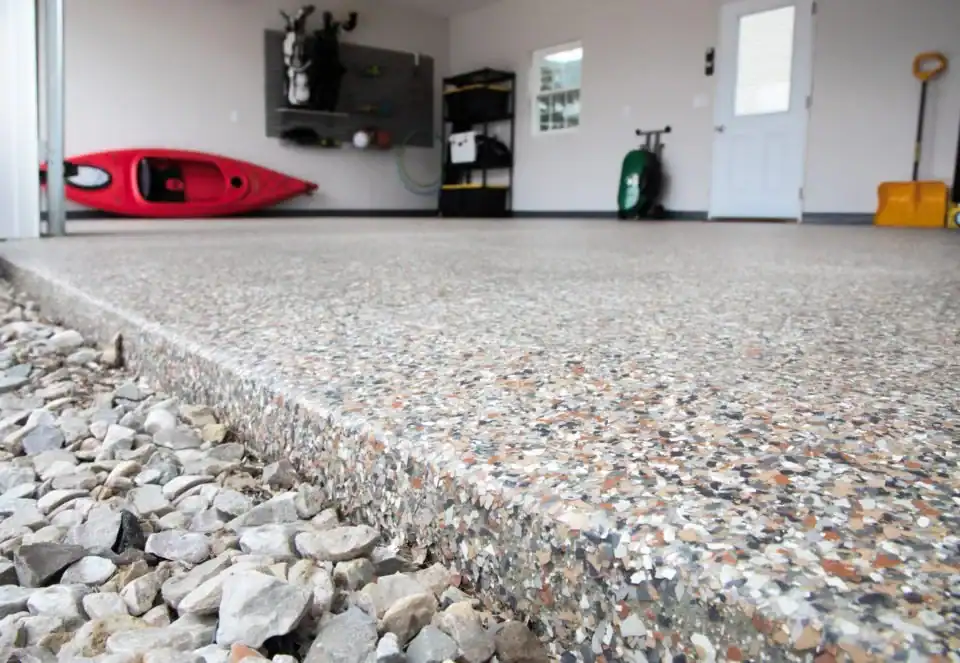
Bare concrete looks solid, but it’s actually porous at a microscopic level. Liquids seep in, stains set deep, and road salt works its way into the surface where it crystallizes and causes damage from the inside out. You can’t see the damage happening until it’s already done.
Epoxy creates a seamless, non-porous surface that bonds directly to your concrete at a molecular level. Nothing penetrates it. Oil spills sit on top where you can wipe them away. Road salt and deicing chemicals can’t reach the concrete underneath. The coating essentially turns your garage floor into a sealed, protective shell that handles the daily wear your space actually sees.
The difference isn’t just cosmetic. It’s functional. You’re not covering up concrete—you’re fundamentally changing how your floor performs under real-world conditions that matter for families, vehicles, and daily life.
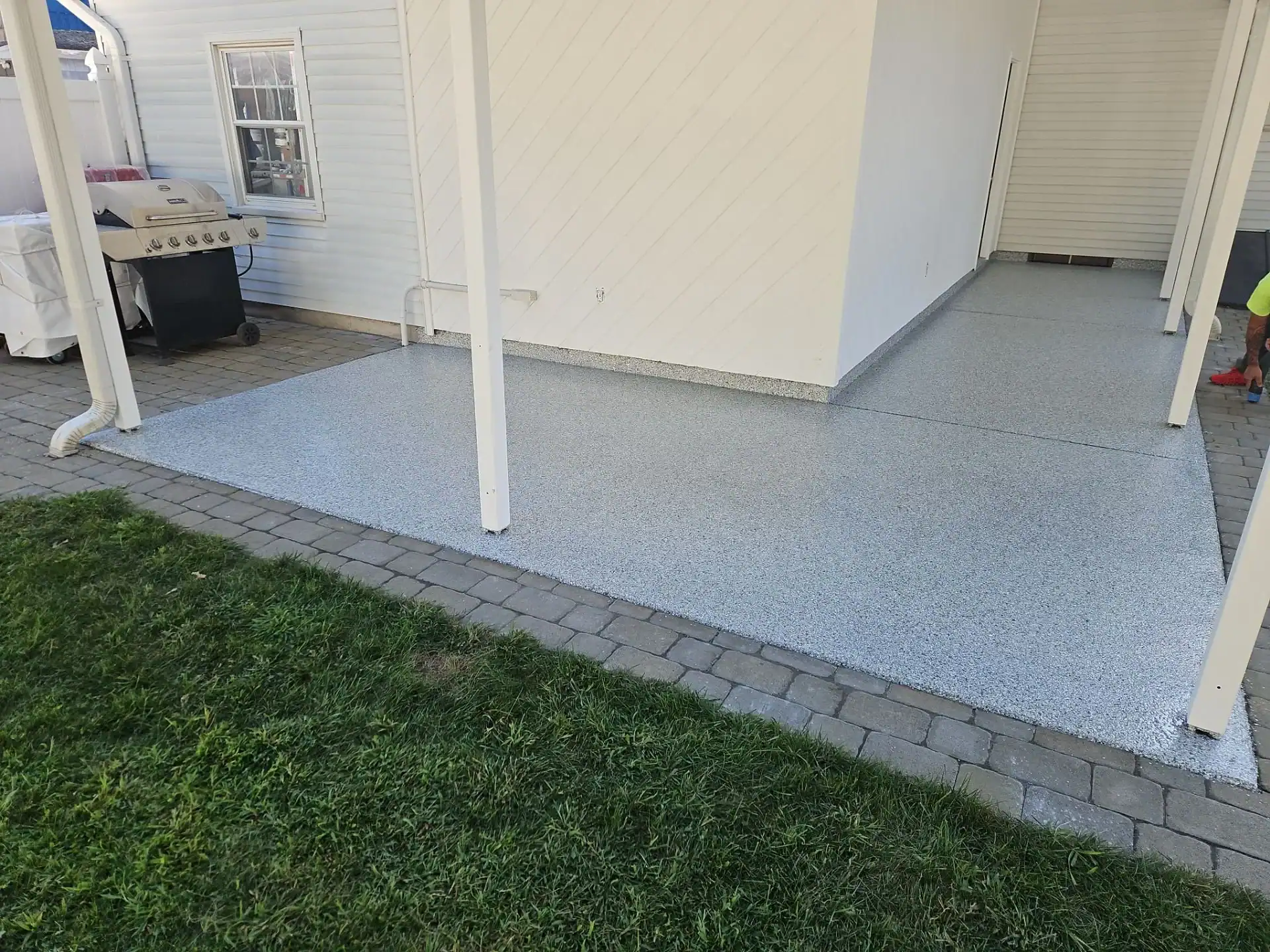
Connecticut winters are brutal on unprotected garage floors. Every time you pull into your garage between November and March, your vehicle brings snow, ice, and road salt with it. That salt doesn’t just sit there looking ugly—it melts, mixes with water, and seeps into bare concrete where it starts a destructive process most homeowners don’t see until spring reveals the damage.
Here’s what happens beneath the surface: the salt solution penetrates the pores of your concrete. When temperatures drop, that moisture freezes and expands, creating tiny fractures in the concrete structure. When it warms up, it thaws. This freeze-thaw cycle repeats dozens of times throughout winter, and each cycle makes existing cracks worse while creating new ones. The salt itself is mildly acidic, which lowers the pH of your concrete and increases pore size, allowing even more moisture and chemicals to penetrate deeper.
By spring, you’re looking at spalling (chunks of concrete flaking off), deeper cracks spreading across your floor, and white salt stains that won’t wash away no matter how many times you hose down the surface. The damage compounds each winter, shortening the lifespan of your concrete and creating repair costs that add up fast.
Residential epoxy flooring stops this destructive process completely. The coating seals the concrete surface, preventing salt and moisture from penetrating in the first place. Road salt, deicing chemicals, and water from melting snow all stay on top of the epoxy where they can be swept or mopped away in minutes. Your concrete stays protected underneath, and you avoid the cycle of deterioration that bare floors go through every single winter in Hartford County, New Haven County, and throughout Connecticut.
This isn’t just about avoiding cosmetic damage. Concrete repairs are expensive, and once spalling starts, it tends to spread. An epoxy coating is preventive maintenance that actually prevents the damage instead of just patching it after the fact. For Connecticut homeowners, that winter protection alone justifies the investment.
You can buy epoxy kits at hardware stores for a few hundred dollars. They’re cheaper upfront, and the marketing makes application sound simple enough for a weekend project. But there’s a reason professional installations last 15-20 years while DIY kits often start failing within 12-18 months: surface preparation and material quality make all the difference between a floor that performs and one that disappoints.
Proper epoxy installation starts with preparing the concrete correctly. That means grinding or acid-etching the surface to open up the pores so the epoxy can bond at a molecular level. Any contamination—oil residue, old sealers, dust, or dirt—prevents proper adhesion. Most homeowners don’t have the specialized equipment or experience to prep the surface correctly, which is why DIY epoxy often delaminates (peels away from the concrete) within months of installation.
Material quality creates an equally significant performance gap. Professional-grade epoxies use 100% solids formulations that cure into thick, durable coatings capable of handling heavy vehicle traffic and chemical exposure. The epoxy kits sold at retail stores are typically water-based with lower solids content, meaning they cure into thinner, weaker films that can’t handle the same level of abuse. They might look similar when first applied, but the performance gap becomes glaringly obvious once you start actually using the floor.
We also know how to apply the right system for your specific situation and conditions. That might mean using a primer coat for better adhesion, adding UV-stable polyurethane or polyaspartic topcoats to prevent yellowing from sunlight exposure, or incorporating decorative flakes for texture and slip resistance. These aren’t just upsells—they’re the difference between a coating that performs for decades and one that disappoints within a year.
If you’re going to invest in an epoxy garage floor, the installation quality determines whether you get the garage floor epoxy advantages you’re paying for or end up redoing the whole project in a couple years. It’s not the place to cut corners or save a few hundred dollars upfront.
Want live answers?
Connect with a American Poly Floor expert for fast, friendly support.
Epoxy garage floors aren’t about creating perfection—they’re about delivering practical benefits you notice every time you use your garage. The advantages that matter most are the ones that make daily life easier: simpler cleaning, genuine stain resistance, and a floor that actually holds up to how real families live.
The sealed surface means spills don’t penetrate and become permanent stains. Oil drips from your car, paint from a weekend project, or mud tracked in from outside—all of it stays on top where you can clean it up. Most of the time, a quick sweep or mop with water is all you need. Compare that to bare concrete, where oil stains are permanent fixtures and salt residue keeps reappearing no matter how many times you scrub or pressure wash.
Durability is the other major benefit that matters in real conditions. Epoxy floors handle heavy vehicle traffic, dropped tools, rolling tool chests, jack stands, and the general abuse that garages see when they’re actually used. The coating resists impacts, abrasion, and the chemicals you’re likely to encounter—brake fluid, antifreeze, gasoline, household cleaners, and more. Your floor doesn’t chip, crack, or wear away in high-traffic areas the way bare concrete does over time.
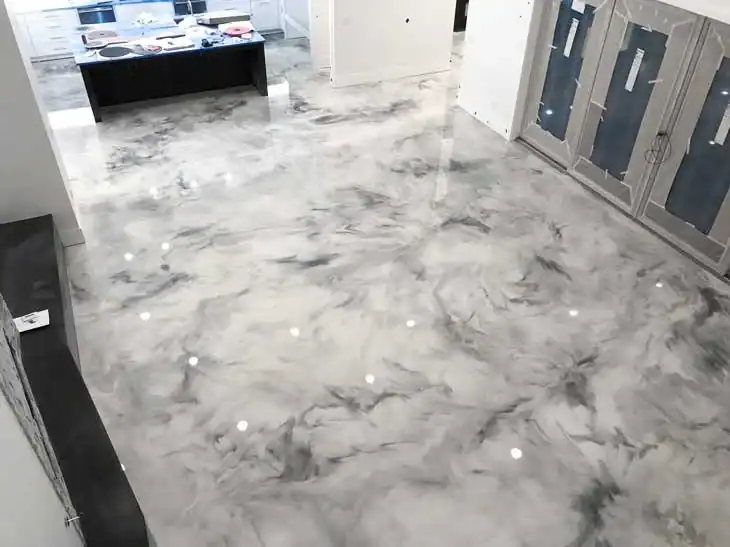
Stain resistance isn’t marketing hype—it’s basic chemistry working in your favor. Epoxy creates a non-porous barrier that liquids physically cannot penetrate. When oil drips from your car during an oil change or you spill something while working on a project, it sits on the surface instead of soaking into the concrete pores. That gives you time—hours or even days—to clean it up before it could potentially cause any marking, and in most cases, a simple wipe removes it completely.
Chemical resistance works through the same principle. Automotive fluids—motor oil, transmission fluid, brake fluid, antifreeze—are specifically engineered to lubricate or cool engines, which makes them particularly effective at penetrating porous materials like unprotected concrete. On bare concrete, these fluids soak in within minutes and leave stains that never come out, no matter what cleaning products you try. On epoxy, they can’t penetrate the coating, so they don’t stain the concrete underneath. You wipe them up and move on.
Road salt and deicing chemicals present an especially harsh challenge because they’re mildly acidic compounds. On bare concrete, they lower the pH of the surface, which increases pore size and accelerates deterioration. The salt literally eats away at the concrete paste and aggregate, allowing more moisture and chemicals to penetrate deeper with each exposure. It’s a destructive cycle that compounds over time, getting worse each winter. Epoxy coating benefits include breaking that cycle completely by preventing the chemicals from reaching the concrete in the first place.
This chemical protection matters tremendously for Connecticut homeowners because winter weather isn’t optional here. Every vehicle that enters your garage from November through March is carrying salt, sand, and deicing chemicals on tires and undercarriage. An epoxy coating is the difference between a floor that degrades a little more each winter and one that stays protected year after year, maintaining its integrity and appearance regardless of what gets tracked inside.
The practical benefit is straightforward: you spend less time trying to clean stains that won’t come out, and you avoid the expense of repairing concrete damage that could have been prevented with proper protection from the start.
Maintenance for epoxy garage floors is refreshingly straightforward: sweep when needed, mop occasionally with mild soap and water, and that’s essentially it. There’s no waxing schedule to maintain, no periodic sealing to remember, no special treatments to purchase. The floor doesn’t absorb dirt or concrete dust, so cleaning is faster and more effective than it ever was with bare concrete. Most homeowners find they spend less time maintaining their garage floor after epoxy installation than they did before.
Long-term durability depends entirely on proper installation quality and the materials used in your system. Professional-grade epoxy systems with UV-stable topcoats routinely last 15-20 years in residential settings with normal use. That’s not marketing exaggeration—it’s what actually happens when the concrete is properly prepped, high-quality materials are applied correctly, and the coating is given adequate time to cure before use.
Compare that longevity to other garage flooring options available to homeowners. Garage floor paint lasts maybe 1-2 years before it starts peeling and looking terrible. Interlocking garage floor tiles can shift position, trap moisture underneath that damages concrete, and don’t actually protect the surface. Bare concrete requires constant cleaning efforts and still deteriorates over time despite your work. Epoxy is the only option that genuinely combines ease of maintenance with long-term protection that justifies the initial investment.
The durability also means you’re not constantly worrying about damaging your floor during normal use. You can park heavy vehicles, drag tool chests and equipment, drop tools, move motorcycles or ATVs, and use your garage the way it’s meant to be used. The floor handles it without complaint. That peace of mind—knowing your floor isn’t fragile or high-maintenance—is worth something tangible, especially if you actually use your garage for more than just parking and storage.
One thing to understand clearly: epoxy floors aren’t indestructible or immune to all damage. Extremely hot items (like welding slag or cutting torch sparks) can burn through the coating. Sharp, concentrated impacts from heavy objects dropped from height can chip it. But for normal garage use—parking vehicles, working with tools, weekend projects, storage—properly installed residential epoxy flooring holds up better and longer than any other flooring option at a comparable price point. The return on investment comes from years of easy maintenance and avoided repair costs.
Epoxy garage floors make practical sense when you want protection that actually works under real conditions, maintenance you can manage without special equipment or constant effort, and durability that lasts long enough to justify the investment. They’re not the cheapest option upfront, but they’re genuinely cost-effective over time because you’re not paying for concrete repairs or reapplying coatings every few years.
For Connecticut homeowners dealing with harsh winter weather, road salt exposure, and the general wear that comes with daily family use, epoxy addresses the specific problems that bare concrete simply can’t handle. It protects against the freeze-thaw cycles and chemical damage that shorten the lifespan of unprotected floors. It makes cleaning easier and more effective. And it holds up to the kind of use real garages see when they’re part of active households.
If you’re considering an epoxy garage floor for your home, understand that the quality of installation matters just as much as the decision itself. Proper surface preparation, professional-grade materials, and experienced application are what separate floors that perform beautifully for decades from ones that fail and disappoint within a year. We specialize in residential epoxy flooring for homeowners throughout Hartford County, New Haven County, New London County, and Middlesex County who want floors that work as hard as they do and protect their investment for years to come.
Summary:
Article details:
Share: