Commercial garages need flooring that handles heavy traffic, chemical spills, and constant abuse—not paint that peels in months. Here's why professional epoxy systems win.
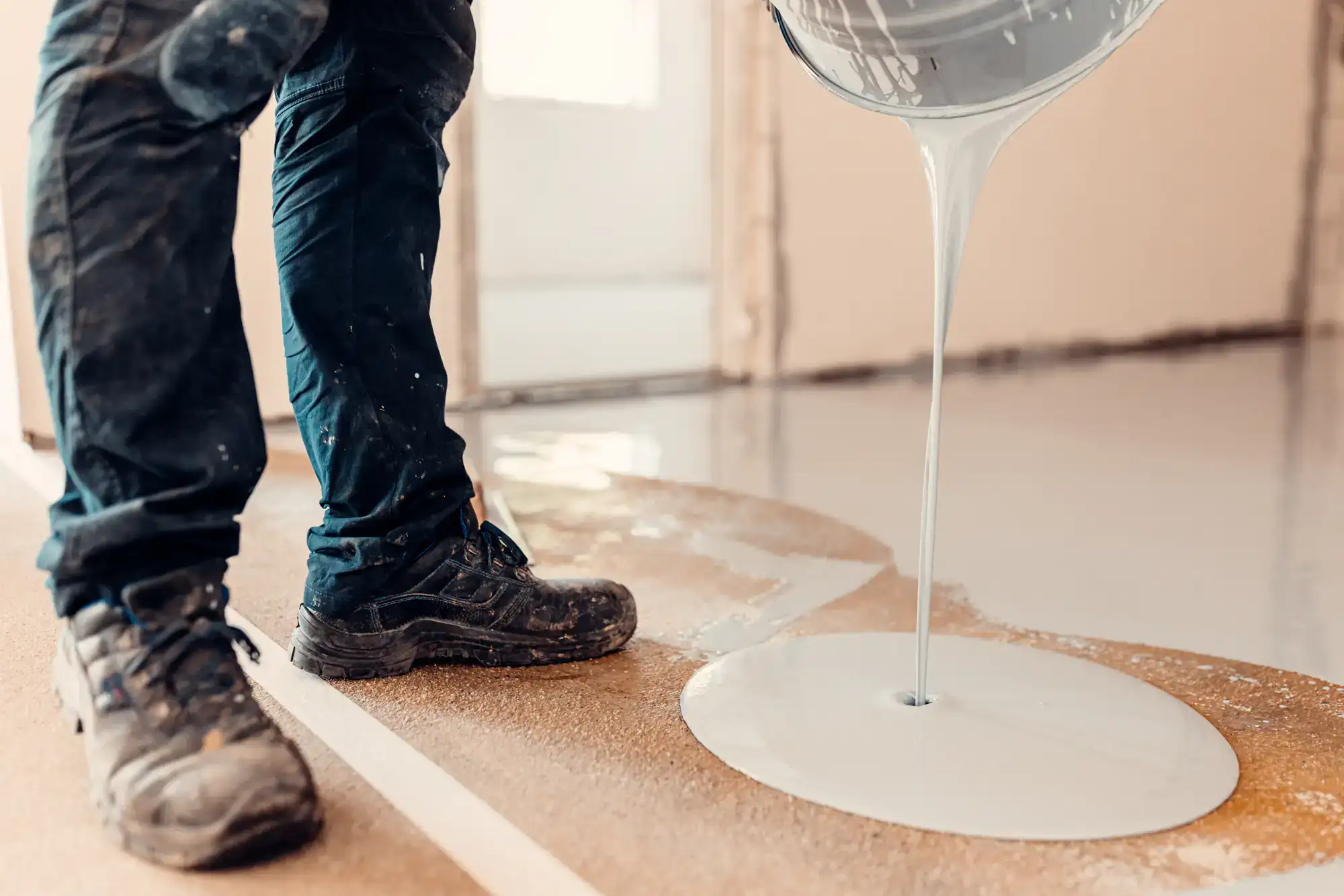
Walk into most commercial garages and you’ll see one of three floors: bare concrete that’s stained and cracked, failed paint that’s peeling in sheets, or a professional coating system that still looks good after years of use. The difference isn’t luck.
Concrete is porous. It absorbs everything that touches it—motor oil, transmission fluid, coolant, hydraulic fluid. Those stains don’t just look bad. They weaken the concrete over time, creating pits and cracks that get worse with every freeze-thaw cycle Connecticut throws at you.
Paint seems like an easy fix. Roll it on, let it dry, move on. But garage floor paint sits on top of concrete instead of bonding to it. Hot tires lift it. Chemicals stain it. Traffic wears through it. You’re repainting every year or two, shutting down bays, losing revenue, and still ending up with a floor that looks worn.
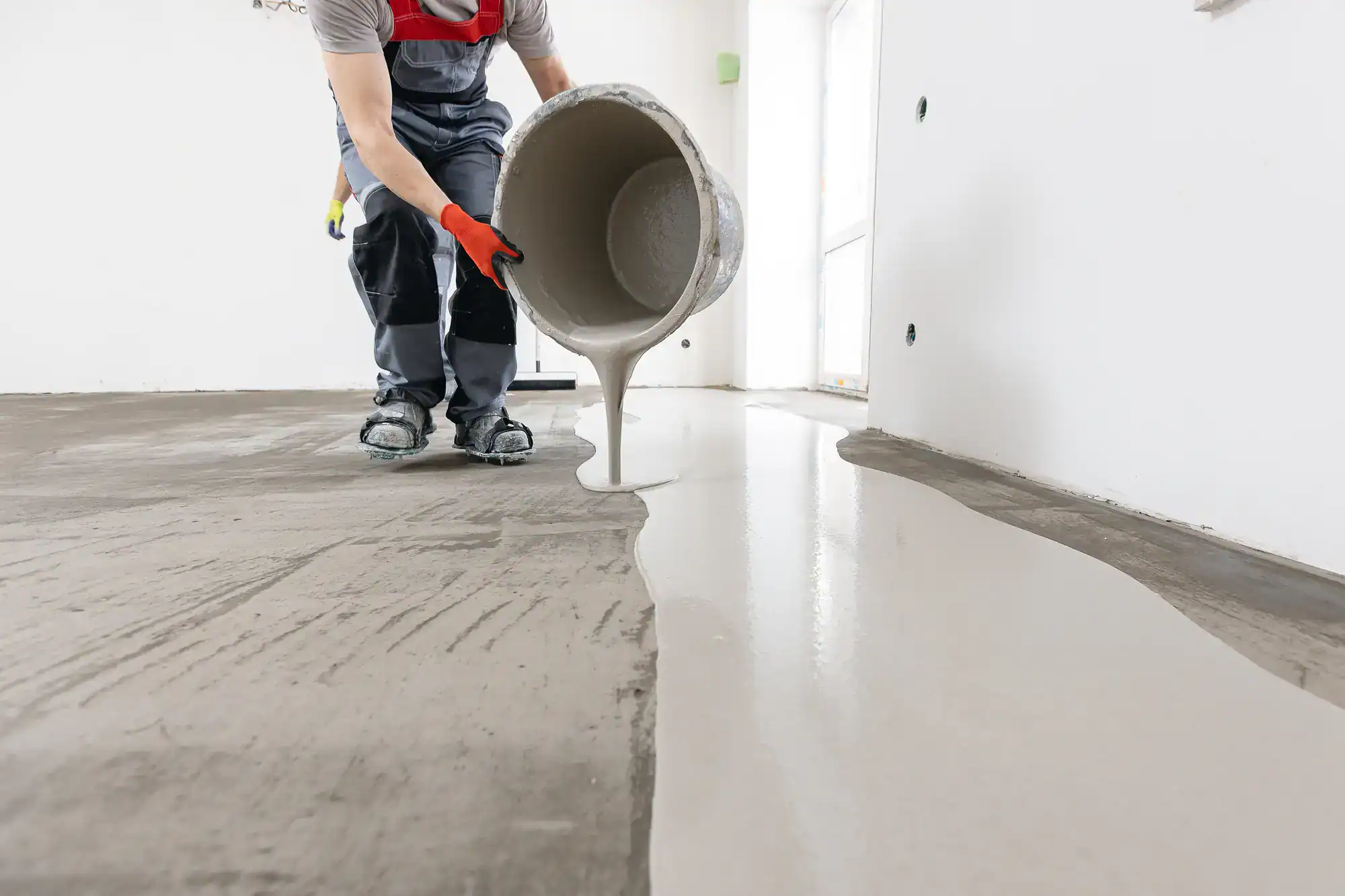
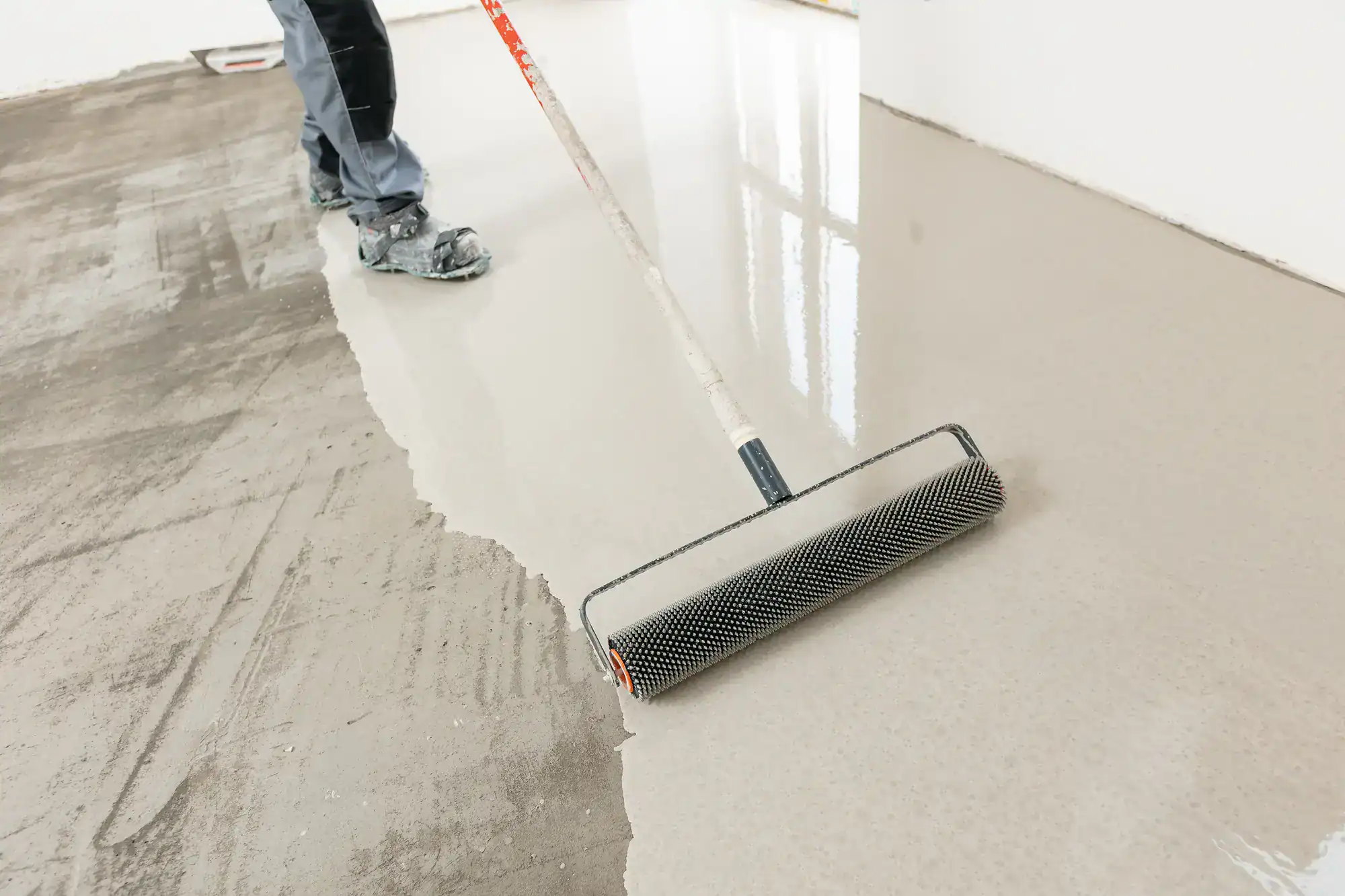
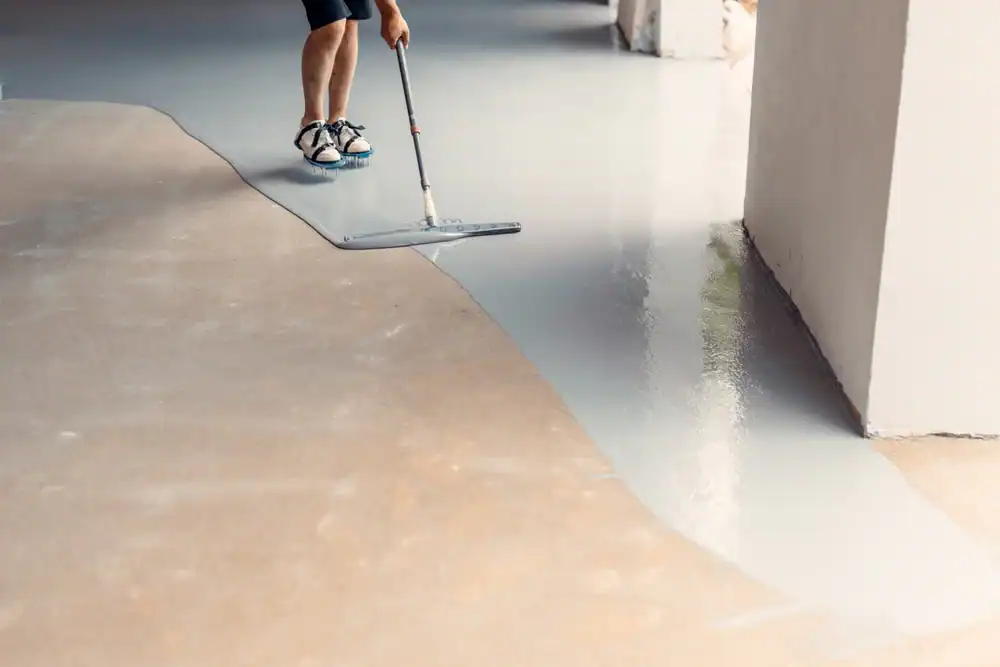
Professional epoxy garage floor systems aren’t paint with a fancy name. They’re two-part chemical coatings that cure instead of dry. When the resin and hardener mix, they trigger a reaction that creates a molecular bond with your concrete. The coating doesn’t sit on top—it becomes part of the surface.
That chemical bond is why epoxy handles what paint can’t. A truck with hot tires parks on paint, the heat softens the coating, and you get “hot tire pickup”—paint stuck to the tread and bare concrete underneath. Epoxy doesn’t soften. It’s engineered to handle temperatures, impacts, and abrasions that would destroy paint in days.
The thickness matters too. Most garage floor paint goes on thin—maybe a few mils. Professional epoxy systems build up in layers: primer coat, base coat, optional decorative flake, and a clear topcoat. You end up with a coating that’s significantly thicker, harder, and more protective. Some systems are five times harder than the concrete underneath.
Surface prep makes or breaks the whole system. Paint manufacturers tell you to clean and maybe etch the concrete. Professional epoxy installation starts with diamond grinding to open the concrete pores and create the surface profile needed for proper adhesion. Cracks get filled. Moisture gets tested. If the prep isn’t right, even the best coating will fail. That’s why DIY kits from big box stores have such a bad reputation—it’s not always the product, it’s the prep work people skip.
The curing process is different too. Paint dries when solvents evaporate. Epoxy cures through a chemical reaction that continues even after the surface feels dry. You can usually walk on epoxy within 24 hours, but full cure takes longer. For commercial garages, that means planning around your schedule. Most professional installers can work in phases to keep some bays operational, or schedule over a weekend to minimize downtime.
Chemical resistance is where epoxy really separates from paint. Brake fluid eats through most paints. Gasoline stains it. Antifreeze leaves marks. Epoxy resists all of it. Spills wipe up without leaving a trace. That’s not marketing—it’s chemistry. The cured coating is non-porous and chemically stable, so fluids can’t penetrate or react with it.
Let’s talk about what this means for your bottom line. Garage floor paint costs less up front—maybe $40-60 per gallon, covering 250-400 square feet. For a two-bay shop, you might spend $300-500 on materials. Add your labor or a contractor’s time, and you’re still under $1,500 for most small facilities.
Then it starts peeling. Hot tire marks appear within weeks. Oil stains set in. High-traffic areas wear through. You’re looking at touch-ups within six months and a full recoat within 1-2 years. Over a decade, you’ll repaint that floor five to ten times. Each time means downtime, lost revenue, and more money spent. The “cheap” option isn’t cheap—it’s expensive in slow motion.
Professional epoxy garage floor coating costs more initially. Depending on the system, you’re looking at $5-12 per square foot installed. That same two-bay shop might run $3,000-8,000. It’s a real investment. But here’s what changes: that floor lasts 10-20+ years with basic maintenance. No recoating. No peeling. No hot tire pickup. No stains that won’t come out.
Run the math over ten years. Paint: $1,500 initial plus $1,500 every two years equals $9,000+, plus the cumulative downtime and hassle. Epoxy: $5,000 once. The epoxy pays for itself, and you get a floor that actually looks professional the entire time.
Maintenance costs drop too. Painted floors need constant attention—touch-ups, cleaning with special products, resealing. Epoxy floors need sweeping and occasional mopping with regular cleaner. Spills wipe up in seconds. You’re not scrubbing stains or worrying about damaging the finish. Your staff spends less time on the floor and more time on billable work.
Performance under real conditions matters more than specs on paper. Talk to any shop owner who’s had both, and they’ll tell you: paint is a temporary fix that becomes a permanent problem. Epoxy is an investment that stops being a problem. When a customer walks into your facility and sees a clean, professional floor instead of stained concrete or peeling paint, that’s worth something. When your insurance agent sees slip-resistant coating and proper drainage instead of oil-slicked concrete, that’s worth something. When you’re not shutting down bays to repaint every year, that’s worth something.
Want live answers?
Connect with a American Poly Floor expert for fast, friendly support.
Not all epoxy systems are created equal, and not all contractors know what they’re doing. If you’re comparing quotes, you need to know what questions to ask and what red flags to watch for.
First, understand the difference between water-based and solids-based epoxy. Water-based systems are easier to work with, have less odor, and cost less. They’re fine for light-duty residential garages. They’re not fine for commercial facilities with heavy traffic and chemical exposure. Solids-based epoxy—especially 100% solids formulations—provides the durability and chemical resistance you actually need. If a contractor is pushing water-based epoxy for your auto shop, keep looking.
Ask about surface preparation. If they’re talking about acid etching or pressure washing, that’s a warning sign. Professional commercial installations require mechanical grinding to create the proper surface profile. The concrete needs to be opened up so the epoxy can penetrate and bond. Etching doesn’t do that consistently, especially on older concrete that’s been sealed or contaminated with oils. Grinding takes more time and costs more, but it’s the only way to ensure proper adhesion.
Different commercial garages have different needs, and the coating system should match your specific situation. A quick-lube shop with constant oil changes faces different challenges than a municipal fleet garage working on heavy equipment.
For high-volume auto service centers, you want a system that prioritizes chemical resistance and fast return-to-service. Polyaspartic topcoats cure faster than traditional epoxy topcoats—often ready for light traffic in 12-24 hours instead of 3-5 days. They also resist UV yellowing better, which matters if you have windows or bay doors that let in sunlight. The base coat is still epoxy for strength and adhesion, but the polyaspartic topcoat adds speed and durability.
Fleet maintenance facilities dealing with heavy trucks, buses, or municipal vehicles need impact resistance and thickness. These floors see more abuse from jacks, dropped parts, and heavy equipment. A thicker build—sometimes called a mortar system—uses epoxy mixed with aggregate to create a more robust surface. It costs more and takes longer to install, but it handles the punishment without chipping or cracking.
Corporate vehicle depots and parking structures need different considerations. If vehicles are just parking rather than getting serviced, you can often use a thinner system. But if there’s any slope or drainage involved, you need a contractor who understands how to work with that. Epoxy is self-leveling to a point, but significant slopes require different application techniques and sometimes different products.
Decorative options matter more than you might think. A solid color looks clean and professional. A flake broadcast system—where colored chips are scattered into the wet base coat—adds texture, hides dirt better, and creates visual interest. Metallic epoxy creates a high-end showroom look. Custom colors can match your branding. For customer-facing facilities like dealership service centers, the floor is part of your brand presentation. For back-of-house fleet garages, function matters more than form, but even there, a clean professional floor improves morale and safety.
Safety features should be non-negotiable. Epoxy can be slippery when wet, especially with oil or water on the surface. Anti-slip additives mixed into the topcoat create texture without sacrificing the smooth, easy-to-clean surface. In high-risk areas—near lifts, wash bays, or entrances where water gets tracked in—you want enough texture to provide traction without making the floor hard to clean. We recommend the right level of slip resistance based on your specific layout and use.
Finding the right contractor makes the difference between a floor that lasts decades and an expensive failure. Connecticut has plenty of epoxy installers, but not all of them have commercial experience, and not all of them do the prep work correctly.
Start by looking at their commercial portfolio. Residential garages are different from commercial facilities. If they’ve only done home garages, they might not understand the demands of a busy service center. Ask for references from commercial clients—actual auto shops, fleet facilities, or industrial spaces. Call those references and ask specific questions: How long has the floor lasted? Any issues with peeling or staining? Did they stay on schedule? How did they handle disruptions to your operations?
Get detailed written proposals, not just a price per square foot. You want to know exactly what system they’re using—brand names, product lines, number of coats. You want to know what surface prep is included—grinding, crack repair, moisture testing. You want to know the timeline—how many days, how long before you can use the floor. And you want to know what’s not included, so there are no surprises.
Watch for lowball bids. If one quote is significantly cheaper than the others, there’s a reason. Maybe they’re using a cheaper product. Maybe they’re skipping steps in the prep. Maybe they’re not insured properly. Maybe they’re planning to rush the job. Epoxy installation has costs that don’t compress much—materials, labor, equipment, time. A bid that’s 40% lower than everyone else’s is a red flag, not a bargain.
Ask about scheduling and downtime. We understand that your garage generates revenue, and downtime costs money. We work around your schedule—nights, weekends, or phased installation that keeps some bays operational. We give you a realistic timeline, not an optimistic one. And we communicate clearly if anything changes.
We have extensive experience with the specific challenges Connecticut weather creates. Humidity affects curing times. Temperature swings affect application. Winter installations require climate control. Having done commercial work throughout Connecticut, we know how to handle these variables.
Insurance and licensing matter more for commercial work than residential. Your insurance company cares about who’s working on your property. Your lease might require specific coverage levels. Make sure any contractor carries general liability and workers’ comp, and get certificates of insurance before work starts. In Connecticut, contractors should be registered and insured. Don’t skip this step to save a few dollars—if someone gets hurt or something goes wrong, you want to know there’s coverage.
Your garage floor is infrastructure, not decoration. It needs to handle years of abuse without failing, because replacing a failed floor means downtime, lost revenue, and money spent twice. Paint doesn’t cut it for commercial facilities. DIY epoxy kits don’t cut it either. Professional epoxy garage floor systems, installed correctly by experienced contractors, solve the problem once.
The upfront cost is real, but so are the long-term savings. So is the safety improvement. So is the professional appearance that tells customers you run a quality operation. If you’re in Hartford County, New London County, New Haven County, or Middlesex County, CT, and you’re tired of dealing with floor problems, it’s worth having a conversation with someone who understands commercial applications.
We specialize in professional epoxy systems for commercial garages, auto service centers, and fleet facilities across Connecticut. We bring decades of combined experience, use industrial-grade materials, and understand what it takes to keep your operations running while upgrading your floor.
Summary:
Share: