Standard garage floor paint fails fast in commercial spaces. Professional epoxy coatings create a chemical bond with concrete that handles heavy traffic, chemicals, and moisture.
Garage floor painting and epoxy coating look similar when first applied. Both brighten dull concrete. Both come in colors. Both make your space look more finished. That’s where the similarities end.
Standard garage floor paint is latex or acrylic paint with additives for concrete adhesion. It’s a one-part product that dries on your concrete surface. Like painting a wall—you’re adding a thin layer of color and basic protection, but not changing the surface underneath.
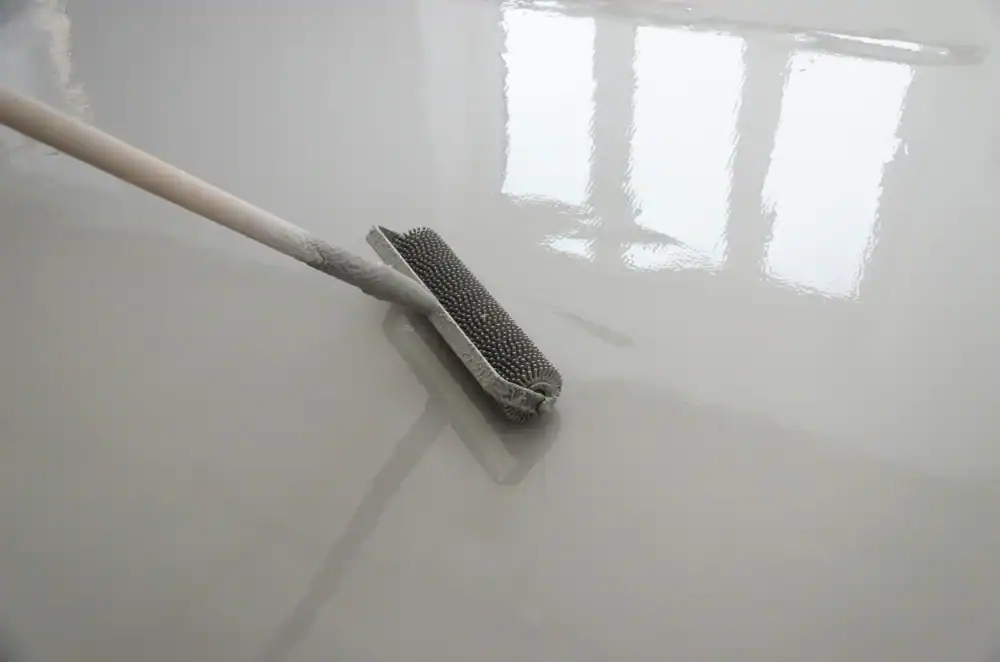
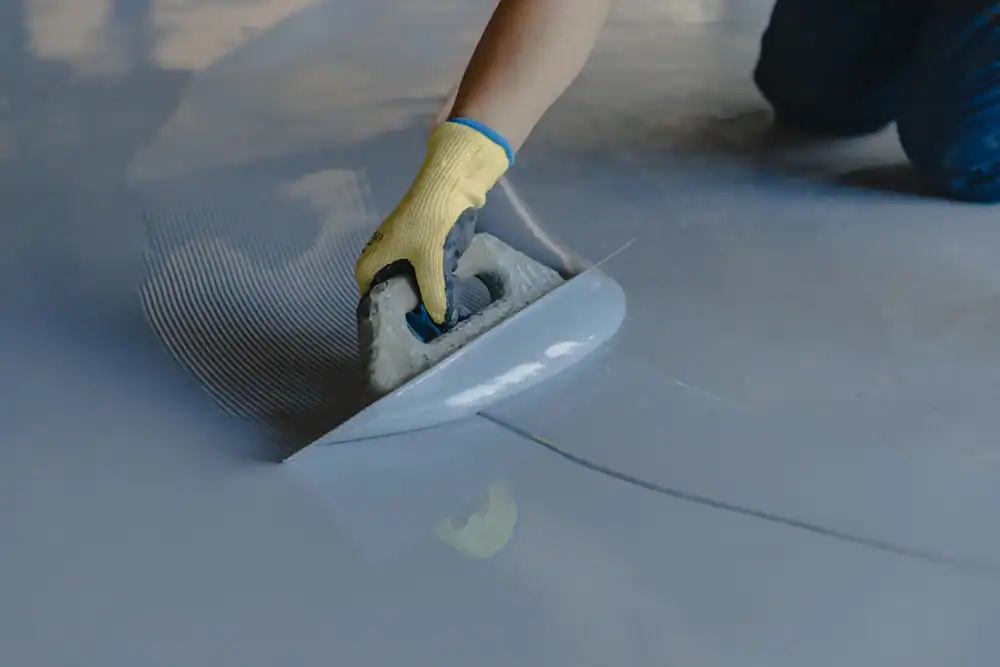
Professional epoxy garage floor coating is different. It’s a two-part system made from epoxy resin and a polyamine hardener. When mixed, they trigger a chemical reaction that creates a rigid, durable surface. This isn’t paint sitting on concrete. It’s a coating that bonds with concrete at the molecular level and cures into something much harder than what you started with.
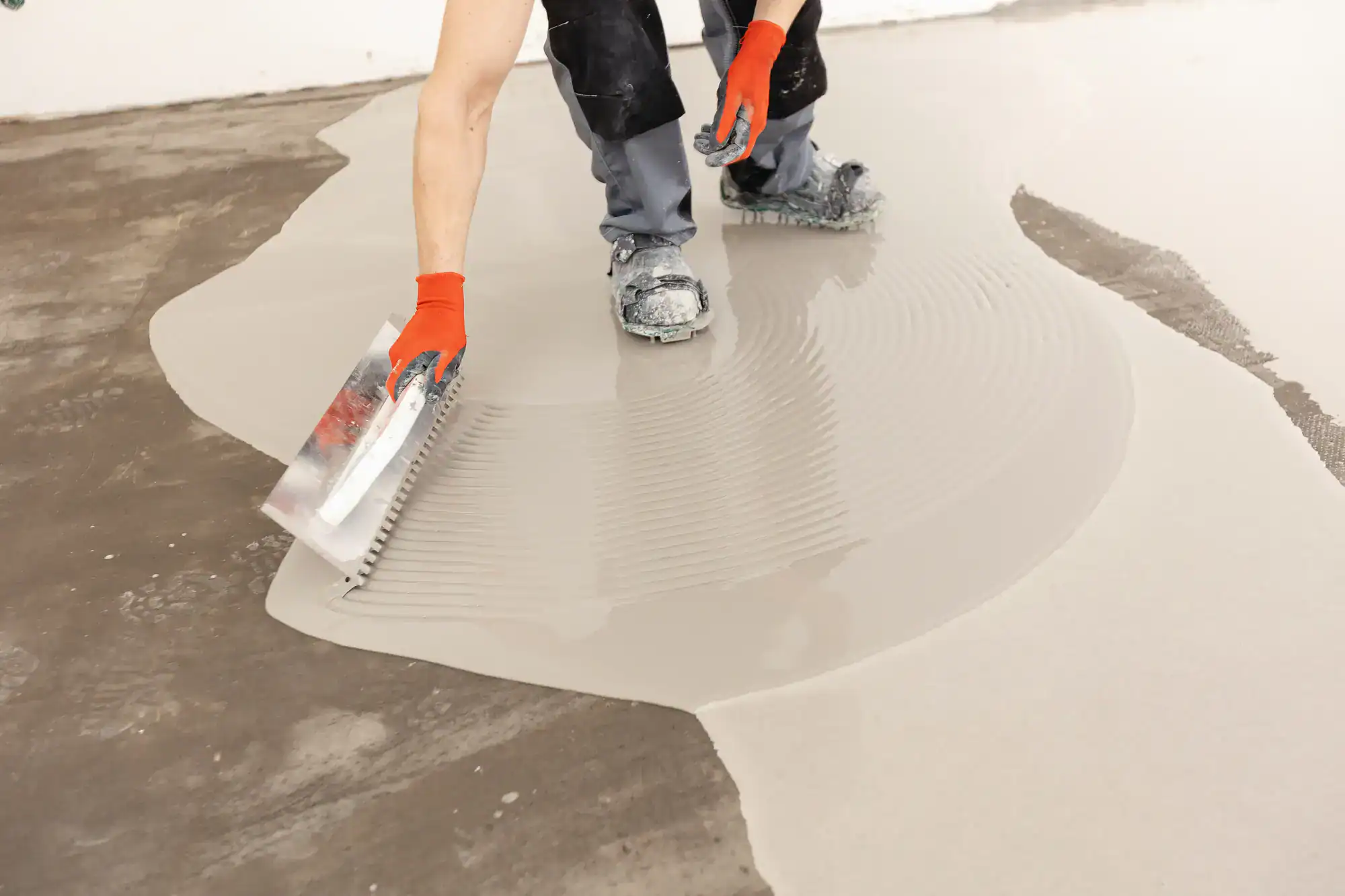
When you apply garage floor painting to concrete, you’re relying on mechanical adhesion. The paint seeps into tiny pores and imperfections in your concrete surface and grips them as it dries. This works for light-duty applications, but there’s a limit to how much abuse that grip can handle.
The paint layer itself is thin—just a few mils thick even with multiple coats. That thin barrier stands between your concrete and everything happening on your floor. When a hot tire sits on painted concrete, heat softens the paint. When chemicals spill, they can penetrate through to the concrete. When heavy equipment rolls over the same spots repeatedly, the paint wears through.
Paint also stays somewhat porous after drying. Moisture from below the slab works its way up through concrete and pushes against the paint layer from underneath. Without proper moisture mitigation, this vapor pressure eventually wins. The paint bubbles, peels, or delaminates—sometimes in sheets.
You’ll typically see garage floor paint showing wear within the first year in commercial settings across Connecticut. High-traffic areas wear through first. Anywhere you have chemical exposure, you’ll notice staining or discoloration. In spots where moisture is an issue, you’ll see bubbling or peeling. Most commercial facilities end up repainting every one to three years if they go this route.
The appeal of paint is straightforward: low upfront cost and easy application. For a temporary fix or a space with minimal use, it might make sense. But for commercial operations in Hartford County, CT or New Haven County, CT where your floor takes real abuse, paint becomes a recurring expense that never quite solves the problem.
One more thing about garage floor painting—it doesn’t seal your concrete. It covers it, sure. But concrete underneath remains porous and vulnerable. Oil and chemicals that work their way through the paint can still damage your slab. You’re protecting the appearance temporarily, but not necessarily protecting your concrete investment long-term.
Epoxy garage floor durability starts with how the coating actually bonds to your concrete. When you mix the resin and hardener, you’re starting a chemical reaction that can’t be reversed. As the epoxy cures, it penetrates into the concrete surface and forms a chemical bond with it. This isn’t just gripping surface texture—it’s bonding at the molecular level.
The result is a coating that becomes part of the concrete surface rather than sitting on top of it. That bond is strong enough to handle the stress that would rip paint right off. Hot tires, chemical spills, heavy impacts, constant traffic—epoxy is engineered to take it all.
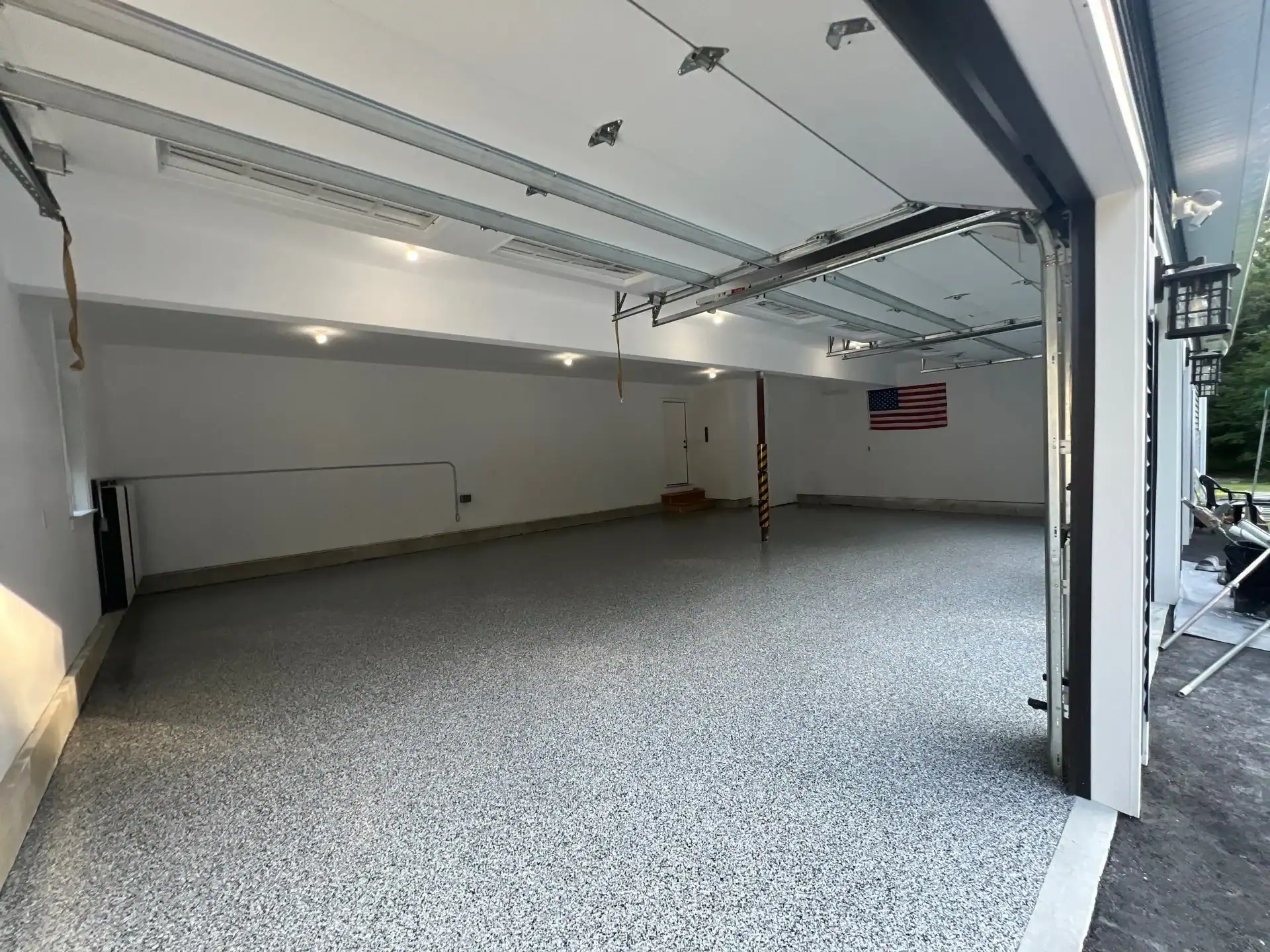
Professional epoxy systems are also significantly thicker than paint. A proper epoxy finish garage floor can be eight to ten times thicker than standard floor paint. That extra thickness matters when you’re dealing with abrasion, impacts, and general wear. There’s simply more material protecting your concrete.
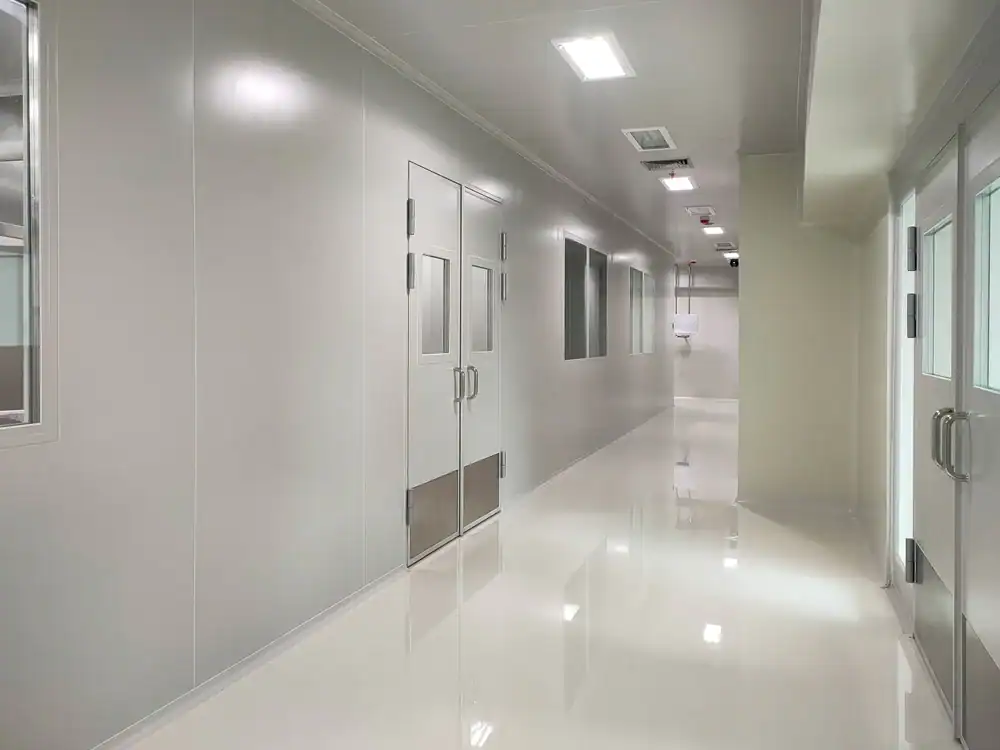
The non-porous nature of cured epoxy is another key difference. Once fully cured, epoxy creates a seamless, impermeable surface. Liquids don’t soak in. Chemicals don’t penetrate. Moisture from below can’t push through, especially when you use a proper moisture mitigation primer. This makes epoxy floors dramatically easier to clean and maintain than painted surfaces.
Epoxy also handles temperature extremes better than paint. It won’t soften under hot tires the way paint does. It remains stable in cold Connecticut winters. And with the right topcoat—like polyaspartic or polyurethane—it resists UV yellowing and maintains its appearance even in areas with natural light exposure.
In commercial applications across Middlesex County, CT and New London County, CT, professionally installed commercial floor coatings typically last fifteen to twenty-five years or more. That’s not fifteen years until it needs a touch-up. That’s fifteen years of actual protection and performance. The upfront cost is higher, but you’re not recoating every couple years. You install it once and move on with running your business.
The surface preparation for epoxy is also more intensive—and that’s a good thing. We diamond grind or shot blast your concrete to create the proper surface profile. This opens up the concrete pores and gives the epoxy maximum surface area to bond with. Paint can be applied over concrete that’s just been cleaned. Epoxy requires proper prep work, which is why it bonds so much better and lasts so much longer.
Want live answers?
Connect with a American Poly Floor expert for fast, friendly support.
Commercial environments are brutal on floors. You’re not parking a sedan overnight and calling it a day. You’ve got delivery trucks backing in multiple times daily, forklifts moving pallets, employees walking through with road salt on their boots in Connecticut winters, and chemicals that would make a residential garage owner nervous.
Standard garage floor painting wasn’t designed for this level of abuse. It was designed for homeowners who want their garage to look cleaner. When you apply it to a commercial space, you’re asking it to do something it’s not built for.
The failures show up fast. Within months, you’ll see wear patterns in high-traffic zones. The paint literally gets ground away by constant movement of vehicles and equipment.
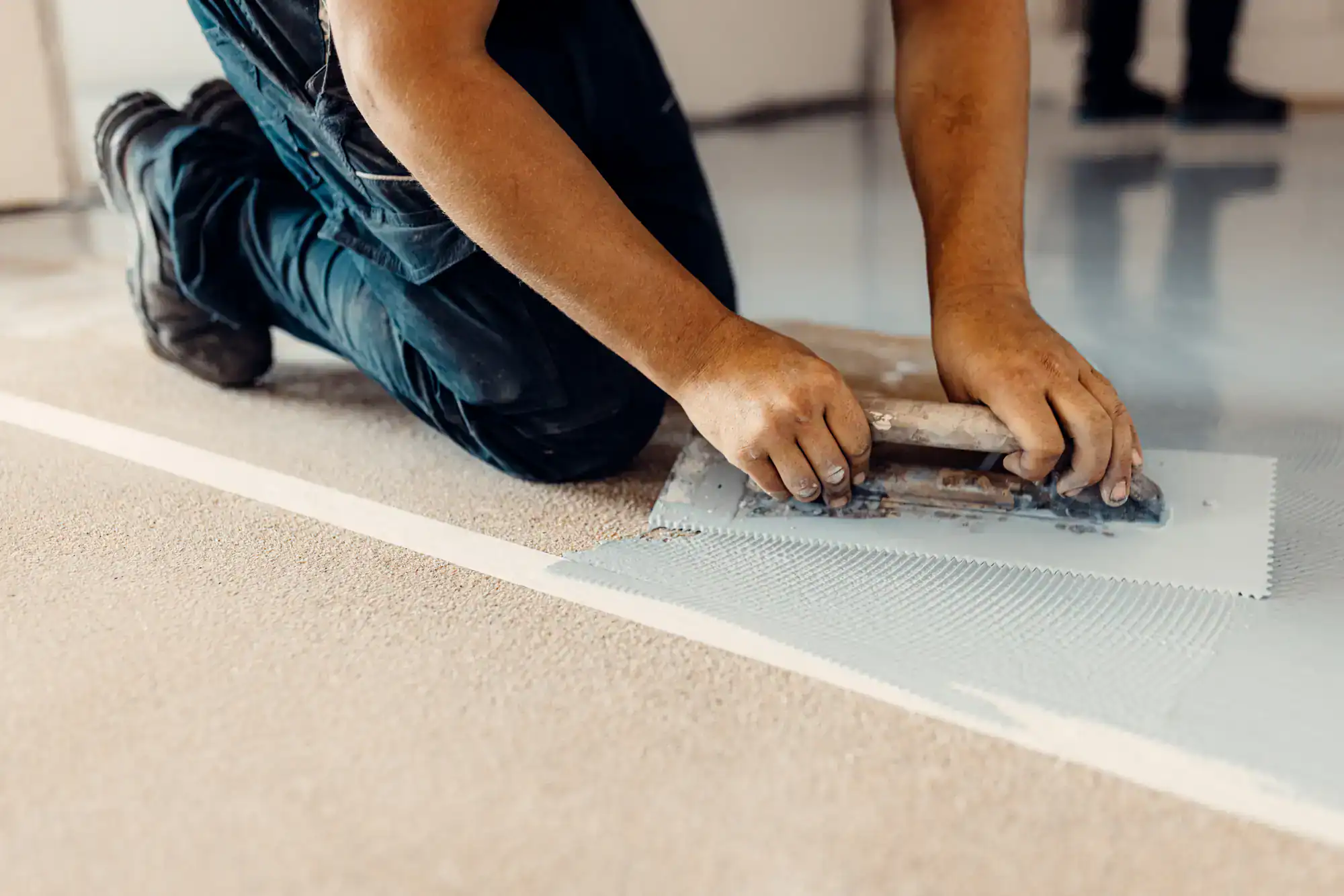
One of the most common complaints with garage floor paint in commercial settings is peeling. You’ll notice it first around edges, near doorways, or in spots where vehicles park regularly. The paint starts lifting away from the concrete in sheets or flakes.
Hot tire pickup is a major culprit. When a vehicle’s been driven and tires are warm, they can actually soften and grab onto painted surfaces. As the tire cools and contracts, or when the vehicle moves, it pulls the paint right off the concrete. This happens constantly in commercial garages where vehicles are coming and going all day.
Moisture is another failure point that Connecticut commercial properties deal with. If your concrete slab is on grade—sitting directly on soil—there’s likely moisture vapor moving up through it. Concrete is porous. Water vapor can travel through it from the ground below, especially if there wasn’t a proper vapor barrier installed under the slab when it was poured.
When that moisture vapor reaches the paint layer, it has nowhere to go. Pressure builds underneath the paint. Eventually, the paint loses its grip on the concrete. You get bubbles, blisters, or entire sections that delaminate. This can happen months or even a year after installation, which is frustrating because the floor looked fine at first.
Impact damage is also more severe with paint. Drop a heavy tool or piece of equipment, and the paint chips away, exposing bare concrete. Unlike epoxy garage floor coating, which has some flexibility and impact resistance, paint is brittle. Once it chips, moisture and chemicals can get under the edges and accelerate the peeling in that area.
The real problem is that once paint starts failing in one spot, it tends to spread. Water gets under lifted edges. Foot traffic catches the loose paint and pulls more of it up. What started as a small problem becomes a bigger one, and eventually, you’re looking at a full repaint much sooner than you planned.
This cycle is expensive. Not just the material cost of repainting, but the labor, the downtime, the disruption to your operations. For commercial facilities in Hartford County, CT or anywhere across Connecticut, this recurring expense adds up fast. You think you’re saving money with the cheaper option, but you’re actually spending more over time when you factor in how often you’re redoing the work.
Commercial facilities deal with chemicals that residential garages rarely see. Motor oil, transmission fluid, brake fluid, hydraulic fluid, gasoline, diesel, antifreeze, cleaning solvents—the list goes on depending on your operation. Standard garage floor paint is not equipped to handle prolonged exposure to these substances.
When chemicals spill on painted concrete, they don’t just sit on the surface. Paint is somewhat porous, and harsh chemicals can break down the paint’s binder. Oils and solvents soften the paint. Acids etch it. Even something as common as brake fluid can discolor and damage a painted surface permanently.
The staining is often irreversible. You can try to clean it, but the chemical has already penetrated into or reacted with the paint. The discolored spots remain, and over time, your floor starts looking like a patchwork of stains. That’s not the professional image most commercial operations in New Haven County, CT or Middlesex County, CT want to project to clients or customers who visit their facilities.
Beyond aesthetics, chemical damage weakens the paint’s protective function. Once the paint is compromised, those same chemicals start attacking the concrete underneath. Concrete is alkaline, and certain chemicals can react with it, causing spalling, pitting, or surface deterioration. Now you’re not just looking at a cosmetic issue—you’re looking at structural damage to your concrete slab that’s expensive to repair.
Commercial floor coatings like professional epoxy, by contrast, are specifically formulated to resist chemical exposure. The cured epoxy is non-reactive to most common automotive and industrial chemicals. Spills can be wiped up without leaving a trace. The floor maintains its appearance and its protective function even after years of chemical exposure.
This chemical resistance is one of the main reasons commercial clients choose epoxy over paint. When your operation involves substances that can damage flooring, you need a coating that’s built to handle it. Paint isn’t. Epoxy is. The epoxy finish garage floor creates a barrier that chemicals can’t penetrate, protecting both the coating itself and the concrete underneath.
For facilities like auto repair shops, manufacturing plants, warehouses with chemical storage, or any commercial garage in Connecticut dealing with these exposures daily, the chemical resistance of epoxy isn’t a luxury—it’s a necessity. You’re not just protecting your floor’s appearance. You’re protecting the structural integrity of your concrete and avoiding costly repairs down the road.
The decision between garage floor painting and epoxy coating comes down to what you actually need from your floor. If you’re running a commercial operation in Hartford County, CT, New Haven County, CT, New London County, CT, or Middlesex County, CT, your floor is a working surface, not a showpiece. It needs to perform under pressure, protect your concrete investment, and not become a recurring maintenance headache.
Standard paint offers a low entry cost, but it doesn’t hold up under commercial use. You’ll be repainting every few years, dealing with peeling and staining, and potentially facing concrete damage if moisture or chemicals break through the coating. The “cheap” option ends up costing more in the long run when you factor in downtime, labor, and repeated applications.
Professional commercial floor coatings like epoxy cost more upfront, but they’re engineered for exactly the kind of abuse commercial floors take. Epoxy bonds to your concrete, resists chemicals and moisture, handles heavy traffic, and lasts decades instead of months. You install it once and get back to running your business without worrying about your floor failing.
If you’re ready to protect your facility’s floors the right way, we specialize in commercial-grade epoxy systems designed for Connecticut’s toughest commercial environments.
Summary:
Article details:
Share: